If Your Institution Is Named After George Washington, Shouldn’t We Be Able To Trust It To Tell The Truth?

The General is not pleased.

The General is not pleased.

Shame on George Washington University (in Washington, D.C.), not only for lying to its students and community, but also for dishonoring the name of the scrupulously ethical American icon which they presumed to expropriate as their own. Such things carry with it some crucial obligations.

For years, the GW admissions and financial aid offices have claimed in printed materials and on the University website that admissions were independent of need. The admissions process does not consider financial need during the first round of screening applications. Before applicants are notified, however the University examines its financial aid budget and decides which students it can actually afford to admit. Wealthier students are accepted, taking the spots of students who would need more financial aid from the University.

Last week, a GW administrator confessed to a student newspaper—one ironically called “The Hatchet” after the apocryphal axe little George used to cop down that cherry tree in Parson Weems’ fable—– that financial resources indeed were considered in the admissions process, and have always been considered despite University statements to the contrary.  As  recently as last weekend, admissions representatives told prospective students that their applications would be judged without consideration of their financial aid profiles. Until it was removed Saturday evening, the newspaper reports, the undergraduate admissions website read, “Requests for financial aid do not affect admissions decisions.”

That site now confirms a “need-aware” policy that has always been in place. George Washington University just had another policy of lying about it. Continue reading →

“BULLY!” Is The New “WITCH!”

"Bully!"

“Bully!”

The Texas father of a high school football player would have been right at home in Salem, in the British New World colony of Massachusetts, around 1692. Then, thanks to hysteria about witchcraft, a vengeful citizen could permanently set the populace against a neighbor who had offended him, say, by winning a lawsuit, stealing a recipe or looking lustfully at his or her significant other, by accusing that neighbor of being a witch. This would inevitably spark an investigation, suspicion, infamy, maybe even a trial…and if the accusation stuck, a sadistic execution, perhaps by piling rocks on the neighbor’s witchy chest until everyone heard the sounds of squishing and cracking.

The cry of “Witch!” doesn’t work so well any more, but accusing someone of being a bully works almost as well. It can cause schools to impose punishment for words and activities that have nothing to do with school, and give law enforcement officials the power to pile rocks on the First Amendment. Now a vengeful father who watched his son’s hapless football team get the just desserts of all hapless teams—losing badly—has successfully punished the victors for being stronger, faster, and better coached, by accusing the superior team—it beat his son’s squad by a score of 91-0—of “bullying.” This mandates an investigation, so the winning team’s coach is now under a cloud, and in peril of seeing his career and reputation squished and cracked.

Mission accomplished! Continue reading →

Ethics Quiz: The SpongeBob Headstones

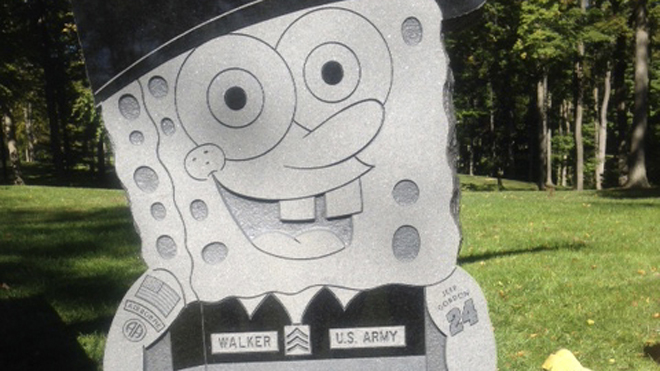
SpongeBob Gravestone Removed

You can’t make stuff like this up.

Apparently I was last one in the nation to learn about the surreal dispute between the parents of the late Kimberly Walker, a 28-year-old Iraq War vet who was  found murdered in a Colorado hotel room eight months ago, and the owners of Cincinnati’s historic  Spring Grove Cemetery, concerning the headstones erected over her grave on October 10.

The cemetery reversed its official approval of the twin monuments, apparently bestowed by someone who had momentarily been possessed by the spirit of Chuck Jones, saying that it would be inappropriate for a traditional and historic 19th Century pastoral cemetery that serves as the final resting place of Supreme Court Chief Justice Salmon P. Chase, several Civil War generals including “Fighting Joe” Hooker, who lost the Battle of Chancellorsville, the Hall of Fame manager of the 1927 Yankees, Miller Huggins, and many others, to sport not one but two hideous 6-foot-high, 4-foot-wide, 7,000 pound slabs of granite lovingly carved to depict SpongeBob Squarepants in military gear, one of which displays Kimberly’s name on his uniform. (For those of you who are hopelessly estranged from popular culture, SpongeBob is a fictional deep sea yellow sponge who stars in a popular Nickelodeon cable TV children’s cartoon show. Kimberly, we are told, loved the show. SpongeBob is an idiot, by the way.)

The family is outraged, and feels abused. “I feel like, and we all feel like, SpongeBob should stay there. We bought the plots, all six of them. We put the monuments there, we did what we had to do and they said they could provide that service to us,’ said Walker’s twin sister Kara, who was looking forward to eventually being buried under the second headstone. “I thought it was the greatest thing in the cemetery. I even told the people there that I think this is the best monument I’ve ever seen. It’s the best headstone in the cemetery and they all agreed. It came out really nice.”

Yyyyyyyeah.

Still, putting considerations of taste aside—-and what American these days doesn’t do that daily?—the Walkers duly purchased the plots (they have four more…and just think of what might end up on them) and properly cleared the monuments.

Your Ethics Alarms Ethics Quiz for this lovely Fall day is this:

Does fairness dictate that the Walkers be allowed to erect whatever monuments they choose, including giant, garish sculptures of a cartoon character, to honor the memory of their daughter? Continue reading →

Ethics Dunce: Fat-Bashing Film Critic Rex Reed

melissa_Elle

Actress Melissa McCarthy stole the film “Bridesmaids” right out from under its better known stars, including the screenplay’s author, Kirsten Wigg. In that film, her hit CBS sitcom “Mike and Molly,” and subsequent films (of varying quality), McCarthy has shown that she is s versatile, appealing comedienne with deep dramatic resources. Film critic Rex Reed, however, is mostly concerned with her weight, which is usually a component of the characters she plays and the quality, other than her talent, that sets her apart from the standard issue, impossibly thin, fit and sexy Hollywood actress.

In his withering review of her latest comedy “Identity Thief,” Reed causally refers to McCarthy as a “female hippo” and reduces her career to this: “Melissa McCarthy (Bridesmaids) is a gimmick comedian who has devoted her short career to being obese and obnoxious with equal success.” Called on his fat-bashing, Reed responded, “I have lost entirely too many friends to obesity-related diseases to pretend Ms. McCarthy’s alarming obesity is anything to applaud.”

There are two aspects of this that are striking. One is that Rex Reed, who played the pre-op Myra Breckenridge in the awful movie version of Gore Vidal’s gender-bending, and considered scandalous at the time, satiric novel (Raquel Welch, now over 70, was post-op), is still alive and reviewing, albeit obscurely until, as now, he writes something outrageous. At one time—40 years ago? Longer?— Reed was considered the most quotable and one of the most influential film critics; now, to say he is passé would be a compliment.

The other striking aspect of this incident is this:  while the culture will turn with unforgiving venom on any public figure who derides individuals for their color, sexual orientation, malady or disability, any of which would be considered cruel, bigoted, and hateful, deriding individuals because their weight doesn’t meet with aesthetic norms—among which are now out-sized breasts on otherwise fat-free frames and sharply chiseled abdominal muscles, a look that was literally freakish until the dawn of Nautilus and personal trainers—-still is largely regarded as justified and acceptable. Continue reading →

The Naked Teacher Principle Strikes In Texas: The Playboy Variation

"Miss DEWEESE?? Ay Caramba!!!"

“Miss DEWEESE?? Ay Caramba!!!”

This version of the NTP is not especially close to the gray area of ethics, nor is the result surprising, though I expect a lot of teeth gnashing about it because the naked teacher in question will attract a lot of, uh, sympathy.

Dallas’s school district has apparently fired Cristy Nicole Deweese, 21, a Spanish teacher for the city’s Townview Magnet High School. Less than three years ago she posed in various provocative positions and states of undress for Playboy, in its February 2011 issue. That magazine is still available, but more to the point, the photos are easily available online. Naturally some students found them, and the core tenets of the Naked Teacher Principle had been triggered.

The Naked Teacher Principle states:

“A secondary school teacher or administrator (or other role model for children) who allows pictures of himself or herself to be widely publicized, as on the web, showing the teacher naked or engaging in sexually provocative poses, cannot complain when he or she is dismissed by the school as a result.”

I won’t keep you in unnecessary suspense. Deweese is almost dead center in the middle of the NTP. Continue reading →

Scott Carpenter And Being Unfair To #2

scott-carpenter

Scott Carpenter died last week, at the age of 88. Did you notice? Did you even remember who Scott Carpenter was?

I remember who he was and what he did, but I didn’t know that he had died. The world stops when the actor who played Tony Soprano dies, but an aged American hero and explorer? The news media says “Meh.” If Carpenter was still famous or a celebrity at all, it was only in the vague, foggy sense that obscure rock artists from the 60’s and expired pop icons are famous. I think Tony Dow, Barbara Feldon and Mama Cass are about as familiar to today’s public as Scott Carpenter, if not more. I just asked my son, who is 18 and better schooled in history and culture than most of his contemporaries. He knew Mama Cass was a member of the Mamas and the Pappas. The rest? Crickets.

Yet Scott Carpenter was, unlike those people, important. He was  one of the original Mercury astronauts, and in 1961, he orbited the Earth. After he left NASA he became a different kind of explorer, challenging “inner space,” the ocean’s mysterious depths. He launched an undersea habitation called Sealab II, where he and three other men conducted experiments on how well humans  function in a high-pressure undersea conditions for extended periods. Carpenter was a deep-water pioneer, mining on the sea bottom and harvesting exotic fish and other sea creatures. He salvaged and refloated a sunken jet fighter; he built an undersea petroleum-exploration platform.

Scott Carpenter, however, wasn’t famous by the time he died, because one of his fellow astronauts and good friends, John Glenn, orbited the Earth before him. Glenn went on to become a U.S. Senator based on his fame and heroic reputation (it helped that he was a combat pilot and decorated military hero as well). Carpenter did something important, dangerous, selfless, difficult and heroic, but he did it second, after John Glenn. We don’t remember second, and the distance between the accolades and honors heaped on #1 and the shrugs that follow #2 is disproportionate and unfair. Continue reading →

Cautionary Tales: When The Law Protects Unethical Creeps

Chaney_Chelsea

Two recent court rulings demonstrate how the law often cannot punish purely unethical conduct if it falls in the cracks of legal language and definitions. When that happens, however, it is incumbent upon the rest of the culture not to allow an Ethics Dunce, or worse,to escape without proper identification and condemnation.

Case A: Curtis Cearley

Director of technology services for the Fayette County (GA) school district.

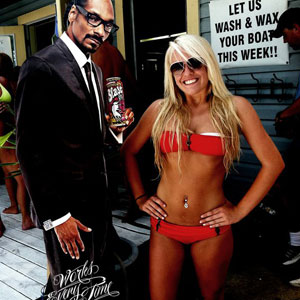
Fayette County high school student Chelsea Chaney used her Facebook page to post a photo of herself wearing a bikini and standing next to a life-size cardboard cut-out of rapper Snoop Dogg holding a can of Blast, the caffeinated alcoholic beverage he promotes. Although it was posted for the student’s friends, Cearley saw it, and used the comely photo in a  presentation at a public forum on the risks of sharing potentially embarrassing personal information on social media. He also used her name, identifying Chaney at the forum which was attended by parents, faculty and  students who attended school with her. He never alerted her, or asked her permission to use her photo as a “Don’t be like Chelsea!” example. The forum was titled “Once It’s There, It’s There to Stay.”

Horrible. This is a pure Golden Rule violation by Cearley, unfair, cruel, thoughtless, mean and intentionally  harmful to a minor, no less: Continue reading →

Down The Rabbit Hole Again With Hank

Forgive Hank, sir....he only watches TV, and besides, he's a twit.

Forgive Hank, sir….he only watches TV, and besides, he’s a twit.

Another day, another annoying Washington Post TV review from Hank Stuever. When I last checked in on Hank as he was practicing his craft, he was ridiculing the concept of young parents committing to the care of an unplanned baby without considering abortion. Today, he’s just trying to make his readers as ignorant as he is.

I suppose there no requirement that a TV critic be conversant in literature…but there should be. All drama and entertainment is constrcted on the foundation of the stories and traditions that came before them, and while one can critique popular culture while being ignorant of everything between Beowulf and All in the Family, one cannot do so competently or professionally, both of which, as the TV critic for a major newspaper, Stuever is obigated to do. This is especially true when he presumes to critique a new TV show based on literature, however lightly, as  ABC’s new “Once Upon a Time in Wonderland” is.

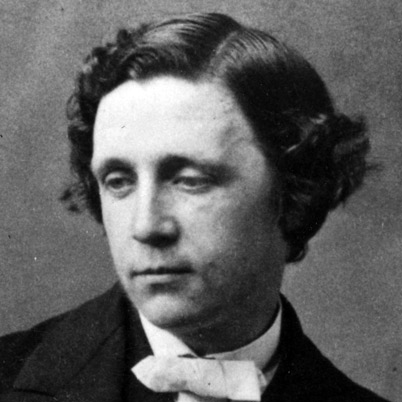
Right off the bat, Hank lets us know that he knows diddly about Lewis Carroll’s strange and wonderful classic, getting “Alice in Wonderland” confused with its (equally brilliant) sequel “Through the Looking Glass.”  Hank speaks of “Lewis Carroll’s 1865 story of Alice, the girl who stepped through the Looking Glass and saw all those freaky things — rabbits, Mad Hatters, worms, Cheshire cats, etc.”  But Alice never saw any of those things when she stepped through the looking-glass, for that is a different book. “Rabbits, Mad Hatters, worms, Cheshire cats, etc.” were encountered by Alice when she fell down the rabbit hole, one the few things the Disney animated version got right. (By “worms” I’m guessing Hank ie referencing the hookah-smoking caterpillar, which is not a worm. Does Stuever know? Is he just showing contempt for the book and its characters? As Hank would undoubtedly say, “Whatever.”) Continue reading →

Ethics Dunce: California

Oh, rats. There goes my head again...where's the duct tape?

Oh, rats. There goes my head again…where’s the duct tape?

The reductio ad absurdum of the debate over illegal immigration has reached its apotheosis in California, where Governor Brown actually signed into law a provision allowing illegal immigrants to be awarded licenses to practice law in the state. The law was designed to render moot the case of illegal immigrant Sergio Gomez, who was brought into the country as a child, managed to evade detection and enforcement through law school and the bar exam, and is now fighting to be admitted to the California Bar.

Garcia has said that being able to obtain a law license “is my life’s dream come true. One of two. I’m going for the U.S. citizenship next. I want to be a full part of this country.” Well, why stop at that bizarre sequence? Why not let Mexican citizens first become U.S. lawyers, and then aspire to sneak over the border some day and become U.S. citizens? Continue reading →

The Ethics Of Demanding Charity

Joanna Leigh

Joanna Leigh

I can not imagine much more heartbreaking plights than that of Boston Marathon bombing victim Joanna Leigh.

By April 14, 2013, Leigh, 39, had a newly minted doctorate in international development, and a promising career as a consultant. On April 15, she was at the finish line of the marathon, waiting for a friend to cross it, when the second of two bombs exploded ten feet from her. She was shielded from the deadly flying metal by other spectators, but still knocked unconscious. When she awoke, there was chaos around her, people screaming, maimed, covered with blood. She helped some injured find help, and then, dazed, walked home. For various reasons, she did not get herself checked out at a hospital until more than a week had passed.

Gradually, however, the symptoms of her injuries began appearing. Soon, it became obvious that the closed head injuries she suffered in the explosion have caused devastating long-term damage to her brain, and it is doubtful that her life will ever be normal again. Today, she says, she has to sleep most of the day. She cannot work or drive, and is easily disoriented, even getting lost on her own block. She has blurred vision, her hearing is impaired and she cannot avoid the constant ringing in her ears. Concentration has become difficult, and the simplest everyday tasks are overwhelming.   Continue reading →