Policies Don’t Fix Unethical Professors

“Here is your assignment, class: Vote for who I tell you to.”

I saw this story and decided it was too obvious to write about. A community college math professor distributes to her class a pledge to vote for Obama and the Democratic slate, and demands that the students sign it—come on! Is anyone going to defend that as ethical? Then a reader sent me several links to the item (thanks, Michael), and after reading them, I was moved to reconsider.

The professor, Sharon Sweet, was put on unpaid leave pending an investigation; I can’t fault Brevard Community College (in Florida) for not firing her yet. What troubles me is the college’s statements that her conduct is just a breach of policy. BCC Spokesman John Glisch told the press that “The college takes this policy [prohibiting employees from soliciting support for a political candidate during working hours or on college property] extremely seriously. It is very important that all of our faculty and staff act in that manner at work and while they’re on campus.” So college provosts are reminding employees about the policy.

Let’s be clear. Associate Professor Sweet’s conduct was an abuse of power and position, an insult to the autonomy of the students and an attempt to take away their rights as citizens, disrespectful to them and the values of the nation, and an attempt to circumvent election laws and to subvert democracy. It was also, quite possibly, illegal. If a college needs to have a policy to stop teachers from behaving like that, it is hiring the wrong kinds of teachers—individuals whose ethics are those of totalitarian states, and whose respect for individual rights are nil. This was an ethical breach of major proportions, not a policy misunderstanding. No teacher should require a policy to tell her that this conduct is indefensible and wrong. Continue reading →
Comment of the Day: “Yes, Reporters Engaged in ‘Collaboration’ On Questions For Romney. Good!”

Dwayne N. Zechman, who has one or two other Comments of the Day to his credit, has authored another in response to the post regarding conservative alarms over evidence that reporters coordinated their questions before Mitt Romney began a press conference on the protests and violence at Middle East embassies. My position was that there is nothing sinister in this as long as it results in the politician or candidate being grilled actually answering legitimate questions. Reporters should do this with all question sessions, if politicians insist on spinning, ducking, and prevaricating. Obviously, if reporters employ this strategy with Romney and not the President, that raises an ethical problem, but a different ethical problem.

Here is Dwayne’s Comment of the Day in response to the post, Yes, Reporters Engaged in “Collaboration” On Questions For Romney. Good!.  I’ll have a further comment at the end.

“I *do* have a problem with the Press Corps acting this way because it sets up a dangerous future license for them to engage in groupthink with no checks and balances against it. (Indeed, the First Amendment would correctly, though tragically, protect it.) Continue reading →

THIS is Hindsight Bias, So You’ll Know a Jerk When You Hear One

I haven’t watched a Red Sox game for over a month now; more on that soon. I do check on the game results however, and observed with interest that Red Sox manager Bobby Valentine, currently being dressed for the guillotine by New England sportswriters who want him punished for a miserable season in which his own work has been outstanding, is being criticized today in a textbook example of hindsight bias at work. I am flagging it for any of you who might want to explain the phenomenon to the next jerk who criticizes you for a reasonable choice you made not knowing how it would turn out, based on the jerk’s knowledge of how it in fact did turn out.

My least favorite personal run-in with hindsight bias was the time I lost a poker hand—and a lot of money– in Vegas despite having four of a kind in a game of seven card stud. The old man sitting next to me looking pathetic also had four of a kind, and in a higher denomination, the odds of two four of a kind hands appearing in the same deal in a non-wild card game being approximately six-gazillion to one. Naturally, I was betting the limit until the old man called my hand—he said later that he felt sorry for me. When he revealed that he had my four sevens beat with his four %$#@%$*& tens, it caused a genuine uproar in the casino, and the dealer said that he had never seen the like in eight years on the job.

“You should have known he had you beat,” said the ass sitting on my right. That’s hindsight bias. And so is this. Continue reading →

“Print the Legend” Ethics: The Unjust Obscurity of Mary Quantrell

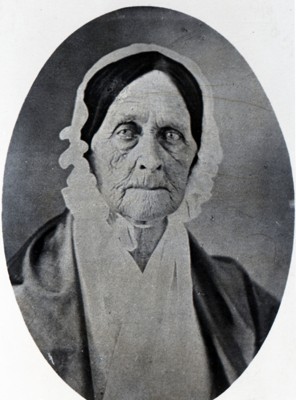
Barbara Fritchie, as in the poem. But the Barbara in the poem was really Mary.

Today is the anniversary of the Battle of Antietam, the single most bloody day in the Civil War, with nearly 21,000 casualties on September 17, 1862.  Most of us, at least those of my generation, were introduced to the battle with a poem, “The Ballad of Barbara Fritchie,” by John Greenleaf Whittier, telling the tale of a brave old woman, ninety years old, who confronted Confederate General Stonewall Jackson’s troops as they marched through Frederick, Maryland to the battlefield, by waving Old Glory after the troops had fired at it, and saying,

Shoot, if you must, this old gray head,
But spare your country’s flag,’ she said.

Barbara Fritchie is now an icon, and has been portrayed in novels and films. Her house is a historic landmark, and the town uses her name and the poem to market everything from candy to T-shirts. And, I learned this Sunday, it is all a lie, though not old Barbara’s fault. The poet got his facts wrong, or used excessive “poetic license” because “Barbara Fritchie” pleased his ear better than “Mary Quantrell”, the name of the real flag-waver, and a 90-year old patriot made for a more colorful plot than a mere 30-something with chutzpah. Whittier also made Jackson the antagonist of the tale, when in fact the general was the less flamboyant and famous A.P. Hill. In 1876 Quantrell wrote to Whittier pleading with him to correct the record, signing her letter, in quotes, as “Barbara.” He did nothing. Continue reading →

Yes, Reporters Engaged in “Collaboration” On Questions For Romney. Good!

Hidden Camera: The mainstream media meets to plot against Mitt Romney…

Yesterday, the Right Scoop blog breathlessly announced that it had acquired a recording of what an open mic had caught in the discussion among reporters prior . to Mitt Romney’s press conference:

CBS REPORTER: “Yeah that’s the question. I would just say do you regret your question.”

UNIDENTIFIED REPORTER: “Your question? Your statement?”

CBS REPORTER: “I mean your statement. Not even the tone, because then he can go off on …”

UNIDENTIFIED REPORTER: “And then if he does, if we can just follow-up and say ‘but this morning your answer is continuing to sound …”

CBS REPORTER:  “You can’t say that.…”

CBS REPORTER: “I’m just trying to make sure that we’re just talking about, no matter who he calls on, we’re covered on the one question.”

UNIDENTIFIED REPORTER:  “Do you stand by your statement or regret your statement?”

This is it!, proclaimed Rush Limbaugh and, like echoes in a grotto, every other conservative talk show host and blogger, and of course Fox News, bleated the same. The smoking gun! The proof! The mainstream  is engaged in a conspiracy to destroy Mitt Romney and to re-elect President Obama! Just let George Stephanopoulos and the rest try to deny media bias now! Continue reading →

A Boy Named Sue, A Woman Named Edward

I think I know where he works…

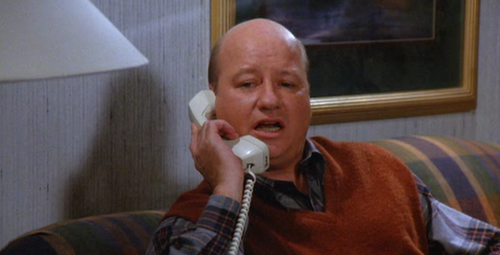
I have no idea what to make of this: I feel like I fell into a “Seinfeld” episode. Remember the “high talker”?

I received an e-mail yesterday from the executive of a large company inquiring about an ethics training. The first name of the executive was Edward, but when I called the listed number, a very high, very female voice answered the phone. I asked to speak to the executive, and received a perky, “I’m Edward! Thanks for calling me back.”

Come on. Edward? What woman goes by Edward? I was about to make a comment like, “That’s an unusual name—how did you come by it?” when I had an image of “Seinfeld’s” high talker, a short, fat, bald guy, becoming irate when callers mistook him for his girlfriend over the phone. This was a potential client, and I didn’t want to annoy her—or him. On the other hand, surely she, assuming it is a she, knows that her masculine  name causes confusion. I searched through her e-mail messages for any hint of her—if she was a her—gender, and found nothing. Wouldn’t it be reasonable and fair to at least confirm that yes, she was a woman, or yes, he was a male counter-tenor, or yes, he was indeed a castrati, or at least do something to clear up what he…or she, dammit… had to know was confusing to anyone meeting her over the phone? Continue reading →

The Breast-Feeding Professor

“Uh, Captain? Captain? We really need you up in the plane, now—we’re under attack…”

This story reads as if it were invented just to cause arguments on Ethics Alarms.

Adrienne Pine, a professor at American University, was faced with a choice: stay home and care for her baby, who had a fever, or take the child to class. She chose to take the infant to the first meeting of her “Sex, Gender and Culture” course, where the child spent her lecture alternately on her mother’s back or crawling around the room, or, at one point, being breast-fed by the professor. Pine’s Full Mommy breast-feeding act was commented upon by the school newspaper, and Prof. Pine responded to inquiries by a student reporter with a dismissive, “…the baby got hungry, so I had to feed it during the lecture. End of story,” and a defensive and defiant  blog entry. She sees nothing wrong with her conduct, and regards the controversy as proof that ” a feminist anthropology course is necessary at AU.”

That’s playing the ol’ Mommy Card with gusto, Professor Pine.

She is dead wrong, as a matter of professional ethics. As a college professor,Pine has limited demands on her time, and the one thing that she is required to do is to devote full attention to her students in class. With an infant, an ill infant at that, in her care, she could not do that. She had a pure and unresolvable conflict of interest, and it was a breach of her duty to her child (at one point a student had to tell her that the baby had a paper clip in her mouth) and a breach of duty to her students (if they were watching the baby, and later that breast-feeding exhibition, they were not able to give full attention to her lecture). She had a choice to make: do one job or the other, because it is impossible to do them both at the same time. Continue reading →

Ethics Hero: Minnesota Vikings Punter Chris Kluwe

Chris Kluwe is the kicker. Emmett Burns is the football.

I can’t highlight Maryland state delegate Emmett C. Burns’ effort to use his position and power to stifle free speech and political discourse without honoring NFL player Chris Kluwe, who put Burns in his place with an online open letter of remarkable clarity, passion and venom. Yes, it was not civil; it was, in fact, frequently obscene. Nonetheless, his indignation, expressed in a colorful upgrade of the language of the locker room, was well-earned. When an elected official in a supposed democracy starts trying to use his power to shut up citizens who disagree with him, maximum shaming is paramount. In this case, a little obscenity helped get the word out (and made it fun to read, too). Highlights of Kluwe’s polemic: Continue reading →

Ethics Quote of the Day: Calvin Coolidge

“There is no right to strike against the public safety by anybody, anywhere, any time.”

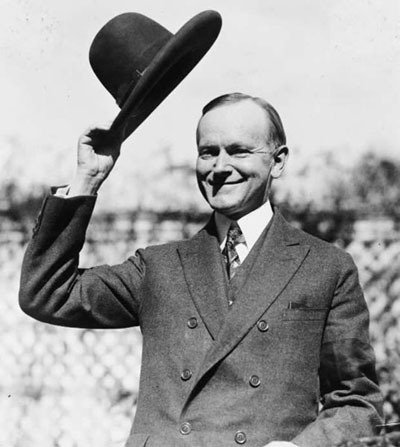
—-Calvin Coolidge, then Governor of Massachusetts, soon to be Vice-President and later President upon the death of Warren G. Harding, in a September 14, 1919 telegram to labor leader Samuel Gompers on the occasion of the Boston police department strike.

Cal made his words count.

The Boston police were fired for extorting the city, and Coolidge’s words were in the air when President Ronald Reagan responded to an illegal strike by air traffic controllers by firing the strikers and banning the union.

Now Chicago’s teachers are striking, not against the city management that is denying their demands, but against the children of the city and their families.

What would silent Cal say? I think I can guess. Harming children and families for higher wages is as much extortion as leaving a city unprotected against crime, and cannot be defended ethically. The defense will be, inevitably, “Well, management is unfair, and their offer is unjust. What are we supposed to do?”

The answer is: something else.

__________________________________

Facts: Chicago Tribune

Source: Wikipedia

Graphic: Washington, Jefferson and Madison Institute

Ethics Alarms attempts to give proper attribution and credit to all sources of facts, analysis and other assistance that go into its blog posts. If you are aware of one I missed, or believe your own work was used in any way without proper attribution, please contact me, Jack Marshall, at  jamproethics@verizon.net.

Booing Ethics: Ethics Lessons for Both Parties That They Will Not Learn

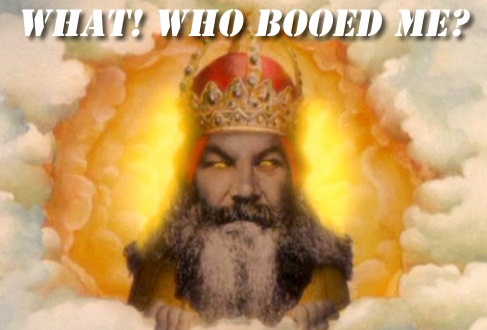
Nobody booed you, God. Stop listening to Hannity…

Remember a year ago, during the Republican presidential primary debates, when unruly Republican boors in the various audiences , in sequence, cheered an accounting of the convicted murderers put to death by the Texas penal system, shouted “Yeah!” to Wolf Blitzer’s questioning whether uninsured Americans should just be allowed to die without medical care, and jeered a videotaped soldier who declared himself as gay before asking if the candidates would support the recent elimination of “Don’t Ask Don’t Tell” as military policy? Neither did I, until I started researching this post. Boy, the pundits and the Democrats had a great time with those incidents, attributing the nasty attitudes of a few jerks to the entire party and the candidates themselves. The candidates, including Mitt Romney, didn’t exactly cover themselves in glory either, as none of them had the wit, courage or principles—any one of the three might have sufficed—to tell the jeering, cheering and blood-thirsty audience members that they were a disgrace to the party.

As anyone who thought about it could have predicted, now the shoe is on the other foot, and the Golden Rule has come full circle. Now it is Democratic jeerers who are objects of criticism, and they stand accused of booing not gays but God himself. Like the Republicans in 2011, the Democrats and their candidate, President Obama, are being painted by their adversaries as being one with the catcallers. I could be wrong, but I think this incident is rather more consequential than the GOP embarrassment in the primaries, if only because 1) it’s closer to the election and 2) many more people are paying attention now. Continue reading →