Ethics Alarms Encore: “Ethics Quiz: Four Young Children Locked In A Hot Car” (July 31, 2014)


[ I’m a mess today; exhausted, distracted, sad. I’m mad at myself about it too, but you can’t reason away or rationalize away grief. Everything makes me think about my little dog. It’s 85 degrees; gee, is it too hot to walk…oh. Right. I feel like a nap: Hey Rugby, want to…oh. Of course. Silly me. Then that TV commercial comes on with the Jack Russell in the car letting his ears blow in the breeze, smiling. Rugby did that. Crap.

So, lazy though it may be, I’m going to put up an old post of interest, an Ethics Quiz. We’re heading into the “locking kids—and dogs—in hot cars” season, so here’s a post about that topic from five years ago.]

______________________________

Mom and mom advocate Lenore Skenazy writes the Free Range Kids blog, which I have to remember to check out regularly. She is the source of today’s Ethics Quiz, which she obviously believes has an easy answer. We shall see.

Charnae Mosley, 27, was arrested by Atlanta police and charged with four counts of reckless conduct after leaving her four children, aged 6, 4, 2, and 1, inside of her SUV with the windows rolled up and the car locked.  It was 90 degrees in Atlanta that day. The children had been baking there for least 16 minutes while their mother did some shopping. A citizen noticed the children alone in the vehicle and reported the children abandoned.

Skenazy believes that the arrest is excessive—that the mother made a mistake, but that compassion is called for, not prosecution:

“[T]he mom needs to be told that cars heat up quickly and on a hot summer day this can, indeed, be dangerous. She does not need to be hauled off to jail and informed that even if she makes bail, she will not be allowed to have contact with her children…No one is suggesting that it is a good idea to keep kids in a hot, locked car with no a.c. and the windows up. But if that is what the mom did, how about showing some compassion for how hard it is to shop with four young kids, rather than making her life infinitely more difficult and despairing?The kids were fine. They look adorable and well cared for. Rather than criminalizing a bad parenting decision (if that’s what this was), how about telling the mom not to do it again?”

Do you agree with her? Here is your Ethics Alarms Ethics Quiz of the day:

Was it cruel, unfair, unsympathetic or unkind for Atlanta police to arrest Mosely for leaving her four young children locked in a hot car? Continue reading

The Constitution, Law, Rationalizations And Ethics—One Of These Things Is Not Like The Other, II: Double Jeopardy Get A SCOTUS Pass

The first time I recall being made aware that a state and the U.S. could both charge a citizen based on the same act was during the Rodney King Ethics Train Wreck, when after the jury acquitted the LA cops involved and the riots ensued, the Justice Department charged them with violating King’s civil rights. They were convicted, and sent to prison. That sure seemed like double jeopardy to me [See: the Fifth Amendment to the United States Constitution, which provides in part: “[N]or shall any person be subject for the same offence to be twice put in jeopardy of life or limb….]  and I wondered why the Supreme Court allowed it.

Why has remained a good question, but when is clear: in 1876, the Court ruled in United States v. Cruikshank that the government of the United States is a separate sovereign from any State:

This does not, however, necessarily imply that the two governments possess powers in common, or bring them into conflict with each other. It is the natural consequence of a citizenship which owes allegiance to two sovereignties, and claims protection from both. The citizen cannot complain, because he has voluntarily submitted himself to such a form of government. He owes allegiance to the two departments, so to speak, and within their respective spheres must pay the penalties which each exacts for disobedience to its laws. In return, he can demand protection from each within its own jurisdiction.

Thus the bizarre construct known as the dual sovereignty rule was born. It means that double jeopardy doesn’t apply when a state and the nation try the same individual for the same criminal act. It seems unfair, because it is unfair. It is, however, old. Continue reading

Ethics Quiz: The Revoked Harvard Acceptance

Kyle Kashuv is the  Parkland, Florida student who bucked the trend and took the side of the Second Amendment while his fellow students were being hailed as moral exemplars for attacking the NRA and touring the country as vocal and self-righteous anti-gun activists.  While David Hogg and the rest became go-to guests on CNN and MSNBC’s talking head shows, Kashuv  launched a career as a junior conservative pundit, hanging out on Fox News.  Harvard College, which never found a young celebrity it didn’t want to recruit as long as he or she could spell C-A-T, accepted him for its 2023 Class.

Then some text  messages using racial epithets and expressing anti-minority sentiments that  he exchanged with other Marjory Stoneman Douglas High School students months before the massacre “surfaced online.” That means some of his classmates who don’t like his non-conforming politics decided to sabotage his academic aspirations.

Harvard contacted Kyle and demanded that he explain himself.  Kyle resorted to the old “that’s not who I am” trope so well-worn by celebrities and sports figures who have faced public relations crises created by social media posts they made when they were nobodies with a handful of followers. Kashuv’s problem is that in those cases, an adult was saying that he or she was “not the same person” as the foolish child from the misty past, while in his case, he is disavowing who he was just two years ago. Continue reading

Ethics Hero Or Ethics Dunce? The Rogue Valedictorian

I couldn’t find an appropriate graphic for this story, so I decided to post this, my favorite photo of anything, ever.

[My mind is made up about this one, but because my brain is fried after my just completed Rhode trip, I’m willing to be dissuaded.]

Nataly Nolastnamebecauseapparentlyshesoldenoughtobeapublicjerk-Buttooyoungtoaccepttheconsequencesofheractions (I wonder what nationality that is?) was the valedictorian  at the San Ysidro High School  graduation ceremonies. All was going well with the young woman’s speech, which, according to the communications director for the Sweet Union High School District, had been duly approved by the San Ysidro school administration, when her oratory suddenly took a dark and unexpected turn.  After expressing gratitude to her friends, family and some teachers at the school, she began using her moment on stage to throw metaphorical bombs and settle scores.

“To my counselor, thank you for letting me fend for myself,” she said. “You were always unavailable to my parents and I, despite appointments….You expressed to me your joy in having one of your students be valedictorian when you had absolutely no role in my achievements.”

Ms. Nolastnamebecauseapparentlyshesoldenoughtobeapublicjerk-Buttooyoungtoaccepttheconsequencesofheractions moved on to attacking the administration staff, for “teaching me how to be resourceful” because, she claimed,  they failed to inform her of scholarships in a timely manner. Then she really got down to it, telling the audience about a San Ysidro teacher who , she said,“regularly” came to class up drunk.  Natalie thanked the teacher sarcastically for warning students about “the dangers of alcoholism.”

With a final coda—- “I hope that future students and staff learn from these examples”—she left the stage to the cheers of her fellow students.

Here is the Ethics Hero argument, which I expect some, especially some  current high school students, to make: Continue reading

An Unjust “Three Strikes” Sentence Is Cancelled…After 23 Years

Ken Oliver (R) with his father, post-release.

The theory behind “three strikes” laws is that it  restrains habitual law breakers by upping the risks every time they engaged in their favorite pastime. It makes criminal culpability cumulative: three smaller crimes add up to the same punishment as one big one. These laws first arrived in the 90s, under President Clinton. I remember my reaction at the time was 1) maybe it will work as deterrenceand really reduce crime and 2) if a twice-convicted criminal knows that the third “strike” will send him away for a long time and commits a felony anyway, that’s his choice, and nobody should feel sorry for him.  I admit that I still have vestiges of this rationale lurking in my brain; it’s the Baretta Principle, from the TV show that made Robert Blake a star before he had his wife killed: “Don’t do the crime if you can’t do the time.”

Ironically, Blake did do the crime and never had to do the time, but then, he was a star. His career hasn’t been going so well, though.

There is some evidence that “three strikes” laws work. Some states, like California, have recorded dramatic drops in  crime rates since the enactment the measure.  In a 2011 report, Los Angeles reported crime had decreased by half since 1994, when its “habitual felon’ statute went into effect. Data from other studies suggests that this is an illusion. Continue reading

Ethics Note To The Chicago Cubs: Double Standards Promote Racial Discord Even When They Aren’t As Stupid As Yours

The Chicago Cubs ridiculous virtue signaling and capitulation to political correctness bullying is metaphorically coming home to roost.

Love it.

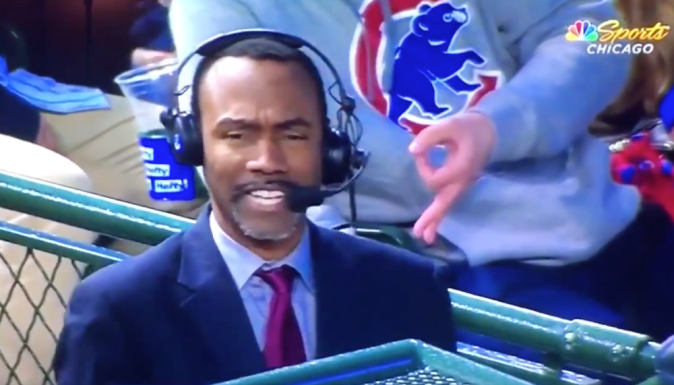
In May, as I wrote about here, the Cubs banned a fan for life because he made the ubiquitous “OK” sign behind a black broadcaster. Nobody had any basis to say with certainty what the fan meant, but after the Twitter mob demanded the fans head, the Cubs meekly complied. You see, the OK gesture might have meant, “My race is better than your race,” because a rumor was circulated online that “OK” is a white power symbol.  It might have been trolling by someone who knew that the  symbol would trigger social justice warriors. Or, you know, OK might have just meant “OK” as it as for almost 200 years.

Hmmm…tough one! Occam’s Razor, anyone? Continue reading

Ethics Alarms Flashback Post Of The Week: “Ethics Quiz: The Sensitive Cop’s Facebook Confession”

[A  while ago I wrote that I might periodically re-post one of the more than 2000 Ethics Alarms essays that have appeared here since 2009. The criteria? Let’s see:

  • A post that I have completely forgotten about, and don’t remember even after I’ve read it again.
  • A post that may be interesting to consider in light of subsequent developments since it was written (in this case,  social media posts triggering workplace discipline, and police-community relations)
  • A lively discussion in the comments.

I think this post, based on a find by now-retired Ethics Alarms super-scout Fred, qualifies on all counts. It’s from May of 2014.]

“If there was any time I despised wearing a police uniform, it was yesterday at the Capitol during the water rally. A girl I know who frequents the Capitol for environmental concerns looked at me and wanted me to participate with her in the event. I told her I have to remain unbiased while on duty at these events. She responded by saying, ‘You’re a person, aren’t you?’ That comment went straight through my heart!”

Thus did Douglas Day, a police officer at the West Virginia Capitol in Charleston, confess to Facebook friends his mixed emotions while doing his duty.

For this he was fired.

The day Day wrote his Facebook post, Capitol Police Lt. T.M. Johnson told him  that the post “shows no respect to the department, the uniform or the law enforcement community which he represents.”  About a week later, Sgt. A.E. Lanham Jr. wrote to Day that he “found the entire [Facebook] posting to be extremely offensive and shocking … This is just another episode of many incidents which show his bad attitude and lack of enthusiasm toward police work in general and toward our department in particular.”

Day was thunderstruck. “If they believed there was some sort of a violation I made, then why wasn’t it addressed? They never brought me in and never said anything to me,” Day said. “In 2½ years working there, I had no disciplinary action taken against me at any time. Nothing was ever written up and I received no reprimands.” So much for the “many incidents.” Continue reading

Morning Ethics Warm-Up, 5/15/2019: Of Ficks, Flicks, Fairness, And. Yes, “Fuck”


Suffering from low blog traffic hangover…

I know I complain about traffic here too much, but it’s the only place I where can complain about it. Either because of Trump Derangement, ethics apathy in a Nation of Assholes, my exile from NPR (for telling an undeniable truth that was accused of being a defense of Donald Trump), Facebook’s sabotage, or sunspots, Ethics Alarms readership is down significantly since the high point of 2016. Yesterday, the usually lively day of Tuesday did a credible imitation of Saturday, when tumbleweeds roll through here, and I can’t find any reason why. Kept me up much of the night, so now I’m going to be slow, cynical  and cranky all day….

1. Speaking of a nation of assholes…Stephanie Wilkerson, the certifiably awful human being who kicked Sarah Huckabee Sanders out of the Red Hen restaurant, was given a forum (disgracefully) by the Washington Post to boast about her “resistance.” Of course she frames herself as a victim, then celebrates the fact that she received support from many Americans who are as hateful, bigoted, and un-American as she is. Depressingly, many of my Facebook friends “loved” or “liked” her nauseating column, which is nothing more nor less that a hard tug on the loose threads on the seams that hold our nation together. These phony advocates of “inclusion” actually favor discrimination and prejudice based on political affiliation and personal viewpoints, which is no less unethical and destructive than discriminating based on race, gender or creed.

Stephanie Wilkerson’s Post column marks her a fick, an individual who is unethical and proud of it.

But I would still serve her in my restaurant.

2. Here’s another topic I’m sick of writing about: We TV, that august cultural institution that features the beneath the bottom of the barrel reality show, “Mama June, From “Not” to “Hot.” is the latest product to use the hilariously clever device of implying variations of “fuck” in its marketing, because saying but not quite saying “fuck” is inherently witty and memorable. The word being so used by We is “flicks.” Get it?? Continue reading

Ethics Quiz: The Cubs Fan Ban

(I have already made up my mind about this one, but I’m willing to be persuaded otherwise…hence the quiz.)

At the start of the bottom of the third inning of the May 7th Marlins-Cubs game, the NBC Sports Chicago broadcast went to analyst Doug Glanville for some “in the stands” commentary. Behind Glanville,  , a fan in a hoodie waved hello to the camera, flashed a peace sign, then made an upside-down OK hand gesture with his fingers.

Always looking for outrages and ways to hype racial tension, sharp-eyed activists flooded  the Cubs  with tweets like this:

@cubs @dan_bernstein What say you about this racist fan flashing a white power sign behind Mr. Glanville at tonight’s game? pic.twitter.com/zR7DqYWgQv

— Marc Lipkin (@Flipkin) May 8, 2019

Whether or not that gesture is “racist” is a matter of opinion, debate, and context. Annoyingly and self-consciously “woke” lawyer-NBC sports blogger Craig Calcaterra explains: Continue reading

A Smoking Flip-Flop: Here Is Why Larry Tribe Cannot Be Regarded As An Objective Legal Authority Any More

…well, other than the fact that his recent tweets indicate that the 77-year-old  prof is no longer playing with a full deck…*

I had a back-and-forth with a smart non-lawyer who is suffering from Trump Derangement, and who cited the opinions of Professor Tribe to counter Alan Dershowitz’s critique of the Mueller Report. He didn’t like my assertion that Tribe has proven himself to be a partisan hack of late, willing to espouse whatever public opinion the Left and “the resistance” will find useful.

Ed Whelan, the President of the Ethics and Public Policy Center, found this example of a cynical Tribe flip-flop, worthy of the gymnasts above, that shows what I mean:

 Back in early March 2016, a few weeks after Justice Scalia’s death created a vacancy on the Supreme Court, Harvard law professor Laurence Tribe was perhaps the most prominent of some 350 law professors to sign a letter asserting that the Senate had a “constitutional duty to give President Barack Obama’s Supreme Court nominee a prompt and fair hearing and a timely vote.” Declaring that “[t]he Senate’s obligation in this circumstance is clear,” the letter invoked the Appointments Clause of the Constitution.

But, as I and others (including liberal law professors Noah Feldman and Vik Amar) pointed out at the time, the position that Tribe took had no support in the text of the Constitution and contradicted perennial Senate practice on nominations. The Appointments Clause states only that the president “shall nominate, and by and with the Advice and Consent of the Senate, shall appoint” various executive-branch and judicial-branch officers. In other words, it restricts the president’s power of appointment by conditioning any such appointment on prior receipt of the Senate’s “Advice and Consent” on a nomination. But it says nothing about how the Senate should go about exercising its power to advise and consent-or-withhold-consent, and it thus leaves the Senate entirely free to exercise that power however it sees fit.

Tribe’s position in March 2016 further surprised me because it contradicted Tribe’s own earlier (correct) recognition, in his 1985 book God Save This Honorable Court, that the Senate may block a Supreme Court nomination “by simply refusing to act upon it.”

I’m pleased to discover that Tribe now agrees that the Senate does not have a constitutional duty to take any action on a Supreme Court nominee. Continue reading