Our News Media’s Integrity Vaccum: The Malia in Mexico Blackout

Here is a good example of how framing is critical in analyzing the news. When various conservative blogs and commentators started complaining that the AP’s report on the Obamas’ oldest daughter spending spring break in Mexico was disappearing from news media websites across the net, I saw it as a non-story from an ethics perspective, and certainly not, as was being suggested, an example of White House censorship of legitimate news. If I was President  Obama and my young teenage daughter was in Mexico, I’d ask the media to leave her alone too.

I thought other criticism of the President in this incident was unfair as well. Some critics suggested that it was irresponsible of the First Couple to allow their daughter to travel anywhere in a nation where the State Department had issued an advisory that it was not safe to travel. The Obamas are bad parents now? I assume that they are certain that their daughter will be safe, and have taken appropriate measures to ensure that. This is not within the realm of legitimate topics for political sniping.

Thus I wasn’t going to write about this, just as I decide not to write about a wide assortment of ethics-related events and topics that I consider and discard every day. By looking at it as an issue of  government and leadership ethics, however, I missed the real story, which involves journalistic integrity and courage. The Obamas certainly had a right to ask that Malia’s spring break travels be unreported, but a responsible and fair U.S. news media would have told them, politely, no. Continue reading →
Ethics Quiz: Holder’s “Brainwash” Comment

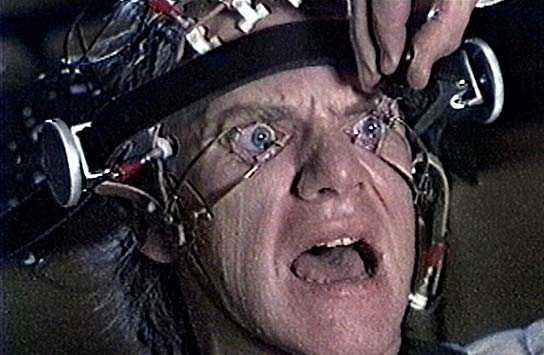
"You WILL feel differently about guns!"

The death of founder Andrew Breitbart hasn’t slowed down his website’s ability to dig up provocative and embarrassing videos one bit. Its latest is a bit of off-putting rhetoric from Eric Holder, when he was the Clinton Administration U.S. attorney for Washington, D.C., telling a D.C. audience that the long-term solution to gun control is to “brainwash” the  public into opposing firearms. Holder said…

“What we need to do is change the way in which people think about guns, especially young people, and make it something that’s not cool, that it’s not acceptable, it’s not hip to carry a gun anymore, in the way in which we’ve changed our attitudes about cigarettes.”

He went on to outline steps that could be taken to “really brainwash people into thinking about guns in a vastly different way.”

Seeing this as a major “gotcha” for the embattled Attorney General, who is already facing growing criticism both for his oversight (or lack of it) of the Fast and Furious gun-smuggling fiasco and his evasive testimony about it before Congress, conservative critics are jumping on the 1995 statement to bolster calls for Holder’s resignation.

Your Ethics Quiz today: Is it fair to criticize a U.S. Attorney General’s statement that he wants to “brainwash” the  public into rejecting a core Constitutional right, when the statement is more than 15 years old, and was made while he was in a different job? Continue reading →

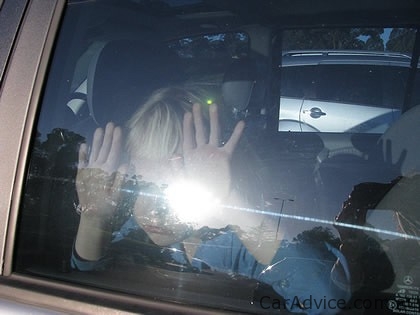
Revisiting the Tragedy of the Dead Child in the Locked Car

Almost two years ago, I wrote about Washington Post feature writer Gene Weingarten’s provocative and sensitive 2009 exploration of the tragic cases in which a distracted parent leaves a small child in an over-heated car. The issue, now as then, is how society should treat such parents, who are without exception crushed with remorse and guilt, their lives and psyches permanently scarred. Weingarten’s original piece, which won him a 2010 Pulitzer, did not take a position on how such parents should be treated by the criminal justice system. In today’s Washington Post, he does.

Weingarten writes:

“The parents are a continuing danger to no one, nor could anybody sanely argue that fear of prison is even a minuscule factor in preventing this. So we are left with the nebulous notion of punishing, for punishment’s sake alone, an act of accidental negligence that by its nature subjects the doer to a lifetime of agony so profound that it is unfathomable to anyone who has not lived it. Prosecution is not, in my view, warranted.”

Weingarten is thoughtful, analytical, reasonable, compassionate and fair. He is also, in this case, dead wrong. Continue reading →

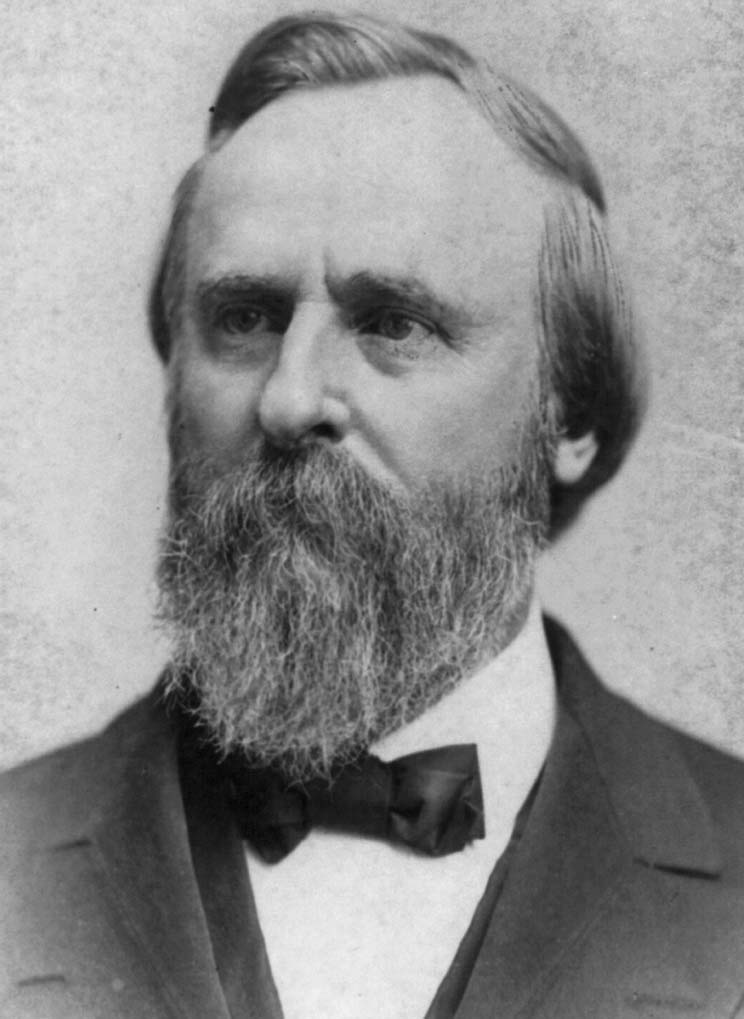
Dear President Obama: Show Some Respect. President Hayes Earned It.

We're sorry, President Hayes. He doesn't know what he's talking about.

One of the many deplorable tendencies of the previous Democratic President was to use the memories, reputations and good names of his predecessors as props to deflect criticism for his own slimy and irresponsible conduct and lies. A standard feature of Bill Clinton’s “everybody does it” defense during his Monica travails was to have his surrogates, like the shameless Lanny Davis, mouth that Bill was no different from other Presidents who used the power of their office to cheat on their wives and exploit other women. Since it wasn’t too ennobling for this tactic to rely on the two most indisputable examples of Presidential sexual excess–Jack Kennedy being a (false) Democratic icon and a misogynist, and Warren G. Harding being the U.S.’s worst or next to worst President ever (depending upon your opinion of James Buchanan, President Clinton allowed his lapdogs to accuse FDR (who as a paraplegic was almost certainly incapable of anything but an illicit affair of the heart), and Dwight Eisenhower, whose supposedly adulterous relationship with his female driver in World War II is 1) unconfirmed rumor only and 2) has nothing to do with his conduct as President. The last time I respected Chis Matthews was when he reprimanded a Clinton surrogate for raising the Ike story, calling it—correctly—an outrageous slur on a great American patriot  to try to excuse Clinton’s inexcusable conduct.

It is disheartening to see President Obama displaying a similar lack of respect and deference for his White House predecessors. Every one of the men who served in the office of President performed a great service at significant personal sacrifice in a job both impossible and dangerous. If anyone is obligated to give these men appropriate respect, it should be the current President, whoever it is. But just as President Obama has set new records for blaming his immediate predecessor for problems deep into his own term, he has shown a Clintonian willingness to trash a past President  for his own purposes.

This would be despicable if the denigration had a basis in fact. Obama’s slur on the 19th President, Rutherford B. Hayes, however, has none. Continue reading →

Funny! But Unfair.

Here’s conservative news aggregator Matt Drudge’s top of the page lead headlines at the moment…

If you are going to try to make the (silly and petty) argument that there is something unseemly about the President taking a break from the heavy lifting his job entails to indulge his passion for March Madness basketball, then make it. Implying it this way is snide and unfair; it reminds me of the trouble the Harvard Crimson got into years ago when its printer placed a photo from an art exhibit that appeared to depict two young people engaging in oral sex right next to a headline that read, “New Cafeteria Opens at Radcliffe.”

Funny!  But still wrong.

As I’m sure Matt Drudge knows this.

He just doesn’t care.

Ethics Lessons of the Great Lotto Betrayal

Let's see how many friends you can buy now, Amerigo...

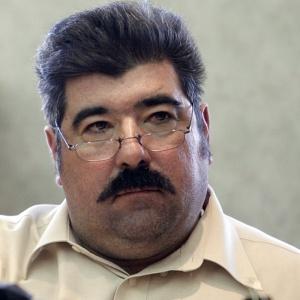
After more than a year and a contentious trial, a New Jersey jury has unanimously determined that hard-hat worker Americo Lopes cheated five co-workers out their fair shares of $38.5 million in lottery winnings. Each was awarded a $4 million share. The evidence presented in the trial was mostly circumstantial, and the case came down to what the jury believed, whom they trusted. Go figure: they chose not to believe the man who organized a lottery pool with his co-workers, collected their money and bought New Jersey lottery tickets with it routinely, and then, when he found himself with a winning ticket in the Mega-Millions game…

  • Didn’t tell any of the group.
  • Claimed he was going on leave to have surgery,
  • Quietly quit without returning,
  • Claimed that the winning ticket was bought with his personal funds, not the pool’s,
  • Argued that none of the men were friends of his and
  • Reportedly said at one point, “With all that money, I can buy new friends.”

Gee, who wouldn’t believe such a terrific guy? Continue reading →

The Ethics Verdict on the Homeless Hotspot Project

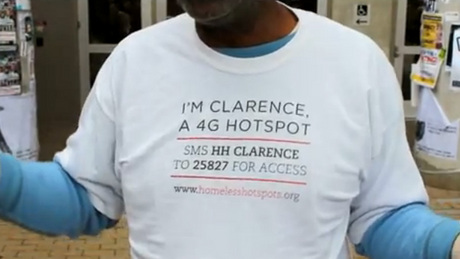
BBH Labs, the innovation unit of the international marketing agency BBH, hired members of the Austin, Texas homeless population to walk around carrying mobile Wi-Fi devices, offering high-speed Internet access in exchange for donations. Thirteen volunteers from a homeless shelter were hooked up to the devices, given business cards and put in shirts with messages that designated them as human connections. “I’m Rudolph, a 4G Hotspot” read the label on the homeless man on the New York Post’s front page with the lead, “HOT BUMS!”

The Walking Hotspots—now there’s a new horror series for AMC when they run out of zombies— were told to go to the most densely packed areas of the South by Southwest high-tech festival in Austin, Texas, where the technology trend-devouring conventioners often overwhelm the cellular networks with their smart phones. Attendees were told they could go up to a Homeless Hotspot and log on to his 4G network using the number on his T-shirt. A two-dollar contribution to the homeless man was the suggested payment for 15 minutes of service. BBH Labs paid  the wired-up homeless $20 a day, and they were also able to keep whatever customers donated.

What BBH called its “charitable  experiment” ended yesterday with the conference, and with all participants seemingly thrilled. The “Homeless Hotspot” gimmick got nationwide publicity, thirteen homeless men made some money, and conference participants got great connectivity…so why were so many people upset? Continue reading →

“The Good Wife” Ethics Addendum: Why Misrepresenting the Legal Profession’s Standards Does Real Harm

Sure, it was a comedy, but how many people believe that Jim Carrey's compulsively lying lawyer was not that far from the truth?

A comment from reader Penn on my post about “The Good Wife’s” recent misrepresentation of legal ethics standards got me thinking, and what it got me thinking was that I was too easy on the show.

Penn asked why I waste my time watching programs that raise my blood pressure, and there are two answers. The first is what I wrote back: it’s not a bad show; in the past it has been a very good one, even from the legal ethics perspective. I have used several scenarios from episodes in seminars.

The second answer, which I didn’t mention in my response to Penn, is the more important one, however. Good show or not, millions of Americans get their information about the legal profession from the portrayal of lawyers and law on TV and in movies. From these fictional sources, they think they know that most lawyers are liars, that they allow their clients to lie, that they put witnesses on the stand who they know will lie under oath. The public thinks that lawyers abuse the law, don’t earn their fees, don’t give a damn about their clients (unless they are sleeping with them), switch sides routinely and confuse juries to release serial killers on more victims. Continue reading →

Ethics Quote of the Week: Ethics Alarms

“The lesson: the absence of respect for the opinions of others, accompanied by a lack of humility and a surplus of contempt for fairness and civility, will doom even intelligent, talented and hard-working individuals to inevitable failure, because they cannot be trusted, not by employers, not by colleagues, not by friends.”

—Me, from January of last year, writing about the demise of Keith Olbermann at MSNBC

Rush, Sandra, Bill, and Jack, plus many, many others, please—please— take note.

Ethics Quiz: The Problem of the Buried Video

"He stole my vote!"

The video is meaningless. It shows college student Barry Obama speaking at a 1991 rally for radical college professor Derek Bell. At one point, the future president hugs Bell. So what you say? No kidding. That doesn’t mean that the anti-Obama truth squad wouldn’t try to make something out of it; indeed, they are now. The video has surfaced as Andrew Breitbart’s farewell poke in the eye to Democrats, and it’s not much of a poke.

The only interesting aspect of the tape is that Harvard Law professor Charles Ogletree said that he had the video and buried it during the 2008 campaign.  “I hid this during the 2008 campaign,” Ogletree said. “I don’t care if they find it now.”

Your Ethics Quiz: Is it unethical for an individual to hide theoretically damaging material relating to a presidential candidate he favors until after the election, if the material in fact contains nothing that would affect the vote of any individual with  intelligence superior to that of the average civic-minded horseshoe crab?

My answer: Definitely. I don’t care whether the information is extra-marital affairs, drug use, a DUI or appearing at a frat party in a tutu. No one has the right to withhold information, even stupid and useless information, from the media and electorate.  If the information is relevant, then the public has a right to know about it. If it isn’t, as this tape appears to be, then why hide it? If the tape was intentionally kept from the public, the conduct can’t be defended on the basis that it did no harm—the intent was to do harm. If one person would have changed his vote because he doesn’t want a President who ever hugged Derek Bell, even though that person is probably a fool, no one had no right to take away that vote through deception.

It’s all hypothetical, apparently, because Prof. Ogletree has explained that his “confession” was a joke, and was understood as such when he made it, if not reported that way. [Thanks to Barry Deutch for the link.]

So nobody hid anything, and those those horseshoe crabs who voted for Obama weren’t deceived after all.