Exhibit A On Why It Is Crucial To Understand Moral Luck: The Samuel Lee Scott Affair

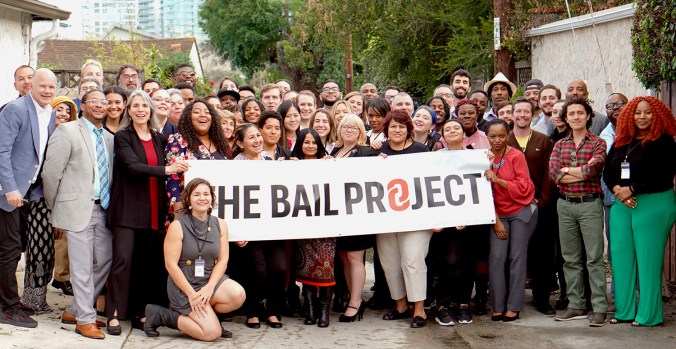
St. Louis Bail Project is under attack for bailing out Samuel Lee Scott, who was in jail pending domestic abuse charges and couldn’t pay the court-ordered bond. Once Scott was free, he went home and killed his wife.

The bail system, which is being re-examined across the country, obviously discriminates against the poor. The idea underlying bail is to get the accused out of jail before trial, since he or she is by definition not guilty, and to create  a financial incentive for the accused to appear for trial. The system penalizes poverty, so non-profits like  the St. Louis Bail Project use their resources to allow poor defendants to have the same options rich ones do. It is an ethical mission.

The fact that this one bailee committed murder is pure moral luck regarding the Bail Project. The Project does not second guess the judge’s decision to allow bail, or the system’s determination that Scott wasn’t a flight risk or a danger to the community. Indeed, there may have been no reason to expect that Scott would kill anyone. That he did was moral luck, and cannot be logically or fairly applied retroactively to the St. Louis Bail Project’s decision to pay his bail. The fact that bail was set indicates that the system did not regard him as a threat.

The episode could justifiably spark a debate regarding when and if domestic abusers should be provided with an opportunity to go home, and whether bail in such situations should include a requirement that they live apart and stay away from the alleged victim. What it should not do is cause organizations like the St. Louis Bail Project to doubt the importance of their mission.

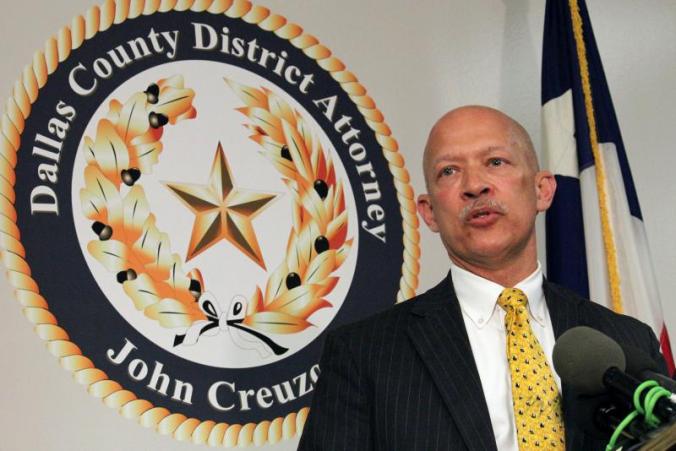
“Ethics Dunce” Doesn’t Do Justice To Dallas County District Attorney John Creuzot…Ethics Virus, Perhaps?

“Should All Thefts Be Prosecuted?” the headline asks rhetorically. Is the Pope Catholic? Does a bear…never mind, you get the point. Of course all thefts should be prosecuted, just like all laws should be enforced. It is a stupid question, and should be immediately recognized as such, yet, that headline goes on tell us, “Dallas County’s District Attorney Says No.”

Really? Then he is unqualified for office, an ethics corrupter, and a carrier of ethics rot. That DA—his name is John Creuzot–should resign, or be impeached. A prosecutor who doesn’t believe in enforcing laws is an unethical prosecutor, an untrustworthy prosecutor, biased and dangerous to society.

Creuzot has announced several measures of varying levels of justification and controversy to reform the justice system, which is certainly not without need to reform. However, one of them is unethical in multiple ways…

Study after study shows that when we arrest, jail, and convict people for non-violent crimes committed out of necessity, we only prevent that person from gaining the stability necessary to lead a law-abiding life. Criminalizing poverty is counter-productive for our community’s health and safety. For that reason, this office will not prosecute theft of personal items less than $750 unless the evidence shows that the alleged theft was for economic gain.

Continue reading

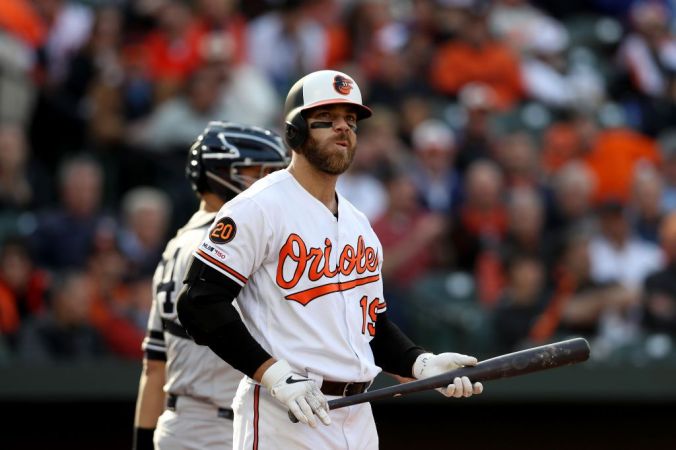
Dear Chris Davis: Do The Ethical Thing, Be An Ethics Hero. Quit.

Baltimore Orioles first baseman Chris Davis is making baseball history, and not in a good way. Once a fearsome slugger—Davis led the American League with 53 home runs in 2013, and hit 38 as recently as 2016—he has lost whatever it is that allows a baseball player to hit a ball thrown at him at up to 100 mph. Last season, at the advanced baseball age of 32 when most players, not all, but most, begin to decline, Davis fell off the metaphorical cliff.

His batting average was .168, the worst  in major league history for a regular, with  a  horrible .539 OPS (On base percentage plus slugging percentage), and a -2.5 WAR, meaning that the Orioles would have won 2.5 more games with a borderline major leaguer from the minors playing in his place. There were no injuries or other explanations for Davis’s sudden morph into an automatic out, and sometimes, not always, but sometimes, players bounce back a little bit after such a so-called “collapse” season.

It’s becoming increasingly clear that this won’t happen in Davis’s case. So far in 2019, Davis is 0-for-23 with 13 strikeouts this season and is hitless in 44 at-bats since last September 14. That’s within two outs of the record for consecutive hitless at-bats by a non-pitcher.

Want to know why baseball’s free agents over the age of 30 didn’t get the big long term contracts they expected this off-season?  Look no further than the Orioles’ predicament with Davis. They had to pay him 23 million dollars to be the worst player in baseball last season, when Baltimore lost 118 games. They are on the hook for the same amount this year, and three more seasons after that. Continue reading

Unethical Prosecution, Incompetent Jury: Once Again, “Sorry” Isn’t Enough.

After Archie Williams (above) was released from a federal penitentiary  last week after serving 36 years  not only for a crime he didn’t commit, but  after a false conviction that would have been prevented by decisive exculpatory evidence that was available to the prosecution from the beginning. The district attorney for East Baton Rouge Parish, Hillar C. Moore III, said in court, “As a representative of the state, I apologize.”

I’m sure that makes Williams feel all warm inside. As we discussed here just this month in another case of wrongful arrest, trial and imprisonment, the kind of life-destroying mistakes that send citizens to prison for crimes they didn’t commit must involve accountability for those responsible beyond mere financial damages paid by the State.

This case is especially infuriating. It was known at the trial, and admitted by the prosecution, that  fingerprints found at the scene where a woman had been raped and stabbed in in Baton Rouge, La. belonged to someone other than the man standing trial for the crime.  Under basic prosecutorial ethics, Williams shouldn’t have been charged. The prints guaranteed reasonable doubt.  An ethical  prosecutor is not supposed to decide, “Well, maybe we can convince the jury to ignore those prints.” Prosecutors aren’t supposed to fool juries.  Ethical prosecution demanded that the State acknowledge doubt, no matter how much it wanted to clear the case, The victim of the attack was the wife of a wealthy and powerful man.

Instead, the prosecutor at the trial trivialized the significance of the then-unidentified fingerprints found at the scene.  “How many people come through your house?” Jeff Hollingsworth asked the jury, after suggesting that the prints could have belonged to  a plumber or a carpenter, “The air-conditioning man, people who clean your carpets, the little girl home from school.”

Then it was the duty of the police to determine who those people were, match the prints, and determine that they didn’t commit the crime. Without that due diligence, there is doubt as a matter of reason as well as ethics.

Technicians in a crime lab eventually ran the fingerprints  through a national database, and  within hours there was a match with a serial rapist. That happened last week, however, almost four decades after the prints should have been identified. When Williams  requested that the fingerprints be run against the national database in 1999, prosecutors opposed his request and  no statute required them to comply…just fairness and an interest in justice.

The fingerprints weren’t the only reason the jury should have acquitted Williams. Although the victim was certain that he was her attacker, several aspects of her description of the rapist didn’t match  Williams. His lawyer at the trial, Kathleen S. Richey, accurately told the jury that  the victim had described a  taller man with a scar on his shoulder blade.  Williams did not; he had a scar on his upper arm.

The jury found him guilty beyond a reasonable doubt anyway. He was 22 when police arrested him. Archie is Williams is 58 today.

It was dawning on criminologists by 1983 that eye witness testimony was less reliable than previously thought, and that identification could be negligently or intentionally be manipulated by police. Combined with the mysterious fingerprints, the shaky ID should have assured Williams’ acquittal. Juries, however, don’t know the law, don’t have experience evaluating evidence, and sometimes, as Reginald Rose pointed out in “Twelve Angry Men,” just want to get home, are misled by their biases, or just aren’t very bright.

I hesitate to call for some kind of sanctions or penalties when a jury botches its job like this; after all, the police screwed up, the prosecution was unethical, the judge let it all happen, and they were doing jobs that they had been trained to do. Nonetheless, it seems like some consequences of a bad verdict might focus jurors attention a bit more, to the benefit of justice. What those consequences might be, I have no idea.

I would support a law mandating the resignation and permanent bar from further prosecuting duties any prosecutor involved in sending an innocent man to prison, however.

It’s fascinating that such a case should come to public attention at the same time that activists, feminists and progressives are arguing that the presumption of innocence for men accused of sex crimes should be reduced. Archie Williams graphically shows where that position leads.
Ethics Quote Of The Month: Glenn Greenwald

“The Mueller investigation is complete and this is a simple fact that will never go away: not one single American was charged, indicted or convicted for conspiring with Russia to influence the 2016 election – not even a low-level volunteer. The number is zero.Compare what cable hosts (let’s leave them unnamed) & Democratic operatives spent two years claiming this would lead to – the imprisonment of Don, Jr., Jared, even Trump on conspiracy-with-Russia charges – to what it actually produced. A huge media reckoning is owed. Don’t even try to pretend the point of the Mueller investigation from the start wasn’t to obtain prosecutions of Americans guilty of conspiring with Russia to influence the outcome of the election or that Putin controlled Trump through blackmail. Nobody will believe your denials”

Muckraking journalist Glenn Greenwald, in a series of tweets reacting to the end of the Mueller investigation and the announcement that there would be no further indictments.

Greenwald is hardly a Trump supporter and his reporting has a strong progressive tilt. He does strive to be a truth-teller however, and adjust for his biases, and unlike all the obnoxious gloating I’m seeing on the conservative media, his analysis should be respected.  That there were no indictable crimes related to “Russian collusion” should not have been a surprise except to the Hillary bitter-enders and Trump-deranged who were certain that the President had to have won the Presidency illicitly,  because…because….well, just because. Of course, it was just moral luck that an investigation like Mueller’s didn’t find more, because that kind of investigation would be likely to uncover bad deeds in the campaigns of any Presidential candidate. Continue reading

What Is The Ethical Response To The Racially Unbalanced Admissions To New York City’s Elite High Schools?

The question has been giving me a headache since I first read about the stunning results of the process that gives New York City students access to its elite public schools.  Of the nearly 4,800 students admitted into the specialized schools for 2019, 190 are black, down from  207 black students admitted last year out of just over 5,000 offers. Stuyvesant high school, which is representative, gave 7 offers to black students (out of 895 slots),   33 offers to Hispanic students, 194 offers to white students, and Asian-American students received a whopping  587 offers. Overall, Asian-American students constitute 60% of the student bodies of the eight elite schools.

Students take  a single exam that tests their mastery of math and English in order to gains entrance to the academically challenging school. Stuyvesant, which has the highest cutoff score for admission and is thus the most selective of the schools, now has the lowest percentage of black and Hispanic students of any of New York City’s roughly 600 public high schools.

What should the city do about this? Should it do anything?  Continue reading

Interview Ethics: Sabotaging A Job Candidate, With A Kavanaugh Hearing Flashback

Frequent commenter and old friend Vinnymick flagged this one, thus proving that someone took my recent appeal for out-of-the-way ethics topics seriously. He pointed me to a Washington Post article, which lays out its topic thusly:

“While browsing Twitter recently, I came across a post that suggested an innovative interview technique: Take a job candidate out for a lunch interview, then secretly ask the server to intentionally mess up the candidate’s order. The purported goal: to see the candidate’s true nature. “It’s easy to say how you would handle when things go wrong, [but] hard to fake your reaction as it happens,” the post concluded.”

Or, as another type of sabotage, have an old high school colleague of the interviewee sit down at the table and accuse him of sexual assault. Then observe how he reacts to that!

The Kavanaugh debacle came to mind immediately, in part because so many who rationalized the Democrats’ abuse of Justice (now, judge then) Kavanaugh was that it was a “job interview.” No, it wasn’t, as I repeatedly had to explain to people (but, you know, when progressives are in the process of a Trump-related freak-out, you can’t explain anything to them(, in a real, fair and professional job interview, the interviewer hasn’t already decided that he or she doesn’t want to hire you, as nearly every single Democrat regarded Kavanaugh before the hearings began . In a job interview, you are being interviewed by your potential supervisors and those who you will be working with if you are hired. The Supreme Court doesn’t report to the Senate, take orders from the Senate, or work with the Senate. In a job interview, there is a presumption of good faith between the job seeker and the interviewer. No, the Kavanaugh hearings were a transparent effort to sabotage the  judge’s nomination from the outset.

Now back to the article’s hypothetical: Of course pulling a stunt like the one described is unethical. An earlier Ethics Alarms essay on “silly job interview ethics”—it’s pretty good, I must say, and I had completely forgotten that I wrote it— recommended that if an interviewer starts abusing you, and this is abuse, excuse yourself, saying, “I’m sorry. I was under the impression that I was applying for a position with an organization that respected serious professionals, and that would never exploit the interview process for its own amusement at the discomfort of someone who expected fair and courteous treatment. I apparently was mistaken.”

I added,

I think the use of odd interview questions is a symptom of an arrogant and essentially untrustworthy corporate culture. There may exceptions, but I don’t believe it’s worth the gamble. If the interviewer starts messing with your emotions and confidence, tell him or her to cut it out, or better yet, leave.

Continue reading

Comments Of The Day: The College Admissions Bribery Scandal

This is a bit of a departure, a showcase for one of Ethics Alarms most active commenters (especially appreciated as the blog experiences boycotts, embargos, and Facebook blocking and other indignities), Michael R. The topic is the recent College Admission scandal, which has been covered here and here.

Michael, an educator, is well informed on this topic, and he shows it in three excellent Comments of the Day.  And I forgive him for never, ever, making a typo.

I.

The college scandal has many, many facets. What has caused standards to slip so low? Well, athletics obviously has a corrosive effect, with students admitted based on athletic ability instead of academic ability. The grade inflation has also greatly degraded college standards. The almost lack of education occurring in our high schools is another factor.

An overlooked factor, however, is the public higher ed systems’ oversupply of colleges. Public college policy has mainly been about votes and prestige, not actual societal need. This has resulted in a lot more colleges than the country actually needs. A typical example would be Local Community College. Well, the President of Local Community College would rather not be the laughingstock of the College President’s Club, so he petitions the state legislature to authorize his school to offer 4-year degrees. He states that his community deserves a 4-year school like (insert rival town here). This proposal is mainly decided on its political merits, not the needs of the state as a whole. It goes through, along with new funding for new facilities, new faculty, and more students for the Local State College. With all the Community Colleges becoming State Colleges, the presidents of the Regional State Colleges petition to become Regional State Universities. They point out the prestige and grant money they could get if they had graduate programs. This too, is granted based on political merit. The National Science Foundation is then pressured to remove funding from the traditional research schools and transfer it to the new State Universities amid allegations of elitism for favoring longstanding research schools with top-notch researchers over the new State Universities with no significant research results and they cave. Now, with no community colleges left, a new round of community colleges is constructed. This increases the number of seats for college students by 30% or so, but there are not more high school students graduating. This is repeated all over the country, so out-of-state students are not an option. The only reasonable option is to lower admissions standards. Once the admission standards are lowered, retention suffers and the faculty are ordered to improve retention and graduation rates. The only reasonable way to do this is to make the classes easier and the race to the bottom is on. Continue reading

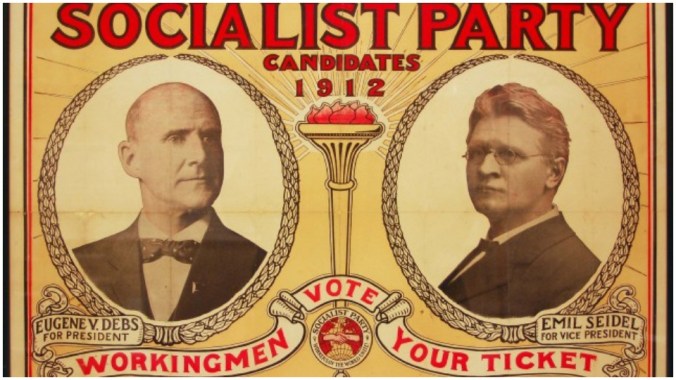
Is The Democratic Party the Party of Anti-Semitism, Infanticide, And Socialism?

Rep. Liz Cheney, the third-ranking Republican in the House, told NBC’s “Meet The Press” last week that Democrats have become the party of “Anti-Semitism,, infanticide, socialism.” This wasn’t quite as inflammatory as when Samuel Burchard, speaking at a GOP pro-James G. Blaine campaign event during the 1884 race against Democratic candidate Grover Cleveland, denounced the Democrats as the party of “rum, Romanism, and rebellion,” but you wouldn’t know it from the howls coming from progressives, because, as we all know, the truth hurts. Well, that’s not quite fair: Cheney was engaging in hyperbole and being intentionally inflammatory, but she wasn’t entirely wrong.

Let’s look at the “infanticide” accusation. Obviously Democrats don’t favor killing babies as a general proposition, but Virginia’s  Democratic governor and renowned Michael Jackson impressionist described exactly how he would make an abortion-survivor “comfortable” before making the newborn dead. (Many states have laws that allowed condemned men to go free if they survived an attempted execution. Seems fair…)

Democrats in the Senate—all but a handfull—blocked a GOP bill requiring doctors to use all means available to save the life of a child born alive after an attempted abortion. They must, it said, “exercise the same degree of professional skill, care, and diligence to preserve the life and health of the child” as they would for “any other child born alive at the same gestational age.”

Senator Ben Sasse, the Nebraska Republican who authored the bill, had called it an “infanticide ban.” Rationalizing like mad, Democrats said that the bill was aimed at discouraging doctors from performing legal abortions—in other words, they were pandering to the pro-abortion extremists—and that it was unnecessary because a similar law already exists, the Born-Alive Infants Protection Act of 2002.—you know, because the Democrats have always opposed redundant legislation. Continue reading

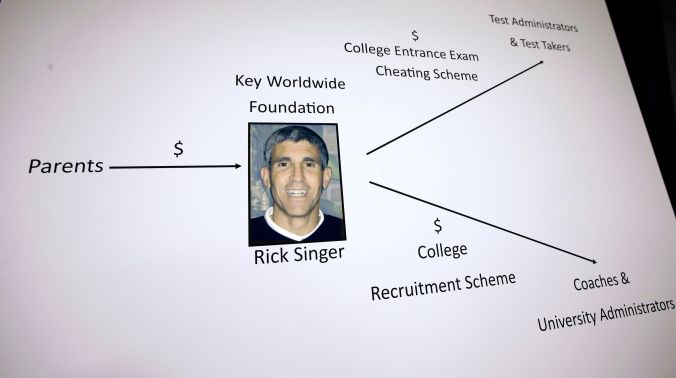
Observations On “Operation Varsity Blues” [UPDATED!]

It is rare that an ethics story is the front page feature of the day, but the scandal that broke last nigh is certainly that. From the AP, on the results of the investigation code-named “Operation Varsity Blues”…

Fifty people, including Hollywood stars Felicity Huffman and Lori Loughlin, were charged Tuesday in a scheme in which wealthy parents allegedly bribed college coaches and other insiders to get their children into some of the nation’s most elite schools. Federal authorities called it the biggest college admissions scam ever prosecuted by the U.S. Justice Department, with the parents accused of paying an estimated $25 million in bribes.

More…

At least nine athletic coaches and 33 parents, many of them prominent in law, finance or business, were among those charged. Dozens, including Huffman, were arrested by midday.

Huffman, best known for “Desperate Housewives,” is married to celebrated actor William Macy (“Fargo”). Presumably he is going to be arrested too.

The coaches worked at such schools as Yale, Stanford, Georgetown, Wake Forest, the University of Texas, the University of Southern California and the University of California, Los Angeles. A former Yale soccer coach pleaded guilty and helped build the case against others.

Yikes. You can get all the details at The Atlantic, Esquire, The Stanford Daily, Chicago Tribune, Raw Story, The Week, Justice News, The Texas Tribune, Slate, SFist, Recode, Page Six, TechCrunch, TMZ.com and Fox News.

Ethics Observations: Continue reading