The NPR Ethics Train Wreck

Ethics train wreck scholars take note: when an organization’s image and existence is based on multiple lies, an ETW is inevitable.

Oh NO! It's another Ethics Train Wreck!

National Public Radio is now in the middle of a massive, six-months long ethics train wreck that began with the hypocritical firing of Juan Williams on a trumped-up ethics violation. The disaster exposes the culture of dishonesty and entitlement at the heart of NPR, and by extension, the Corporation for Public Broadcasting. To the extent that their supporters blame anyone else, it is evidence of denial. This is a train wreck, however, and the ethics violators drawn into the wreckage are many: Continue reading →

Quiz: Which Law Enforcement Fiasco Was More Unethical?

It’s Quiz Time!

Chief Wiggum would be an upgrade.

Today’s topic: Why the public doesn’t trust the law enforcement system. Here are two horrible and true, tales of AWOL ethics involving law enforcement in New York and Tennessee. Which is more unforgivable, A or B?

A. Brooklyn, NY: The Perpetual Warrant

What is the fair limit of “the police made  an honest mistake”? Let’s say the police have a warrant to search your house, and come to your door because they got the address wrong—and it’s a mistake. At least they didn’t break down the door in the middle of the night. OK, mistakes happen. Then they come again, because they got your address in error again. Annoying, but they seem embarrassed: they aren’t trying to harass you.

And then they arrive 48 more times. Continue reading →

Don’t Knock “The Code of the West”!

A commenter just nominated the Republicans in the Montana State Legislature for “Incompetent Elected Official” status because they have proposed “The Code of the West” as  Montana’s State Code.

Nomination rejected. I don’t want to argue about whether a state needs a State Code, although it seems a lot more useful and constructive than state birds, state songs and state pies. I also don’t feel like debating the political correctness attacks on the potential use of the Code of the West by Native American activists, who apparently think the Code glorifies cowboys and insults Indians (Oh, all right: the complaint is nonsense. Valid ideals are not sullied by the misdeeds of those who espoused them.) But I like the cowboy codes, all of them. One is already on the site. I might not choose the same ten tenets of the unwritten Code of the West that is being debated in Montana, but the Code of the West is a perfectly good statement of ethical principles, and any state that embraces it should be praised, not embroiled in a lot of political posturing. Continue reading →

Ethics Quote of the Week: Ex-Con John Collins

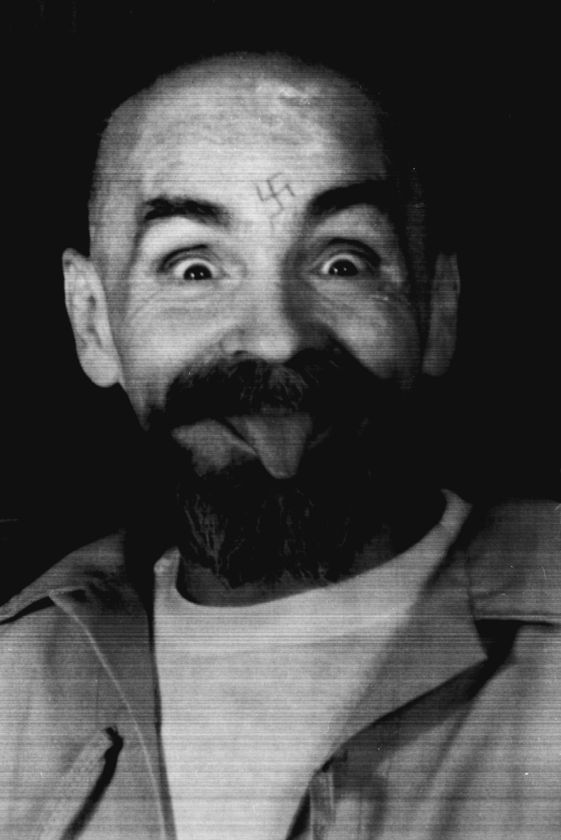
Charlie made a different kind of mistake, too!

“We’re people, we’re not monsters. We’ve just made a different type of mistake than someone else.”

— 34-year-old John Collins, who announced his support for a provision being pushed forward by the Seattle Office For Human Rights, which believes that convicted criminals should be made a protected class.

Collins sure made a different kind of mistake, all right. He served four years in prison for drugging and raping his estranged wife. Continue reading →

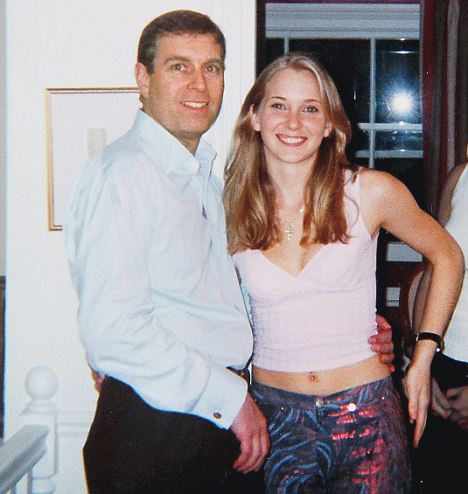
The Prince, The Sex Offender, and the Ethics of Friendship

Prince Andrew with one of his friend's victims in 2001

The ethics of friendship is complicated.

President Bush claimed to be friends with Vladimir Putin. F.D.R. once said that Josef Stalin was his friend. President Obama was famously friendly with dubious characters like Rev. Wright and William Ayres.

History is full of heroes and near-heroes who had infamous friends, though the extent of the often friendship is difficult to know. Sammy Davis, Jr. and Elvis were supposedly buddies with Richard Nixon. Bill and Hillary Clinton were close friends with Dick Morris. Wyatt Earp was a life-long friend of “Doc” Holliday; Andrew Jackson may have been friends with pirate Jean Lafitte, who helped him win the Battle of New Orleans. We simultaneously celebrate loyal friends, and yet we also judge people by the company they keep. Should we condemn individuals who have friends with serious character flaws or a history of unsavory acts? Or should we admire them for sticking with their friends when everyone else is turning against them? Continue reading →

Fired for Applauding: The Warped Ethics of Sports Reporters

I missed this story, because I regard auto racing as interesting as beetle mating, but it is an important one.

"Yeah, I report on it, but I really don't give a damn."

Trevor Bayne won the Daytona 500 last month, and the unexpected victory of the youngest Daytona champion ever provoked audible glee in the press box. One of the reporters on the scene, Sports Illustrated freelancer Tom Bowles, explained on Twitter and his blog why his applauding for a sporting result, considered a cardinal sin in the sportswriting profession, was not a sin after all.

He was fired. Continue reading →

The War On Gays: “Fair and Equitable” in Corpus Christi

Some day, one hopes not too far in the future, when U.S. culture has unequivocally abandoned the ancient fear of gay human beings, when understanding, fairness and respect has banished ignorance and hate, when same sex marriages are recognized as manifestations of loyalty, commitment and love rather than perversions of nature, and when no American feels the need to hide his or her sexuality, and thus feels no compulsion to trumpet it either, we will look back on such societal embarrassments as the Flour Bluff Intermediate School District as we do now on past purveyors of child labor, forced sterilization, involuntary human experimentation, mistreatment of women, and racism, and wonder, “What was the matter with those people? How did they get that way?”

Or, come to think of it, we could ask that question right now.

Seventeen-year-old Bianca “Nikki” Peet, a senior at Flour Bluffs High School in Corpus Christi, Texas, high school senior requested the she be permitted to launch a Gay-Straight Alliance in her school. The Equal Access Act, a federal law passed in 1984, requires schools receiving federal funding to offer “fair opportunities for students to form student-led  groups, regardless of their religious, political and philosophical leanings.” If the school district was going to allow any extracurricular groups, it had to allow Nikki’s.

So it shut down all extracurricular clubs at the school. Continue reading →

Answer the #@!!*&%! Question, Michele!

I don’t have the transcript of David Gregory’s interview with Rep. Michele Bachmann (R.-Min), Queen of the Tea Party, on “Meet the Press,” but it went something like this:

Gregory: Do you think the government should be shut down unless the President agrees to more budge cuts?

Bachmann: I think the fielding of Don Hoak at third base for the 1960 Pirates was truly outstanding, and definitely a key to the team’s success. Baby bok choy is delicious.

Gregory: Let me play you a clip of your recent comments. Do you really believe that the President is trying to jeopardize the economy?

Bachmann: Most people think Anchorage is the capital of Alaska, but it’s really Juneau. And, of course, Anne Boleyn had three breasts.

Gregory: I’m asking a direct question…do you really believe that the President has anti-American motives?

Bachmann: I’m now going to recite everything Barack Obama has done wrong from the second grade to the present, and in pig-latin, just for the fun of it….

Okay, I’m a little sketchy on the details. Continue reading →

Texas Lawyers And Sex: Not Horny, Just Wise

"Now about my fee...."

Texas lawyers have voted down a proposed ethics rule that specifically condemned attorneys having intimate relations with their clients. Naturally, the media will represent the decision as the predictable reaction of a bunch of high-rolling, fun-loving Texas legal horn-dogs to people trying to spoil the perks of their job; even the legal media has settled on a misleading headline:  “Texas lawyers reject ban on sex with clients.” But Texas lawyers don’t think that sex with clients is ethical, or want it to be ethical. Like the attorneys in many other states, they just think having a rule on this topic is bad idea. And they are right. Continue reading →

Frank Buckles, Speaker Boehner, and the Duty To Remember

Frank Buckles is our last chance to remember...

They fought overseas in battles with strange names like the Meuse-Argonne Offensive. They sang charmingly upbeat songs like “Over There!” and “Inky-Dinky Parley-Voo.” A lot of them were gassed, about 200,000 were wounded, 120,000 died, and many of them who  came home were never the same, dubbed “the lost generation” by Ernest Hemingway. They were America’s “doughboys,” the young homegrown heroes of World War I, who arrived late to a pointless war they didn’t start, and became the first American soldiers to die in large numbers in foreign lands.

The last of them died last week. His name was Frank Buckles, and he had lied about his age to become a soldier at the tender age of 16. In his 110 years, Buckles took part in a lot of history, sailing for the Continent on the Carpathia, the very same ship that rescued the Titanic’s survivors; traveling the world by sea as ship’s purser, which afforded him an accidental encounter with Adolf Hitler, and having the bad luck to be in the Philippines when the Japanese invaded, ending up as a prisoner for most of World War II.

Sen. Jay Rockefeller (D-W.Va.), and Rep. Shelley Moore Capito, (R-W.Va.) have introduced resolutions to allow fellow West Virginian Buckles to lie in honor in the Rotunda of the U.S. Capitol, where the public could pay their respects to him by filing past his casket. Though usually reserved for former presidents and distinguished members of Congress, unelected American citizens of distinction have laid in state in the Rotunda, such as civil rights icon Rosa Parks and Gen. Douglas MacArthur.

Apparently Speaker of the House John Boehner doesn’t think Buckles makes the grade, for he has rejected the idea and decreed that the last World War I soldier in a special ceremony at Arlington National Cemetery, but not at the Capitol. Continue reading →