The Comment of the Day: Another On “The White Male Scholarship”

John-Baptiste Clamence reacts to yesterday’s post with a crucial point (that I happen to agree with) about the role of law in setting cultural values and societal ethics. Here is his Comment of the Day, on “The White Male Scholarship”:

“It’s a hard line to draw sometimes; the line between your right to have the wrong opinion, and how much the law should push you to have the right opinion.
In the UK, since 1996 it has been illegal for B&Bs to refuse rooms to gay couples. These are private businesses – should they have the right to offer their services in a discriminatory way also?

“The situation you describe is, in my view, unethical for the reason that it perpetuates the idea in society that racial discrimination for an academic award is OK. The sooner and stronger the message given by the law is, then the sooner the views of society change.

“To paraphrase Cesar Millan: Change the behaviour, change the thoughts.”

The Legal Profession Welcomes Yet Another Arrogant Jerk Into the Fold

OK, she's snarky...but can she be a good lawyer?

…but not an untrustworthy arrogant jerk!

Marilyn Ringstaff, a 2006 graduate of John Marshall Law School, had to pay a $250 fine as a result of a minor traffic accident she was a first year law student. She represented herself in court, challenging Abe Lincoln’s Rule that “If you represent yourself you will have a fool for a client and a jack-ass for a lawyer,” and then proved Abe correct—on both counts— when she argued on appeal that her own representation was ineffective.

Ringstaff paid the fine and sent along an obnoxious note with two smiley faces, reading, “Keep the change—put into a police/judicial education fund. I can certainly say this has been an educational experience. I am now a second-year law student and can honestly relate to what a crooked and inequitable system of ‘justice’ we have.” Continue reading →

Unethical Quote of the Week: U.S. Attorney General Eric Holder

Trick Question: Who are the U.S. Attorney General's people?

“When you compare what people endured in the South in the 60s to try to get the right to vote for African-Americans, and to compare what people were subjected to there to what happened in Philadelphia–which was inappropriate, certainly that—to describe it in those terms I think does a great disservice to people who put their lives on the line, who risked all, for my people.”

—-U.S. Attorney General Eric Holder, testifying in a Congressional hearing regarding allegations of race-based enforcement in the Justice Department, and taking issue with Rep. John Culberson, who was questioning Holder about the New Black Panther Party voter-intimidation case. Culberson quoted a Democratic activist who called the incident the most serious act of voter intimidation he had witnessed in his career, prompting Holder’s statement.

I am willing to give the Attorney General the benefit of the doubt and regard this is a slip of the tongue. It would be unfair to conclude, based on this statement, that Holder is biased. But his use of the term “my people” certainly raises the question of bias. As the Attorney General of the United States, Eric Holder is obligated to regard all American citizens as “his people.” Suggesting otherwise undermines his credibility and the people’s trust, and is at best careless, and at worst suspicious.

[Thanks to WSJ blogger James Taranto for flagging the quote.]

The Comment of the Day: “The White Male Scholarship”

Tim LeVier defends the controversial white male scholarship, as well as other scholarships determined by race and gender. Here is his Comment of the Day, in response to my post, “The White Male Scholarship”:

“…This is actually a subject that I feel passionate about for exactly the reasons you state. I’ve mentioned on this blog (in the comments) before about how I feel with regards to student groups that support every student except the straight white male. What’s a guy like me to do when everyone’s at their meetings? The names of their groups suggest exclusion of others and create an unwritten rule that you should only attend if you meet the qualifications.

“With regards to student groups, I think your post would be more accurate. I think there’s more opportunity for all individuals to flourish in mixed student groups plus it spreads awareness of your “race-based” goals when you aren’t just ‘preaching to the choir.’

“However, for scholarships, surprisingly, I have to take the opposite approach. I think it’s because I believe that with scholarships, it’s about providing opportunity, whereas with student groups it’s about taking opportunity. Continue reading →

Ethics Heroes: The U.S. Supreme Court

As the perfect tonic for all the attempts to silence Gilbert and Sullivan songs with controversial lyrics, reject bus ads espousing controversial positions, and declare that words like “target” are just too darn inflammatory for the sensitive, politically-correct ears of CNN viewers, here comes the U.S. Supreme Court, galloping to the rescue with a near unanimous (8-1), ringing reaffirmation that free speech is a bastion of American democracy, even when the speaker or speakers are vicious, unfair, cruel, radical and deluded. Continue reading →

Unethical Website of the Month: “University of Redwood”—Or Perhaps We’re Doomed


Oregon's Reed College...and, in Universe Beta, the "University of Redwood"

“University of Redwood” exists only in cyber-space, the mutated virtual clone, or perhaps evil twin, of Oregon’s prestigious Reed College. The imaginary institution consists only of a website, which rips off most of the features of Reed College’s website, with pictures of Reed’s faculty as the imaginary “Redwood” faculty, photos of Reed alumni as “Redwood” graduates and even a parallel universe history of the school. Reed’s history section begins,


“Reed College was founded in 1908, and its first classes were held in 1911. Reed is named for Oregon pioneers Simeon and Amanda Reed. Simeon Reed had been an entrepreneur in trade on the Columbia River; in his will he suggested that his wife could “devote some portion of my estate to benevolent objects, or to the cultivation, illustration, or development of the fine arts in the city of Portland, or to some other suitable purpose…”

Coincidentally, “Redwood” has a very similar background, according to its site: Continue reading →

Outrageous Prosecution: The Eric Rinehart Story

Asst. U.S. Attorney DeBrotas predecessors

Eric Rinehart, a 34-year-old police officer in  Middletown, Indiana, began consensual sexual relationships with two young women, ages 16 and 17. Rinehart was going through a divorce at the time, and in Indiana, he was doing nothing illegal, for 16 is the age of consent in the Hoosier state? Unethical? I tend to think so, but that isn’t part of the story.

One of the girls told Rinehart that she had posed for erotic photos for an earlier, presumably younger boyfriend, and suggested that she do the same for him. So Rinehart gave her his camera, with which she took the lascivious photos. This inspired Rinehart to take some more sexy photos and at least one video of both girls, which he downloaded to his computer.

For this, Rinehart was convicted on two federal charges of producing child pornography. Continue reading →

Ethics Quote of the Week: Blogger Jeff Jarvis

"If Charlie's unavailable, get this guy. He's hilarious!"

“One way or another, by one definition and diagnosis or another, Charlie Sheen is a sick man. He doesn’t need airtime. He needs couchtime. News people are ill-serving him and the issue of mental illness in this country by putting him on the air as if he were just another source, another celebrity. They are not informing the public. They are exploiting Charlie.”

—Blogger Jeff Jarvis on his site, BuzzMachine, on the media’s disgraceful rush to get celebrity meltdown Charlie Sheen to do as many wacky, self-destructive, “did he really say that?” interviews as possible before he falls completely to pieces as addicts in full denial inevitably do.

Jarvis is right. There is no more news to be milked from the sad Sheen story, other than “Charley continues to say things that are destroying his career, making him dislikable and unemployable, and that prove that he is sick, getting sicker by the day.” This is no less despicable than exhibiting freaks, the brain injured and schizophrenics for the amusement of the crowd. “They want him to act nutty,” says Jarvis. “Ratings, man, ratings.” Continue reading →

Home-Grown Mengeles, And What We Must Learn From Them

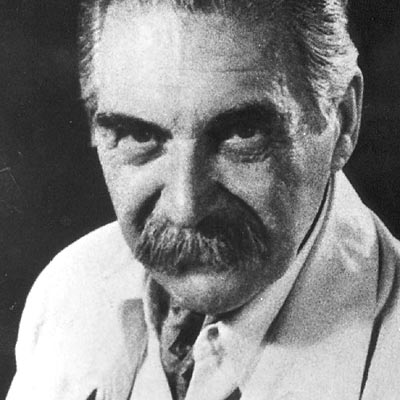
Josef Mengele: researcher, utilitarian, monster

We knew, or should have known, that this extremely ugly shoe was bound to drop eventually.

Last autumn, when the U.S. apologized for federal doctors infecting prisoners and mental patients in Guatemala with syphilis 65 years ago, it put us on notice that a vile and unethical cultural standard had taken hold of the American medical and scientific communities in the 20th century, one that held  it was “right” for the weakest, most powerless and most disposable of human beings to be tricked, coerced or bribed into serving as subjects for experiments that could lead to miraculous cures and treatments for the rest of the population. This–depriving human beings of their rights and lives in the interest of science—is “the ends justify the means” at its worst. But the Guatemala experiments proved that this was once flourishing and respectable in the U.S. scientific and medical research communities, so it would have been surprising if there weren’t more stories of home-grown Mengeles, and sure enough, there were. The U.S. acknowledged as much when it apologized for the Guatemalan tests. Now we have details. Continue reading →

Teachers Unions: Not Unethical, Just Uninterested in the Public Welfare

His union is competent; it's just that he isn't

Public unions and their Democratic supporters (and supported) are not going to have much luck winning the public relations battle with Republicans as long as teachers unions are front and center. Teachers unions are not— I repeat not-–primarily concerned with the welfare of schoolchildren, or the public, or the deficit, or even education. Their priority is the welfare of their membership, and if any of those other stakeholders have to take it on the chin to make sure that the teachers have good salaries, benefits and iron-clad job security, well, that’s just the way of the world.

This doesn’t make teachers unions unethical any more than lawyers are unethical to represent their clients. But it does mean that any time a teacher’s union official claims to be concerned with anything but his members, he or she is lying through their teeth. And that is unethical. Continue reading →