Ethics Quiz: The Dog-Poisoners [UPDATED]

This is, I know, a poor topic for Christmas, but it just came down the chimney.

While shopping yesterday, we encountered a man who lived in the neighborhood. Rugby had enjoyed conversing with the two dogs owned by the man and his wife, two friendly, lively min-pins. As shoppers bustled around us, our neighbor announced that he was more our neighbor than ever: he and his wife had moved from where I had met them to a home less than a block away from ours, on the long street that our cul de sac opens onto. The reason for the move: their next-door neighbor had poisoned their dogs. One had survived.

Our neighbor said that they had called the police, who investigated. Based on motive (the there had been a property dispute, and the resulting law suit had gone our friends’ way), opportunity, and the demeanor and comments the police got while questioning the suspects as well as accounts about their threats and general sociopathic tendencies from others on the street, the police reported that they were pretty sure my neighbors’ neighbor were the culprits, but that they did not have sufficient evidence to make an arrest.

This story had unpleasant resonations for me. My Dad, when he was a 10 year-old only child being raised by a single mother during the depression and having to move to new neighborhoods constantly, owned a large, loyal Airedale named Bumbo. One day someone put ground glass in his beloved dog’s food dish, and my father had to see his best friend die in agony in his arms. It was one of the great tragedies of his life. His mother was certain who had killed the dog, but again, there was insufficient proof.

Your Ethics Alarms Ethics Quiz of the Day:

Is my neighbor obligated to tell anyone who is interested in renting or buying his now-abandoned property that the neighbor poisoned his dogs?

Continue reading

Casting Ethics: Color-Blind vs Color Conscious in “All My Sons”

Director Gregory Mosher quit the Broadway revival of Arthur Miller’s “All My Sons” (scheduled to open in the Spring) when Miller’s estate, run by his daughter Rebecca Miller,  blocked him from casting a black actor  to play George Deever, one of the main characters in the classic.  Miller objected to the director’s choice of making the Deever family black when the play’s other central family, the Kellers, had already been cast as white. If the Deevers were black, it would introduce the concept of an interracial relationship in the 1940s.

“My concern was that to cast the Deevers as black puts a burden on the play to justify the relationship in the historical context,”  Miller said “I was worried that it would whitewash the racism that really was in existence in that period by creating this pretend-Valhalla-special family where no one would mention this.”

Nice attempt to put her position in a politically correct context, I have to admit. The objection really is that the play is a period piece, firmly and unavoidably set in the post-World War II era. It will have period costumes, sets and props, and the audience seeing the story unfold in the proper historical time period is essential to the play’s success. An inter-racial romance shatters that illusion, and unnecessarily so. The play is not about race, so race should not be injected into the plot by reckless casting. Miller had previously approved of a production in which both families were black.

Interestingly, she also was willing to approve the casting of a black actor if his sister were cast as white. You see, then the casting would be “color blind,” meaning that it was just a black actor playing a white character (without white make-up, which would be “white-face,” which would suggest blackface, and—oh, never mind…), and that his family wasn’t really “black.” Got that? Otherwise, it would be “color-conscious” casting, in which the race of the performer necessarily requires a different approach to the material. Continue reading

Encore: On the Importance Of Christmas To The Culture And Our Nation : An Ethics Alarms Guide

[As promised, here is the Ethics Alarms Christmas package, lightly revised, last posted three years ago]

I don’t know what perverted instinct it is that has persuaded colleges and schools to make their campuses a Christmas-free experience. Nor can I get into the scrimy and misguided minds of people like Roselle Park New Jersey Councilwoman Charlene Storey, who resigned over the city council’s decision to call its Christmas tree lighting a Christmas Tree Lighting, pouting that this wasn’t “inclusive,” or the  CNN goon who dictated the bizarre policy that the Christmas Party shot up by the husband-wife Muslim terrorists had to be called a “Holiday Party.”  Christmas, as the cultural tradition it evolved to be, is about inclusion, and if someone feels excluded, they are excluding themselves.  Is it the name that is so forbidding? Well, too bad. That’s its name, not “holiday.” Arbor Day is a holiday. Christmas is a state of mind. [The Ethics Alarms Christmas posts are here.]

Many years ago, I lost a friend over a workplace dispute on this topic, when a colleague and fellow executive at a large Washington association threw a fit of indignation over the designation of the headquarters party as a Christmas party, and the gift exchange (yes, it was stupid) as “Christmas Elves.” Marcia was Jewish, and a militant unionist, pro-abortion, feminist, all-liberal all-the-time activist of considerable power and passion. She cowed our pusillanimous, spineless executive to re-name the party a “holiday party” and the gift giving “Holiday Pixies,” whatever the hell they are.

I told Marcia straight out that she was wrong, and that people like her were harming the culture. Christmas practiced in the workplace, streets, schools and the rest is a cultural holiday of immense value to everyone open enough to experience it, and I told her to read “A Christmas Carol” again. Dickens got it, Scrooge got it, and there was no reason that the time of year culturally assigned by tradition to re-establish our best instincts of love, kindness, gratitude, empathy, charity and generosity should be attacked, shunned or avoided as any kind of religious indoctrination or “government endorsement of religion.”  Jews, Muslims, atheists and Mayans who take part in a secular Christmas and all of its traditions—including the Christmas carols and the Christian traditions of the star, the manger and the rest, lose nothing, and gain a great deal.

Christmas is supposed to bring everyone in a society together after the conflicts of the past years have pulled them apart. What could possibly be objectionable to that? What could be more important than that, especially in these especially divisive times? How could it possibly be responsible, sensible or ethical to try to sabotage such a benign, healing, joyful tradition and weaken it in our culture, when we need it most?

I liked and respected Marcia, but I deplore the negative and corrosive effect people like her have had on Christmas, and as a result, the strength of American community. I told her so too, and that was the end of that friendship. Killing America’s strong embrace of Christmas is a terrible, damaging, self-destructive activity, but it is well underway. I wrote about how the process was advancing here, and re-reading what I wrote, I can only see the phenomenon deepening, and hardening like Scrooge’s pre-ghost heart. Then I said… Continue reading

Christmas Questions For A Thoroughly Confused Culture

In “A Christmas Kiss,” the 2011 Hallmark-style Christmas movie (that premiered on the Ion channel, but really would have been right at home on the Hallmark channel, or for that matter, the Crap Channel), Wendy Walton is an aspiring interior designer. One night, while preparing to go out with her roommates in glitter makeup,  she encounters an impossibly handsome, formally-dressed stranger in the elevator. When the elevator stalls and seems unstable, Wendy is thrown into the stranger’s arms….or perhaps grabs him for support, or in fear.  The elevator starts moving again, and he impulsively embraces her and gives  her a passionate, romantic kiss.  They part without her learning his name, and Wendy breathlessly tells her roommates about her magical encounter with the handsome stranger.

2018 questions:

1 Was the kiss sexual assault? Wendy did not consent to it. Continue reading

Comment Of The Day: “Open Forum Ethics (Justice System Thread)”

The Open Forum this week raised several new ethics topics I will be posting on soon, in addition to its bumper crop of Comments of the Day. The latest of these is another by Michael R., following  the posting of this link.

Here is Michael R’s Comment of the Day on the justice system thread in Open Forum Ethics:

I have wondered about the ethics of citizens shooting criminals when they are legally justified. Should a citizen try at all costs to avoid shooting a criminal when legally justified or should citizens shoot and attempt to kill criminals any time it is legally justified? Sad to say, I am beginning to think the latter is preferable. I will give an example to illustrate why.

A man committed 5 home invasions in 1 day in my neighborhood about 2 years ago. During the first 4 home invasions, the residents were armed and drove him off. In the 5th, the resident held him at gunpoint for police (my neighborhood is kind of rough for home invaders). The police told the 5th homeowner he should have killed the man. You may wonder why. The criminal was convicted on all 5 counts of home invasion as well as being a felon in possession of a firearm. Justice, right? Well, he has already been released from prison. He severely beat two women while robbing them. He led police on a high speed chase in a stolen car while shooting at them. He was shot and crashed the car (doing extensive property damage). He will require extensive medical care at state expense for the rest of his life. If the homeowner had killed him, those women wouldn’t have been beaten and robbed, the car wouldn’t have been stolen, and the public wouldn’t be paying millions to take care of this criminal. Continue reading

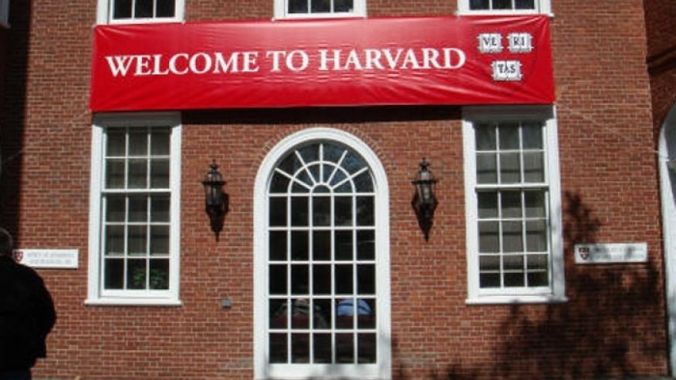
Ethics Quiz Of The Day: What’s None Of Harvard’s Business?

Now we own you.

Boy, Harvard is getting like the Candyman (no, not Willy Wonka, the horror movie version): mention its name enough times, and it appears behind you, with mayhem on its mind.

A case filed in federal court by a Harvard University student, “John Doe,” argues that the school overstepped  its authority by investigating him for a rape allegation lodged by a non-student in a city where police declined to prosecute. He contends that Harvard did not have the authority to open an investigation into sexual assault allegations levied by a non-Harvard student regarding an incident that did not take place on University property. “Doe” demands that Harvard end the investigation and pay him $75,000 in damages, as well as compensate him for any costs incurred during litigation.

Doe’s suit states that, during summer 2017, Doe and “Jane Roe” ( the unnamed woman he allegedly raped) were both working internships in Washington, D.C. The D.C. Metropolitan Police Department investigated the alleged assault but ultimately decided not to prosecute the case. “Roe” has filed a civil suit against the Harvard student.

The University’s Office for Dispute Resolution opened an investigation into Doe in October 2018

Harvard University’s policies related to sexual and gender-based misconduct, readable here, apply only to misconduct perpetrated by students while on campus or in connection with University-recognized activities. The  guidelines followed by the Faculty of Arts and Sciences are more expansive, as it states that the school  may hold all students to the expectation that they behave in a “in a mature and responsible manner” no matter where they are.

“It is the expectation of the Faculty of Arts and Sciences that all students, whether or not they are on campus or are currently enrolled in a degree program, will behave in a mature and responsible manner. Consistent with this principle, sexual and gender-based misconduct are not tolerated by the FAS even when, because they do not have the effect of creating a hostile environment for a member of the University community, they fall outside the jurisdiction of the University Policy.”

Whatever that means.

Meanwhile, new Title IX guidelines proposed by Education Secretary Betsy DeVos and released by the department last month stipulate that schools are not required to open investigations into alleged acts of sexual misconduct that took place outside the bounds of a school “program or activity.”

Doe’s suit charges Harvard with breach of contract and breach of covenant of faith and fair dealing. In allowing him to attend classes in exchange for “substantial amounts of money,” Harvard created a reasonable expectation that Doe would earn a degree from the school. One possible result of an ODR investigation would be expulsion.

“Harvard has breached, and is breaching, its contractual obligations by subjecting Mr. Doe to a disciplinary process that—in the ways, and for the reasons, set out above—is arbitrary, capricious, malicious, and being conducted in bad faith,” the complaint states. ODR informed Doe that the investigation is based on Roe’s allegations. In an email submitted as an exhibit in the lawsuit,  ODR’s senior investigator wrote that the College Title IX coordinator filed the case, then reached out to Roe to ask her to participate as a complainant in the investigation. Doe asked Harvard to temporarily suspend the investigation pending the results of Roe’s civil suit. Doe stated a simultaneous ODR investigation would have a “serious impact” on his ability to defend himself in the ongoing civil case, according to the complaint.

Harvard, noting that the D.C. police was not going to investigate the allegations, rejected the request.

Let’s put aside the law and Harvard’s policies for now, and stick to ethics.

Your Ethics Alarms Ethics Quiz of the Day is…

“Is it fair for a college to investigate alleged misconduct, including crimes, on the part of student, when the conduct occurs in a different city and local police have declined to take action?”

Continue reading

The “White Christmas” Ethics Guide (REVISED And UPDATED)

I’m looking at some holiday movies to add to the Ethics Alarms library of annotated classics—no, ethics and “A Christmas Story” are irrelevant, it being a child’s remembrance and hardly literal–but I might as well begin with  revising and revisiting the “White Christmas” guide, which first appeared in 2012. 

I still like the film—my wife hates it—being a fan of all four stars, especially Bing and Danny, as well as the director, Michael Curtiz.  I do like it a bit less each time I see it, mostly from an ethics perspective, and the successive revisions reflect that.

I still get misty when the old general, played by Dean Jagger, gets saluted by his reunited army unit, which has gathered at his struggling, snowless, Vermont inn on Christmas Eve to remind him that he is still remembered and loved. Nonetheless, “White Christmas” is by far the strangest of the Christmas movies, and also the most unethical. Though everything works out in the end, the characters in the sloppy plot spend the whole movie lying, extorting, betraying, manipulating and generally mistreating each other, always with no recriminations at all, and usually with no consequences either.

In his addendum last year to my original post, Michael West found the film foundering from the second the opening credits ended. He began with the script for the opening scenes—General Waverly* is played by Dean Jagger; Captain Bob Wallace is Bing Crosby, and Private Phil Davis is Danny Kaye:

Opening Scene in the Jeep as they hear the Entertainment show.

GEN CARLTON (To Adjutant): What’s this all about, Captain?

ADJUTANT: A little entertainment for the men, sir. Tonight’s Christmas Eve.

GEN CARLTON: These men are moving up tonight, General Waverly. They should be lined up for full inspection!

GEN WAVERLY (To Carlton): You’re absolutely right. (To Adjutant): There’s no Christmas in the Army, Captain.

ADJUTANT: Yes, sir.

GEN WAVERLY (To Carlton): There’s always a slip-up or two during a change in command. The men get a little loose. But I know I’m leaving them in good hands.

GEN CARLTON: (To Waverly): Thank you, General. (To Driver): Sergeant, take me to headquarters immediately! We’ll have those men turned out on the double!

The Sergeant looks at General Waverly.

GEN WAVERLY: Goodbye, Sergeant. Take the short cut.

SERGEANT: Yes, sir!

The jeep pulls off and makes a half circle. The Adjutant makes a gesture, as if to stop it. Waverly stops him. The Adjutant turns to him.

ADJUTANT: That’s not the way back to headquarters!

GEN WAVERLY: Joe, you know that, and I know that, but the new General doesn’t know it. Or he won’t for about an hour and a half.

ADJUTANT: That Sergeant’ll be a private tomorrow!

GEN WAVERLY: Yes… isn’t he lucky?

SCENE CHANGE TO ENTERTAINMENT SITE:

CAPTAIN BOB WALLACE and PRIVATE PHILIP DAVIS are doing a number on stage to entertain a mass of 200 or so soldiers. GENERAL AND ADJUTANT just starting to take seats, off to one side where they are not noticed by the performers. ABOUT 6 SOLDIERS seated in audience. They look off, see General, start to rise. The General notices them – motions for them to sit down again, indicating he doesn’t want attention called to himself. Captain Wallace sings “White Christmas”.

CPT WALLACE: Well that just about wraps it up, fellas. It’s certainly too bad General Waverly couldn’t be here for this little yuletide clambake ’cause we really had a slam bang finished cooked up for him. I guess by now you know the Old Man’s being replaced by a new Commanding General fresh out of the Pentagon…it’s not a very nice Christmas present for a division like us that’s moving up. The Old Man’s moving toward the rear. That’s a direction he’s never taken in his entire life. Well all I can say is we owe an awful lot to General Waverly and to the way…

GEN WAVERLY: ATTENTION!

Every man is at attention and every head has turned to where General Waverly has taken up a position near the front of the platform.

GEN WAVERLY: Captain Wallace, who’s responsible for holding a show in this advanced area?

CPT WALLACE: Well sir as a matter of fact it was…

PVT DAVIS: …me Sir! It was my idea sir. Uh, I mean when you gotta entertainer sir of the caliber of Captain Wallace, sir…I mean sir…it’s Christmas Eve, sir. And well, sir, I mean that if you were in New York, Sir, you’d have to pay six sixty or even eight eighty to hear a great singer like Captain Wallace, sir.

GEN WAVERLY: I’m well aware of Captain Wallace’s capabilities. Who are you?

PVT DAVIS: Er…Phillip Davis, sir. Private First Class, sir.

GEN WAVERLY: Well, at ease, Davis.

DAVIS: Yes, Sir!

WAVERLY: I said, At Ease!

DAVIS: Oh, uh, Yes, sir, thank you sir.

WAVERLY: This division is now under the command of General Harold G. Carlton, and I don’t want anyone to forget it — not that he’ll let you. He’s tough — just what this sloppy outfit needs. He’ll have you standing inspection night and day — you may even learn how to march. And if you don’t give him everything you got, I may come back and fight for the enemy. Merry Christmas!

ASSEMBLED MEN: Merry Christmas!

GEN WAVERLY: Well, I guess, all I can say is, how much I…what a fine outfit…How am I going… (to Wallace) don’t just stand there, how am I going to get off…?

CPT WALLACE: We happen to have a slam-bang finish…He turns to the musicians, gives the downbeat.

They play “THE OLD MAN,” which is sung by the entire outfit.

ARTY FALLS IN VICINITY…Soldiers crouch…then finish singing.

GENERAL AND ADJUTANT DEPART.

MORE ARTY FALLS, ON SITE…Men scatter. Captain Wallace and Private Davis try to get men to cover. Private Davis man handles the Captain to cover as a wall collapses where he had just been standing.

For starters, we see a mass of soldiers in an open air situation within effective range of enemy artillery fire. A single well-placed artillery round could eliminate approximately 200 soldiers — more than an entire World War 2 Infantry Company (whose authorized strength is about 190-195 men; but given this stage of the war and attrition, this could easily be 2-3 companies of EXPERIENCED soldiers). Someone in the chain of command KNOWS this to be true and authorized this gathering despite the obvious danger. We know for certain that the Adjutant knows what the gathering is, as he answers in line #2 precisely what is going on. But an Adjutant has no command authority, so someone else authorized the gathering. We have to assume General Waverly didn’t know until the Adjutant answered General Carlton’s inquiry based on General Waverly’s later questioning of Captain Wallace. We can’t ever be sure who actually made the decision to have the entertainment occur at that location since Private Wallace, breaking an incredible number of military bearing protocols, interrupts a Captain, to answer a General. This Private, Private Davis, accepts all responsibility for the decision to expose upwards of 2 companies-worth of men to devastating artillery fire.

This information leaves us with two options: Either it really was Private Davis’s idea to have the venue at that location, in which case, Private Davis’s commanding officer and the various commanding officers AND EVERYONE ELSE in their chain of command are colossally INEPT for agreeing to the idea. The second option is that Captain Wallace DID indeed make the decision to have the venue at that site, and now he’s standing there like a lump allowing a subordinate to cut him off mid-sentence, a military no-no, and then allowing the subordinate to take the heat of any potential censure that was forthcoming. Of course, since he’s a Private trying to cover for his boss, he’ll say anything, so I won’t even ding him for the horrible excuse that 200 men should be exposed to German artillery fire because CPT Wallace is a famous singer – we all know it’s worth dying to hear Bing sing…

But of course, even General Waverly doesn’t seem to mind that 200 of his soldiers are idling around with a population density rivaling that of Bombay, just one artillery strike away from having more in common with mist than with humanity. When HE discovered what was going on by the Adjutant’s answer in line #2, he should have immediately ordered the soldiers disperse and had about two dozen commissioned officers who had every ability to stop the farce standing in his headquarters receiving the most royal dressing down of their careers and maybe a few firings.

What possibly does General Waverly think outweighs the need to disperse a mass of soldiers within effective range of artillery? Why, a Christmas music concert of course! It is Christmas Eve, after all!  Now, the Army does a really good job bending over backwards for the morale, welfare, and recreation of soldiers, much more than was ever considered a military precedent. BUT, we learn from the dialogue, the entire division is on orders to “move up tonight.” This somewhat vague description could range anywhere from simply occupying a section of the line to relieve a unit coming back or it could mean they are initiating a major offensive operation. We learn, however, that this movement, whatever it is, is occurring in mere hours. Having experienced large movements of soldiers myself, I know that if a Division is stepping off in a few hours, the men down to the platoon level are ALREADY in their assembly areas doing final preparations. This is apparent to the new commander, General Carlton, who is astonished that the men aren’t doing their final checks of equipment and gear.

Which leads us to the next bit: General Waverly is none too concerned about the unjustifiable exposure he’s tolerating of his…well, now General Carlton’s men…as we know Waverly has just been replaced by General Carlton, who, trope-tastically, we learn is one of those wretched new leaders who is probably horribly incompetent. The movie lets us know early on that he’s a despicable piss-and-vinegar type when he is mad that the men are having Christmas entertainment. Never mind that we now know that Carlton is severely concerned about a huge mass of men within artillery range open and exposed as well as not anywhere near where they ought to be to initiate movement of the entire Division.

The movie also lets us know he’s a jerk because it pushes the whole “fresh out of ________” trope. The usual way this plays out is the “fresh out of West Point” or “fresh out of ROTC” smear applied to new Lieutenants who assume Platoon Leadership with little to no actual experience. Unfortunately, this doesn’t exactly play out on the General level. Yes, the General ranks expanded rapidly during World War II, but an individual didn’t become one by being a complete buffoon (and yes there are always exceptions — but General Carlton, who seems to have a sense of urgency that no one in Waverly’s sphere of influence seems to possess, does not seem to be the exception).

Never mind, we’ll go on with the traditional “smearing of the new guy who replaces the beloved experienced leader.” In the original script I copied and analyzed, the dialogue was OVERTLY insubordinate and actively undermining of the men’s confidence in their new commander. In the corrected dialogue, though cleaned up a lot, there are still hints of undermining the new guy’s authority before he even makes a decision as the commander. There’s General Waverly’s smart-ass “There’s no Christmas in the Army” jab as a response to Carlton’s concern about the location and timing of the entertainment event — which he says “knowingly” to the Adjutant, who, we must remind ourselves no longer works for the Waverly but for Carlton.

There is the extra-rotten move when Carlton, recognizing the imminent danger as well as the horrifying breach of schedule in implementing the plan of operations, indicates he plans to move to Headquarters immediately to begin rectifying the situation and is undermined either by the Sergeant driving Carlton or by General Waverly himself. The driver decides to undermine Carlton’s ability to fix the problem by taking an extra long route back to headquarters. Between a driver and a singing-private, this division is apparently full of the lowest-ranking guys thinking they know best when to leave a behind-the-schedule division exposed to enemy fire just so they can catch a few tunes from Bing. The only other possible explanation is that General Waverly, himself, with a nod-nod wink-wink, authorized the driver to follow the reckless plan to take an hour-and-a-half detour, which we assume will require another hour-and-a-half correction before Carlton can get to Headquarters. Just as with the Adjutant before, let’s again consider that this driver no longer works for Waverly, but for Carlton The Sergeant is being openly insubordinate.

Even if Waverly was not responsible for the three-hour diversion, he immediately became complicit when the Adjutant, in an apparent realization who his new boss is (Carlton), moved to correct the driver but was stopped  from doing so.by General Waverly

The last bit of insubordination and undermining  the chain of command comes from the subtle digs Captain Wallace makes during his speech. His “Fresh out of the Pentagon” disdain undermines faith that Carlton may be a good commander, followed by the snide “not a nice Christmas present” for the division is enough to get any soldier censured. Soldiers and peers WILL whisper about their leaders, but an open act of insubordination like that? Stamped out like a spark in a dry forest… I won’t even address the fact that it’s a COMMISSIONED OFFICER making the openly insubordinate comments and a CAPTAIN no less. He would be dismissed and transferred immediately.

But hey, I suppose Waverly recognized all their rotten conduct when he feebly tried to make things right by saying “hey guys, he’s a good commander, never mind all the stuff we said before and our attitudes we displayed before!” A few moments later, just to do Carlton some justice, the artillery shelling arrives.

Then the movie moves into its funny guilt extortion phase. Army private Phil Davis (Danny Kaye) rescues his smooth-singing captain, Bob Wallace (Bing Crosby) from being crushed by a falling wall in a World War II bombing raid, and injures his arm in the process. (It’s not a plot feature, but the battlefield set for the entire opening sequence is itself unethically unprofessional by being chintzy even by musical standards: it looks like they are filming a skit for a Bob Hope Christmas Special.  I thought it was lousy when I saw it as a kid. Michael Curtiz deserved better; the man directed “Casablanca.” Show some respect.) Phil then uses Wallace’s debt of gratitude to coerce him into accepting the aspiring comic as a partner in Wallace’s already successful civilian act. This is obviously unfair and exploitative, but Bing accepts the ploy with good spirits, and the next we see  the new team of Wallace and Davis knocking ’em dead and rising in the ranks of stage stars.

The act looks terrible. Bing was never much of a dancer, a game hoofer at best, and you don’t feature the greatest voice in the history of American popular music by having him sing exclusively duets. Nevertheless, all we see of the team’s rise is both of them singing and corny dancing inferior to what Bing did with Bob Hope in the “Road” movies.

Never mind. They have a show on Broadway, and as a favor to a mutual army buddy, they agree to watch the boonies nightclub act of “The Haynes Sisters” (Rosemary Clooney as Betty, and Vera-Ellen, of wasp-waist fame, as kid sister Judy. Did you know that in the “Sisters” number, Clooney sang both parts? ). Bing is immediately smitten with older sister Rosemary, but there is a tiff over the fact that younger sister Judy fooled them into seeing their act: she, not her brother, had sent the letter asking for a “favor.”

This is the first revealed of many lies woven into the script. This one is a double beach of ethics: Judy uses her brother’s name and contacts without his permission or knowledge, and lures Wallace and Davis to the night club under false pretenses.

Bing dismisses Judy’s cheat by noting that everyone “has an angle” in show business, so he’s not angry. Rosemary is, though, and reprimands Bing for being cynical. That’s right: Vera/Judy uses their brother’s name to trick two Broadway stars into watching their little act, and Rosemary/ Betty is annoyed because Bing/Bob (Bing’s bandleader, look-alike, sound-alike brother was also named Bob) shrugs off the lie as show business as usual. True, Betty is technically correct to flag the Everybody Does It rationalization, but shouldn’t she be grateful that Bob isn’t reaming out the Haynes sisters and leaving the club in a huff? OK, nice and uncynical is better than nice and cynical, but Bob is still giving her and Judy a break. As the beneficiary on Judy’s angle, Betty is ethically estopped from complaining that Bing/Bob’s reaction was “I don’t expect any better.” I can, she can’t. He should expect better: accepting unethical conduct allows it to thrive.

As we soon find out, however, Betty often flies off the handle.

Continue reading

Morning Ethics Warm-Up, 12/6/18: The Defended And The Indefensible

Goooood Morning!

Baby, it’s stupid outside…

1.PLEASE stop making me defend Hillary Clinton. In a “controversy” reminiscent of the mainstream media’s hyped and manufactured criticisms of every word. sigh, look or twitch by President Trump, the conservative web is in an uproar over Hillary Clinton’s “snub” or Melania Trump yesterday. Hillary didn’t wave at Melania, you see. She just “nodded” her head. Good Lord, leave the poor woman alone. She’s obviously not well. We know she’s bitter, angry and depressed. Now she and Bill are facing sparse audiences on their ill-advised tour together. So she didn’t greet Donald Trump’s spouse with enthusiasm at a funeral—so what? If she had, everyone would be saying that she’s a hypocrite and a phony. She is, of course, but that’s not the issue.

Fake snub.

2. Oh, fine, now I have to defend Natalie Portman… Inexplicably acclaimed actress Natalie Portman apologized to has-been singer/actress/ sex-symbol Jessica Simpson after  Simpson said Portman was slut- shaming her. Portman said in an interview with USA Today that as a teenager she was”confused” by a sexy photo of Simpson “on the cover of a magazine saying ‘I’m a virgin’ while wearing a bikini.” Portman said, “Like, I don’t know what this is trying to tell me as a woman, as a girl.”

This triggered a long rebuke by Simpson on social media:

“I was disappointed this morning when I read that I ‘confused’ you by wearing a bikini in a published photo taken of me when I was still a virgin in 1999. As public figures, we both know our image is not totally in our control at all times, and that the industry we work in often tries to define us and box us in. However, I was taught to be myself and honor the different ways all women express themselves, which is why I believed then – and I believe now – that being sexy in a bikini and being proud of my body are not synonymous with having sex. I have always embraced being a role model to all women to let them know that they can look however they want, wear whatever they want and have sex or not have sex with whomever they want. The power lies within us as individuals. I have made it my practice to not shame other women for their choices. In this era of Time’s Up and all the great work you have done for women, I encourage you to do the same.”

Portman immediately backed down, saying her comments were not meant as a jab toward Simpson, saying, “I would never intend to shame anybody and that was absolutely not my intention. I was really talking about mixed media messages out there for young women and completely apologize for any hurt it may have caused because that was definitely not my intention. What I said was I was confused by mixed messages when I was a young girl growing up, and there are a lot of messages for how women should be, and women should be allowed to do whatever they want.”

The issue Portman raised was and is a legitimate ethics conflict, and should be discussed openly by women, men, and culture. Continue reading

Analysis: Neil DeGrasse Tyson’s #MeToo Accusations And His Response

Oh, great…the Harvey Weinstein Ethics Train Wreck is still making stops and picking up passengers. This time the target is Neil deGrasse Tyson who someone, actually several somones, decided was a powerful man too full of himself who needed to be taken down a peg or sixty, and thus he has been accused–Democratic Senators would say “credibly” accused—of two episodes of sexual harassment and one rape. This is no trivial matter for Tyson, whose carefully constructed image as the new Carl Sagan is now in real danger. So is his job, his celebrity, his reputation and perhaps his marriage.

The three accusations belong in two boxes. The two sexual harassment claims may bolster each other, for harassing is an attitude, a habit, and a form of ethics blindness. Real harassers never do it just once. Rape is something else entirely, and, obviously, far more serious, since it is a crime.

Let’s examine each of the accusations, and Tyson’s defense, which he issued in a long Facebook post over the weekend.

Accusation #1:

Workplace Harassment: Hostile work environment and Unwanted sexual advances (2018)

Ashley Watson, who began a job as Dr. Tyson’s assistant on “Cosmos” in the spring, told an interviewer that on one occasion he asked if she would like to come to his home to share a bottle of wine and “unwind for a couple of hours.” She agreed to come in for one glass, she said, believing that they were going to talk about work and her future assignments.

Once in the astronomer’s apartment, she said, he told her that “as human beings, we all need release,” and asked if there were any “releases” she needed.  (Oh-oh!) As she began to leave a while later,  and he asked if she would let her show her  a Native American handshake.” This required clasping their hands together , finding the pulse on the other person’s wrist, and looking into each other’s eyes. (Super Oh-oh, and also “You’ve got to be kidding me.”) She says that it made her uncomfortable, and she broke it off after about 10 seconds.

As she was again trying to leave, she says Dyson commented, “I want you to know that I want to hug you so bad right now, but I know that if I do I’ll just want more.”

Then, the next day, he told her, “You say you want to be a producer, but it’s always going to be an uphill battle for you because you’re too distracting.”

She says told a supervisor ,a line producer,about what had happened, and that she was quitting.. The supervisor, asked Watson if she wanted to file a complaint. She said no. The supervisor suggested she tell her co-workers that she was leaving because of a family emergency, which she did.

Comment: If accurately described, this is slam dunk sexual harassment. The apartment visit is an extension of the workplace. If it is a veiled “date,” Tyson has crossed a line because he is the woman’s supervisor with hiring and firing power. She cannot consent meaningfully. The release comment, depending on the delivery and context, is creepy and plausibly sexual in intent, unless he also said, “Me? I like to watch baseball. How about you?” The “Native American handshake” sounds like a nifty version of the old “shoulder rub.” Now there has been touching, and forced eye-gazing. Ew. The last comment at the apartment  is also a sexual advance, especially in context with the rest.

Tyson’s Explanation: Not good. In his Facebook post,  Tyson described the handshake as one he uses “in appreciation of people with whom I’ve developed new friendships.” He said that at work, Ms. Watson freely offered hugs, which he typically rejected, but that on a few occasions, he “clumsily declared, ‘If I hug you I might just want more.’”

“My intent was to express restrained but genuine affection,” he wrote.

He also wrote that . Watson had come into his office after the incident in his apartment and told him she had been “creeped out.” He said he had “apologized profusely” and that she had accepted the apology.

Comment: Tyson’s defense is essentially “I didn’t mean anything by it, she construed it the wrong way, and anyway, she accepted my apology.” Those are three excuses, none of which carries any weight in sexual harassment cases. It’s what the harasser did, and how the harassed felt about it that matter. His apology and her acceptance of it, even if true, do not and cannot undo the event. The encounter and his words  made her uncomfortable working with him, and objectively, anyone can see why. It is also interesting that Tyson doesn’t deny the “release” conversation, or his later comment about her being a distraction.

Since Watson had to leave her job, this episode could justify a lawsuit for sexual harassment.

Accusation #2: Sexual assault (2009)

Continue reading

The Alexander Acosta-Jeffrey Epstein Scandal

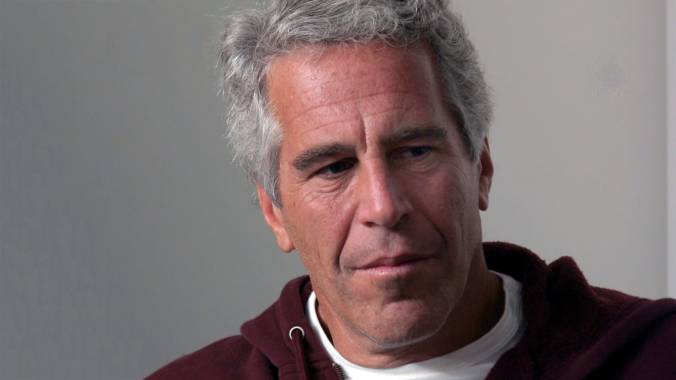
That’s Epstein…a popular guy.

You have to buckle your seat belt and read this story.

The Miami-Herald undoubtedly earned itself a Pulitzer Prize with its detailed and horrifying account of rigged justice involving jet set multimillionaire Jeffrey Epstein, who parlayed money, connections, friends in high places and quite possibly extortion into a lighter-than-light sentence despite overwhelming evidence that over many years he had used his resources to gather “a large, cult-like network of underage girls — with the help of young female recruiters — to coerce into having sex acts behind the walls of his opulent waterfront mansion as often as three times a day…The eccentric hedge fund manager, whose friends included former President Bill Clinton, Donald Trump and Prince Andrew, was also suspected of trafficking minor girls, often from overseas, for sex parties at his other homes in Manhattan, New Mexico and the Caribbean, FBI and court records show.”

The prosecutor who allowed Epstein to virtually escape accountability for crimes that make such recent cultural villains as Harvey Weinstein appear to be benign in comparison was the Trump Administration’s Secretary of Labor, Alexander Acosta, then the U.S. attorney for Southern Florida.

Nobody’s talking, except the alleged victims, who are now mounting a legal challenge to the fiasco. Epstien’s lawyers, the kind of high-powered, high-priced super-team that only the richest of the rich can summon, included Allan Dershowitz, Roy Black and Ken Starr, among others, can’t discuss their representation under the rules of client confidentiality. So far, Acosta has been silent as well. The evidence that the paper’s investigation has uncovered—and again, don’t rely on this brief post, read the whole story—is persuasive, damning, and for me, someone who works in and with the legal profession, spiritually devastating. This, from the Maimi-Herald’s introduction and conclusion, provides some sense of the magnitude of the scandal: Continue reading