Comment of the Day: “Unethical Quote Of The Week: Martina Navratilova”

social-media

Chris Marschner has weighed in with an exposition on social media’s impact on public opinion and society, sparked by the post here about a tennis icon’s claim that other sports stars had an obligation to use their fame to push their own often half-baked opinions on their fans.

Here is his Comment of the Day on “Unethical Quote of the Day: Martina Navratilova”:

…Social media is built on the construct of group think. That is why I think it is more dangerous than anything Trump or Clinton may do. The medium is the message.

It is not surprising that every platform uses similar concepts such “followers”. The psychology is that the larger the number of followers the higher the relative credibility. Facebook started this charade by placing a “Friends” counter on the person’s time line. “Likes” are another tool for the message makers. “Likes” are a reinforcement mechanism. Just click the thumbs up sign to validate the idea- don’t add anything- just positively reinforce the thinking. Ever wonder why there is not a dislike icon – thumbs down? Yes there is a means to comment but be prepared to have many weigh in against you if you challenge the group think. Continue reading

Unethical Quote Of The Week: Martina Navratilova

"Hey, Kershaw! Martina wants to know why you're afraid to give us your position on fracking!"

“Hey, Kershaw! Martina wants to know why you’re afraid to give us your position on fracking!”

“So many athletes are afraid to use their platform to do the right thing and speak what they feel, and that’s very depressing.”

Tennis legend Martina Navratilova to approving New York Times sports reporter Juliet Macur, as the former tennis great prepared for her keynote speech at a human rights event at the Department of State.

Wrong, Martina. There is no “platform.” You earned credibility and influence regarding social and political issues by intelligently and boldly standing up for your own rights and privileges, on issues that affected you directly and about which you had an important perspective and a legitimate reason to speak out. Female athletes. Discrimination. Gay rights. Feminism. You had credentials and authority in all of those areas, and using your status as a sports star to spark intelligent debate was responsible and fair.

Once you had established your credibility, analytical abilities and skill at articulating issues while taking informed positions on them, then you had earned added legitimacy separate from your athletic prowess and stardom. You’re a smart person: smart people’s informed opinions should be listened to and considered no matter what the topic. Many other athletes have expanded their legitimate authority and influence this way. Muhammad Ali. Kareem Abdul Jabbar. Ted Williams. Billy Jean King. Bill Bradley.

Athletic stardom, however, confers no more assumed expertise regarding issues unrelated to sports than being a paper-hanger or a busboy. The difference is that famous athletes, like famous singers and actors, are admired and idolized by many people, especially among the young, who are incapable of resisting the siren influence of their heroes. There is nothing good about this, and everything wrong about it. Tom Brady supports Donald Trump, and the only reasonable reaction to that is to conclude that Tim Brady is a moron. However, that’s not how blank-slate sports fans react to his endorsement. For too many of them, the sequence is pure cognitive dissonance: Continue reading

Ethics Mega Dunce And Ethics Corrupter: “Dancing With The Stars”

Ryan Lochte, role model

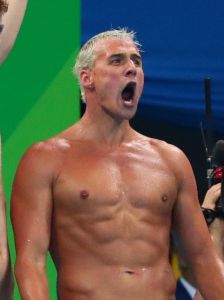
Ryan Lochte…liar, boor, jerk, TV star, role model.

This announcement would warrant a KABOOM! if ABC’s popular reality show/ dance competition hadn’t already demonstrated its lack of responsibility and decency so many times before. I guess my still unexploded head should be grateful for that, at least.

Dancing With The Stars is going to include Ryan Lochte in its line-up of competing celebrity dancers in the upcoming season. Why? Because he urinated on the wall of an establishment belonging to someone else, lied about the immediate consequences, insulted the hosts of the Olympic Games he competed in, and thoroughly embarrassed the United States, of course.  He’s infamous! He’s cute! He’s a moron! Naturally, this makes him attractive to “Dancing With The Stars.”

The undeniable message such casting sends to younger citizens whose sense of ethics and appropriate social conduct are still being formed is that wrongful conduct pays. DWTS is proving that as long as what you do makes you famous, it doesn’t matter if it is reckless, stupid, harmful or illegal. Then you can cash in.

This is the message that the show has often broadcast. Kim Kardashian was a contestant because she made a sex video, was the daughter of one of O.J.’s lawyers, had a freakishly large butt and epitomized hedonism, venality, and style over substance. Perfect! Tom DeLay was on the show because he was a famously vicious and corrupt—and successful— politician. Bristol Palin’s sole qualification for the show was that she managed to be an unwed mother-to-be, engaged to a jackass, while her mother was trying to convince the nation that she was qualified to be a heartbeat away from the White House. Reality shows and the ranks of washed-up actors have  supplied the show with a steady stream of drug addicts and low-lifes  whose sole distinctions have been that they were primarily famous for doing things that would get normal people fired or imprisoned. Continue reading

Ethics Hero Emeritus: Irena Sendler (1910-2008)

Sendler

I missed learning about the death of Irena Sendler (Irena Sendlerowa) in 2008, and this occurred because the mass news media barely took note of it. Lots of celebrities died that year whose passing prompted extended mourning in the press and examinations of their legacies: Paul Newman, Heath Ledger, Sir Edmund Hillary (a member of the Ethics Alarms Heroes Hall of Honor), Charlton Heston, Aleksandr Solzhenitsyn, and many others. There was no room for a final appreciation of the life of Irena Sendler, apparently. Today, the website Bio.com doesn’t list her among the notable deaths of that year, though it finds room for Fifties stunt singer Yma Sumac—remember her? She had a four octave range! And Arthur Showcross: he murdered 11 women from 1988 to 1990 in upstate New York, earning the nickname “The Genessee River Killer.”

All Irena Sendler did was save 2500 children from the Treblinka death camp. Continue reading

Case Study In Cultural Ethics Rot: “Bin Laden Shooter” Robert O’Neill

Dead, but still helping to corrupt our culture...

Yes, dead, but still helping to corrupt our culture…

Do you remember all those World War II, Korean War and Vietnam veterans who published books and gave interviews taking personal credit for the successes of the United Armed Services? No, neither do I, because there weren’t very many. The ethical culture of military organizations has always been that the unit is what matters, not the individual. For a soldier to seek credit, accolades and celebrity through his own disclosures was regarded as disgraceful conduct, and a betrayal of military honor and tradition.

Those values, and the important larger cultural values that they reinforce, are crumbling rapidly. Former Navy SEAL Robert O’Neill, one of many U.S. special forces members to storm Osama bin Laden’s compound on May 2, 2011, confirmed to The Washington Post that he was the unnamed SEAL who fired the fatal bullet at the terrorist leader. His decision to make himself an instant celebrity and speaker circuit star comes nearly two years after another Seal in the mission, Matt Bissonnette, published his account of the raid, “No Easy Day.” The Post says that O’Neill has endured “an agonizing personal struggle, as he weighed concerns over privacy and safety against a desire to have a least some control over a story that appeared likely to break, with or without his consent.” There is no struggle if O’Neill accepted that fact that his ethical obligation is to shut up, and not dishonor his colleagues, his profession and his country by choosing celebrity over preserving a vital ethical standard.

Will future Seals jeopardize the success of their missions as each tries to deliver the “money shot” that will literally result in millions? Why wouldn’t they, now that soldiers are absorbing the American culture’s obsession with cashing in and becoming famous as the primary objective of human existence? Like all ethical standards, the tradition of soldiers neither seeking individual credit nor wanting it had strong practical reasons for its existence. A military unit is the ultimate team, and no team can function at maximum efficiency if the members regard themselves as competing for glory. Continue reading

Geoffrey Holder Died, And Most Americans Don’t Care. There Is A Problem.

Does the name Geoffrey Holder mean anything to you? It probably doesn’t. He died this week, at the age of 84, and his passing received less media attention than the death of Paul Revere, of the cheesy Rolling Stones-lite 60’s rock band Paul Revere and the Raiders, and wasn’t within light years of the orgies of sorrow lavished on the passing of Joan Rivers and Robin Williams. hundreds of thousands of Americans, especially African-Americans, wear jerseys honoring NFL wife beaters and child-batterers, who would have crossed the street to shake Geoffrey Holder’s hand or get his autograph.

Boy, are American values screwed up.

Let me tell you about Geoffrey Holder, one of my heroes. Continue reading

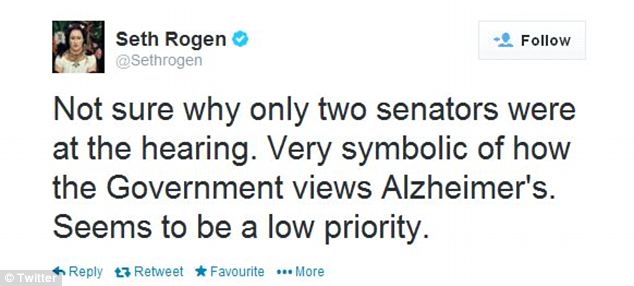
Seth Rogen’s Celebrity Hissy Fit And Congress’s Celebrity Cynicism

"How dare the Senators not take me seriously?"

“How dare the Senators not take me seriously?”

Actor Seth Rogen, who specializes in playing likable, though often stoned, shlubs in Hollywood comedies (except when he was cast as the Green Hornet, which everyone would rather pretend never happened), came to Capitol Hill to testify about the need for more research into the causes and prevention of Alzheimer’s Disease. His testimony was to the point and heart-felt—his late mother began showing symptoms of the illness in her fifties—and read from prepared text in a flat and formal tone rather than actorly flair. Rogen, however, was apparently seething was anger: after he was introduced, only two Senators on the committee stuck around for the show. Later he tweeted peevishly:

Rogen Tweet

Get the hook: Continue reading

Case Study: The Botched DP, Baseball, Ethics Evolution, and “Getting It Right”

manager-mike-matheny-argues

I know this is a long essay.

Yes, it involves baseball.

Bear with me. I think it is worth your time.

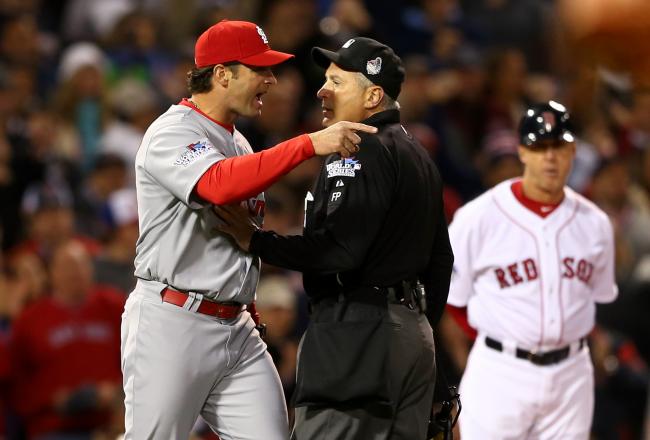
Last night, in Game 1 of the 2013 World Series, embarrassingly kicked away by the St. Louis Cardinals and won handily by some team called the Boston Red Sox,  an intricate ethics drama appeared, allowing us to see the painful process whereby a culture’s ethical standards evolve and change in response to accumulated wisdom, altered attitudes and changing conditions. An obviously mistaken umpire’s call was reversed by the other umpires on the field as the Cardinals manager argued not that the original call had been correct, but that reversing it was a violation of tradition, established practice and precedent….in other words, doing so was wrong, unfair, unethical because “We’ve never  done it this way,” a variation of the Golden Rationalization, “Everybody does it.”   You should not have to appreciate baseball (but if you don’t, what’s the matter with you?) to find the process illuminating and thought-provoking. Continue reading

Scott Carpenter And Being Unfair To #2

scott-carpenter

Scott Carpenter died last week, at the age of 88. Did you notice? Did you even remember who Scott Carpenter was?

I remember who he was and what he did, but I didn’t know that he had died. The world stops when the actor who played Tony Soprano dies, but an aged American hero and explorer? The news media says “Meh.” If Carpenter was still famous or a celebrity at all, it was only in the vague, foggy sense that obscure rock artists from the 60’s and expired pop icons are famous. I think Tony Dow, Barbara Feldon and Mama Cass are about as familiar to today’s public as Scott Carpenter, if not more. I just asked my son, who is 18 and better schooled in history and culture than most of his contemporaries. He knew Mama Cass was a member of the Mamas and the Pappas. The rest? Crickets.

Yet Scott Carpenter was, unlike those people, important. He was  one of the original Mercury astronauts, and in 1961, he orbited the Earth. After he left NASA he became a different kind of explorer, challenging “inner space,” the ocean’s mysterious depths. He launched an undersea habitation called Sealab II, where he and three other men conducted experiments on how well humans  function in a high-pressure undersea conditions for extended periods. Carpenter was a deep-water pioneer, mining on the sea bottom and harvesting exotic fish and other sea creatures. He salvaged and refloated a sunken jet fighter; he built an undersea petroleum-exploration platform.

Scott Carpenter, however, wasn’t famous by the time he died, because one of his fellow astronauts and good friends, John Glenn, orbited the Earth before him. Glenn went on to become a U.S. Senator based on his fame and heroic reputation (it helped that he was a combat pilot and decorated military hero as well). Carpenter did something important, dangerous, selfless, difficult and heroic, but he did it second, after John Glenn. We don’t remember second, and the distance between the accolades and honors heaped on #1 and the shrugs that follow #2 is disproportionate and unfair. Continue reading

Ethics Dunce: “Johnny Football”—True, But Now What? Maybe Hollywood Had The Solution

You don't know this actress, do you? There's a reason...

You don’t know this actress, do you? There’s a reason…

Texas A&M Aggies quarterback Johnny Manziel, a.k.a “Johnny Football,” ended last year by winning the 2012 Heisman Trophy, the first freshman ever to do so. He has spent the first 8 months of this year showing that he is an immature, arrogant kid with a dangerously inflated ego, with no sense of his obligations as a widely admired elite athlete, and little expertise in how to conduct himself responsibly and ethically.

A brief and incomplete sampling of his exploits:

  • In January, following his team’s  A&M’s Cotton Bowl win over Oklahoma, he visited the Winstar Casino in Oklahoma for some late-night gambling. He tweeted a photo with friends, waving money around. When the photo went viral on the web, sparking criticism, Manziel tweeted, “Nothing illegal about being 18+ in a casino and winning money…KEEP HATING!”
  • In March, Manziel was frustrated after throwing an interception during a spring football scrimmage, so he shoved aside a graduate assistant who happened to be in his way.
  • He was photographed with a fake tattoo of Texas A&M’s archrival Texas Longhorns, infuriating the fanatic fans of the Aggies. Continue reading