Comment of the Day: School No-Tolerance Hits Rock Bottom

By popular demand, Bill scores a Comment of the Day with 18 well-chosen words, his solution for the school that has demanded that a deaf pre-schooler named “Hunter” find another way to sign his first name because the standard method requires him to make his fingers into the shape of a gun. Here is the new record holder for shortest COTD, on the post School No-Tolerance Hits Rock Bottom. Well done, Bill.

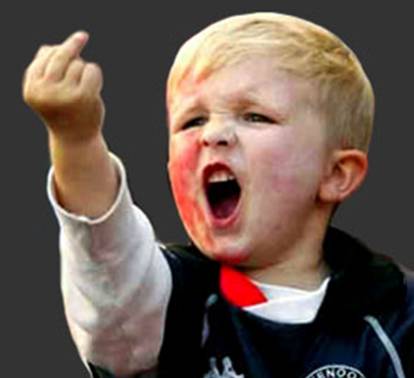
“They should change the sign for his name to a fist pointed up with the middle finger extended.”

School No-Tolerance Hits Rock Bottom

I hope.

Hunter Spanjer, preparing to terrorize someone.

This day-ruining story jumped ahead of a Todd Akin-related post, but since they both involve near criminal levels of stupidity, I didn’t have to shift gears very much. I should begin by assuring readers, however, that much as I wish I was, I am not making this up.

In Grand Island, Nebraska, the public school system has informed the parents of a deaf three-year-old pre-schooler that he cannot use sign language to communicate his name. You see:

  • The young boy’s name is Hunter Spanjer…
  • The Signing Exact English gesture for “hunter” is a fist with the forefinger pointing out and the thumb up, like a pistol…
  • The Grand Island school system’s “Weapons in Schools” Board Policy 8470 prohibits “any instrument…that looks like a weapon'”, and
  • The administrators of that school system are so dumb that they make Todd Akin look like Stephen Hawking. Continue reading

Of T-Shirts, Delta, Racist Ding-dongs, and a TSA Incident Worth Screaming About

How frightening.

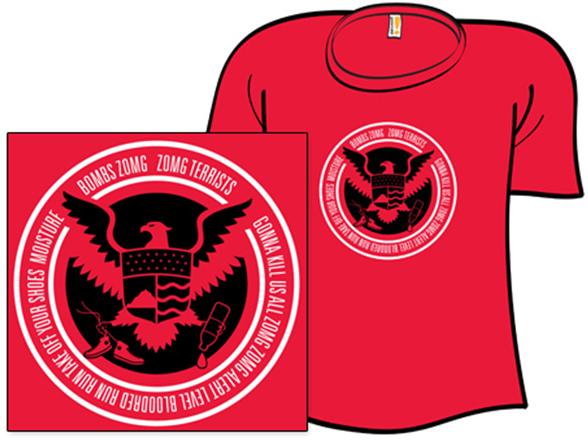
A brown-skinned  blogger named Anjiit recounts a recent outrageous incident in which he and his wife were kicked off a flight and subjected to extra-screening by the TSA because he was wearing a satirical T-shirt mocking airport security. The episode occurred at the Buffalo-Niagara airport, and the airline involved was Delta.

We had cleared the security checkpoint without incident, but while waiting at the gate, a Delta supervisor informed me my shirt had made numerous passengers and employees “very uncomfortable.” I was then questioned by TSA about the significance and meaning of the shirt. I politely explained that it was “mocking the security theater charade and over-reactions to terrorism by the general public — both of which we’re seeing right now, ironically.” The agents inquired as to the meaning of the term “ZOMG” and who it was that I thought was “gonna kill us all.” As best I could tell, they seemed to find my explanation that I didn’t think anyone would be killing us all and that I was poking fun at overwrought, irrational fears exhibited by certain members of the flying public to be satisfactory.  And moreover, they clearly deemed my shirt to be no legitimate threat. The Delta supervisor then told me I would be able to board the plane, but only after acquiescing to an additional security check of my and my wife’s belongings and changing my shirt. He went to lengths to explain that my choice of attire was inappropriate and had caused serious consternation amongst multiple individuals, and that ultimately “It’s not you, it’s the shirt.” Continue reading

Ethics Hero: The American Bar Association


This week, the American Bar Association House of Delegates passed Resolution 100.

The measure reads:

RESOLVED, That the American Bar Association urges all state, territorial, and local legislative bodies and governmental agencies to adopt comprehensive breed-neutral dangerous dog/reckless owner laws that ensure due process protections for owners, encourage responsible pet ownership and focus on the behavior of both dog owners and dogs, and to repeal any breed discriminatory or breed specific provisions.

Translation: stop discriminating against pit bulls and all the dogs that look like pit bulls, might be pit bulls, or that people who don’t know anything about dogs might think are pit bulls, as well as the dogs’ owners. It’s not fair, it’s unethical, and it’s un-American. Or, as Elise Van Kavage, chair of the Animal Law Committee of the Tort, Trial & Insurance Practice Section, put it, “People love their pets, no matter what their appearance,” she said. “This is America. Responsible pet owners should be allowed to own whatever breed they want.” Continue reading

Is Elizabeth Warren A Pit Bull?

You never know.

Lucky for her, she doesn’t look like one. Then again, she doesn’t look like a Cherokee, either…

After all, it is even easier to be designated a “pit bull” than a Cherokee, believe it or not. As a result, hysterics in the public and on the Maryland Court of Appeals have decided it is prudent to engage in the kind of bias and fear-driven racism regarding pets that would be condemned as brutally unjust if applied to humans.

The Maryland Court of Appeals ruled that “pit bulls” are “inherently dangerous” and will be subject to higher levels of liability, meaning, among other things, that there will be no “one bite rule” for these dogs, the usual trigger for determining whether a canine is a risk to humans, and that landlords will be forcing tenants to either get rid of their “inherently dangerous” dogs or move out. The ruling is  the result of bad reasoning, bad information, bad statistics and bad law, not to mention bias. What kind of legal standard depends on a term that has no definition and no way to determine what fits it? Yet that is what the Maryland pit bull ruling does.

As I have noted here in other posts, “pit bull” is a generic term applied to several bull dog and terrier-mix breeds, and mistakenly to up to 25 other breeds as well. This renders the deceptively used statistics of anti-pit bull zealot organizations like Dogs Bite.org completely worthless. I would say completely useless, but there are useful…for getting  perfectly gentle and trustworthy dogs killed. In its compiled statistics of deadly dog attacks, the organization states that “pit bull-type dogs” are responsible for 59% of fatal attacks on humans, contrasted with specific breeds like Rottweilers. The category of “pit bull-type dogs,” however, includes at least five distinct breeds that are often called “pit bulls”—  the American Bulldog, American Pit Bull Terrier, American Staffordshire Terrier, Staffordshire Bull Terrier, Bull Terrier, and the Mini Bull Terrier. Anti-pit bull breed-specific legislation also includes absolutely non-pit bull breeds in its definition of “pit bull types” in many jurisdictions, breeds like the Boxer, Bull Mastiff, Boston terrier and French Bulldog, the last two especially deadly threats to lick you into submission. Such laws are, in truth, dog legislation created by people who know nothing about dogs, but who are perfectly willing to take responsible people’s loving pets away and kill them if it will mollify some phobic voters.

Then there are the dog breeds that may be called “pit bulls” by dog attack victims who can barely tell a dachshund from a Great Dane. Among those “pit bull-type breeds” are the Alpha Blue Blood Bull Dog, American Bulldog,  American Pit Bull Terrier, American Staffordshire Terrier, Banter Bull Dogge, Black Mouth Cur, Boston Terrier, Boxer, Bull Terrier, Bulldog, Bull Mastiff, Cane Corso, Dogo Aregentino,  Dogo Canario, Dogue De Bordeaux, English Bulldog, English Mastiff, Fila Brasileiro, Fila Mastiff, French Bulldog, Italian Mastiff, Mastiff, Mini Bull Terrier, Neapolitan Mastiff. Old English Bull Dogge, Patterdale Terrier,  Presa de Canario, Staffordshire Bull Terrier, Spanish Mastiff, and the Valley Bulldog.

So what does the predominance of “pit bull type dogs” in the dog bite statistics tell us? It tells us that a lot of fearful, ignorant people—and judges— don’t know what pit bulls are, but they are afraid of them and want to wipe them off the face of the earth anyway.

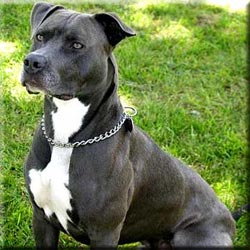
For the record, there is only one true pit bull, the American Pit Bull Terrier, which looks like this:
Continue reading

Why Does American Public Education Stink? The Answer: Incompetence, Stupidity, and Fear. The Proof: THIS…

Ah, that look that only a dedicated New York public school teacher can spark!!!

Over at Popehat, Ken has been on another roll, and his latest effort, as depressing and enraging as it is, is a real contribution to our understanding of the kind of entrenched foolishness, cowardice and incompetence in our nation’s public school administration that is gradually rendering the schools useless and our children uneducated.

Spurred by a New York Post story that seemed too horrible to be true, Ken set out to research the claim that the New York School system has compiled a long list of topics that are banned on student tests for a variety of reasons, prime among them that someone, somewhere, will be offended by them.  After some digging on the New York City Department of Education’s websites, what he found  was worse than how the Post had described it.

In an Appendix, he discovered a list of  test question topics “that would probably cause a selection to be deemed unacceptable by the New York City Department of Education… In general, a topic might be unacceptable for any of the following reasons:

  •   The topic could evoke unpleasant emotions in the students that might hamper their ability to take the remainder of the test in the optimal frame of mind.
  •     The topic is controversial among the adult population and might not be acceptable in a state-mandated testing situation.
  •     The topic has been ―done to death in standardized tests or textbooks and is thus overly familiar and/or boring to students.
  •     The topic will appear biased against (or toward) some group of people.

Using those criteria, and undoubtedly using astounding numbers of hours and taxpayer dollars, the Department came up with the following jaw-dropping list of banned test subjects. I’ll flag with red the taboos that are especially outrageous or idiotic, though perhaps I should note the two or three that might be appropriate. Continue reading

Tim Tebow Hatred and the Rabbi’s Fears

How dare he?

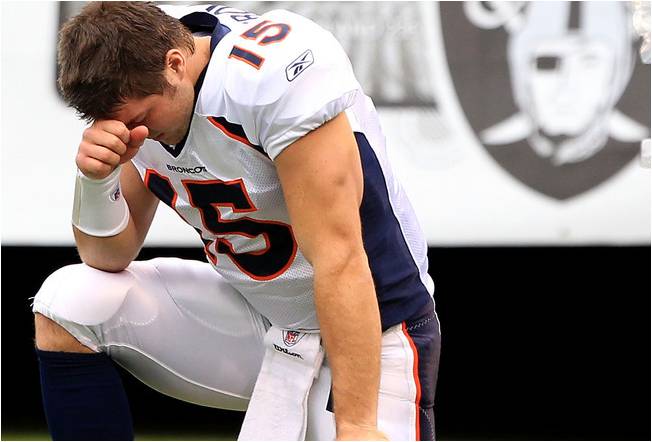
I have avoided weighing into the controversy over Tim Tebow, the Denver Bronco quarterback whose very public Christianity, combined with his penchant for leading miracle comeback victories for his team, has made him the most polarizing figure in sports today, and one of the most polarizing people in the culture as a whole. I have avoided commenting because I think the ethics of the controversy are obvious. Tebow is a decent, law-abiding, well-bred young man in a sector of our culture that produces profane, semi-literate, violent, or arrogant  jerks, fools, cheats and felons, not to mention arrested adolescents, by the hundreds, who are cheered, worshipped and enriched based solely on their talent to excel in stadiums and arenas. Anyone who chooses Tim Tebow, out of all these travesties of sports celebrity, to deride solely because he is vocal about his religious beliefs isn’t worth arguing about, because the verdict’s in: that critic’s priorities are backwards, inside out and warped. Tebow, unlike the NFL’s assorted felons, the NBA’s many dead-beat dads, and baseball’s steroid cheats, is a worthy role model for kids. He is humble, respectful, does his job and plays by the rules. What’s not to like?

Well, we know the answer to that question. He prays on the field, thanks God after every touchdown pass, and is prone to saying things like, “First and foremost I gotta thank my lord and savior Jesus Christ”  to reporters. Is it annoying? Oh, sure it is. This stuff is annoying from any athlete. To begin with, it is silly—the very idea that a Supreme Being gives a hoot which wins a football game is infantile—and it comes off as a commercial, like an athlete who makes sure that he says, “Well, first and foremost I have to thank the General Mills  people, because Wheaties, “The Breakfast of Champions,” has made me who I am today!”  in every interview. But Tebow’s statements aren’t  commercials, though, and anyone inclined to be fair knows it. This is a man with a deep religious faith who really believes that God guides his every move, and that it is right and responsible to thank Him when  the quarterback  is being celebrated for athletic exploits that in Tebow’s belief system are the product of his relationship with his deity. The sentiment is sincere and the motivation is virtuous. For Tebow’s displays of faith to incur hatred is an indictment of the haters. If he annoys you, don’t listen to him. If you do, the annoyance is your fault, not Tebow’s. Continue reading

Mike McQueary and Me


Do you know what you would do, in Mike McQueary's place? Are you sure?

I have defended Mike McQueary, the graduate student assistant coach who, according to the Pennsylvania Attorney General’s report, witnessed Jerry Sandusky raping a young boy in the Penn State showers in 2002 and told Joe Paterno, to this extent: he took the crucial step of reporting the incident to the coach, his boss as a graduate student assistant coach, and that took courage. Because of Paterno’s reputation as a moral and ethical exemplar, the young man had no reason to believe that Paterno would not do all the right things, from confronting Sandusky to finding the boy to alerting the police. (As we now know, Paterno did none of these.)

Even so, he had to believe he was in a career jeopardizing situation. Sandusky was a Penn State football legend, though retired, and presumably had Paterno’s loyalty. Would being the messenger that created liability and public relations problems for his boss’s beloved football program make McQueary a pariah even if it resulted in Sandusky’s arrest? That scenario is not uncommon, unfortunately.

That is why, when a commenter wrote that McQueary was more culpable for Penn State’s inaction than Paterno, I disagreed strenuously, and I still do. Paterno had power, given his iconic status, perhaps the ultimate power. If he had insisted that Sandusky be confronted, removed, and reported to police, it would have happened, and would have happened completely within his natural sphere of influence. For McQueary, however, to track the university’s response and independently take action to stop Sandusky would require exemplary valor. I wish he had done it. But he had placed his faith in Joe Paterno, and at Penn State, that should be a sure bet.

I think it is easy for any of us to conclude that in Joe Paterno’s place, we would not have allowed Sandusky to continue preying on young boys. What would we do in Mike McQueary’s position, however…putting aside the action of physically intervening in the rape itself? There is a reason why the first thing he did was to go home and call his dad for advice. He never, never considered what he would do in such a situation, because never, in his wildest dreams, did he imaging such a crisis occurring.

Never underestimate the difficulty of making the right ethical decision in an unexpected crisis.

I also sympathize with McQueary, because I had my own Mike McQueary moment years ago. Continue reading

The Widener School of Law Faculty’s Character Deficit

The Widener faculty meets to discuss its options regarding the persecution of Prof. Lawrence Connell

When we last left the ethics train wreck at the Widener University School of Law, Dean Linda Ammons had succeeded in exacting her revenge on long-time tenured professor Lawrence Connell, forcing him into a year-long suspension and demanding that he undergo psychiatric evaluation for political correctness infractions that she took as as a personal affront, despite the fact that a university inquiry cleared him. (The supposed justification for his punishment was the Catch-22 offense that he had “retaliated” against the students who had wrongfully accused him by publicly denouncing their claims.) Nothing much has changed in the interim. Connell is gone, and is in the process of suing. Widener’s reputation continues to sink, as it has abandoned academic freedom for lock-step ideological conformity; its Dean, Linda Ammons, maintains her silence about the affair despite unanimous condemnation by observers, reinforcing the conclusion that she has a vendetta against Connell, and the faculty remains mum. It is that last the commentators find most fascinating: why have none of Prof. Connell’s colleagues at the law school stood up for him? After all, the principle involved, academic freedom, is core to their profession, and the facts are straightforward. Continue reading

We Know Enough about Ethics Already

If Shakespeare understood ethics so well, why are we still pretending to be ignorant about it?

I awoke to read about a breathlessly announced new work on ethics, a book called “Blind Spots: Why We Fail to do What’s Right and What to do About it.” Business Professor  Ann Tenbrunsel and co-author Max Bazerman write that we are unaware of the “ethical blind spots” that keep us from recognizing how we engage in unethical actions. The book cites tests and new research showing behavior that the authors call “ethical fading” and “motivated blindness.” They examine such case studies as Enron and the Madoff scam to show how people “believe they will behave ethically in a given situation, but they don’t. Then they believe they behaved ethically when they didn’t. It’s no surprise, then, that most individuals erroneously believe they are more ethical than the majority of their peers.”

Stop the presses! Conflicts of interest make us ignore core values and act in our own best interests, and we rationalize our actions to avoid confronting the true nature of our conduct!

Oops! I just stated the entire thesis of the book. I’m sorry, Ann! Apologies, Max! Continue reading