Why It’s Unethical For Journalists To “Fact Check” Donald Trump—Especially CNN Journalists

Donald Trump

In Donald Trump’s meaningless statement yesterday, which was covered by the news media as if it was the revelation of the millennium, he  officially conceded that Barack Obama is a natural born U.S. citizen. He also used the silly media attention to drag out his announcement into a long campaign infomercial for which he didn’t have to pay a cent. Nice, and it serves the broadcast media right for giving any significance to a five-year-long trolling exercise.

Trump used the phony controversy over President Obama’s birth certificate to get publicity five years ago, because he is shameless. That’s all. Did he really think Obama was born in Kenya? Oh, who knows? He is an idiot, after all. Then again, he is a skilled professional troll. Whether he believed it or not, Trump used the issue to get attention then, and now has used his 180 degree reversal to get attention now. Obviously nothing has changed that would justify this flip-flop if he believed what he insisted was true for five years. A more transparently cynical and insincere retraction I cannot conceive. Who cares what Trump says he believes at any point, about anything?

But I digress. What really seemed to enrage the journalists who have embraced Rationalizations #28. The Revolutionary’s Excuse: “These are not ordinary times,” and #31. The Troublesome Luxury: “Ethics is a luxury we can’t afford right now” to anoint themselves as full-time volunteer members of the Hillary for President campaign, was that Trump said this:

“Hillary Clinton and her campaign of 2008 started the birther controversy. I finished it.”

Quoth the thoroughly partisan news media,

“ARRGH!!!!:
Continue reading

Unethical Quote Of The Week: Politico

experience

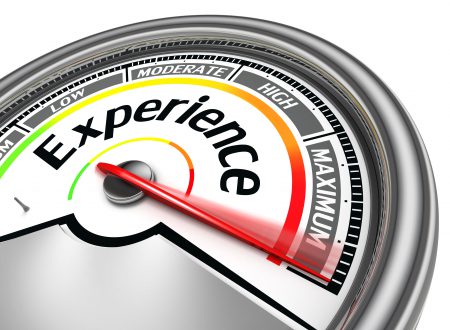
“This is the fundamental tension of being Clinton’s chief speechwriter: How do you write effectively for a policy-driven candidate who is allergic to campaign-speak? …But it’s also deeper than just a speechwriting problem: It’s about how the most experienced person to ever run for the White House continues to struggle with one of the most basic parts of the job: committing to a message that helps establish a general sense of affection from the electorate.

—-Annie Karnie in Politico, in a post called “Has Hillary finally found her voice?”

The news media has become so biased, so incompetent, so arrogant and so dishonest that I could fill this blog every day with only posts aimed at exposing the horrific and damaging “profession” of journalism. The increasing boldness with which reporters and editors aim to manipulate public opinion and government policy by intentional disinformation is staggering. In focusing on Politico’s Big Lie about Hillary’s credentials, I chose not to write about several others, such as, for example, Cincinnati Enquirer reporter Jessie Balmert, who wrote that the number of murders in the U.S. last year was 15 times higher than it actually was. Another candidate was liberal website ThinkProgress, which headlined a story “GOP Platform Proposes To Get Rid Of National Parks And National Forests.” (It proposes nothing of the sort, but ThinkProgress’s false headline operates as both clickbait and confirmation bias fodder for its readers.)

I chose Politico’s bland statement as fact what is not a fact, but rather easily disprovable pro-Hillary propaganda, because this technique is so insidious. The  biased news media repeats falsity over and over again until it is accepted as truth. No, Trump did not say that “Mexican immigrants were rapists.” No, equally qualified women do not get only 77 cents for every dollar paid to their male counterparts. Those two examples however, have some arguments, however unfair and warped, to justify them. By no possible interpretation can it be claimed that Hillary Clinton is “the most experienced person to ever run for the White House.”  It is an unequivocal falsehood, perpetuated by the news media out of incompetence and ignorance, or in order to intentionally mislead the public. Continue reading

Encore! Presidents Day Ethics: The Presidents of the United States on Ethics and Leadership

It’s President’s Day, and I see that it has been five years since the most popular Ethics Alarms President’s Day post was published. That one, from 2011, reminds us of the ethics wisdom and leadership acumen of the remarkable men who have served their country in the most challenging, difficult, and ethically complicated of all jobs, the U.S. Presidency.

In the middle of a campaign season littered with some disturbingly unethical candidates, it seems especially appropriate to re-post that entry now….with some updates. In 2011, I left out three Presidents, including the current one. Now all are represented, most of them well.

So…

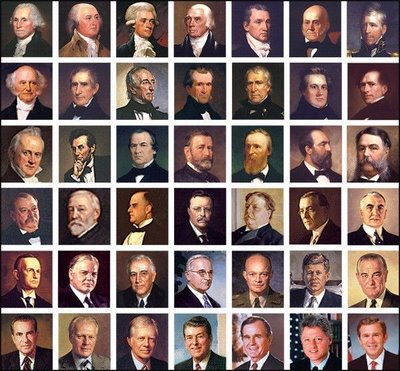
Ladies and Gentlemen, the Presidents of the United States of America:


George Washington: “I hope I shall possess firmness and virtue enough to maintain what I consider the most enviable of all titles, the character of an honest man.”

John Adams: “Because power corrupts, society’s demands for moral authority and character increase as the importance of the position increases.” 

Thomas Jefferson: “On great occasions every good officer must be ready to risk himself in going beyond the strict line of law, when the public preservation requires it; his motives will be a justification…”

James Madison: “No government any more than any individual will long be respected without being truly respectable.”

James Monroe: “The best form of government is that which is most likely to prevent the greatest sum of evil.”

John Quincy Adams: “Always vote for principle, though you may vote alone, and you may cherish the sweetest reflection that your vote is never lost.”

Andrew Jackson: “One man with courage makes a majority.”   (Attributed)

Martin Van Buren: “No evil can result from its inhibition more pernicious than its toleration.”

William Henry Harrison: “There is nothing more corrupting, nothing more destructive of the noblest and finest feelings of our nature, than the exercise of unlimited power.” Continue reading

Unethical Meme Of The Week: Democratic Underground

Meme

I know I could batter internet memes all day, but this one, by the Democratic Underground, particularly annoys me, as has the “chicken hawk” canard that knee-jerk anti-war activists have been wielding for decades.

To begin with, it’s an ad hominem argument, and thus unethical on its face. The question is whether a military option is the best and most responsible solution to an international problem, not who is asserting that it is. It is also an incompetent argument, as in stupid. There  is nothing about typical military experience that conveys expertise in foreign affairs or international politics. Military service, as in training, marching, being deployed and shooting a gun, and military action, as a strategic tool of diplomacy and international politics, are two different things. Lincoln was a superb Commander in Chief, but he didn’t gain that ability from his brief combat experience fighting Black Hawk Indians.

In fact, what is  the statement above supposed to imply? No Commander in Chief has had to risk personal combat if he chose war. Because there has been no draft since the the Nineties, the only way a political leader would ever have military experience would be if he chose a military career, which would mean that the meme suggests that a military career is a prerequisite for national leadership. But Democrats don’t believe that; nobody believes that. In fact, Democrats are wary and suspicious of the military, which they believe, with some justification,  is biased toward military involvement. They don’t even especially respect military service: look at how James Webb was treated in his brief presidential run. Continue reading

Unethical U.S. Presidential Candidacies: Is Trump’s the All-Time Worst?

There have been many unethical candidacies for U.S. President in American history, and some of them have been successful.

I am not referring to unethical candidates for the job, for there have been too many of them to count. An unethical candidacy occurs when a candidate’s purpose for seeking the job, method of doing so, and/or the effect on the nation of his or her campaign is especially reckless, harmful, or irresponsible. Perhaps the first unethical candidacy was that of Aaron Burr, who attempted to exploit a flaw in the election process to steal the presidency from his position as a vice-presidential candidate. Rutherford B. Hayes allowed himself to be put in office by an undemocratic back-room deal when his opponent, Samuel Tilden should have won both the popular and electoral vote.

Teddy Roosevelt’s decision to oppose his old friend, President Taft, in 1912, splitting his party, breaking his word (he had earlier refused to run for what was in essence a third term, agreeing it was best to hold to George Washington’s tradition), and all-but-insuring Woodrow Wilson a victory, was an exercise in ego and hubris. Eight years later, Sen. Warren G. Harding, who privately expressed doubts about his ability to fill the highest post in the land, may have allowed himself to be manipulated and used by corrupt political operatives for their own purposes. Franklin Roosevelt recklessly ran for his fourth term knowing that he was seriously and perhaps terminally ill, and didn’t take care to ensure that he had a competent Vice-President. (He, and the U.S., were lucky in that regard.)

Gov. George Wallace’s third party presidential run in 1968 was explicitly racist. The beneficiary of that candidacy, President Richard Nixon infamously pursued re-election with a new low of unethical and even illegal tactics against the Democrats. There have been others.

Donald Trump’s revolting candidacy, as yet unannounced, cannot fairly be called the most unethical presidential candidacy, but it is early yet. It may well prove to be one of the most harmful. As the United States faces some of the most difficult challenges in its history, Trump has chosen to use the nation’s process of deciding on its leader for his own ego gratification and self-promotion, without  preparation for the job, deference to fair campaign rhetoric, or acknowledgment of his own fatal flaws as a candidate. Continue reading

Why We Cannot Trust The News Media, Reason #116: ABC’s Deceptive Video Editing

The ABC News version: "I'm going to make him an offer!"

In a fiery speech in budget wars epicenter Madison, Wisconsin yesterday, whatever-she-is Sarah Palin told cheering Tea Party followers,

“If you stand by your platform, if you stand by your pledges, we will stand with you, we will fight with you, GOP, we will have your back. What we need is for you to stand up, GOP, and fight. GOP leaders need to learn how to fight like a girl!”

“Fight like a girl” —that is, like Palin—immediately spread over the internet, one more example of Palin’s uncanny bumper-sticker catch phrase talent. Now here is how ABC’s “This Week with Christiane Amanpour” played the video today:

“What we need is for you to stand up, GOP, and fight. GOP leaders need to learn how to fight—!” Continue reading

The Prince, The Sex Offender, and the Ethics of Friendship

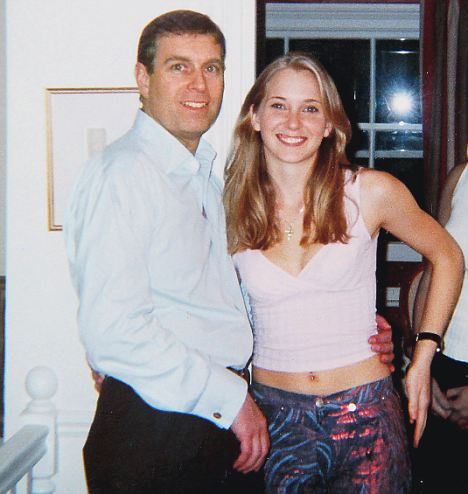
Prince Andrew with one of his friend's victims in 2001

The ethics of friendship is complicated.

President Bush claimed to be friends with Vladimir Putin. F.D.R. once said that Josef Stalin was his friend. President Obama was famously friendly with dubious characters like Rev. Wright and William Ayres.

History is full of heroes and near-heroes who had infamous friends, though the extent of the often friendship is difficult to know. Sammy Davis, Jr. and Elvis were supposedly buddies with Richard Nixon. Bill and Hillary Clinton were close friends with Dick Morris. Wyatt Earp was a life-long friend of “Doc” Holliday; Andrew Jackson may have been friends with pirate Jean Lafitte, who helped him win the Battle of New Orleans. We simultaneously celebrate loyal friends, and yet we also judge people by the company they keep. Should we condemn individuals who have friends with serious character flaws or a history of unsavory acts? Or should we admire them for sticking with their friends when everyone else is turning against them? Continue reading

Presidents Day Ethics: The Presidents of the United States on Ethics and Leadership

In commemoration of President’s Day, Ethics Alarms presents the ethics wisdom of the remarkable men who have served their country in the most challenging, difficult, and ethically complicated of all jobs, the U.S. Presidency.

Ladies and Gentlemen, the Presidents of the United States:

George Washington: “I hope I shall possess firmness and virtue enough to maintain what I consider the most enviable of all titles, the character of an honest man.” Continue reading

What is the “Worst” Behavior? Don’t Ask Conservative Bloggers!

John Hawkins of Right Wing News persuaded 43 conservative bloggers to send him their list of the twenty worst Americans in history. He then compiled a list of “The 25 Worst Americans” using their responses, with the rankings based on the number of blogger who listed an individual.

The list is disturbing, but not for the reasons you think.  What does it say about the priorities and values of conservative bloggers that the “worst American” among all the criminals, serial killers, scoundrels and sociopaths America has produced is, by this method of measurement...wait for it…

...Jimmy Carter? Continue reading