Meet Sara Morris, the Running Fick [Corrected]

I referred to someone as a fick last week, and realized Ethics Alarms hadn’t exposed any of that particularly loathsome breed recently. Upon checking, I discovered that the last official Ethics Alarms fick was designated way back in 2021. It was Bennett Madison, a columnist at the now (thankfully) defunct Gawker site. He had openly boasted about deceiving advice columnists and their trusting readers in his article titled, “Help! I Couldn’t Stop Writing Fake Dear Prudence Letters That Got Published.

Sara Morris says, “Hold my beer!”

Continue reading

The Judge’s Fraud Ruling Against Donald Trump [Opinion Link Added]

Justice Arthur F. Engoron of the New York Supreme Court ruled yesterday that Donald Trump repeatedly inflating the value of his assets, thus constitution fraud on banks and insurers. Thus New York Attorney General Letitia James will no longer have to prove fraud in her lawsuit against Trump. She is seeking a penalty of $250 million in a trial scheduled to begin next week. Justice Engoron ruled that the annual financial statements submitted to banks and insurance companies by Trump agents “clearly contain fraudulent valuations that defendants used in business.”

He also fined Trump’s lawyers $7,500 each for persisting in making arguments that he had previously rejected, and warned them that the arguments in question bordered on being frivolous. The former president, the judge wrote, ignored reality when it suited his business goals. “In defendants’ world,” he wrote, “rent-regulated apartments are worth the same as unregulated apartments; restricted land is worth the same as unrestricted land; restrictions can evaporate into thin air.” Trump’s defense was that the banks made large profits in their dealings with the Trump Organization and could not be called victims, and that valuing property is subjective. This is the classic and often successful defense offered in many tax fraud cases.

Continue reading

NOOOOOO! “The Ethicist” Just Endorsed The Golden Rationalization As Justification For Deception.

It isn’t quite head-exploding, because the New York Times “The Ethicist” column has seen its columnist—there have been five of them, I think—promote unethical conduct all too frequently over the years. But the current ethics advice maven, Kwame Anthony Appiah, is a real ethicist, unlike the others, and I expect better of him. Because of his credentials and assumed authority, his unethical advice this week is particularly damaging. And to clarify my statement I quote one of many memorable exchanges during the testimony of Miss Mona Lisa Vitto (Marissa Tomei) in the climax of “My Cousin Vinny”:

D.A. Jim Trotter (Lane Smith): Objection, Your Honor! Can we clarify to the court whether the witness is stating opinion or fact?

Judge Chamberlain Haller (Fred Gwynne) : [to Lisa] This is your opinion?

Mona Lisa Vito: It’s a fact.

The inquirer asked whether it was unethical for him to list a fake publisher on the title page of his self-published book that he created on Amazon, apparently a common practice that Amazon permits. He also asked whether it would be unethical to tell a bookstore owner who agreed to sell the book on consignment that the book was published by his made-up book company.

“The Ethicst” answers the first query this way:

Continue reading

On The Matter Of Whether There Are Valid Reasons To Suspect And Investigate Voter Fraud…

benfords-law

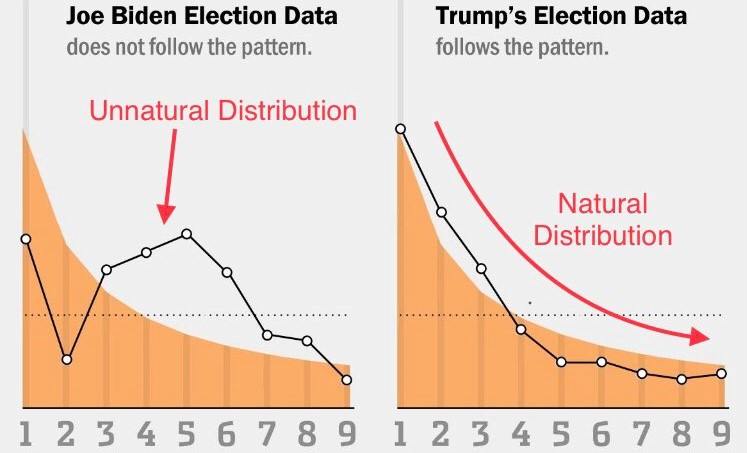
This article, called “Joe Biden’s Votes Violate Benford’s Law (Mathematics)” is, if nothing else, interesting. Math is not my wheelhouse, to say the least. Maybe it’s right and maybe it’s garbage, but Benford’s Law is real, and is used  to detect fraud, as this article explains.

Prof. Reynolds, who posted the link, on his blog, says that Facebook will not post the link in any form. That itself is a red flag. Why is Facebook preventing readers from learning about a process that might lend a clue to whether the current election vote totals have been manipulated or not?  What is Facebook afraid of?

The rush to conclude the election rather than examine these legitimate questions is its own red flag.


Comment Of The Day: “Scary Tales Of The George Floyd Freakout: The Mission On The Bay Fiasco”

Arthur in Maine accepted the challenge of answering my query that began the Mission on the Bay story: “What is it about restaurants that generate so many ethics messes?” I had never considered the reasons he cites, but they are sound. I was thinking about all the various restaurant ethics blow-ups I have posted on in the past, as well as the many I have left undiscussed. I was especially thinking about this one from seven years ago, about an Applebees waitress who posted online a receipt from an obnoxious customer, a pastor to shame her. That controversy prompted two additional posts, here and here. Yet as unethical as the waitress in that episode was, the eavesdropping bartender in Swampscott was worse.

Arthur argues persuasively that the culture of the restaurant business makes it a breeding ground for unethical conduct. Here is his Comment of the Day on the post, “Scary Tales Of The George Floyd Freakout: The Mission On The Bay Fiasco”:

Jack, your header asks why so many ethics problems arise in restaurants. Having spent some time in the field, I offer the following in answer.

  • High end restaurants tend not to have this type of issue. They usually hire highly competent kitchen and front-of-house staff, and management is usually diligent in training and supervision.

The ethical problems are more common in mid-level houses and chains.

  •  In such houses, staffing is a never-ending challenge, for the simple reason that restaurant work is essentially one of the few fields that actually rewards vagrancy. Servers and kitchen personnel might work a given house for a year or two and move on to something else – either a gig where they think they can make more money, or a different place altogether. Serving and cooking skills are easily transferable; if you leave one location for whatever reason (family, problems with the law, just a desire to see another part of the country, you name it) – it’s pretty easy to find another gig doing exactly the same thing.

In mid-level houses, actual loyalty to the organization tends to be the exception, rather than the rule.

  • The nature of restaurant staff. Senior-level positions – chef or sous chef (or kitchen manager) and the front-of-house manager generally require a fair amount of training and experience. These tend to be genuinely skilled positions. But servers and line cooks… candidly, these are mostly semi-skilled positions. The work is fairly physically demanding but really isn’t particularly mentally taxing most of the time. And with regard to service personnel: very few people in the United States actually work as restaurant servers because that’s their chosen field. Yes, you find true professionals in the high-end places. But for pretty much everyone else, it’s a way to pay the bills while waiting for your screenplay to be picked up, or finishing school, or whatever.

And in fairness, there are servers who really don’t have other options available to them based upon their skills and where they live. But for many, the number of hours required to make a decent amount of money are comparatively short. Continue reading

A Unanimous Supreme Court Makes The Crucial Point That Unethical Isn’t Necessarily Illegal, And Shouldn’t Be

This was a bad day for over-zealous prosecutors.

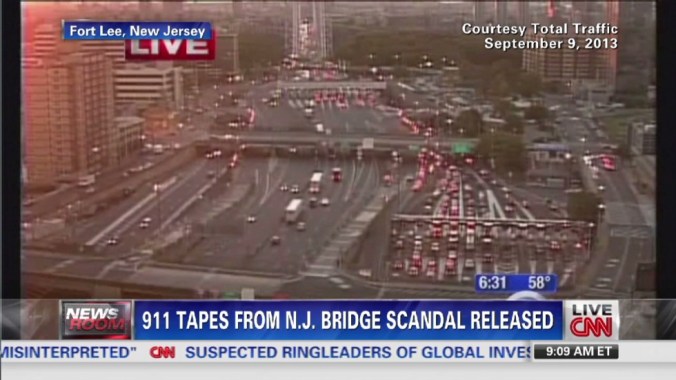
First, the Justice Department dropped all charges against Michael Flynn in the face of findings of overwhelming prosecutorial misconduct. Then a unanimous U. S. Supreme  reversed the fraud convictions of the two former aides to New Jersey governor Chris Christie for their roles in the “Bridgegate” scandal.

In 2013, Bridget Kelly, once Christie’s deputy chief of staff, and William Baroni of the Port Authority, had collaborated in reassigning traffic lanes on the George Washington Bridge typically reserved for residents of Fort Lee, N.J., to punish the town’s mayor for withholding support of Christie’s reelection bid. Christie ducked responsibility  for the petty stunt that inconvenienced hundreds of commuters, but was never formally implicated.

The Court held, in Kelly v. United States, that the actions of the two did not meet the statutory definition of fraud.

Baroni’s and Kelly’s realignment of the access lanes was an exercise
of regulatory power—a reallocation of the lanes between different
groups of drivers. This Court has already held that a scheme to alter
such a regulatory choice is not one to take the government’s property.
Id., at 23. And while a government’s right to its employees’ time and
labor is a property interest, the prosecution must also show that it is
an “object of the fraud.” Pasquantino v. United States, 544 U. S. 349,
355. Here, the time and labor of the Port Authority employees were
just the implementation costs of the defendants’ scheme to reallocate
the Bridge’s lanes—an incidental (even if foreseen) byproduct of their
regulatory object. Neither defendant sought to obtain the services that
the employees provided.

When a Court routinely criticized as sharply divided along ideological lines agrees across the bench, it demonstrates how egregious the prosecution of Baroni  and Kelly were.

The essence of Justice Elena Kagan’s opinion: Continue reading

Monday Ethics Musings, 10/7/2019: Questions, Questions…

Thinking…

Wait, where are my clothes???

1. When will Mrs. Q make her debut as a regular contributor to Ethics Alarms? I’m working out the details. She’s ready, I’m behind, we’ll get it done. Very excited.

2. If everything is going to be done online, is it reasonable to expect those companies who force us to interact that way to be competent? Case Study: The Boston Globe just offered me a 6 month digital subscription for a buck. But an old password connected to my email address prevented me from entering the new one necessary to accept the deal. All links went to current subscription or subscribing at the regular price. It took 40 minutes of online chats with robots and a human being (who disconnected me one) to fix the problem, which was in how the Globe set up the offer acceptance page. I ended up using a password made up by “Sherry” because I couldn’t reset my password myself. This kind of thing happens all the time. I wouldn’t have a clue how to set up a website response system, but if that was my job, I would be obligated to do better than this.

3. What good are movie critics whose opinions and tastes aren’t shared by their readers? My view: not much. The job of a critic is to let readers know if readers would appreciate the movie or not. A critic who can’t or won’t do that, and most don’t, is useless. I was thinking about this when I encountered this article in The Guardian listing the films for which audience ratings and critical ratings diverged the most.

Much of the disparity today is caused by critics who allow their ideological biases to dominate their judgment: yes, bias makes them stupid. Another problem, harder to over-come, is that the judgment of people who see hundreds of movies a year and who are often steeped in the art of film-making often has no relevance to the movie average audience member at all. Yet another is the unavoidable fact that few critics are equally qualified to review all genres. Horror movies are especially frequent victims of this problem.

Incidentally, yesterday I watched a new horror movie, “A.M.I.” that exploited the inherent creepiness of online personal assistants like Siri and Alexa. It was pretty bad, but the final scene was so ridiculous (and predictable) that it almost justified the film. Almost. Continue reading

The Great World War I Dogfight Photo Hoax

You are probably familiar with the famous Cottingley fairy photography hoax (there’s even a movie about it starring Peter O’Toole) in which two young British girls fooled much of the world—and credulous believer in the supernatural Sir Arthur Conan Doyle—into thinking that they had captured photographic proof that the fairy folk of legend existed. That hoax, however, was a mere bagatelle compared to this one.

In the early 1930s, a Mrs. Gladys Maud Cockburne-Lange said she was the widow of a Royal Flying Corps pilot. She presented  stunning photographs of scenes of aerial combat during World War I, apparently taken in the air from a combat biplane. Her late husband, she said, had defied the RFC’s regulations and mounted a camera on his plane, tying its shutter action to his machine gun. The resulting photos were the first  visual representation of British and German planes fighting each other taken from the air. They showed  bi-panes crashing into each other, being shot to pieces, catching on fire, and even pilots falling from the sky.

All previous photos of  WWI aerial “dogfights” had been taken from the ground, so this unexpected  trove of photographs caused a sensation.  The images were rapidly sold to newspapers, galleries, and publishers. Mrs. Cockburne-Langes sold 34 of the photos to one  publisher for  $20,000, a huge sum during the Great Depression, and they were later published in a popular book, “Death in the Air: The War Diary and Photographs of a Flying Corps Pilot.” by an anonymous author.

Unlike the fairy photo hoax, however, the truth about these photos took hald a century to uncover.  In 1984, the Smithsonian Institute received a donation of materials from Wesley David Archer, an American pilot who had served with the RFC and then…wait for it… became a special-effects technician in Hollywood.  Air and Space Museum curator Karl S. Schneide and Peter M. Grosz, an aviation expert, investigated the materials, and discovered  that in  some of the photographs, the wires holding up the model airplanes used to create the illusion of mid-air dogfights had yet to be airbrushed out. The materials also contained a diary entry that revealed the entire scheme. Continue reading

Political Fundraising Frauds And Scams, PART II: The Conservatives

(Except nobody was alerted…)

An intrinsic problem with members of a party that extols Capitalism is that so many  have a fondness for making money that often overwhelms their ethics alarms, assuming they have any….and many don’t.

In a brave and responsible article posted to day, National Review writer Jim Geraghty , lays out a devastating indictment. He writes in part,

“Why is the conservative movement not as effective as its supporters want it to be? Because day after day, year after year, little old ladies get called on the phone or emailed or receive letters in the mail telling them that the future of the country is at stake and that if they don’t make a donation to groups that might as well be named Make Telemarketers Wealthy Again right now, the country will go to hell in a handbasket. Those little old ladies get out their checkbooks and give what they can spare, convinced that they’re making a difference and helping make the world a better place. What they’re doing is ensuring that the guys running these PACs can enjoy a more luxurious lifestyle. Meanwhile, conservative candidates lose, kicking the dirt after primary day or the general election, convinced that if they had just had another $100,000 for get-out-the-vote operations, they might have come out on top.”

Continue reading

Lunchtime Ethics Appetizer, 6/3/2019: Self-Censorship, Trump’s Ridiculous Jumbo, Turley On Mueller, And A College Ranking Scandal [Updated]

Bon Appettit!

1. To self-censor or not to self-censor. Right after expressing here my dilemma about whether to risk political and partisan backlash by raising current, important and legitimate legal ethics issues from the Mueller investigation, there were a flurry of articles and podcasts about the dangers of self-censorship in a climate where Americans are being systematically intimidated from opposing the Woke Collective. This is a classic ethical dilemma, with ethical considerations like integrity, duty, citizenship, honesty and responsibility, are opposed by non-ethical considerations, like keeping one’s job, paying the bills, and not being cast as a pariah in one’s profession.

I was also reminded of my problem by Instapundit referencing today an old  Washington Post article about Mao’s mass murders. My company lost a lucrative sexual harassment training deal after two Chinese nationals (that I did npt know were in the audience) too offense at a tangential comment about Mao’s exterminations dwarfing those of Hitler and Stalin  (but not Darth Vader). Both contacted me and demanded apologies, claiming that it was Western propaganda and that the Great Leader had “only” executed millions out of necessity. I refused (I know I have mentioned this before here) and said I was sincerely sorry they had been subjected to cultural influences that had warped their ethics, and that if I had been aware that this was a sensitve topic to anyone in the audience, I would have omitted the reference. Having spoken the truth, however, I was not going to deny or apologize for it.

“Why didn’t you just apologize?” my client asked. And I was reminded of the moment in “1776” when a royalist in the Continental Congress asks Jefferson why he called King George “a tyrant” in the Declaration. “Because he is a tyrant,” Jefferson answers.

I’m an ethicist, I said. I’m not going to whitewash the massacre of 45-60 million people because someone is offended by the truth.

That was the end of that contract…

2. The President issues a Jumbo. Why does he do things like this? I have no idea. It si the political equivalent of pushing a pie into his own face. In an interview with the British tabloid, The Sun tabloid, Trump responded to a query about his reaction to  Megan Markle’s statement  that he is a “misogynist” and her suggestion that “she’d move to Canada if you got elected; turned out she moved here.” He said, “Well, a lot of people are moving here, so what can I say. No, I didn’t know that she was nasty.”

Of course Trump was attacked for saying that to a British newspaper—it was racist, it was an insult, the usual. Of course the President shouldn’t stoop to personal swipes at anyone; on the other hand, that’s what he does when he is attacked himself.  “Tit for Tat” and “doing unto others as they did to you” are part of Trump’s “ethics.” Can’t we stipulate this by now? Can’t TRUMP stipulate it at this point?

Then he tweeted, “I never called Meghan Markle ‘nasty.’ Made up by the Fake News Media, and they got caught cold! Will @CNN, @nytimes and others apologize? Doubt it!” He did this knowing that the Sun had his statement recorded, and sure enough, the paper  released the audiotape.

See, the idea behind Jimmy Durante saying “Elephant? What elephant?” when caught stealing the biggest pachyderm in the world in a musical comedy is that it’s obviously desperate and ridiculous, and intended to be funny.

This is just self-destructive, disturbing, and really, really stupid.

3. Jonathan Turley on Mueller. The George Washington Law prof has consistently been a voice of reason and objectivity reagarding the Mueller investigation. He has recently written two excellent columns on Mueller’s public statement, here, and here.

Greg should send them to his ex-friend.

4. Why is this more damaging to a school than, say, falsely instructing students about justice, the right to representation, and due process?

From TaxProf Blog: “University Of Oklahoma Inflated Its Alumni Giving Data For 20 Years, U.S. News Strips Its #127 Ranking”

The University of Oklahoma admitted to  U.S. News that it had inflated its alumni giving data since 1999, which affects its placement in the National Universities, Best Value Schools, Top Public Schools, Best Colleges for Veterans and A-Plus Schools for B Students rankings and lists. For the 2019 Best Colleges rankings, the University of Oklahoma originally reported its two-year alumni giving rate at 14 percent. The school informed U.S. News the correct value is 9.7 percent. The average alumni giving rate has a weight of 5 percent in the Best Colleges ranking methodology.

And now,

A former OU student has filed a class action lawsuit against the University of Oklahoma as a result of the university being stripped of its U.S. News & World Report ranking. [Gretzer v. Oklahoma, No. 19-490 (W.D. OK May 28, 2019]

The lawsuit, which was filed May 28 on behalf of former OU student Elani Gretzer and all OU undergraduate students since 1999, alleges the university broke contract by providing false alumni giving data to U.S. News & World Report, inflating its ranking in U.S. News & World Report’s “Best Colleges” ranking as a result.

The lawsuit alleges the U.S. News & World Report’s ranking of the Price College of Business was a “material factor” in Gretzer’s decision to enroll at OU. … The suit is also filed on behalf of an estimated minimum of 350,000 people — all OU students who have enrolled since 1999, the year in which OU has admitted it began providing false information to U.S. News & World Report.

Morgan Cloud (Emory) & George Shepherd (Emory), Law Deans In Jail, 77 Mo. L. Rev. 931 (2012):

A most unlikely collection of suspects — law schools, their deans, U.S. News & World Report and its employees — may have committed felonies by publishing false information as part of U.S. News’ ranking of law schools. The possible federal felonies include mail and wire fraud, conspiracy, racketeering, and making false statements. Employees of law schools and U.S. News who committed these crimes can be punished as individuals, and under federal law the schools and U.S. News would likely be criminally liable for their agents’ crimes.

Some law schools and their deans submitted false information about the schools’ expenditures and their students’ undergraduate grades and LSAT scores. Others submitted information that may have been literally true but was misleading. Examples include misleading statistics about recent graduates’ employment rates and students’ undergraduate grades and LSAT scores.

U.S. News itself may have committed mail and wire fraud. It has republished, and sold for profit, data submitted by law schools without verifying the data’s accuracy, despite being aware that at least some schools were submitting false and misleading data. U.S. News refused to correct incorrect data and rankings errors and continued to sell that information even after individual schools confessed that they had submitted false information. In addition, U.S. News marketed its surveys and rankings as valid although they were riddled with fundamental methodological errors.

One question: why isn’t Harvard’s ranking being lowered? I suspect that it’s because maleducating students and systematically undermining American values and civil rights isn’t included in the criteria.

It should be.