Picking My Way Through Alex Berenson’s Ethics Minefield

Alex Berenson is one of the former Axis journalists (Matt Taibbi is another) whose conscience and cerebrum just couldn’t take the lies and craziness of the Left any more and went rogue. He’s done yeoman work for Truth, Justice and the American Way on Twitter/X and on his substack. Berenson’s latest post there gives readers a glimpse into his ethical orientation, and it’s nothing if not thought-provoking.

Berenson makes statements that make me wonder if he’s worth paying attention to at all, however. A prime one is this: “I am pro-choice, though I find abortion personally abhorrent…Those are medical decisions, and they are governed by a principle of near-absolute autonomy.”

Why does he find abortion “abhorent”? Presumably it is because abortion most frequently involves the killing of a nascent human being who would have a shot at a long, exciting, productive and possibly consequential life were it not for another individual, his or her mother, deciding that her life would be easier if this separate individual’s existence were sacrificed.

Continue reading

Oh Yeah, Pro Sports’ Greedy Embrace of Legalized Gambling Is Really Going Well…

In 2023, Ethics Alarms tersely predicted, regarding the full and loving embrace with which professional sports is snuggling up to online gambling, “This will not end well.” Ah, but there’s money to be made….so, for example, Major League Baseball allows Red Sox Hall of Famer David Ortiz to shill for one of the big online betting concerns during local game broadcasts. Not surprisingly, given that it is the most unethical of all sports organizations, the NFL had the first betting scandal under the new gluttony: In 2023, “Isaiah Rodgers and Rashod Berry of the Indianapolis Colts and free agent Demetrius Taylor were suspended indefinitely for betting on NFL games. Tennessee Titans offensive tackle Nicholas Petit-Frere was suspended six games for betting on other sports.

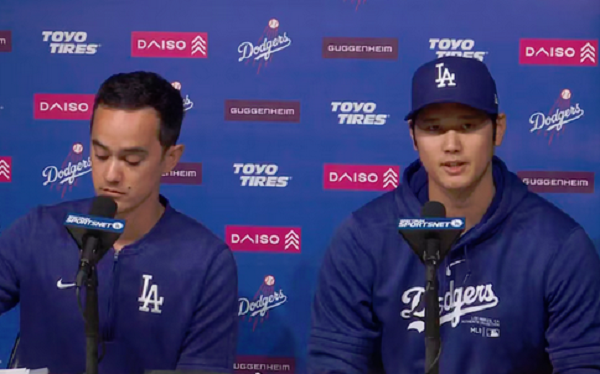
Next came the betting scandal involving baseball’s most famous star, pircher-slugger Shohei Ohtani, whose translator was caught illegally using the star’s name to pay off a bookie. But of course, there was, and is, more to come.

Toronto Raptors player Jontay Porter was banned from the NBA after an investigation last year found that Porter tipped off bettors about his health and then claimed illness to exit at least one game, creating wins for anyone who had bet on him to under-perform. Porter also gambled on NBA games in which he didn’t play, and once bet against his own team. Now another NBA player, Miami Heat guard Terry Rozier, is under investigation. He is suspected of manipulating his game performance “as part of an illegal sports betting scheme”when he was a member of the Charlotte Hornets.

Wait: pro athletes today make millions of dollars. The 1919 Black Sox scandal (Second mention today!) happened because the players involved were being exploited by their team’s owner and were barely able to feed their kids. Why would millionaire jocks ever get involved with gamblers?

Continue reading

States Are Running Unethical Numbers Rackets That Take From The Poor, Legalized Casino Gambling Is Spreading Gambling Addictions Across The Land, Legalized Online “Gaming” Threatens The Integrity Of Our Sports, And What Do Democrats Want To Ban?

Betting on elections!

Brilliant.

U.S. Reps. Andrea Salinas (D-Oregon) and the reliably absurd Jamie Raskin, (D-Md), introduced a bill in Congress last month mirroring a bill introduced by Sen. Jeff Merkley (D-Ore.), earlier in 2024, to prohibit election wagering. It’s called the “Ban Gambling on Elections Act.”

“Betting on elections degrades them from an investment in leadership to a profit-maximizing game,” Merkley said in a statement. “In addition, this practice is corrupt since those betting can influence the outcome by funding late-cycle smear campaigns. It’s like betting on a baseball game when you control the umpire. It’s a great step forward to have House leaders like Rep. Raskin and Congresswoman Salinas take on this fight.”

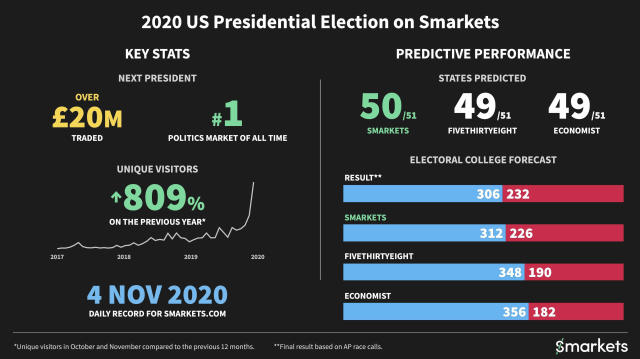
No, it’s moronic. One can hardly get addicted to election wagering: first, the pay-offs aren’t very big, and second, big elections only come along every two years. Unlike any other form of gambling, the election wagering actually conveys useful information: due to the “wisdom of crowds,” the betting tends to be more accurate in predicting outcomes than polls. The idea that anyone would spend money to fund a “smear campaign” to win an election bet is so bonkers it doesn’t even warrant a rebuttal.

In contrast, banning state lotteries would do some real good; finding ways to dial back casino gambling and online gambling would also save families and marriages from ruin. Slot machines are licenses to steal. So, of course, these three Democrats choose the least harmful and sinister of all gambling platforms to grandstand over. I can’t figure out what motivated this nonsense. Are the Democrats mad at the betting sites because they predicted Trump’s win?

I’m betting their bill rolls snake-eyes.

Baseball Gets the Gambling Scandal It Deserves.

Shohei Ohtani is, when healthy, the best baseball player alive as well as the most remarkable. No one since Babe Ruth (and no one before Babe either) managed to be a star slugger and an ace pitcher simultaneously, and Ruth never filled both roles in equal measure in the same seasons like Ohyani has. It may well be that the imported Japanese star isn’t as great a hitter as Babe or as overpowering a pitcher either, but never mind: he’s star quality on the mound and at the plate, and that is unprecedented.

The undisputed most valuable player in baseball signed a massive free agent contract with the best team in baseball (and, after the despicable Yankees, the best known), so Major League Baseball was confident that it had hit the metaphorical jackpot. And then…disaster struck.

During a Seoul, South Korea, series between the Dodgers and San Diego Padres, it was revealed that Ippei Mizuhara, Ohtani’s interpreter since 2013 who followed the star to the United States in 2018, had been illegally gambling on sports; a law enforcement investigation of a bookie uncovered his activities. Ohtani’s name was bank transfers to the bookie to cover Mizuhara’s gambling losses, but Mizuhara insisted that his boss and friend knew nothing about the gambling. The Dodgers fired Mizuhara and the official story coming from Ohtani’s lawyers was that Mizuhara had been stealing money from Ohtani.

Continue reading

Confronting My Biases, Episode 7: Buying Lottery Tickets

Interjecting itself before my planned first post this morning is the latest installment of the Ethics Alarms series in which your friendly neighborhood ethicist examines the biases that may make him (that is, me ) stupid, or not. At my local 7-11 just now on an emergency errand, I spied one of my next door neighbors purchasing lottery tickets. I have long suspected that he is an idiot, and this pretty much locked down my diagnosis.

Ethics Alarms has covered the issue of state lotteries extensively; you can see most of the results at this depressing tag. The most recent piece was in 2022, reacting to a CNN segment that declared state lotteries to be racist because a disproportionate percentage of the players are black. I believe that CNN’s analysis is racist, and I ended the post this way…

Continue reading

If It’s Any Consolation, Pete, If Ethics Alarms Had An Ethics Dunce Hall Of Fame, You’d Be The First One In…

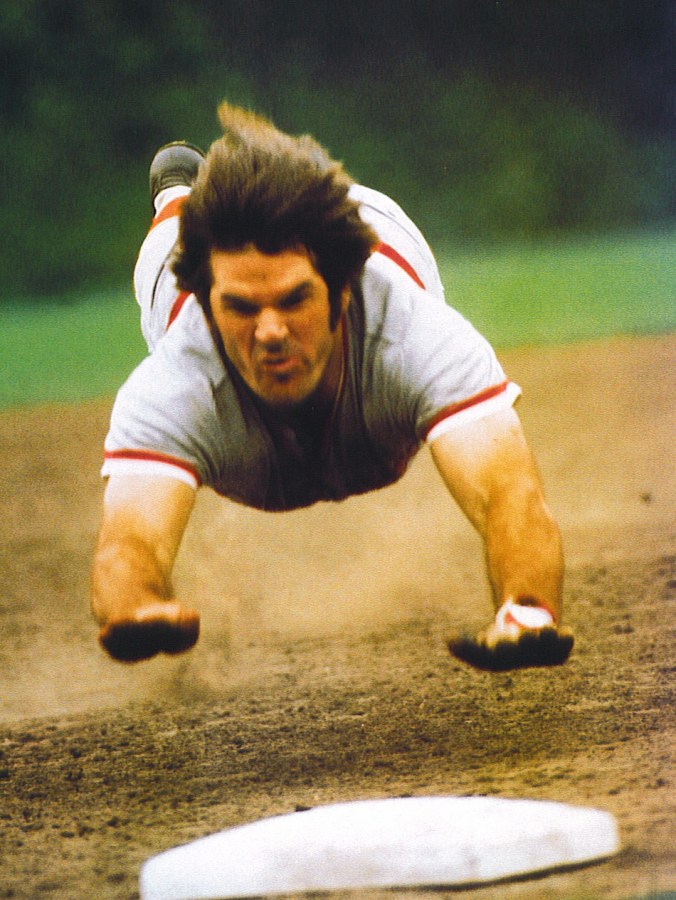
Pete Rose, baseball’s all-time career hit leader, is also one of the most outrageous creeps ever to play the game, which is just as remarkable an accomplishment when one considers competition like Cap Anson, Hal Chase, Barry Bonds and Alex Rodriguez. The amazing thing is that Pistol Pete keeps adding to his jerk resume even now, and he’s 81 years old.

Rose was my very first American Ethics Dunce when the now inactive Ethics Scoreboard debuted in January of 2004. I wrote then,

Pete Rose now admits he bet on baseball (after ten years of lying about it) but says that his bets (always in favor of his team, never against it, he says) as manager of the Cincinnati Reds never effected his management decisions, and thus he did not harm the integrity of the game. He feels he should be let back into the game as a manager.

A couple of things, Pete:

1) Even if this were true, fans of the game cannot put their faith in the outcome of games when they know that those who help determine the outcome might be motivated by their wagers. This is the reason that we call “the appearance of impropriety” an ethical problem.

2) Presumably you did not bet on the Reds when a key player was sitting out, or when your starting pitcher wasn’t feeling good. Right? Or are we supposed to believe that you bet large amounts of money while already in debt to bookies in circumstances when you thought you would lose? So every time you didn’t bet on the Reds, you were sending information to the bookies, and it affected their odds on the game. Got it?

3) You say you never bet against the Reds. You used to say you never bet on baseball. You’re a liar. Why should anyone believe you now?

Later, the Scoreboard made Pete the first (and so far only) Ethics Dunce Emeritus after he admitted that in fact he did bet on every Reds game as a manager. (I really need to add Bill Clinton to the Ethics Dunce Emeritus ranks, among others. Remind me.) Continue reading

A Déjà Vu Ethics Dunce: Pete Rose

Pete Rose

I confess that at this time of year, with the Boston Red Sox in the play-offs (and doing splendidly so far), my thoughts keep defaulting to baseball and baseball ethics. However, I couldn’t have resisted this inspiration in the dead of winter.

I was already considering writing about how Major League Baseball has now abandoned its former principled stand against gambling on the game to the point where its gambling industry partners are encouraging suckers to bet on game details like extra-base hits and runs-batted-in, and during games, using special bonus pay-offs—you know, like the casinos that give out free chips to get tourists hooked? How MLB is going to square this sudden embrace of professional gambling with the sport’s so-called “third rail” rule that demands a lifetime ban of any player, coach or manager who is caught betting on baseball games is anybody’s guess.

Pete Rose, the all-time career hits leader, is the most famous victim of the third rail, and he was also my very first Ethics Dunce. In January of 2004, Pete’s sleaziness helped launched The Ethics Scoreboard when I wrote,

Pete Rose now admits he bet on baseball (after ten years of lying about it) but says that his bets (always in favor of his team, never against it, he says) as manager of the Cincinnati Reds never effected his management decisions, and thus he did not harm the integrity of the game. He feels he should be let back into the game as a manager.

A couple of things, Pete:

1) Even if this were true, fans of the game cannot put their faith in the outcome of games when they know that those who help determine the outcome might be motivated by their wagers. This is the reason that we call “the appearance of impropriety” an ethical problem.

2) Presumably you did not bet on the Reds when a key player was sitting out, or when your starting pitcher wasn’t feeling good. Right? Or are we supposed to believe that you bet large amounts of money while already in debt to bookies in circumstances when you thought you would lose? So every time you didn’t bet on the Reds, you were sending information to the bookies, and it affected their odds on the game. Got it?

3) You say you never bet against the Reds. You used to say you never bet on baseball. You’re a liar. Why should anyone believe you now?

Pete continued to embarrass himself and baseball, leading to several posts on Ethics Alarms. My favorite Pete Post is this one, in which I wrote in part,

All of the above could be more concisely summarized by six words: Pete Rose is a stupid man. As comedian Ron White says, “You can’t fix stupid.” Manfred, in his letter telling Pete that he can forget about any future employment in baseball, noted more than once that Rose does not appear to understand the import and purpose of the rule he violated, which exists  to protect the integrity of the game. Indeed,  Pete Rose wouldn’t know what integrity was if it sat on his face.

“This final chapter (I hope) in the sad Rose gambling saga drives home a fact that is under-appreciated in the ethics world. Ethics is hard, and requires attention, critical thinking, and a modicum of intelligence. Ethics involves choosing among competing options in difficult situations, often under pressure; it involves recognizing when non-ethical considerations are threatening to overwhelm ethical principles; it involves being able to understand why an ethical society is preferable to a corrupt one, and the difference between rationalizations and ethical values.

When tying your shoes is a challenge, most of this is out of the question. Or to put it in Pete Rose terms, if you are seeking forgiveness for  placing bets on baseball when you knew that baseball bans anyone who does that, and can’t figure out that continuing to gamble on baseball isn’t going to help your case, the chances that you are going to be able to figure out whether a particular situation requires an application of the Rule of Universality or not are those of Frosty the Snowman bumpety-bump-bumping safely through Hell...”

As you have probably guessed by now, that was not “the final chapter.” A new chapter came out today. Pete, who is always playing some angle to make money off of his baseball exploits because he is perpetually broke, has launched a sports gambling podcast.

Continue reading

Evening Ethics Cool-Down, 9/16/2021: On Idiots, The Donner Party, Statistical Reparations And The Evil NFL

Frozen Statue

I had to get out of bed to write this; I’ve been exhausted all day. I better not be getting old. That will really tick me off…

***

I’m working on a post called “Cannibal Ethics,” and this obviously led me to the Donner Party, the group of doomed pioneers who had to eat each other to survive when they were caught in a storm in the Sierra Nevadas in 1846. If I knew that they had come to their fate because of a negligent author, I had forgotten it: a fake expert named Lansford Hastings had written “The Emigrant’s Guide to Oregon and California” recommending a short-cut (which actually increased the trip’s mileage) to the Promised Land (this was before the two areas were ruined by reality-free politics)He had never actually traveled the new trail when he published the book. He did finally do it shortly before the Donner party set out, and helped sealed its fate by leaving paper notes along the way that further misled them. One told the already desperate wagon train they could cross Utah’s Great Salt Lake desert in a faction of the time it actually took. The group ran out of water in the middle of the salt plain about half-way across.

If I compiled a list of U.S. Ethics Villains throughout history—I’ve considered it—Hastings would be on it. After he left the U.S. for Brazil following the Civil War, he wrote a sequel of sorts to the book that killed so many of the Donner Party: “The Emigrant’s Guide to Brazil.” (1867).

1. Tales of The Great Stupid, Headline Division. From the Boston Globe: “How did Boston miss its moment to elect a Black leader?” The reporter, Stephanie Ebert just can’t imagine why he three Black candidates in the mayoral primary were eliminated in favor of Michelle Wu, the daughter of Taiwanese immigrants and Annissa Essaibi George, whose father was a Tunisian Arab Muslim. But, Ebert complains, there won’t be “any candidate who knows the weight of being Black in a city with deep racial scars.”

Maybe the three black candidates were not seen as skilled, experienced, or qualified as the primary’s winners. Or is Ebert saying that being black should be enough to qualify someone to be mayor?

Continue reading

Morning Ethics Expectoration, 4/15/2021: I’m In A Really Bad Mood (And Ethics Is Just A Part Of It…)

Let’s see what revoltin’ developments we have accumulated, shall we? But first, some positive news…

1. Bernie Madoff has died in prison. Good. If there was ever a case for using capitol punishment for crimes other than murder and treason, Bernie is it. He was convicted of orchestrating the biggest Ponzi scheme in American history and was serving a 150-year sentence that he managed to escape by dying in prison of natural causes at age 82. He was a stone-cold sociopath who destroyed his family, foundations, charities and lives, all out of greed. On the plus side, his exploits did spawn two excellent dramatic portrayals, one by Robert De Niro and the other by Richard Dreyfuss. I liked Richard’s better, but after his disgusting conduct during the Trump years, Robert is permanently unwelcome to my eyeballs.

So much for the good news…

2. Don’t tell me again how poor Pete Rose deserves to be in the Hall of Fame. Pete was the second Ethics Dunce of them all, way back in 2004, here. Knowing well that baseball had an iron-clad, one strike and you’re out forever rule forbidding players, coaches and managers from betting on games, he did it anyway (as a manager) because, see, he is Pete Rose, and the rules don’t apply to him, but mostly because he’s an idiot. So he got banned from the game and the Hall of Fame despite being the all-time hit leader, ahead of Ty Cobb. He’s a walking, talking ethics corrupter, prompting fans and writers to resort to rationalizations to explain why he should be forgiven.

Now we have this:

Continue reading

Morning Ethics Warm-Up, 4/21/2020: Groundhog Day

http://www.youtube.com/watch?v=PkmBjHwzyMw

Hi.

I was talking with a colleague about the most relevant movie to watch these days. As readers here know, the outbreak of elected officials letting power go to their heads led me to designate Woody Allen’s “Bananas” for that honor.  (And yesterday I posited the relevance of “Airplane!” )Still, it’s hard to argue against my friend’s position that the right choice is “Groundhog Day.”

In the interest of sanity, I reject “Contagion” and especially “World War Z” or “Quaranteen.” (All good movies though.)

1. Right now it’s turned face to the wall, but today I’m putting a sheet over it…My college diploma becomes more embarrassing by the day. Harvard University has accepted nearly $9 million from the pandemic relief package. With a 40 billion dollar dollar endowment, Harvard is better off financially than the U.S. government.

[Notice of Correction: I wrote “million” instead of billion in the original post. Really stupid typo. I apologize.]

There is no excuse for the school accepting the money. It is getting widely criticized for taking it, and ought to be.

A spokesman for the U.S. Department of Education said ithat Education Secretary Betsy DeVos “shares the concern that sending millions to schools with significant endowments is a poor use of taxpayer money. In her letter to college and university presidents, Secretary DeVos asked them to determine if their institutions actually need the money and, if not, to send unneeded CARES Act funds to schools in need in their state or region.”

In an episode of Spokesman vs Spokesman, a mouthpiece for the Ivy said, disingenuously,

“By federal formula laid out in the CARES Act, Harvard was allocated $8.6 million, with 50% of those funds to be reserved for grants to students. Harvard is actually allocating 100% of the funds to financial assistance for students to meet their urgent needs in the face of this pandemic. Harvard will allocate the funds based on student financial need. This financial assistance will be on top of the significant support the University has already provided to students — including assistance with travel, providing direct aid for living expenses to those with need, and supporting students’ transition to online education.”

This is an exercise in deflection and rationalization. The only issue is that Harvard has plenty of money to do all of this without any hand-outs from the government, and many other institutions need the money more, which is an easy calculation because no institution needs money less than Harvard does. Continue reading