Encore! Presidents Day Ethics: The Presidents of the United States on Ethics and Leadership

It’s President’s Day, and I see that it has been five years since the most popular Ethics Alarms President’s Day post was published. That one, from 2011, reminds us of the ethics wisdom and leadership acumen of the remarkable men who have served their country in the most challenging, difficult, and ethically complicated of all jobs, the U.S. Presidency.

In the middle of a campaign season littered with some disturbingly unethical candidates, it seems especially appropriate to re-post that entry now….with some updates. In 2011, I left out three Presidents, including the current one. Now all are represented, most of them well.

So…

Ladies and Gentlemen, the Presidents of the United States of America:


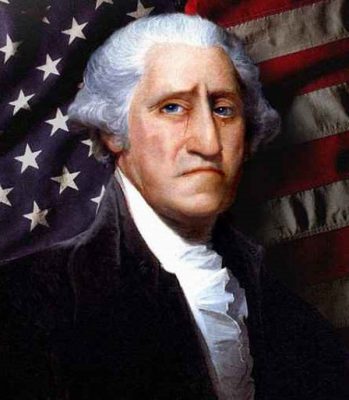
George Washington: “I hope I shall possess firmness and virtue enough to maintain what I consider the most enviable of all titles, the character of an honest man.”

John Adams: “Because power corrupts, society’s demands for moral authority and character increase as the importance of the position increases.” 

Thomas Jefferson: “On great occasions every good officer must be ready to risk himself in going beyond the strict line of law, when the public preservation requires it; his motives will be a justification…”

James Madison: “No government any more than any individual will long be respected without being truly respectable.”

James Monroe: “The best form of government is that which is most likely to prevent the greatest sum of evil.”

John Quincy Adams: “Always vote for principle, though you may vote alone, and you may cherish the sweetest reflection that your vote is never lost.”

Andrew Jackson: “One man with courage makes a majority.”   (Attributed)

Martin Van Buren: “No evil can result from its inhibition more pernicious than its toleration.”

William Henry Harrison: “There is nothing more corrupting, nothing more destructive of the noblest and finest feelings of our nature, than the exercise of unlimited power.” Continue reading

Remembering The President Whose Dedication To Ethics Made The U.S. Possible

george_washington_death

We no longer honor George Washington on his birthday to the extent his importance to our nation warrants. George Washington died on this date, in his Mount Vernon Home, at the age of 67. Let’s think about him now, specifically his character.

Washington is still something of a mysterious man, but there is no question that he was one who was possessed of natural and remarkable leadership abilities, unusual instincts of common sense and justice, astounding courage, striking charisma and most of all, the rare ability, especially in one so celebrated and successful, to change his attitudes and beliefs over time. He was chosen, among the most outstanding collection of leaders this nation ever had at a single point in history, to lead them  all, and the primary reason was that while few of our Founding Fathers trusted each other, they all trusted him. George Will calls him “the indispensable man,” and the assessment is apt.

One formative experience that created that indispensable man was his lifetime dedication to civility, respect, conscience, kindness and ethics as they were taught to him by his father. The elder Washington made young George copy a list 110 rules of civility and deportment into his school notebook when the President-to-be was about sixteen-years old. Scholars have determined that the list originated in the late sixteenth century in France, and had been in use there and in England before the elder Washington ever imbued his son with them. Biographers of George have been struck by the extent to which these maxims accurately describe his behavior, habits and ethical conduct throughout his life. He was quick to quote them;  it has been said that if you awoke George from his slumber prior to breathing his last on that December 14, and asked him, “What’s Rule #7?,” he would have recited it on the spot. (“Put not off your clothes in the presence of others, nor go out of your chamber half dressed.”) The Library of Congress owns the original manuscript for the Rules of Civility.

Washington’s 110 Rules have been on the Ethics Alarms home page in the left margin under “Rule Book” almost from the beginning of the blog, and I posted them back in 2009. It’s time to look at them again, as we remember, and are properly grateful for, this special man. Many are funny, in retrospect, in their dated reflection on earlier times, but the ethics principles sounded still resonate, especially the last:

110. Labor to keep alive in your breast that little spark of celestial fire called conscience.

That one alone is worth a lifetime.

George Washington’s 110 Rules

The Rules of Civility & Decent Behavior in Company and Conversation
(As memorized by George Washington as a youth. Authorship unknown)

Continue reading

A Presidents Day Celebration (PART 1): I Love These Guys, I Really Do. Yes, Every One Of Them.

Hall of the Presidents

I have a lifetime love affair with the Presidents of the United States.

I love these guys, every one of them. The best of them are among the most skilled and courageous leaders in world history; the least of them took more risks and sacrificed more for their country than any of us ever can or will, including me. Every one of our Presidents, whatever their blunders, flaws and bad choices, was a remarkable and an accomplished human being, and exemplified the people he led in important ways. Every one of them accepted not only the burden of leadership, but the almost unbearable burden of leading the most dynamic, ambitious, confusing, cantankerous and often unappreciative nation that has ever existed. I respect that and honor it.

I have been a President junkie since I was eight years old. It’s Robert Ripley’s fault. My father bought an old, dog-eared paperback in the “Believe it or Not!” series and gave it to me. It was published in 1948. One of Ripley’s entries was about the “Presidents Curse”: every U.S. President elected in a year ending with a zero since 1840 (William Henry Harrison) had died in office, and only one President who had dies in office, Zachary Taylor, hadn’t been elected in such a year. The cartoon featured a creep chart—I still have it—listing the names of the dead Presidents, the years they were elected, and the year 1960 with ???? next to it. When Jack Kennedy, the youngest President ever elected, won the office in 1960, my Dad, who by that time was sick of me reminding him of the uncanny pattern, said, “Well, son, so much for Ripley’s curse!”

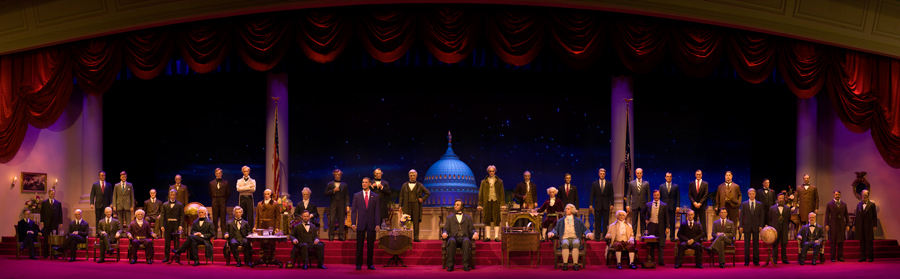
You know what happened. (John Hinckley almost kept the curse going, but Ronald Reagan, elected in 1980, finally broke it.) That year I became obsessed with Presidential history, devising a lecture that gave an overview of the men and their significance in order. My teacher allowed me to inflict it on my classmates.  Much later, Presidential leadership and character was the topic of my honors thesis in college. When I finally got a chance to go to Disneyland, the first place I went was the Hall of Presidents. When the recorded announcer said, “Ladies and Gentlemen, the Presidents of the United States!” and the red curtain parted to show the audio-animatrons of all of them together, it was one of the biggest thrills of my life.

Today I will honor our past Presidents with some of my favorite facts about each of them, trying hard not to get carried away. Is it ethics? It’s leadership, which has always been the dominant sub-topic here, but yes, it’s ethics.  I know I’m hard on our Presidents, as I think we all should be: supportive, loyal, but demanding and critical. I am also, however, cognizant of how much they give to the country and their shared determination to do what they think, rightly or wrongly, is in the country’s best long-term interests. File this post under respect, fairness, gratitude, and especially citizenship. And now…

“Ladies and Gentlemen, the Presidents of the United States!

Continue reading

Ashley Judd, Hillary Clinton, and Celebrity Malpractice

Mount Rushmore

I had hoped to have my “Celebrity Code of Ethics” complete for this post, but it isn’t, so I’ll just allude to some of its likely provisions.

I like Ashley Judd, I really do. I’m not sure why she never became the reigning female light drama star of her generation; she’s every bit as good as Sandra Bullock or Julia Roberts, and that voice! Now she’s routinely relegated to repetitious action movies and will be playing Jennifer Lawrence’s mother any day now—oh well, that’s show biz. Judd is also more articulate and intellectually curious than the average celebrity, so it was with great pain and disappointment that I learned that she had recently said this, in an interview with Larry King, about the presidential prospects of Hillary Clinton:

“I think she might be the most overqualified candidate we’ve had since – you know, Thomas Jefferson or George Washington.”

Now, I don’t expect celebrities to be historians or experts on anything  other than their profession and areas of specialty. However, one tenet of celebrity ethics is the same as that of doctors: “First, do no harm.” That means, for someone like Judd, a celebrity has an ethical duty to recognize that a disturbing number of people think that because she is rich and famous, she is necessarily  informed, responsible and wise, as well as a role model, and therefore, unlike the usual drunk on a barstool, when that celebrity says something outrageously ignorant, stupid and misleading, hundreds of thousands of people believe it and align their own beliefs accordingly. That’s harmful, and doing it is unethical. Continue reading

The Ethics Conflict Of Chevy Chase’s Newlands Fountain and How To Resolve It

Chevy Chase Circle

Chevy Chase Circle is the official border separating the District of Columbia and Chevy Chase, Maryland. The inscription on the fountain at the center of Chevy Chase Circle honors Francis Griffith Newlands, saying, “His statesmanship held true regard for the interests of all men.” He was a three-term senator from Nevada,  serving from 1903 until his death in 1917, but more important to this controversy, founded the Chevy Chase Land Co., which created neighborhoods on the Washington and Maryland sides of the circle. Yes, the founder of Chevy Chase is honored with a fountain in Chevy Chase Circle. What could possibly be wrong with that?

The problem is that Senator Newlands was a racist, and a proactive one. He was a white supremacist who described blacks as “a race of children” too intellectually handicapped for democracy. In 1912, he attempted to have  the 15th Amendment, which granted voting rights to African American men, repealed. Not surprisingly, his vision of Chevy Chase did not include black residents, or Jewish ones for that matter.

The Advisory Neighborhood Commission that represents the D.C. section of Chevy Chase wants to remove Newlands’ name from the fountain, and has introduced a resolution calling on the D.C. Historic Preservation Office to rename the landmark “Chevy Chase Fountain.” The reason is his advocacy of anti-black policies.

This is a classic ethics conflict, a problem in which valid ethics principles oppose each other. There are so many conflicting ethical principles and objectives at work here: Continue reading

Anderson Cooper’s Reflections on Inheritance: Not Unethical, Perhaps; Just Ignorant, Self-Serving and Presumptuous

I was going to let this go, but it kept gnawing at me, and nobody in the news media called out Anderson Cooper on his outrageous misrepresentation of history and human character. I guess it’s up to me.

gloria-vanderbilt-anderson-cooper

“Thanks for nothing, Mom!”

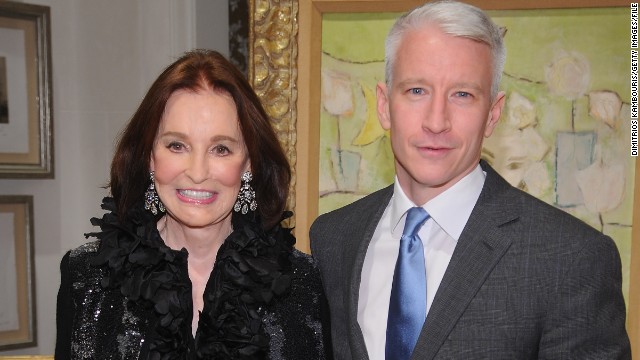
Cooper is the son of fashion designer Gloria Vanderbilt, and thus an heir to one of the most storied of American family fortunes. Apparently Cooper has known for some time that he’s getting none of his mother’s estimated 200 million dollar estate, and he told Howard Stern recently that he was fine about it, an had no bitterness or regrets.

“I don’t believe in inheriting money, ” he told Stern. “That’s a total fantasy … I think it’s an initiative-sucker, I think it’s a curse. Who’s inherited a lot of money who’s gone on to do things in their own life? If I felt that there was some pot of gold waiting for me, I don’t know that I would have been so motivated.”

As for his mother, who inherited many millions and who still made a name for herself by launching a  line of designer jeans, Cooper told Stern, “I think that’s an anomaly.”

Cooper is free to adopt whatever myths and rationalizations that help him get over the fact that his mother is cutting him off. He is not free to misinform the historically ignorant that a tendency exists which may describe his own mental state but which is far from the presumptive norm with others throughout the centuries. “Who’s inherited a lot of money who’s gone on to do things in their own life?” The answer to that question is “Too many to mention, Anderson. Are you kidding? Do you know anything about history?”

Just counting U.S. Presidents, which I think even in this period of reduced stature among White House occupants, would still qualify as “doing something with your life,” we have Washington, Madison and Monroe, all of whom inherited substantial property and assets from their families, as did William Henry Harrison and his grandson, Benjamin Harrison. Both Roosevelts inherited substantial wealth; so did William Howard Taft, whose family was (and is) one of the richest in the U.S. Both Bush’s managed not to let the curse of inherited wealth undermine their wills to succeed. Continue reading

If Your Institution Is Named After George Washington, Shouldn’t We Be Able To Trust It To Tell The Truth?

The General is not pleased.

The General is not pleased.

Shame on George Washington University (in Washington, D.C.), not only for lying to its students and community, but also for dishonoring the name of the scrupulously ethical American icon which they presumed to expropriate as their own. Such things carry with it some crucial obligations.

For years, the GW admissions and financial aid offices have claimed in printed materials and on the University website that admissions were independent of need. The admissions process does not consider financial need during the first round of screening applications. Before applicants are notified, however the University examines its financial aid budget and decides which students it can actually afford to admit. Wealthier students are accepted, taking the spots of students who would need more financial aid from the University.

Last week, a GW administrator confessed to a student newspaper—one ironically called “The Hatchet” after the apocryphal axe little George used to cop down that cherry tree in Parson Weems’ fable—– that financial resources indeed were considered in the admissions process, and have always been considered despite University statements to the contrary.  As  recently as last weekend, admissions representatives told prospective students that their applications would be judged without consideration of their financial aid profiles. Until it was removed Saturday evening, the newspaper reports, the undergraduate admissions website read, “Requests for financial aid do not affect admissions decisions.”

That site now confirms a “need-aware” policy that has always been in place. George Washington University just had another policy of lying about it. Continue reading

Why Nate Silver Is Wrong

Funny, Nate, I don’t see “leadership” anywhere in here…

I have wrestled with whether to write this post for about a month now. I am not in the election predicting business, which is a fool’s game, and this is tangential to ethics at best. On the other hand, leadership and American culture are among the subjects frequently explored here. Nate Silver’s analysis of the Presidential election on his New York Times blog has been at once fascinating and aggravating for me, though it has been a godsend to my nervous friends on the ideological left. Silver has insisted that his statistical analysis of the polls fortells an Obama victory with increasing certainty. Last I looked, his model was showing the election to be all but in the bag for the President, with, Silver calculates, an 86% chance that Romney goes down to defeat.

I don’t question Silver’s figures or formula. He’s a statistics whiz. His mistake is trying to use the tools he has used to great success on the poker table and in the world of sabermetrics to analyze the election of a President of the United States, without acknowledging or understanding the core of the process, or the culture and context in which it occurs. In many elections, most perhaps, his model would work perfectly. This time, it is going to fail. Silver won’t see his failure coming because as brilliant as he is in his chosen field, his demonstrated expertise is in economics and statistics. He really believes, apparently, that American history doesn’t matter, that what Americans think about when they choose a President is irrelevant, and that numbers purify the discussion and remove all the bias and static. He couldn’t be more wrong. Continue reading

Ethics Alarms Recap: A Long Weekend of Ethics

If the long Presidents Day weekend took you hither and yon and away from ethical dilemmas and controversies, welcome back! Here is what went on here in a lively three days:

The Most Ethical President

When I am asked who I think was the most ethical President of the United States, my answer is the man whose birthday President’s Day preempts: George Washington. He was not our most brilliant or eloquent President, and it often took him a while to find his way to the right thing to do, slavery being the most important example. Still, the United States was extraordinarily fortunate to have such a principled and instinctively wise leader as its first. He created the template that, though weakened by time and inferior successors, continues to exert a powerful influence over our choice of Presidents. He was honest. He was civil. He was dignified and insisted on respect, but never worship: his simple decision that America’s Chief Executive be called, humbly, “Mr. President” had immense consequences for the nation’s attitudes toward executive leadership. Perhaps most important of all, Washington was a gifted leader but a reluctant one. He believed that a citizen should heed the nation’s call when needed, but he was a reluctant public servant, and condemned those who sought power for its own sake.

I am always amazed, when I return to Washington’s writings and speeches, how sure, persuasive and perceptive his statements remain, so long after they were made.

Here are some of my favorite quotes from our most ethical President.

Happy Birthday, approximately, General Washington. Continue reading