A particularly clueless inquirer to “The Ethicist” advice column in the New York Times asked Prof. Appiah, a real ethicist or so we are assured, “Was it wrong to exclude one person from our family reunion?” The woman explains that her large extended family has frequent reunions, but “when plans began for our latest event, an agreement was reached to delete a particular woman from all invitations.”
Oh, the decision “was reached,” was it? Just sort of happened…
The inquirer goes on to explain that the Shunned has become estranged from many people in her life, including her daughter, and the family chose the daughter over the mother. Now the mother is distraught and threatening suicide. “Is it wrong to exclude one (or more) members who would bring pain and anguish rather than joy?,” the shunner asks “The Ethicist.”
The Ethicist (Kwame Appiah to his friends and NYU students) gets a lot of questions about a common dilemma: what kind of things does a selling homeowner have an ethical duty to inform a potential buyer about? My favorite version of this issue—because you know how I am—involves houses where horrible murders have taken place, or ones that are rumored to be haunted.
Most of these non-horror movie situations are solved by a strict adherence to the Golden Rule. Would you want to be told that a property has X? If so, tell the potential buyer. Yeah, being ethical may cost you some money, or even a sale. Nobody ever said being ethical was easy or always beneficial to the ethical actor.
Last week Kwame was asked by condo seller of she was bound to tell a potential buyer that the condo association uses “pesticides, herbicides and other chemical treatments” that environmentalists regard as harmful, even though they are legal. The seller has been part of a group trying to force the association to go “green” without success. The Ethicist’s answer was reasonable: if the condo association was obeying local laws and ordinances, the dispute was none of the purchaser’s business until after the property was transferred. “[W]hen it comes to selling your unit, your responsibility doesn’t extend to reshaping a buyer’s worldview,” he wrote. “Those who dissent should make their case for reform, but disclosure is usually reserved for departures from what is recognized and approved — from what a reasonable person would anticipate. You’re free to voice your concerns. You’re not required to.”
I thought this op-ed, by a Jesuit priest, would have something profound to say about the ethics of schadenfreude. I was disappointed. His grand conclusion:
At this point I could run through a list of philosophers, theologians and wise voices from religions and traditions around the world to prove my point. Instead I will reclaim a word that has been largely lost from our discourse: mean. Crowing over someone’s suffering or demise is as far from a moral act as one can imagine. It’s cruel. Indulged in regularly, schadenfreude ends up warping the soul. It robs us of empathy for those with whom we disagree. It lessens our compassion. To use some language from both the Old and New Testaments, it “hardens” our hearts. No matter how much I disagree with anti-vaxxers, I know that schadenfreude over their deaths is a dead end.
Wow, stop the presses. A Jesuit recognizes the value of the Golden Rule. This is news that’s “fit to print?” Well, the obvious (I hope) conclusion turned out to be device to attack Wuhan vaccine skeptics and opponents on the way to reaching it. “After months of trying to convince anti-vaxxers, anti-maskers and anti-social distancers that lifesaving measures are both for their own good and for that of others, frustration might get the better of people,” Father James Martin writes, finding an excuse for one side of the aisle while condemning without sympathy, for example, Fox News pundit Laura Ingraham, “a commentator who often expresses her belief in “Christian values,” gloating over the news that Gen. Mark Milley, chairman of the Joint Chiefs of Staff, had tested positive despite being vaccinated and boosted.
I expect more fairness and less deceit from the clergy, Lord knows why:
Opposing government mandated vaccinations does not make one an “anti-vaxxer.” That’s a slur on par with calling those who doubt the certitude of over-simplified climate change taking points “deniers.” Many oppose the mandated vaccines as an unconstitutional and unethical violation of personal liberty, and are not taking the shots to stand up for basic rights, not because they necessarily don’t believe in “the science.”
Calling masks, particularly the masks most people wear, “live-saving” is propaganda and misinformation. The CDC’s “experts” have, in sequence, said “mask aren’t necessary,” wear masks; no need to wear masks if you’re vaccinated; better wear masks, and if you don’t like what the advice is now, as they say about weather in New England, wait a bit. I know men of the cloth are suckers for faith, but if Jesus had been wrong as often as the health experts, we might be making offerings to Jupiter and Neptune today.
Don’t get me started on “social distancing.” I’m surprised the good Father didn’t also say we were killing people by touching our faces. Remember that edict?
People who don’t read the baseball-related posts here miss the point: sports in general and baseball in particular create ethical problems that clarify ethics in all fields. The story of former catcher and broadcaster Ray Fosse is a prime example.
Fosse, was an All-Star catcher, a multiple Gold Glove-winner, a two-time World Series champ, and a long-time broadcaster who died yesterday, of cancer at the age of 74. His claim on immortality is the famous play above, which ended the 1970 All-Star Game, back when baseball’s “Mid-Season Classic” was more than just a chummy parade of stars playing baseball with the intensity of an office picnic softball game.
In 1970, Fosse was in his first full big league season with the Cleveland Indians, and signaled that he could be one of the all-time greats at his position. He won a Gold Glove, received some MVP votes, and had a 23-game hitting streak from early June into early July (That’s a lot. especially for a catcher). Fosse made the All-Star team that year and had his rendezvous with destiny when, in the bottom of 12th inning of a tense, tie game, the Reds’ Pete Rose, famous for his hustle and trying to score the winning run from second base, was beaten by the throw home but smashed into Fosse at home plate, causing the catcher to drop the ball and winning the game for the National league. It was a thrilling play, one of the most memorable in the nearly 90 years history of the exhibition, but Rose separated and fractured Fosse’s shoulder. Fosse continued to play for the rest of the 1970 season but because doctors didn’t discover the injuries until the following season his body never healed properly. Fosse would suffer lingering effects from play for the rest of his life. He also was never as good a player again.
Rose was unapologetic, and most conceded that his tactic was a clean play. Fosse was blocking the plate, and the only way Rose could score was to reach home while making him drop the ball. The controversy was over whether it was ethical for Rose to risk injuring another player in an exhibition game. Had Rose epitomized a sporting ideal by playing hard to win—after all, he could have been hurt too—or had he engaged in poor sportsmanship?
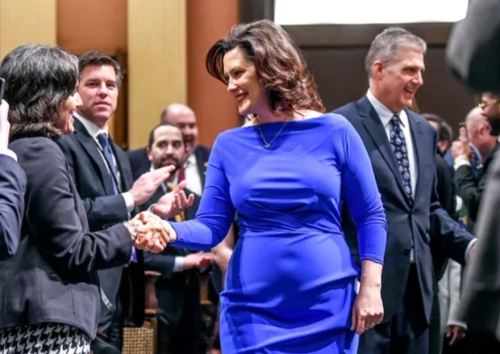
Michigan Governor Gretchen Whitmer wore a “form fitting dress” or a “distractingly badly-fitting dress” during her state of the State address. After some pundits and a lot of social media users leveled harsh criticism of her attire, the matter quickly entered the battlefield of the gender wars. She said in a statement,
“In my speech I was encouraging people to see the humanity in one another in this cruel political environment. In an era when so many women are stepping up to lead, I’m hoping people will focus on our ideas and accomplishments instead of our appearance. Until then, I’ve got a message for all of the women and girls like mine who have to deal with garbage like this every day: I’ve got your back.”
Anne Doyle, an Oakland County leadership coach for women, said,
“If she had been wearing something big and baggy, she would have been criticized for wearing that. We’re going to see a significant amount of this type of criticism as more and more women are in these type of powerful, leadership roles. It’s gender bias. But we have to power our way through it and ignore it.”
No question about it, female public figures are often subjected to higher standards of appearance than males. However, does this mean that no criticism of public comportment and appearance by public officials in the official discharge of their duties is legitimate? Here’s Ann Althouse on the controversy, writing that the Governor…
…wore a dress to her State of the State Address that was just way too tight. As many of the commenters (at The Daily Mail) observe, you can see the outline of her bellybutton. It’s not really fair to accuse everyone of body shaming when you wear something that fits so poorly. People talk about Trump’s tie being too long….
And his hair, AND his skin color, AND his hands, AND his weight. Meanwhile, Michelle Obama’s every fashion choice received barrels of ink-worth of automatic praise. The issue is, or should be, whether a public figures should be held accountable for decisions regarding they present themselves to the world. Cousin Vinny kept finding himself in contempt of court for inappropriately casual attire, which was deemed disrespectful to the court. Are supporters of the governor really arguing that all criticism of a female elected official’s attire or appearance is sexist? Seriously?
My tuna sandwich had an unwelcome bonus: a 3/4 inch, two-pronged bone. It stuck me in the gums. No blood drawn, but I expect better from my usual brand of white albacore in water.
Now what? I have encountered negligently included matter in foodstuffs before, nothing large or horrible, like the famous human toe in the plug of chewing tobacco often cited as a perfect illustration of “res ipsa loquitur”. (The Mississippi Supreme Court: we can “imagine no reason why, with ordinary care human toes could not be left out of chewing tobacco, and if toes are found in chewing tobacco, it seems to us that somebody has been very careless.”) In such cases I have just let it go, taking a Golden Rule approach. After all, some stuff is bound to slip through now and then. Yes, I made a big deal when I found a bug in my salad, but the occasional small hair, or bit of bone, I let pass.
This one was different, though. It was bigger, and the damn thing stuck me.
So should I send the tuna fish company the bone and complain? If I do, what’s the objective? Is it to extort a lucky haul by getting the company to send a life supply of tuna fish? I know people that send in such complaints several times a year, often with spectacular results. They specialize in writing indignant, angry letters full of implied threats. These people like finding bones in their tuna fish. The problem is, I don’t like them.
Is it a matter of good citizenship to tell the company that some of their cans have bones along with the fish? Can I save another consumer from a stuck gum and a spoiled sandwich experience by alerting the company to a problem in their processing? It probably is good citizenship, except that I’m pretty sure that renegade fish bones are a well-known inevitability in the tuna fish business.
1 We know that the FBI had told the Trump White House about allegations from Porter’s two ex-wives that he had been physically abusive. Apparently, the FBI did not confirm, or could not, that the accusations were true. The allegations were still sufficient to prevent Porter from getting security clearance, whether they were true or not. There are good reasons for this. That does not mean that it is fair that someone’s career can be derailed and his reputation smeared without proof of wrongdoing, but it is necessary.
2. The position of an employer that has its own integrity and reputation to protect when an explosive allegation of personal and criminal misconduct regarding an employee arises is an ethics conflict. The Golden Rule suggests that such an employer should not jettison such an employee absent due process and sufficient proof of wrongdoing. However, the greater duty in this case is to the administration.
3. Porter should have resigned. In fact, that he did not resign was the best reason to fire him. This was his domestic problem, and he had no right to inflict it on the White House, even if he was innocent.
4. There was nothing inconsistent about President Trump’s tweets condemning domestic violence and regretting the lack of due process and fairness in the current #MeToo witch hunt environment. He is right on both counts. As usual, he was not as articulate as he needs to be when opining on such delicate topics. He is not going to become more articulate, however.
5. Porter’s denials of wrongdoing, absent more, should carry no more nor less weight than the accusations against him.
6. Nobody who does not know Porter, the women involved or the intimate details of their relationships should be saying things in public like “I believe the wives” or “I don’t believe them.” This flips us back to “I believe Anita Hill but don’t believe that slut Paula Jones” territory. People believe who they want to believe. Women who accuse men of abuse have no more claim or right to be believed without evidence than any other accuser, including those who accuse you.
7. Domestic disputes are infamous for the frequency with which previously honorable combatants will use false or exaggerated accusations to gain legal leverage or for old-fashioned revenge. It is possible that Porter’s two wives want to destroy his life. They seem to be doing a good job of it, if that’s their objective. Continue reading →
Actress Charlyne Yi ( you may remember her on “House”—well, maybe not) tweeted last week :
“I think about the first time I met David Cross 10 years ago & he made fun of my pants (that were tattered because I was poor). Dumbfounded I stared at him speechless and he said to me ‘what’s a matter? You don’t speak English?? Ching-chong-ching-chong.’
“I will say this: I can tell the difference between this man making a joke vs condescending me,” Yi wrote later. “This happened 10 years ago and I sure as hell hope he’s changed (or at the very least, he’s scared enough to not be his racist self).”
Now Cross, a very funny improvisational comic and actor best known for “Arrested Development” (he was also in the first two “Men in Black” films) is being attacked on social media as a a racist. He purports to be flummoxed.
“I don’t remember this at all!” he said in a tweet this week. Cross later tweeted to Yi,
“Charlene, i dont remember this at all! It’s bonkers to me and WAY, way out of character. DM me so I can understand all of this.”
Mark this down as one more way social media allows people to be worse human beings, and makes the world a meaner, nastier place.
Yi, who has obviously held a grudge for a long, long time (Career just didn’t work out the way you hoped, eh?) exploited social media to get some media buzz by accusing a colleague of being a jerk ten years ago. This, in turn, calls down on Cross’s head the Web Furies, harms his reputation, and there isn’t a thing he can do to defend himself, whether he said what she claims, or not.
This is a blinding Golden Rule breach by Yi. Who among us would like to have this happen—a bad moment in a single personal interaction suddenly made public just to cause us humiliation and embarrassment? It seems as if Yi, lacking a salacious story of being propositioned, assaulted or raped by Harvey Weinstein, decided to see if recounting the time David Cross was a jerk to her could get some cheap publicity. And it worked! Continue reading →
A culture is defined by what it chooses to remember and what it chooses to forget. Ideally, a culture would remember everything, because knowing the past, as Santayana famously observed, was insurance against repeating its mistakes. But time is a huge eraser, as Shelley told us:
I met a traveller from an antique land,
Who said—“Two vast and trunkless legs of stone
Stand in the desert. . . . Near them, on the sand,
Half sunk a shattered visage lies, whose frown,
And wrinkled lip, and sneer of cold command,
Tell that its sculptor well those passions read
Which yet survive, stamped on these lifeless things,
The hand that mocked them, and the heart that fed;
And on the pedestal, these words appear:
My name is Ozymandias, King of Kings;
Look on my Works, ye Mighty, and despair!
Nothing beside remains. Round the decay
Of that colossal Wreck, boundless and bare
The lone and level sands stretch far away.”
This is why historians have such a crucial role to play in preserving our culture, by preserving stories, lives and memories along with the inspiration and wisdom they can provide.Sometimes a lost memory is rescued from neglect. Today we remember Colonel Joshua Chamberlain as one of the central heroes of the Battle of Gettysburg for his desperate stand with the 20th Maine Volunteer Infantry Regiment at Little Round Top, culminating in his using his knowledge of military history (he was a college professor) to improvise the bayonet charge that held his position and turned defeat into victory. That was not the case for almost a century, however, until the historical novel “The Killer Angels” retold the story so vividly that Chamberlain’s entire career became the object of new scholarship and admiration. This was truth emerging, but it was also justice. Chamberlain deserved to be remembered.
Unfortunately, Chamberlain is an exception. Once a life, a deed, a remarkable moment is forgotten, it is usually gone. That is a tragedy for the culture. The duty to remember, which I have discussed here before, is the duty to protect the culture and its riches. It is also based on the Golden Rule. We all would like our lives to be remembered as long as possible, especially when we accomplished something that future generations could and would appreciate or benefit from recalling.
This brings us to Al Luplow.
Two nights ago, in an outrageously antic and entertaining game between the Cleveland Indians and the Boston Red Sox, Indians outfielder Austin Jackson robbed Hanley Ramirez of a home run by leaping in the air at the right centerfield bullpen fence reaching over it mid-air to catch the ball, and tumbling over it. He still held on to the ball—he could have easily broken his neck—and the home run became an out.
Although outfielders have fallen over that fence from time to time, notably in the 2013 play-offs…
I don’t know why it is that the Boston Red Sox are leading all of baseball in ethics controversies, but here’s the story:
The Red Sox have been playing the Orioles the last four days, in a series marked by rancor arising from an incident last week that has metastasized into an exchange of words, accusations and attempted beanballs. After the first game in this series, Orioles’ outfielder Adam Jones claimed that he had heard racial epithets from the stands, and a bag of peanuts had been thrown at him. Boston and the Red Sox in particular have a dubious racial history (the team was the last in baseball ito have a black player), so this immediately became a big story, with the Sox, MLB, the city, and even the governor expressing horror, regret, and outrage. No fan or Orioles player has stepped forward to substantiate Jones’ accusations. I don’t doubt him, but that is relevant, because in the entire episode as it unfolded, conclusive evidence has been deemed unnecessary. Accusations alone confer guilt. In the next game, Fenway gave Jones a long standing ovation on his first trip to the plate, saying, in essence, “We’re sorry you were treated this way, and we reject that disgusting conduct.” Good. That is the Fenway Park I know.
Then it was reported that another fan who was in the crowd at Fenway the next night has been banned for life by the Red Sox. Team president Sam Kennedy said that the fan received the lifetime ban for using a racial slur to to describe a Kenyan woman who sang the National Anthem before the game, in a conversation with another fan.
Calvin Hennick, a Boston resident bringing his son to his first Red Sox game as a present for his sixth birthday, wrote on Facebook and confirmed to the Associated Press that a fan sitting near him used “nigger” when referring to the National Anthem singer that night. Hennick asked the man to repeat what he had said, and when he did,Hennick summoned security. The Fenway security ejected the offending fan, who denied using a racial slur….you know, like Giles Corey denied being a witch.
Kennedy thanked Hennick, who is white, for coming forward. Says NBC baseball writer Craig Calcaterra, who once was a lawyer and presumably understood basic principles of justice, process, and fairness, “Kudos to the Red Sox for acting so swiftly.”
The Red Sox acted swiftly, all right.
Your Ethics Alarms Ethics Quiz of the Dayis this...
Is it fair, proportionate, reasonable and just to ban a baseball spectator for life under these circumstances?






 Ethics Alarms