A Tale of Two Heathers

All right, cooking your child doesn't mean you're a bad person.

Heather #1: Ethics Hero Heather Elliott, who saw two small boys locked in a car parked outside a Kroger store in Indianapolis. The temperature was in the 90s and climbing, and the boys looked red-faced and hot. One was screaming and crying, and banging at the closed window. Elliott decided to take action, and began to try to find a way to open the car doors.

Heather #2: Ethics Dunce Heather Query, 21-year-old mother of the two cooking boys, who arrived on the scene just as Heather #1 was trying to rescue her children. “How long were you in that store?’ Heather #1 asked #2.  “It’s 100 degrees outside.” ‘What do you care?” said Ethics Dunce Heather. “Mind your own business” When Ethics Hero Heather responded, “I’m just concerned about your kids. I’m just thinking about the safety of your kids,” Heather #2 attacked her, punching her in the face.

There’s gratitude for you. Continue reading
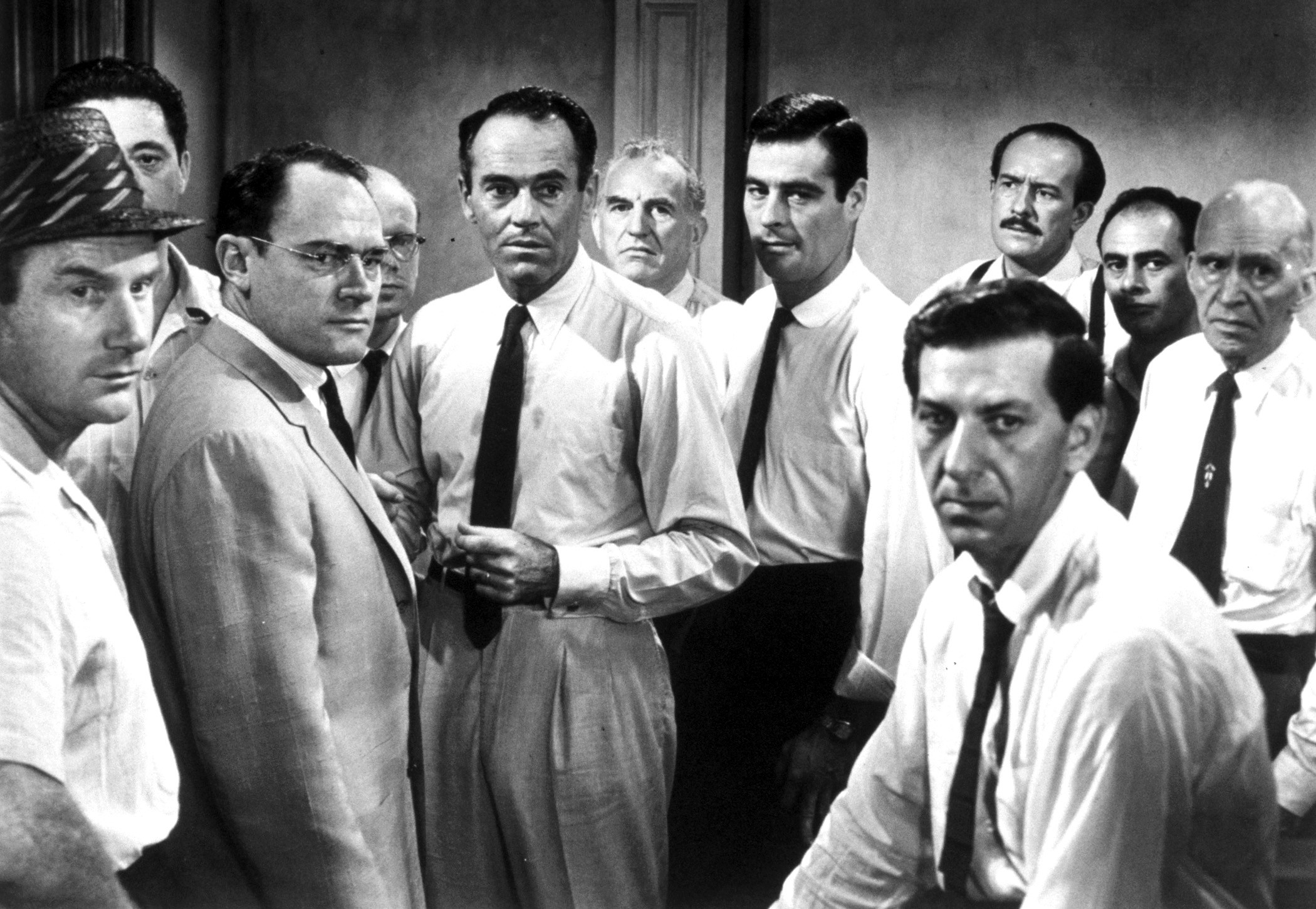
“Twelve Angry Men,” A Million Angry Fools, and the Jury System

Their defendant was probably guilty too.

Ethics Alarms All-Star Lianne Best sent me this link about a member of the Casey Anthony jury who is going into hiding because of all the hate and criticism being directed at jury members and their controversial verdict. Her plight, which must be shared by other members of the much-maligned jury, highlights the unethical, not to mention ignorant, reaction of the public to the Florida ex-mother’s narrow escape from a murder conviction she almost certainly deserved.

The problem begins with publicity. We may need to re-examine the logic behind broadcasting high-profile cases. The combination of live courtroom feeds and quasi-semi-competent commentary gives viewers the mistaken belief that they are qualified to second guess the jury, and they are not. They are not because the jury is in the courtroom, and the viewers aren’t. The jury and TV watchers see different things; individuals communicate different emotions and reactions in person than they do on camera. There is only one fair and sensible way to answer those on-line instant polls that ask, “Do you think Casey Anthony should be found guilty?”, and that is “I don’t know.”

Most of all, the viewers and pundits are not present in the jury room. Continue reading

Thanking Dick Williams…Finally

The late Dick Williams, doing what great leaders do

If you are not a baseball fan, or under the age of thirty, you probably never heard of Hall of Fame manager Dick Williams, who died yesterday at the age of 84. I never met Williams myself, but I have been indebted to him for four decades. I never told him the immense difference he made in my life, just by doing his job.

In the winter of 1967, I was a devoted fan of my home town team, the Boston Red Sox, and had been since 1962.  Over that period I had listened to every single baseball game on my transistor radio when a game wasn’t on TV, which was most of the time, or when I wasn’t at the game, which was almost always the case. I was the only person I knew who followed the team, and for good reason: it was torture. The Red Sox were hopelessly mediocre on the way to awful, and hadn’t had a winning season in more than ten years.

It is a great character builder to follow the fortunes of a terrible baseball team. Almost every day, for six months, you are let down, and yet return to the scene of your despair the next, attempting to muster hope while steeling yourself against likely disappointment. You find yourself finding things to appreciate other than winning: the gallant veteran player who “plays the right way” (Eddie Bressoud, shortstop, 1962-1965); the exciting rookie who gives promise of a better future (Tony Conigliaro, right fielder—rest in peace, Tony); the unique talent who is worth watching for his own sake (Dick Radatz, relief pitcher, 1962-1966). These things help, but following a perennial losing team and caring about them is like being punched in the gut four or five days a week without knowing which day you’re getting it.

Since 1965, I had always reserved seats for the first day of the season and one of the last two home games, just in case those last games would be crucial to a (hahahaha!) Red Sox pennant drive. This was especially pathetic, since the team was getting worse. They had finished in a tie for 9th place in 1966, and as the 1967 season loomed, Vegas had them installed as 100-1 underdogs to win the American League pennant. In truth, the odds should have been longer. Nonetheless, I wrote the Red Sox and got my tickets, this time for the next to last day of the season.

The team was full of rookies and near rookies, and appropriately had hired a minor league manager, Dick Williams, to be the new skipper. Williams was something else, however: he was a gifted leader. One day, in the middle of Spring Training, a Boston scribe asked the new manager what the prospects were for the upcoming season. Would the team escape the cellar? Would there be forward progress? Williams’ answer was instant front page news:

“We’ll win more than we lose.” Continue reading

Ethics Quote of the Era: Thomas Jefferson and the Continental Congress of 1776

“We hold these truths to be self-evident, that all men are created equal, that they are endowed by their Creator with certain unalienable Rights, that among these are Life, Liberty and the pursuit of Happiness.–That to secure these rights, Governments are instituted among Men, deriving their just powers from the consent of the governed, –That whenever any Form of Government becomes destructive of these ends, it is the Right of the People to alter or to abolish it, and to institute new Government, laying its foundation on such principles and organizing its powers in such form, as to them shall seem most likely to effect their Safety and Happiness.”

—-The Declaration of Independence, authored by Thomas Jefferson, edited, ratified and signed by him,  Button Gwinnett, Lyman Hall, George Walton, William Hooper, Joseph Hewes, John Penn, Edward Rutledge, Thomas Heyward, Jr., Thomas Lynch, Jr., Arthur Middleton, John Hancock, Samuel Chase William Paca, Thomas Stone, Charles Carroll, George Wythe, Richard Henry Lee, Benjamin Harrison Thomas Nelson, Jr., Francis Lightfoot Lee, Carter Braxton, Robert Morris, Benjamin Rush, Benjamin Franklin, John Morton, George Clymer, James Smith, George Taylor, James Wilson, George Ross, Caesar Rodney, George Read, Thomas McKean, William Floyd, Philip Livingston, Francis Lewis, Lewis Morris, Richard Stockton, John Witherspoon, Francis Hopkinson, John Hart, Abraham Clark, Josiah Bartlett, William Whipple, Samuel Adams, John Adams, Robert Treat Paine, Elbridge Gerry, Stephen Hopkin,  William Ellery, Roger Sherman, Samuel Huntington, William Williams, Oliver Wolcott
Matthew Thornton.

Ethics Heroes all.

Thank you, guys.

(You can read the entire document that changed the world…undeniably for the better…here.)

Ethics Hero: Lincoln School in Spring Valley, Illinois

Thanks to Lincoln School, this isn't me. Yet.

Thank you, oh thank you, Lincoln School in Spring Valley, Illinois! Your superb and inspiring decision has stopped me, for the moment at least, from seeking species reassignment surgery. My membership in the human race has been an embarrassment to be of late, and I had been seeking alternatives. You give me hope.

Spring Valley’s Lincoln School gymnasium held a day of appreciation this week for custodian Edward “Red” Nestler,  88, who will retire on June 30. To his surprise, Red did not receive just a free lunch, or a watch, or a jacket, or a plaque in appreciation and commemoration of his many years with the school, a journey that began when he was a student there in the 1930s. On his “day,” Red learned that the school board, responding to a petition from students and staff, had voted to name the school gymnasium in his honor. Continue reading

Recognition and Gratitude Time

Despite the lightest traffic Ethics Alarms had experienced since Christmas in the week running up to Memorial Day, May 2011 will break the blog’s previous record for most visits, and end up approximately 300% busier than May 2010.

My heartfelt thanks to regulars and occasional visitors too—even those who still want to argue about the Tide commercials—with Acti-Lift!—for making my efforts here seem, if not especially influential, not entirely unappreciated either.


Ethics Heroes: World Journalists

Chris Hondros (left) and colleagues

I know Ethics Alarms is critical of the media and journalists for breaches of objectivity and fair reporting. Nevertheless, there are few professions more inherently heroic than journalism, especially when it requires on-the-scene reportage under dangerous conditions. This was demonstrated, once again, by the recent death of Chris Hondros, a distinguished photo-journalist who was killed last week in Libya.

May 3 is World Journalist Day, and an excellent time to honor the tough and dedicated professionals who bring us important and hard-to acquire news, often risking their lives in the process. To that end, there is no better on-line destination than the website of New York-based non-profit Committee to Protect Journalists, dedicated to making it possible for journalists to do their jobs without fear of reprisals.  There you can learn about the perils faced by media personnel all over the globe, and read about the journalists killed since January 2010 while trying to let us know what is going on in the world.

My Mother’s Funeral and the Kindness of Strangers

Few things are sadder than a long life commemorated by a sparsely attended funeral. The sadness is based more on illusion than reality, I know: the best way to ensure a good crowd at your funeral is to die young. Still, no son or daughter wants to deliver a eulogy to an empty chapel, even if the attendance figures at a love one’s funeral often say little about the richness of the life being remembered.

Most of the mourners at my mother’s funeral yesterday afternoon at Arlington National Cemetery barely knew her. Many had never met her; I doubt that she would have been able to name half of them if she had encountered them on the street. Yet they came, in the middle of a workday, to make sure that my mother’s family, including my sister and me, did not have to endure the sadness of the empty chapel. It was an amazing group. Among those whose connection to my mother was solely that they knew me, there were several whom I had not seen or spoken with in years, and others whose presence immediately made me feel guilty for being out of touch with them for too long. There were colleagues from jobs I had left long ago, and old friends who had, through the relentless roadblocks that family, work and assorted crises and priorities of living, had receded into names on a Facebook list. A former fiancee…a cast member of a show I had directed long ago. They were all expending time, their most precious resource, to be kind.

I’ve been going to a lot of funerals lately, something I once avoided with a passion. I’m going to start going to a lot more, and not merely just because, to paraphrase a line from the last Indiana Jones movie, I’ve reached the time when life stops giving you things and starts taking them away. As Yogi Berra reputedly said, “You should always go to other people’s funerals, otherwise, they won’t come to yours.” I appreciate the joke, but I’m pretty sure what Yogi was talking about was The Golden Rule.

Natalie Portman Ethics, Part II: The Body Double

This looks like Oscar, but it's really his body-double, Chip.

Sarah Lane, Natalie Portman’s Designated Ballet Dancer in “Black Swan, ” has caused a controversy by revealing that it was her, not Natalie (okay, maybe Natalie’s head on Sarah’s body), in some/many/most of the dance sequences. This has caused some commentators to suggest that Portman’s Academy Award was based on a sham. The film’s PR flacks made a big deal out of how Portman, with no more ballet training that your sister, worked so hard to acquire professional level dancing skills. Could this have made the difference in the Academy’s decision? Continue reading

Ethics Dunce: Fort Wayne Mayor Tom Henry

Mayor Trivial T. Spineless

He was, without question, the best mayor Fort Wayne, Indiana has ever had. When he first took office, he consolidated city departments launched construction of Fort Wayne’s massive underground sewage system and built the city sewage treatment plant, which is used to this day, seventy years later. When W.W. II came, he held war materials drives, upgraded city equipment and services, and broke ground for was is now Fort Wayne International Airport. and lowered city tax rates. In his last term, he opened up a major area of the town for development by elevating the railroad tracks. And he kept taxes low.

For 21 years beginning in 1934, this dedicated public servant was only not mayor for three years: he died at his post in 1954. And the people of Ft. Wayne haven’t forgotten him. This year, when city officials asked its citizens to vote on whose name the new government center should bear, the response was overwhelming. Ten times more people again voted for the former mayor they had always voted for while he was alive than for anyone or anything else (the runner-up choice was “Thunderdome”).

The current mayor, however, has decided not follow the results of the poll. He thinks the name would be inappropriate. You see, the famous leader that the people of Fort Wayne want to honor was named Harry Baals.

The current mayor’s name?  Trivial T. Spineless. Continue reading