May The Fourth Ethics Warm-Up: The Derby, Booing Mitt, And Other Pastimes…

Besides the terrible pun, May the 4th has great ethical significance in U.S. history. The children of the Sixties have the date seared into their memories as the 1970 tipping point in the Vietnam war protests. Twenty-eight young and badly trained National Guardsmen fired their weapons at a group of anti-war demonstrators on the Kent State University campus. Four students were killed, eight were wounded, and one was permanently paralyzed. The tragedy didn’t make the war any more or less wrong, but it massively shifted sympathies to students, protesters, and the one-time punchline of the previous few years, hippies. Future U.S. activists learned the lesson of Kent State well: if you can goad the opposition into violence, it is a victory for the cause, just and reasonable or not. This makes no sense, of course, other than being the ideal use of the cognitive dissonance scale

But Kent State doesn’t came close to the impact of the Haymarket Square Riot in Chicago, Illinois on this date in 1886. A bomb was thrown at a squad of police attempting to break up a peaceful labor rally that was getting rowdy. The police responded to the bomb by wildly shooting into the crowd, killing more than a dozen people and injuring hundreds. The episode had wide-reaching effects in labor, law and politics, galvanizing the union movement, leading to great political courage by some politicians (like Illinois Governor John Peter Altgeld, who pardoned three arrested activists who hadn’t been executed or died in 1893) and craven expediency by others.

The episode was also the major catalyst in bring a small-time lawyer named Clarence Darrow to Chicago, and inspiring him to be a labor lawyer.

1. More on Brandon Mitchell, the Chauvin juror who couldn’t keep his mouth shut. The photo of Mitchell wearing a Black Lives Matter T-shirt at a protest in Washington D.C. last August…
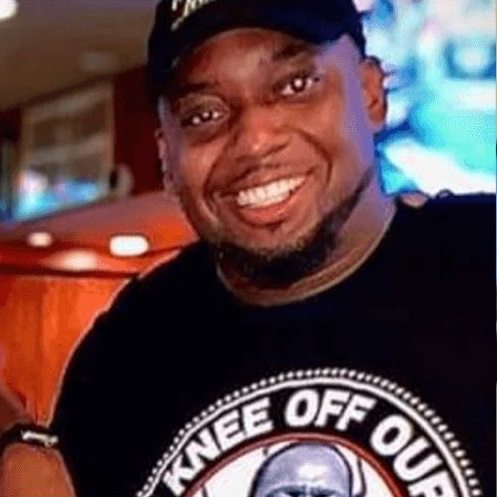
…has some legal experts…and me…wondering if the chances of the Chauvin verdict being overturned just got a whole lot better. “I’d never been to D.C.,” Mitchell humina-huminaed about his reasons for attending the event. “The opportunity to go to D.C., the opportunity to be around thousands and thousands of Black people; I just thought it was a good opportunity to be a part of something.”

Part of what, exactly, sir?

Brandon also says he doesn’t recall wearing such a shirt. That’s not encouraging regarding his honesty, is it?

Meanwhile, in the story about the latest development in the George Floyd Ethics Train Wreck, the AP writes,

A photo, posted on social media, shows Brandon Mitchell, who is Black, attending the Aug. 28 event to commemorate Martin Luther King Jr.’s “I Have a Dream” speech during the 1963 March on Washington. Floyd’s brother and sister, Philonise and Bridgett Floyd, and relatives of others who have been shot by police addressed the crowd.

Others who have been shot by the police? Floyd was shot too? I did not know that!
Continue reading

From The Ethics Alarms Archives: “The Forgotten Meaning of Labor Day”

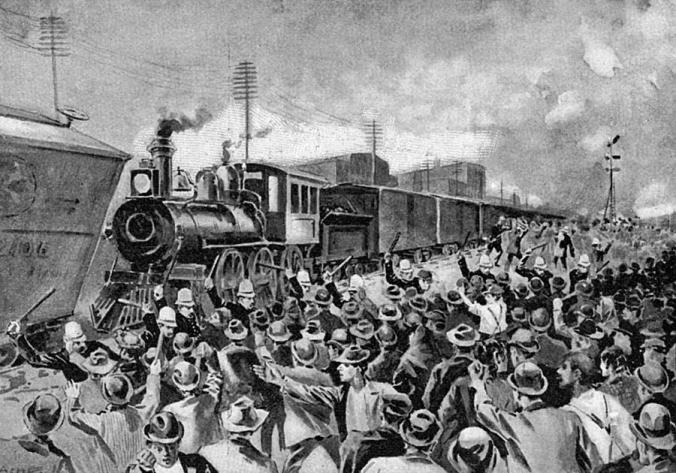
The 1894 Pullman strike

It may be hard for Americans to get inspired to celebrate Labor Day for what it is supposed to honor, especially with teachers unions working to keep America locked down and students barely educated in pursuit of a partisan political agenda, and pro athlete unions bullying sports leagues into ruining their product by turning them into political propaganda vehicles, and the postal workers union partisan bias eroding trust in the upcoming election. Nonetheless, there is a good reason to celebrate Labor Day.

This Ethics Alarms post from 2012 explains what that reason is.

Labor Day commemorates one of the great ethical victories of American society, and not one in a hundred Americans know it. Labor Day marks the end of summer, and a time for retail store sales, and the last chance to get away to Disney World, but few of us think about the real meaning of the word “labor” in the name, and how it is meant to honor brave, dedicated men and women who fought, sometimes literally, the forces of greed, political influence, wealth and privilege in this country to ensure a measure of safety, consideration, fairness and justice for the hardest working among us.

Today labor unions are controversial, and with good reason. Many of them have been run as criminal enterprises, with deep connections to organized crime; many operate in a blatantly coercive and undemocratic fashion. Union demands and strong-arm tactics, while providing security and good wages to members, have crippled some American industries, and limited jobs as well. Today the unions  get publicity when one of them tries to protect a member who should be punished, as when the baseball players’ union fights suspensions for player insubordination or even drug use, or when school districts are afraid to fire incompetent teachers because of union power, or when the members of public unions protest cutbacks in benefits that their private sector counterparts would be grateful for. It is true that today’s unions often embody longshoreman philosopher Eric Hoffer’s observation that  “Every great cause begins as a movement, degenerates into a business and ends up as a racket.” *

That not what Labor Day honors, however. It is celebrating the original labor movement that began at the end of the 19th century, and that eventually rescued the United States from an industrial and manufacturing system that was cruel, exploitive, deadly and feudal. Why the elementary schools teach nothing about this inspiring and important movement, I do not know. I suspect that the story of the American labor movement was deemed politically dangerous to teach during the various Red Scares, and fell out of the curriculum, never to return. Whatever the reason, it is disgraceful, for the achievements of the labor movement are every bit as important and inspiring as those of the civil rights movement and the achievements of our armed forces in the protection of liberty abroad. Continue reading

Morning Ethics Warm-Up, 9/4/17: Labor Day, Google Being Evil, Antifa, And Hollywood

Good Morning!

1.Happy Labor Day! My dry cleaner has a sign out that reads, “Happy Labor Day! Support Our Troops!” Now, any day is a good day to support our troops, but I strongly suspect that this is an unfortunate example of our increasing cultural and historical ignorance (ignorance that the war on statues and memorials will exacerbate, and that’s the intention). No holiday is more misunderstood than Labor Day, and the news media barely makes an effort to remedy the problem.

Ethics Alarms explained the history behind the holiday in a 2012 post that began,

Labor Day commemorates one of the great ethical victories of American society, and not one in a hundred Americans know it. Labor Day marks the end of summer, and a time for retail store sales, and the last chance to get away to Disney World, but few of us think about the real meaning of the word “labor” in the name, and how it is meant to honor brave, dedicated men and women who fought, sometimes literally, the forces of greed, political influence, wealth and privilege in this country to ensure a measure of safety, consideration, fairness and justice for the hardest working among us.

The post is here.

2. This is traditionally a big movie weekend, but it has already been declared a dud. Hollywood is having its worse summer in more than two decades.  Conservative commentators have speculated that one reason is that Hollywood’s loudly and obnoxiously proclaimed contempt for about half of its potential audience—you know, The Deplorables–has alienated a significant segment of the market. That would be nice, since Hollywood has traditionally been a unifying cultural force rather than a divisive one, and this might shock Tinsel Town into getting off its high, blind horse and doing its job. I doubt it, though.

Astoundingly, the public is not yet sick of super hero movies, one of the few genres that continues to do well at the domestic box office.  I wonder when the public will figure out this is partially political indoctrination by the Hollywood Left too: super heroes don’t use those evil guns. They just kill people with their innate powers, or, as in the not-bad NetFlix/Marvel series “The Defenders,” in ridiculously long, drawn-out martial arts combat sequences that resemble ugly dancing more than real fighting. Some of the heroes are bullet proof, however.

The flaw in this anti-Second Amendment propaganda is that real people do not have super powers, and there aren’t any super heroes running around protecting them. Continue reading

The Forgotten Meaning of Labor Day

Do you know who this is? You should! It’s Labor Day, dammit!

Labor Day commemorates one of the great ethical victories of American society, and not one in a hundred Americans know it. Labor Day marks the end of summer, and a time for retail store sales, and the last chance to get away to Disney World, but few of us think about the real meaning of the word “labor” in the name, and how it is meant to honor brave, dedicated men and women who fought, sometimes literally, the forces of greed, political influence, wealth and privilege in this country to ensure a measure of safety, consideration, fairness and justice for the hardest working among us.

Today labor unions are controversial, and with good reason. Many of them have been run as criminal enterprises, with deep connections to organized crime; many operate in a blatantly coercive and undemocratic fashion. Union demands and strong-arm tactics, while providing security and good wages to members, have crippled some American industries, and limited jobs as well. Today the unions  get publicity when one of them tries to protect a member who should be punished, as when the baseball players’ union fights suspensions for player insubordination or even drug use, or when school districts are afraid to fire incompetent teachers because of union power, or when the members of public unions protest cutbacks in benefits that their private sector counterparts would be grateful for. It is true that today’s unions often embody longshoreman philosopher Eric Hoffer’s observation that  “Every great cause begins as a movement, degenerates into a business and ends up as a racket.” *

That not what Labor Day honors, however. It is celebrating the original labor movement that began at the end of the 19th century, and that eventually rescued the United States from an industrial and manufacturing system that was cruel, exploitive, deadly and feudal. Why the elementary schools teach nothing about this inspiring and important movement, I do not know. I suspect that the story of the American labor movement was deemed politically dangerous to teach during the various Red Scares, and fell out of the curriculum, never to return. Whatever the reason, it is disgraceful, for the achievements of the labor movement are every bit as important and inspiring as those of the civil rights movement and the achievements of our armed forces in the protection of liberty abroad. Continue reading

Wikipedia Ethics

An article in the Chronicle Of Higher Education serves as a stark lesson in how policies, procedures and bureaucracy can warp an organization’s purpose and lead to self-destructive conduct that injures stakeholders and destroys trust. The entity at issue: Wikipedia. And now we know why, despite the immense growth and improvement in the web’s community encyclopedia, it still can’t be trusted….and may never be trustworthy.

Historian and researcher Timothy Messer-Kruse tells of his decade-long effort to correct misinformation in Wikipedia relating to the Haymarket riot and subsequent trial in 1886, a landmark episode in the social, political and labor history of America. Messer-Kruse discovered that the entry included an outright error that had become standard in the historical accounts, but that he had personally proven was false through meticulous research. But Wikipedia wasn’t interested in accuracy: Continue reading