Comment of the Day: “What’s Next for the Alisal Union School District…John Dillinger High School?”

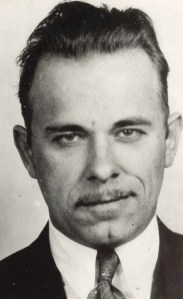
Dillinger. Such a pleasant looking fellow!

Dillinger. Such a pleasant looking fellow!

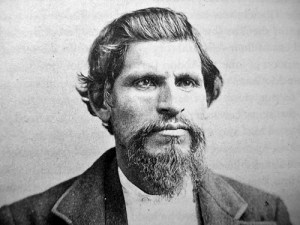
This is the first of two informative Comments of the Day regarding this post. 49erDweet is correct, of course: the decision to honor Tiburcio Vasquez is a disgrace, and the comment shows that it is even more outrageous and irresponsible than I thought. I have read some of the claims on the web that Vasquez was “framed,” and that he didn’t commit the crimes attributed to him. None of them offer any proof other than the fact that mainstream scholars and historians, which naturally are biased against Mexicans, chronicled his activities, and none explain this mystery: if Vasquez didn’t commit all those crimes, what the heck did he do that was so remarkable? The only reason he is famous is because of his crimes. If he really was innocent, then he was a non-entity.

Here is 49erDweet’s Comment of the Day on the post, “What’s Next for the Alisal Union School District…John Dillinger High School?”:

“The Alisal school district’s area is directly adjacent to mine but in the same community, so I’m a tiny bit familiar with the issue. I’ve disbelievingly read most of the few published responses of a couple of their board members and their superintendent. For some reason the other board members haven’t been available.
From what I’ve read it’s apparent the individuals involved, all of whom have Hispanic surnames, believe the available published history concerning California is biased and untrue, and Vasquez should be considered a popular hero in the same vein as was Robin Hood. For the crimes he committed against his own people, which they believe were minor, they readily forgive him. And to their way of thinking he’s a folk hero who should be idolized.

“I believe this is sad, bad community leadership, obviously a major ethics fail, and is more than passingly ironic because the area they represent is one of the major Mexican prison gang battlefields currently in crisis in California. They are preparing to hold up a killer, thief, robber and rapist as a person their future students should emulate. Which, for a gang area, should build up the prison population and a much shorter than normal life expectancy.

“My heart breaks for the students who will be negatively impacted by this dreadful decision.”
What’s Next for the Alisal Union School District…John Dillinger High School?

OK, so he was hanged for murder. Nobody's perfect.

OK, so he was hanged for murder. Nobody’s perfect.

According to the University of Southern California historical archives, Tiburcio Vasquez (1835- 1875) was California’s second most notorious bandit. At the age of 14 he stabbed a constable, then embarked on a life of crime. He became the leader of his own gang, which ranged up and down central and southern California, robbing and killing. Vasquez was convicted of horse-stealing and sentenced to San Quentin prison in 1857, escaped, stole more horses, and was finally released in 1863, after playing a role in four prison breaks that resulted in the deaths of twenty inmates. For the next ten years he and his gang committed a string of burglaries, robberies and murders in the San Benito County area, finally ending with his capture in 1874. Convicted of two murders of the six attributed to him, Vadquez was sentenced to death, and executed by hanging the next year. Shortly before the noose was placed around his neck, Vasquez dictated an explanation for his actions:

“A spirit of hatred and revenge took possession of me. I had numerous fights in defense of what I believed to be my rights and those of my countrymen. I believed we were unjustly deprived of the social rights that belonged to us.”

I know what you must be thinking: “What a perfect historical figure for the Mexican-American community to honor by naming an elementary school him!” Continue reading

Ten More Hollywood Ethics Cures For A Post-Election Hangover (Part I)

A year ago, the combination of the erupting Penn State scandal (and Penn State’s students’ scandalous reaction to it) and our dysfunctional government led me to list my “15 Hollywood Cures…,” my favorite movies dealing with ethics themes that I reflexively turn to when the world’s ethics alarms look frozen and broken. I had to leave some of the best ethics films off that list (Part I is here; Part II is here), and this seems like a good time to remedy that injustice. Here are ten more excellent films to prime our ethics alarms with minimal preaching and maximum entertainment value, bringing the Ethics Alarms movie list to 25. It will get larger, I’m sure:

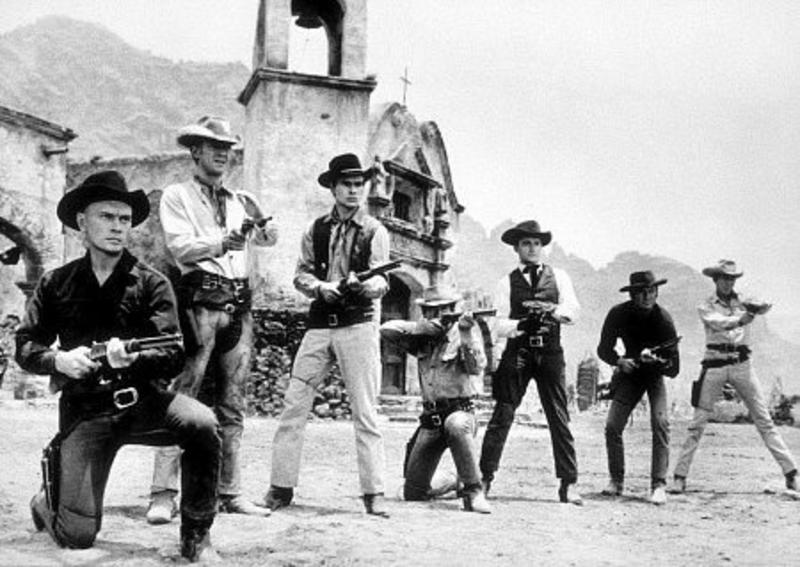
1. The Magnificent  Seven (196o)

Ethics Bob Stone’s favorite ethics movie, and he has a good case. A group of seven hired gunslingers help an impoverished Mexican town fight off looting bandits, each of the seven for a different reason, facing their own ethical dilemmas and contradictions.

Ethical issues highlightedaltruism, bullying, charity, courage, integrity, teamwork and the importance of prioritizing values.

Favorite quote:

Harry (Brad Dexter): “There comes a time to turn mother’s picture to the wall and get out. The village will be no worse off than it was before we came.”

Chris (Yul Brenner): “You forget one thing — we took a contract.”

Vin (Steve McQueen): “It’s not the kind any court would enforce.”

Chris: “That’s just the kind you’ve got to keep.” Continue reading

“I’m Warning You: If You Rescue That Drowning Man Over There, You’re Fired!”

“Not your concern…”

The brain-dead and ethics-empty conduct of Jeff Ellis Management, an Orlando, Florida-based company, in its recent firing of 21-year-old lifeguard Tomas Lopez is welcome in one respect, and one respect only. It helps explain the inhuman attitude of the two Brooklyn EMT’s who stood by and watched a woman die of a heart attack as they munched bagels. It begins to explain why two Seattle security guards stood by and allowed a woman to be nearly beaten to death while they looked on. It almost explains how a crowd of people on a California shore, including firefighters, stood by as a man named Raymond Zack took nearly an hour to drown himself. It might even provide some insight into the thought processes of Penn State assistant football coach Mike McQueery, who famously observed Jerry Sandusky as he engaged in a child rape but didn’t stop it. For one of the reasons so many Americans turn off their ethics alarms, reject their humanity and flunk their duty to rescue those in peril is that there are people like  Jeff Ellis, who deem human life less important than business, policy and profit, and who will punish any employee who doesn’t feel similarly and act accordingly.

The company fired Lopez after he pulled a struggling swimmer out of the ocean on Hallandale Beach in Broward County, saving his life. The rescue, you see, occurred 1,500 feet south of the firm’s contracted boundaries for lifeguard service.  Lopez was told that a swimmer was in peril off the neighboring beach, and ran to his rescue, leaving the “protected beach” area where his services had been contracted to serve. The near-drowning victim was swimming in the “unprotected area” without lifeguards, and there’s no point, the management company reasons, to hire it to provide lifeguards if the heroes like Lopez will dive in for free. Continue reading

William Aramony and the Fallen Hero Dilemma

As he usually did, the extraterrestrial, mutant, collective or whatever he was William Shakespeare (no human could be that wise) had it exactly right, and a long time ago: “The evil that men do lives after them; The good is oft interred with their bones.” In a dispirited column on the CNN website, obviously inspired by the Paterno debacle, ESPN writer L.Z. Granderson writes that he has become afraid to watch the news, fearing that another of his heroes will be shown to be a fraud:

“And when we find out our gods are not perfect, we’re confused. We don’t know what to do with a storyline where the perceived protagonist is complex. Heroes aren’t supposed to do bad things. That’s what villains are for. So either the good supersedes the bad, or the bad makes it impossible to remember the good. We don’t like it when such duality exists in one person. We don’t want to know our heroes are human.” Continue reading

Comment of the Day: “Mike McQueary and Me”

Some recent Ethics Alarms commenters

Joseph Edward bought me some time with this superb Comment of the Day, because I am writing a post on the same topic. Mike McQueary’s conduct in the locker room, when he allegedly witnesses Jerry Sandusky raping a boy,  has generated some of the most self-righteous and, I may say, annoying comments I’ve encountered on Ethics Alarms, characterizing my commentary (in “Mike McQueary and Me”) on why McQueary might have acted as he did with excusing his conduct. Most of these, I’m relatively certain, are motivated by those who want to shift responsibility for the Penn State debacle away from Joe Paterno.

One particularly persistent and vociferous commenter has decreed that it was an “absolute moral obligation” for McQueary to physically intervene to stop the assault he witnessed. Joseph touches on that dubious contention; I’ll have more to say about it soon. Meanwhile, here is his Comment of the Day, on “Mike McQueary and Me”: Continue reading

Would Dennis Rodman Qualify for the Baseball Hall of Fame?

Dennis Rodman, out of uniform

Of course not. Dennis Rodman didn’t play baseball. He was a pro basketball player, and as of yesterday, an inductee into the NBA Hall of Fame for his exploits on a basketball court. There is no question that he is eminently qualified for admission to the NBA Hall of Fame, because the NBA Hall of Fame doesn’t care if players are thugs, drunks, scofflaws, deadbeat dads and couldn’t define sportsmanship with a dictionary as long as they can shoot, score, pass, dribble and block shots.

The Major League Baseball Hall of Fame at Cooperstown, however, requires that its members demonstrate “integrity, sportsmanship, (and) character,” in addition to outstanding achievements and a remarkable career record.  Because of the steroid era that has rendered a whole generation of players suspect for cheating, an expanding number of baseball greats face being excluded from the Hall because cheating by using substances that are illegal and banned in the sport while implicitly deceiving the public about the use is, by any rational definition, a material breach of integrity and sportsmanship.  The natural reaction by many sportswriters, as in other fields when reasonable standards are routinely violated, is to attack the standards. Why should a sport care about matters like integrity and character? Isn’t it the performance that counts, and winning? Continue reading

Robert E. Lee and the Abuse of Principle

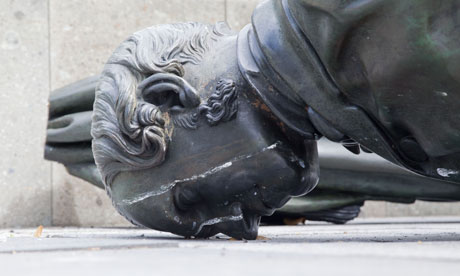
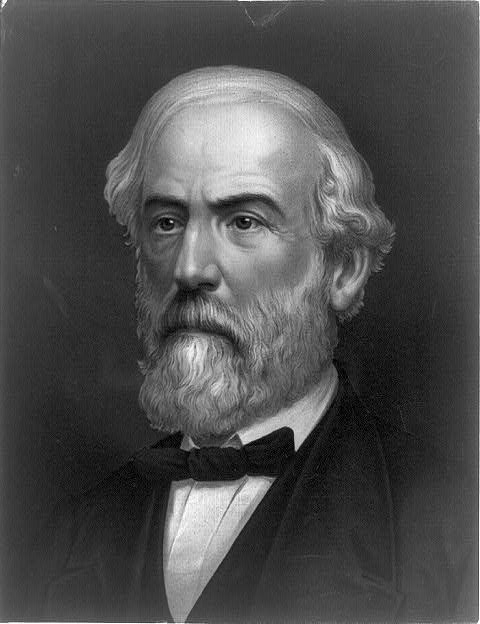
Lee: Use his life as a warning, not an inspiration.

As both political parties and the President of the United States seem to be determined to subject the American people, economy and standing in the world to disaster in the defense of principles, it might be a good time to reflect on the fact that principles detached from reality have little value, and that rigidly adhering to principles to the detriment of the community and civilization is not a virtue.

In the current issue of Humanities, historian James Cobb makes these points vividly, if tangentially, while reflecting on the odd reverence with which Americans, and not just Southerners, regard Robert E. Lee. I am proud to say that the lionization of Lee never made sense to me, not even when I was a small boy. But he is the epitome of someone who is revered as a role model and hero for his supposed character and values rather than what he actually did with them.*

Cobb begins his essay with this anecdote:  Continue reading

Ethics Hero: Derek Jeter

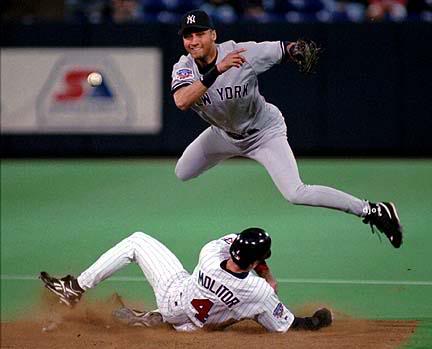
Roger Clemens is now on trial facing perjury charges. Barry Bonds has been convicted of obstruction of justice. Pacman Jones has just been arrested again; Tiger Woods hasn’t won a golf tournament since he was exposed as a serial adulterer. Through the travails and embarrassments of all of these and many more tarnished athletes who were once looked upon as cultural heroes, Yankee shortstop Derek Jeter has remained a constant— a team player, a clutch player, and an undeniably great player who has maintained his integrity and high values of competition and sportsmanship, never betraying the trust of his fans, his city, his team, or his game.

Yesterday Jeter reached 3000 hits, the watermark of the greatest of the greats, becoming the only lifetime New York Yankee to do so. He achieved the magic number with the flair only special players can muster, rising to a grand occasion like Ted Williams, hitting a home run in his final at bat, or Cal Ripken, marking  his passing of Lou Gehrig’s “iron man” record for consecutive games with a homer. Yesterday, Jeter passed 3000 in a rush, going 5 for 5 with the hit # 3000 being, yes, a round-tripper. Continue reading

Ethics Quote of the Week: “Ethics Bob” Stone

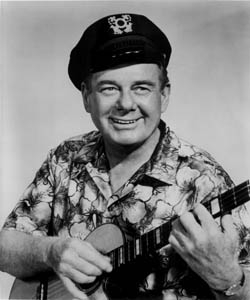
Is Joe Scarborough the new Arthur Godfrey, as in "nice guy" revealed as "unethical creep"?

“It’s always upsetting when one of your heroes turns out to be an unethical creep.”

Ethicist and business ethics professor Bob Stone on his blog “Ethics Bob,” expressing his disappointment in the conduct of MSNBC talk show host Joe Scarborough, who persuaded guest and colleague Mark Halperin to “go for it” when Halperin suggested that his description of President Obama’s press conference was not appropriate for public broadcast, and then did nothing to accept responsibility for the uproar when Halperin referred to Obama as “kind of a dick.” Halperin was suspended indefinitely by MSNBC, following a complaint from the White House.

Bob had expressed hope, in a comment to the Ethics Alarms criticism of Scarborough’s role in the incident, that Scarborough would do the right thing by the next day. He did not. And Bob is correct: this is proof positive that Scarborough is an unethical, cowardly creep.

What should “Morning Joe” have done? Several things: Continue reading