“The Longest Day,” Darryl F. Zanuck, D-Day, And Us

title_longest_day_bluray

Today is June 6, the anniversary of the Allies’ invasion of Normandy, the audacious military strike that changed the course of history. I’ll be interested in seeing how it’s commemorated this year, 71 years later, especially by the news media. A lot of Americans under the age of 40 know almost nothing about it, or worse, the values it represents to the United States.

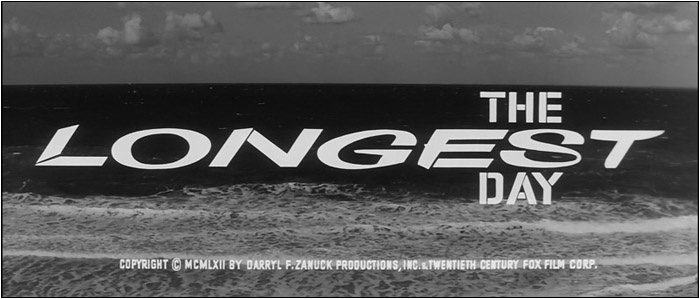
Fortunately, there is an easy and entertaining way to teach a young American about what happened on this day 71 years ago. That is to have him or her watch “The Longest Day,” producer Darryl F. Zanuck’s epic film based closely on historian (and sole credited screenwriter) Cornelius Ryan’s 1959 book. (You can get it at Amazon, here.)I usually find understanding military battles nearly impossible; written accounts completely confound me, and few movies about any battle make a serious effort to explain the tactics and strategy without reducing the facts to pablum. (I remember how much my father, who fought in the Battle of the Bulge, detested the big budget movie of the same name, which he found outrageously sloppy, and which he summarized as “Henry Fonda won the war.”)

Not “The Longest Day,” however. Since seeing the movie with my father as a kid, I have learned a lot about what was left out, but the movie is remarkably clear and accurate about what happened and why without being either too detailed or too simplistic. It’s also just a great, inspiring movie.

That we have “The Longest Day” is entirely due to the courage of one of Hollywood’s most dynamic, flamboyant and successful studio moguls, Darryl F. Zanuck. The original producer of the adaptation of Ryan’s book (which is terrific ) gave up on the project when 20th Century Fox refused to allow him an adequate budget. Zanuck, who was still producing films but no longer ran the studio he had built,  bought the rights, and was determined to do the story, the event, and the men who fought the battle justice by mounting a production almost as ambitious as the invasion itself. Continue reading

The Irony Of Wikileaks: Yes, It Is Despicable…But It’s Still Useful To Know That PBS, Ben Affleck And Prof. Henry Lewis Gates Are Despicable Too.

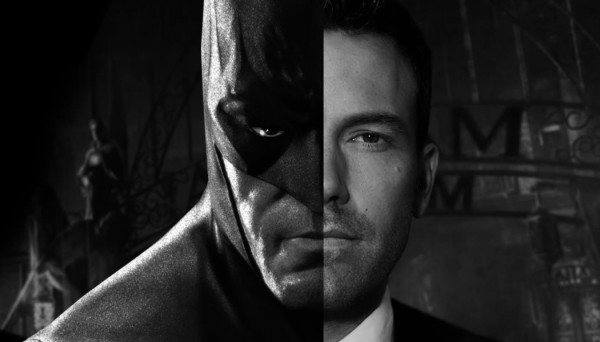
Batman is ashamed of you, Ben...

Batman is ashamed of you, Ben…

Once a secret is out, it isn’t a secret any more. Once privacy is shattered, it’s gone: that egg can’t be put back together again. I wish Sony’s e-mails hadn’t been hacked: everyone who isn’t operating under a policy that mandates that their communications must be archived and available for media and public examination, like, oh, say, Hillary Clinton, has a right to have private business and personal communication.

Julian Assange is a fick, and an uncommonly arrogant one. He encourages, aids and abets the theft of proprietary information in the interests of world anarchy, which is in the interests of nobody. So let’s see now…North Korea hacks Sony to chill our First Amendment rights, and Wikileaks helps magnify the damage by spreading private e-mails and documents far and wide.

Yechhh.

But it’s all out there now, and there is no virtue in averting our eyes and plugging our ears. There is a lot of unethical conduct exposed in those 30,000 documents and 170,000 emails hacked from Sony, and while the means by which it was exposed was illegal and wrong, we should still learn from what is now public information.

The fact that PBS and Harvard prof Henry Louis Gates Jr. can’t be trusted, for example, is good to know. Continue reading

Oscar Ethics 2015: The Unforgivable Dishonoring Of Maureen O’Hara

maureen ohara

Usually I follow the Oscars telecast with a post on the recently deceased actors and actresses the Academy unfairly snubs in its annual “In Memoriam” session. There is no excuse for robbing anyone of a last bow and farewell, despite the repeated claim that there “just isn’t enough time” to squeeze everyone in. Last night that dishonest excuse for disrespect and incompetence was rendered more absurd than ever: If there’s time for the longest, slowest, most repetitious speech yet by an Academy official, if there’s time for not one but two inappropriate political rants on the podium by award-winners, if there’s time for so many songs that the show seemed more like the Grammys than the Oscars, then there’s time to flash a couple more faces for a second or two.

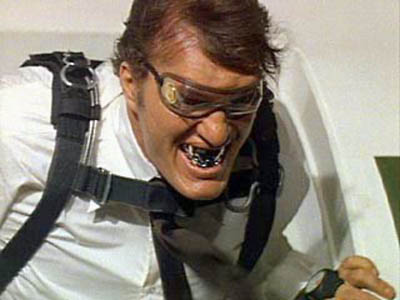
This year, the omissions were minimal compared to recent years. I noticed the absence of Richard Kiel (1939-2014),

Jaws

…the giant actor who was best known for playing the James Bond villain “Jaws” in two films, as well as less celebrated monsters, aliens and goons. Marcia Strassman, (1948-2014),

Strassman

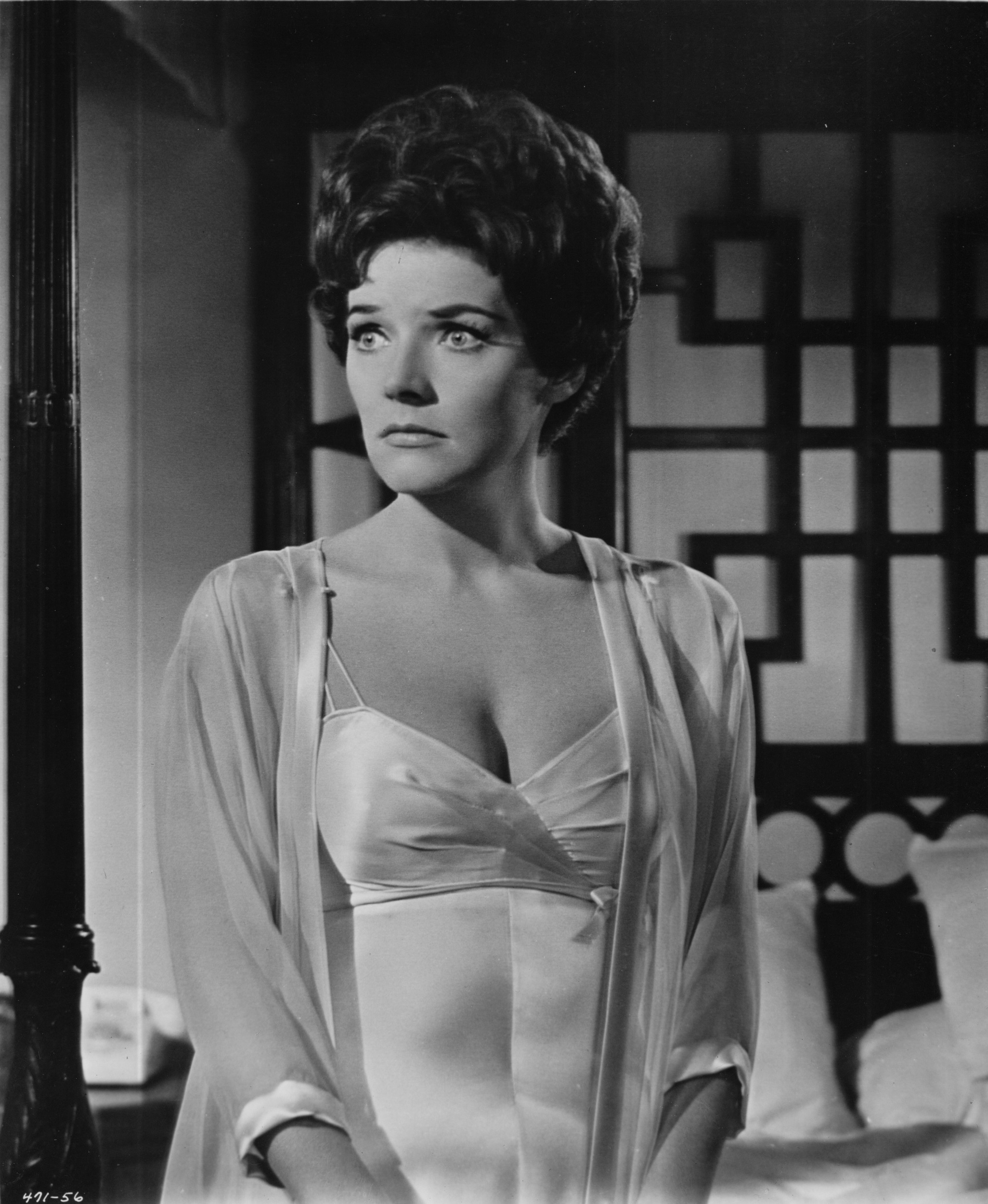
who made few films (she was predominantly a TV actress (“Welcome Back, Kotter”), but who was the co-star (with Rick Moranis) of the Disney hits, “Honey I Shrunk the Kids” and “Honey I Blew Up The Kid,” also deserved inclusion, and Polly Bergen (1930-2014)

Polly Bergen

…who played the terrorized lawyer’s wife in the original “Cape Fear”(portrayed by Jessica Lange in the Scorsese re-make) and had significant roles in several other films, was a bad omission.

Because Twitter users are about 12 or have the memories of mayflies, there was much indignation last night over the absence of Joan Rivers and former SNL standout Jan Hooks. I’d leave the appreciations of both to the Emmys, especially Rivers. A couple cameos and doing the voice of the C3PO parody in “Spaceballs” doesn’t constitute a film career, and snarky red carpet interviews are not movie-making.

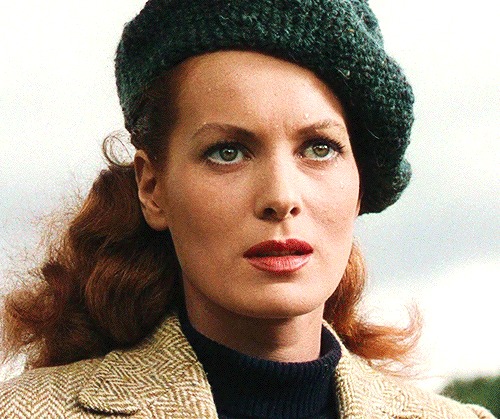
Those snubs pale in significance, however, to the disrespect shown by the academy not only to one of its all-time great stars, but to its own history, in the treatment of actress Maureen O’Hara. Continue reading

Ethics Quote of The Month: Fired Sony Executive Amy Pascal

Good for you, Amy.

Good for you, Amy.

“Here’s the problem: I run a business. People want to work for less money, I’ll pay them less money. I don’t call them up and say, ‘Can I give you some more?’ Because that’s not what you do when you run a business. The truth is, what women have to do is not work for less money. They have to walk away. People shouldn’t be so grateful for jobs. … People should know what they’re worth.”

—Recently fired—because of those hacked e-mails—Sony Pictures chief Amy Pascal, in an interview with journalist Tina Brown at the Women in the World conference in San Francisco. She was addressing her e-mails revealing that actress Jennifer Lawrence was paid less than her male co-stars in “American Hustle.”

Take that, “77 cents for every dollar”!

My least favorite deceitful statistic took it on the chin with Pascal’s candid and accurate statement, and she ranks Ethics Hero status not just for saying it, but saying it in front of an audience full of women who have supported the lie while cheering and voting for politicians who repeat it.

A large chunk of the disparity between the salaries of men and women for the same jobs is not the product of bias or discrimination, but the natural consequences of females being raised to be less assertive, with lower self-esteem, and their resulting poor negotiating skills. Pascal is placing responsibility squarely where it belongs. This has been one more example of a traditionally mistreated group relying on victim-mongering rather than focusing on personal responsibility, accountability and honesty to address what is well within their power to fix.

Brava, Amy Pascal!

If Sony had any sense or principals, it would give you your job back.

The Strange And Unethical Case Of The Aging, Ageless, Part-Time Actress

Cheer up, Junie! Remember the sage words of the great Satchel Paige: “How old would you be, if you didn’t know how old you was?”

Cheer up, Junie! Remember the sage words of the great Satchel Paige: “How old would you be, if you didn’t know how old you was?”

In October of 2011, Ethics Alarms offered an Ethics Quiz that asked, “Did the Internet Movie Data Base do anything unethical by publishing the actress’s real age without her permission?” The occasion was a lawsuit asking for over a million dollars in damages by an anonymous film actress who claimed that Amazon’s Internet Movie Data Base harmed her career by researching and publishing her real age without her permission. My conclusion at the time was that Actress X was

“shooting at the wrong villain. If there is age discrimination in Hollywood, confront it: a number shouldn’t disqualify her from any roles at all. I am not saying that fighting such a long-standing tradition in the show business culture isn’t a daunting task, but that’s the real problem, not a web service that conveys information about movies and movie stars by publishing facts.”

Well, it’s almost four years later, this dubious case has wound its way to trial, and we are now learning some fascinating things: Continue reading

The Destructive, Useful, Unethical Presumption of Bigotry, Part 2: The Oscar “Snub”

selma-4

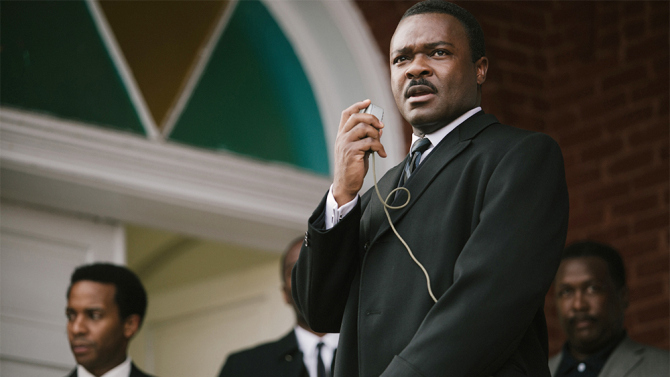
For the second time in nearly two decades, and for the first time since 1998, the Oscars will be awarded to only white acting nominees. This, then, if you listen to the caterwauling race-baiters, is because Hollywood is racist. The Academy’s voters just hid it well since 1998, that’s all. Does that make any sense to you?

There are few more infuriating and transparently illogical examples of an unfair slapping down of the race card than looking for bigotry in the notoriously arbitrary, bias-soaked, essentially meaningless choices for “best” in the various Academy Award movie-making categories. Yet the race card sharks were up to the task.  Naturally, the authority on the subject was Al Sharpton, he whose own performance quality on his MSNBC TV show is so amateurish that it would be shut out in any community theater awards.

“In the time of Staten Island and Ferguson, to have one of the most shutout Oscar nights in recent memory is something that is incongruous,” Sharpton told The Daily News. Wait, what??? Incongruous is the assertion that the nominations for film-making excellence should be influenced in any way by how many blacks are killed resisting arrest. Anyone who finds that to be a logical argument for why more black actors should have been nominated for Oscars is useless to any rational discussion of the issue. I want a show of hands. Continue reading

No, There’s No Comparison Between Bill Cosby And Woody Allen And No “Double Standard”

One of these things is not like the other....

One of these things is not like the other….

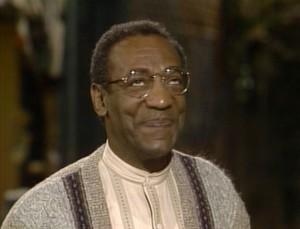
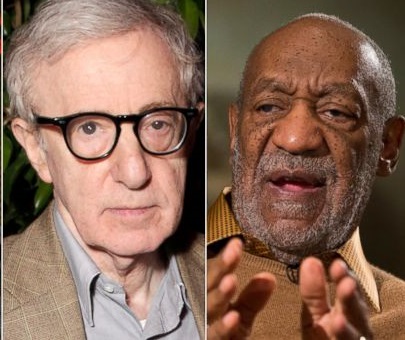
Newspapers should make us more informed and smarter, not less informed and dumber. Thus a Washington Post feature this morning qualifies as journalism malpractice, incompetence exemplified. Its theme: “Gee, why is Woody Allen signing a new deal to do a streaming comedy series for Amazon, while Bill Cosby lost his deal with NBC?” The print edition sub-heads: “Crisis responses may explain…”

No, they don’t. This is a false comparison based on superficial similarities: two comics who initially peaked in the same era, both in their seventies, shadowed now by sex scandals. The effort to use one to question the treatment of the other is either intellectually dishonest or so analytically unsound that it should forfeit the authors’ privileges of being assigned to write anything for mass consumption (the Post piece is by Stephanie Merry and Amy Argetsinger, and shame on them). The question of why Allen and Cosby are being treated differently in the court of public opinion isn’t worth asking, but since they asked, here are the obvious answers:

1. Woody Allen’s art, comedy, and persona have never had anything to do with virtue, stable families or being any kind of a role model. As a performer, he has presented himself as perpetually horny, neurotic, obsessed with sex and masturbation, prone to lying, and open to adultery, betrayal, stealing friends’ lovers; in “Manhattan,” he happily romanced a virtual child. In real life, he says things like “The heart wants what the heart wants,” which is a  rationalization for any act unethical or illegal, involving sexual or romantic desire. If you were ever a fan of Woody Allen after the age of 13, you were so because he was funny, accepting the fact that he is at best a sexually obsessed, maladjusted creep.

None of this is true of Cosby, who has always aimed his comedy at innocence, functional families and traditional virtues, and represented his own values as consistent with these when speaking for himself. Sex was not any part of Cosby’s art or image. He was an iconic good guy. Continue reading

Unethical Quote of the Week: Ampersand on “Alas! A Blog”

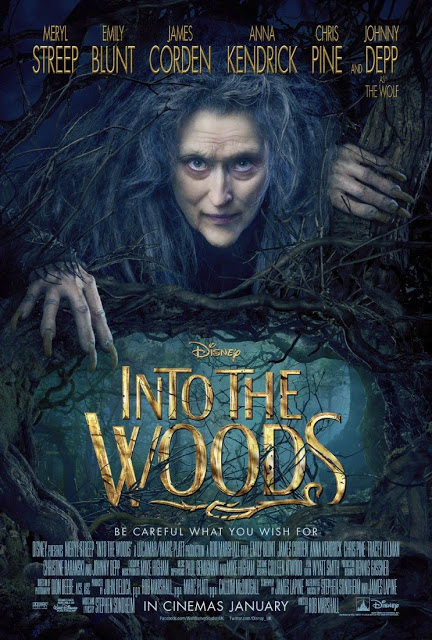
Into the Woods

There is no reason in the world, other than Hollywood’s endless racism and lack of imagination, for this movie (or the original play, alas) to have an all-white cast. Why do movies feel like they’d rather die than show us a diverse cast? (And please don’t say “they cast the best people for the roles.” I thought the whole cast was good, but Streep was the only one who turned in a performance so unique that you couldn’t imagine anyone else doing the role.)

—–Ampersand, a.k.a. Barry Deutsch, opining on the assets and deficits of Rob Marshall’s film adaptation of “Into the Woods” on his blog

I hate to pick on Barry—OK, that’s not true, I enjoy it immensely—but this statement could stand as the distillation of knee-jerk liberal thinking on race, and it is wrong in so many ways that I hesitate to start counting. The sentiment, however, poses a nice counterpoint to the discussion here about the black James Bond controversy, so I can’t resist taking aim at it.

1. So casting a mega-million dollar film—-in a dicey genre (Have you heard? Big budget Hollywood musicals died in the Sixties…) and a limited audience—with actors who comport with that audience’s expectations of the musical the film is based on is racist, eh? More unfair words and inexcusable race-baiting were seldom uttered in word or written in ink. If a director had a vision that supported casting African American actors in traditional Grimms’ fairy tale roles and could make it work, I would salute him, but Rob Marshall had other priorities. He knew that every cut would be scrutinized and attacked by the Sondheim fanatics (which, by the way, are as white as a dove convention in a blizzard); he knew that the show itself was seriously flawed; he knew that every single adaptation of a Sondheim musical (“West Side Story” doesn’t count) has been a critical and box office bomb. He had every reason to keep his casting choices as close to the traditional images of the characters and the way they were portrayed on Broadway, and none of those reasons were racism.

2. It’s impressive how casually a race-obsessed progressive will accuse a professional of racism as a first response. Irresponsible, unfair, disrespectful, and in this case, ignorant of both commerce and art. Continue reading

Ethics FYI To Hollywood, Pundits And Al Sharpton: There Is Nothing Racist–Or Unethical—About The Hacked Denzel Washington Memo

denzel-washington

Does anybody even bother to think about what racism is any more before accusing people of it? Do journalists think about the circumstances before they parrot knee-jerk accusations of racism from the likes of Sharpton and others? Based on the evidence of reaction to the infamous memo from a Sony honcho regarding the performance of Denzel Washington pictures abroad, apparently not.

Everywhere, this screed by an unnamed Sony executive is being called “shocking,” “unbelievable,” and, of course “racist.” It is nothing of the kind. In a scenario that reeks of the surreal Samuel L. Jackson fiasco where Ethics Alarms was virtually alone in noting that Jackson’s on-air accusation that a white TV host had confused him with fellow black star Lawrence Fishburne because “all blacks look the same to him” was unfair and completely meritless, the news media is just running with a demonstrably false accusation.

Here are the relevant portions of the e-mail exchange based on what has been reported in the media:

“I am not saying The Equalizer should not have been made or that African American actors should not have been used (I personally think Denzel is the best actor of his generation.) [But] Casting him is saying we’re ok with a double if the picture works. He’s reliable at the domestic [box office], safe, but has not had a huge success in years. I believe…the non event pictures, extra ‘bets’ should have a large inherent upside… Here there isn’t a large inherent upside….I believe that the international motion picture audience is racist – in general, pictures with an African-American lead don’t play well overseas…Sony sometimes seems to disregard that a picture must work well internationally to both maximize returns and reduce risk, especially pics with decent size budgets.”

Let’s examine this “unbelievable” e-mail, line by line and then as a whole, for ethical misconduct and incipient racism:

“I am not saying The Equalizer should not have been made or that African American actors should not have been used (I personally think Denzel is the best actor of his generation.)”

No problem there, right?

“[But] Casting him is saying we’re ok with a double if the picture works.”

The baseball analogy, a “double” over a “home run,” is a conclusion based on Washington’s films’ grosses and hard facts, not racism. It is a legitimate opinion, and one that in a business context must be made as a matter of fiduciary duty. Foriegn box office is about half (or more) of a typical film’s profit. If a star isn’t as popular in foreign markets as in the U.S., then metaphorically speaking, a “home run” is more difficult, and maybe impossible. Continue reading

Unethical Quote of the Week; Chris Rock

Shut up, Chris.

Shut up, Chris.

“You say the wrong thing — you see what happened to [Donald Sterling],” Rock said. “I’m not defending what Sterling said at all, but if that’s not the First Amendment then what the [bleep] is? And what did he say, ‘I don’t want my girlfriend hanging out with black basketball players’? Me neither!”

—Black comic and “truth-teller” Chris Rock, discussing the fear in Hollywood as a result of the Sony hacks.

Gee, Chris, that’s courageous, fair, perceptive and true.

What a shame you didn’t have the integrity or guts to condemn what happened to Sterling while every other black pundit, columnist, athlete, and celebrity was comparing him to Satan. You just allowed everyone to pile on the old, rich white guy, take away his team and make him the face of racism for telling his slutty black  girlfriend—in his own bedroom!—not to flaunt the fact she was only hanging with him for the money by showing up at his teams’ games with her real boyfriends. You Hollywood types are hilarious–as in disgusting— in your selective belief in rights, privacy and fair play. First Aaron Sorkin, who didn’t object to the media feeding frenzy over Sterling’s private remarks, suddenly argues that his friends and business associates’ equally damning comments shouldn’t be reported because they aren’t about crime and corruption, and thus aren’t news. Then you suddenly decide to defend Donald Sterling’s rights of privacy and free speech now, when there is no cost to you at all, and the damage is done and irreparable.

Here’s what’s unethical about your statement, Chris: it’s too damn late.