Ethics Quote Of The Month: Aaron Sorkin

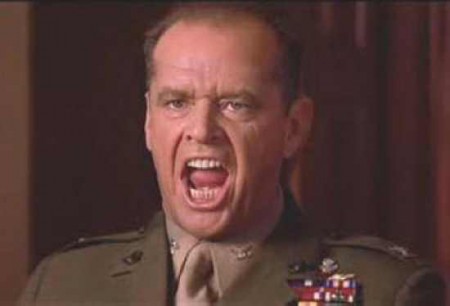
“You want the truth? Well, you can’t have the truth because I’ve decided that it isn’t newsworthy!”

“I understand that news outlets routinely use stolen information. That’s how we got the Pentagon Papers, to use an oft-used argument. But there is nothing in these documents remotely rising to the level of public interest of the information found in the Pentagon Papers. Do the emails contain any information about Sony breaking the law? No. Misleading the public? No. Acting in direct harm to customers, the way the tobacco companies or Enron did? No. Is there even one sentence in one private email that was stolen that even hints at wrongdoing of any kind? Anything that can help, inform or protect anyone? The co-editor in chief of Variety tells us he decided that the leaks were — to use his word — “newsworthy.” I’m dying to ask him what part of the studio’s post-production notes on Cameron Crowe’s new project is newsworthy. So newsworthy that it’s worth carrying out the wishes of people who’ve said they’re going to murder families and who have so far done everything they’ve threatened to do. Newsworthy. As the character Inigo Montoya said in “The Princess Bride,” I do not think it means what you think it means.”

—-Acclaimed screenwriter, playwright and Hollywood liberal Aaron Sorkin, reprimanding the news media  for publishing material from the Sony computer hacks in an Op-Ed in the New York Times.

There are many other titles for this post I considered, like “Jaw-dropping Hypocrisy of the Month,” “Self-serving Delusion of the Month,” and “This Is The Tragedy of Partisan Delusion: Won’t You Give Generously To Help Aaron”?

I’ve got to give the man credit: it takes world class gall for to write something like this self-serving for international consumption. Self-righteous, Freedom of the Press-promoting (Sorkin is the creator and writer of “The Newsroom” series on cable) Hollywood liberals applauded and screamed for blood when a near-senile billionaire’s private comments made in his own bedroom were surreptitiously recorded by his paid female mistress and plastered all over the media, because the private, private, private words suggested that he held racist attitudes, and no matter what he actually did (which was sufficient to be named an NAACP “man of the Year,” a distinction Aaron Sorkin has never earned),  that meant that he had to be publicly humiliated, fined millions and stripped of his business. We didn’t hear Sorkin protesting that this wasn’t newsworthy. Nor did the Sorkins of an earlier generation protest when the very same newspaper carrying his essay published criminally stolen Defense Department documents that, whatever was contained in them, were part of a sincere effort to win a war. Continue reading

The Sony Hacks, Hollywood Hypocrisy and The Full Pazuzu

Amy Pascal, apparently...

Amy Pascal, apparently…

You can’t make this stuff up. First North Korea apparently hacks Sony’s emails to punish it for producing a Seth Rogen comedy,—which, by the way, would justify a national response if the current leadership didn’t object to necessary retaliation on principle: this is a foreign attack on American soil, just not a fatal one—-then the revealed e-mails showing  enthusiastic Obama supporters Amy Pascal, Sony Pictures co-chair, and movie producer Scott Rudin making racist jokes worthy of  the readers of Chimpmania.

Of course, Buzzfeed shouldn’t have published hacked e-mails—private is private— but it couldn’t resist. Let’s see: Buzzfeed, Pascal, Rudin, North Korea…let’s throw in our government being unwilling to stand up against vile foreign governments cyber-attacking citizens and businesses: yes, I’d say this qualifies as an Ethics Train Wreck.

Here was the email exchange between Pascal and “The Social Network” producer Scott Rudin, when Pascal sought his advice on what she should say to the President at an upcoming Hollywood fundraiser:

Rudin: Would he like to finance some movies [?]

Pascal: I doubt it. Should I ask him if he liked DJANGO?” [ The violent Tarentino “Escaped-slave-kills-white-guys” Western mash-up revenge epic ]

Rudin: 12 YEARS [A Slave]”

Pascal: “Or the butler [“Lee Daniels’ The Butler”]. Or think like a man?” [ Steve Harvey comedy “Think Like A Man”]

Rudin: Ride-along. [“Ride Along,” a failed cop buddy movie-action flick starring a mostly black cast] I bet he likes Kevin Hart.

Let me focus for the nonce, however, on the absurd and self-indicting apology by uber-hypocrite Amy Pascal, who said: Continue reading

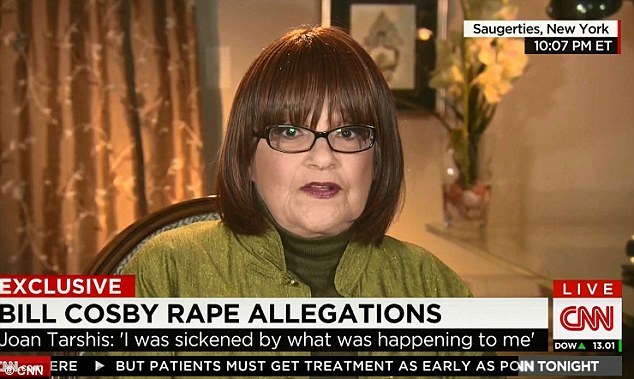
Ethics Quote Of The Day: Joan Tarshis, Alleged Bill Cosby Victim

Joan_Tarshis_on_Bill_Cosb

“I know he’s an icon. So is Bill Clinton.”

-Latest Cosby accuser Joan Tarshis, now a publicist and journalist, who wrote a detailed account of  being sexual assaulted  by Bill Cosby, when she was a teen, for the Web site Hollywood Elsewhere, replying to a question on CNN this morning about why anyone should believe her when she impugns the character of “an icon.”

BAZINGA!

About Bill Cosby

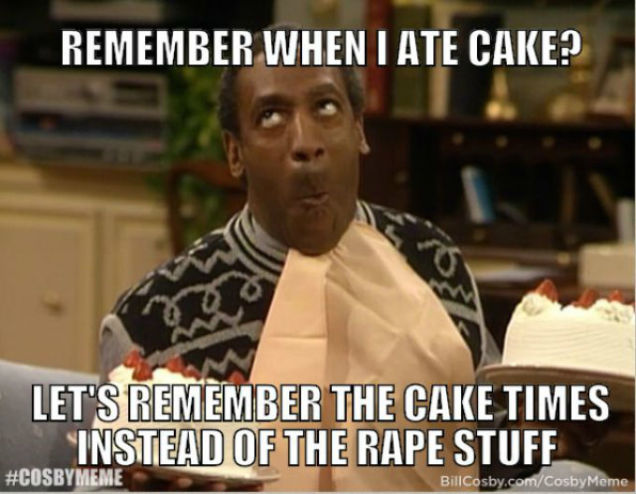
Cosby meme

Fair enough. Wait…what????

Why is Bill Cosby’s past avocation as a Hollywood power-abuser and serial sexual predator suddenly so upsetting to Hollywood that they are recoiling from him now?

I refuse to believe that everyone in the news media, the entertainment industry and the black community didn’t know all about it, and for many years. I wrote about it in 2007, and I am not an investigative reporter.

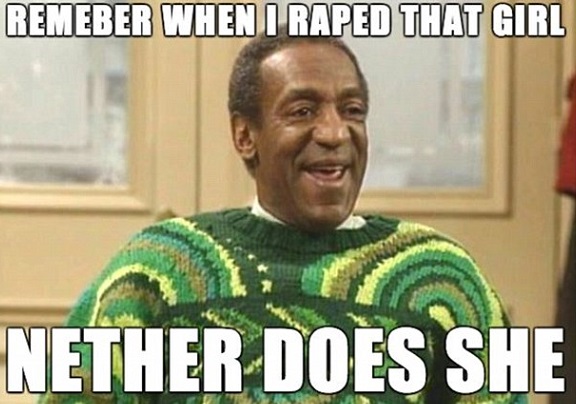
I have to conclude that this is all because of younger people learning about this for the first time and the effect of social media. When whoever runs Cosby’s Twitter account cluelessly challenged followers to “meme me!”, what resulted was a flood of derisive–but funny!—memes referencing the rape allegations (he reportedly used hypnotic drugs), like the one above, or this one:

Cosby meme1


I also have to conclude that… Continue reading

Reader Alert: An Old Post That Lots Of People Are Suddenly Interested In Reading

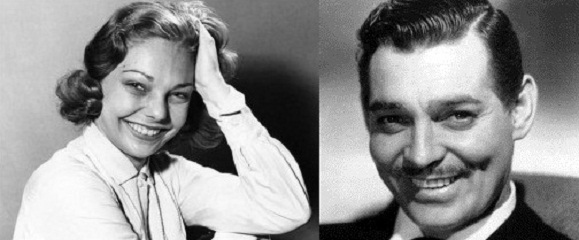
-judy-lewis

All of a sudden, a post from 2011 is attracting more views in the last four days than it did in the previous four years. Odd are you missed it too, so so to avoid the anomaly of non-Ethics Alarms fans being more attuned to a post here than the loyal throng, I’m going to point the way to the link. The essay is titled “Clark Gable, Loretta Young, and the Betrayal of Judy Lewis,” and told the heart-breaking story of how Clark Gable denied his parenthood of his own daughter (that’s her to his left) to avoid a career-damaging scandal, while the child’s mother, Loretta Young, lied to her as well.  It was and is an interesting and disturbing chapter in Hollywood history, and my commentary  generated some furious defenses from fans of “The King,” who marshal every rationalization imaginable to try to justify a rich and famous father neglecting his only child, even after she became aware of who her father was. That phenomenon is as illuminating as the sad tale itself.  Here, for example, is “Seeker”—see how many rationalizations you can find. I see at least four: Continue reading

Dunces, Heroes, and Fools In The Wake Of The Great Nude Actress Hack

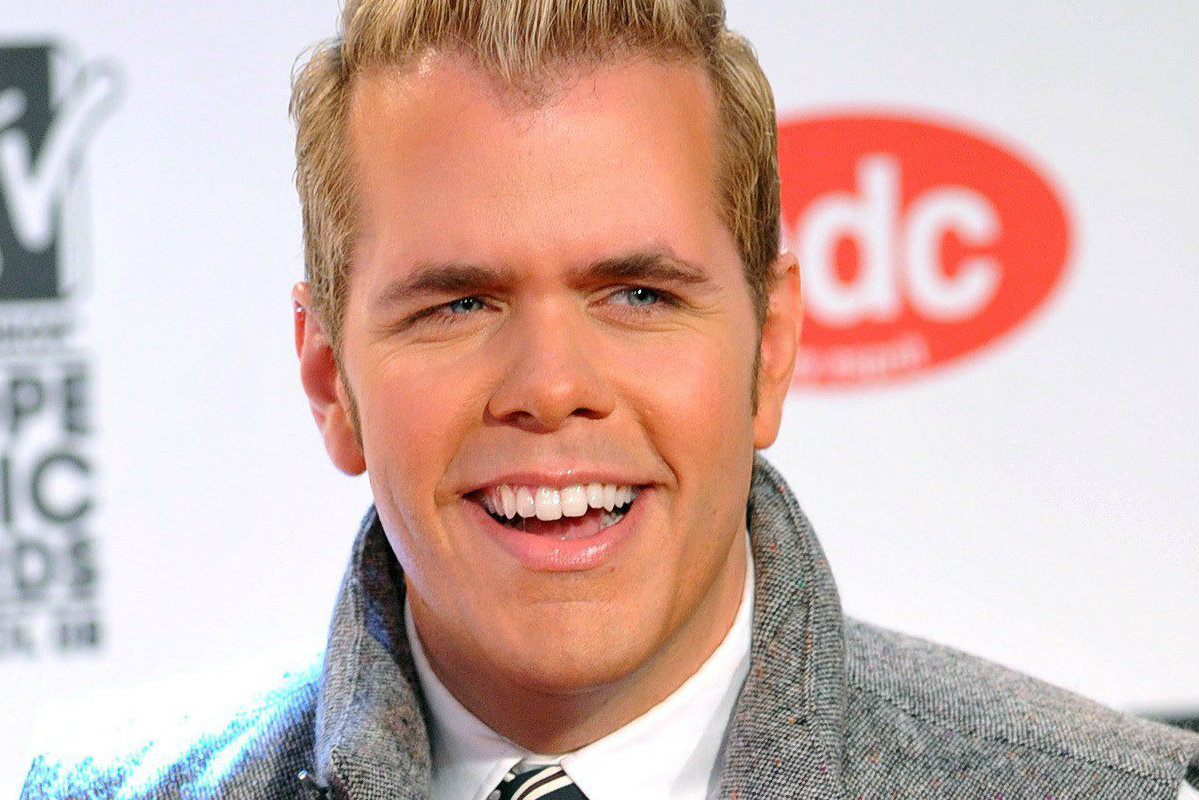
Perez Hilton Yecch.

Perez Hilton
Yecch.

You should know by now that about a hundred actresses have had their nude photographs hacked from private accounts and posted for the world to drool over. As is often the case in such incidents, the ethical instincts, or lack thereof, of various individuals have been exposed in the wake of the event:

Ethics Dunce: Perez Hilton.

No surprise here: Hilton, a web gossip columnist and a different species of hack than the ones at issue, showed himself to have dead ethics alarms. After eagerly posting the uncensored photos  of Victoria Justice and Jennifer Lawrence on his celebrity gossip blog, Hilton was condemned far and wide on social media, so he first proved he didn’t get it by keeping up the photos but censoring the women’s naughty bits, and then taking them down entirely, explaining that “At work we often have to make quick decisions. I made a really bad one today and then made it worse. I feel awful and am truly sorry.”  Continue reading

Ethics Lessons From An Ethical Life: James Garner, 1928-2014

Brett_Maverick_-_James_Garner

To me, James Garner will always be Bret Maverick, his black hat worn girlishly on the back of his head, or “The Scrounger” in “The Great Escape,” a role modeled after Garner’s real-life exploits in the military. For some reason Garner’s aging through the years—his health issues ranged from a heart by-pass to knee replacements and several strokes—bothered me more than that of most stars from my youth. His death bothers me more. James Garner always struck me as a someone who should be perpetually young. Of course, I feel the same way about myself.

By all accounts from contemporaries, fans and colleagues, he was a decent, fair and usually amiable man who never let stardom turn him into a monster, as so many do. He had a single, long-lasting marriage and a stable family; he was not fodder for tabloids with affairs, illegitimate children, drug abuse or DUI arrests. He did apparently have a penchant for punching people in the nose who insulted him to his face, a habit about which he was unapologetic. Continue reading

John Travolta, Carrie Fisher, and The Ethics of Outing

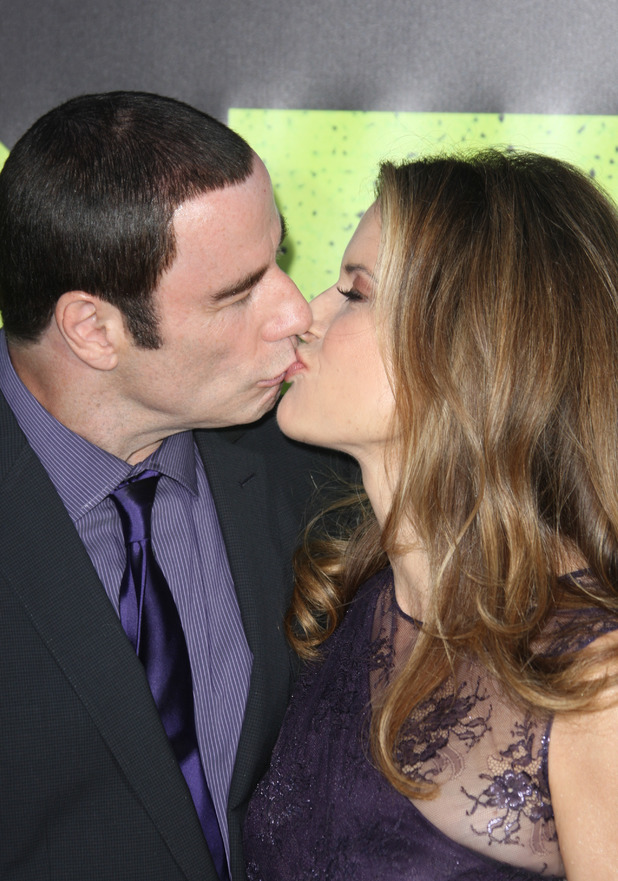
Mr. and Mrs. John Travolta

Mr. and Mrs. John Travolta

Should it matter if John Travolta is gay? It shouldn’t, no. To say it shouldn’t, however, is not to prove that it doesn’t. In his industry, for all its liberal and progressive grandstanding, the perceived sexuality of leading men does matter, because it is believed that it affects the bottom line. Most important of all, John Travolta doesn’t want the public to know/believe/think that he’s gay.

That alone ends the story, in ethics terms. Revealing this aspect of a private life that the actor has chosen to keep private is entirely his decision to make, and nobody should force him to make it, or make it for him. Therefore, what did actress Carrie Fisher, Hollywood kid, writer, “Star Wars” icon, and former bride of a gay man, think she was doing when she told the Advocate, in response to a question about Travolta’s legal maneuvers against a website that published a story about his alleged gay lifestyle…

“Wow! I mean, my feeling about John has always been that we know and we don’t care. Look, I’m sorry that he’s uncomfortable with it, and that’s all I can say.”

Continue reading

Is There An Ethical Obligation Not To Shock, Nauseate, Or Blind Your Neighbors? Of Obese Joggers and #FreetheNipple

A Facebook friend posted the following letter, posted by one of her friends, and supposedly passed along by the target of the letter. The individual subjected to the complaint is reputedly trying to overcome obesity and various health issues. The letter:

Mean letter

I have my doubts regarding the authenticity of this, but it doesn’t matter to this post. I assume we can all agree that the letter itself, if genuine, is cruel, mean-spirited, cowardly (it is anonymous), hurtful, and indefensible. It does raise an valid ethics question, though, which is this: Do we have any ethical obligation any more to exhibit modesty and a degree of public decorum out of doors, when we are likely to come under the gaze of others? If so, what are that obligation’s parameters? Continue reading

The Academy’s “In Memoriam” Snubs: Much Better This Year—Thanks, Oscar

The great Jonathan Winters in the not-so-great "It's a Mad, Mad, Mad, Mad World"

The great Jonathan Winters in the not-so-great “It’s a Mad, Mad, Mad, Mad World”

In past years I have taken the Academy of Motion Picture Arts and Sciences to task for the ethical breach of ingratitude and disrespect, as the honor roll of the year’s deceased film notables have omitted important figures who deserved their final bows. Omissions are inevitable, I suppose, but some of the past examples were unforgivable—last year alone, for example, the Academy snubbed Ann Rutherford, Andy Griffith, R.G. Armstrong, Russell Means, Harry Carey, Jr., and Susan Tyrell. 2012 was worse.

2013, however, shows that the Academy is being more careful, and Oscar deserves credit for cleaning up its act. I have ethical and historical objections to bestowing the prestigious final slot on actor Phillip Seymour Hoffman, dead prematurely of self-inflicted drug abuse, when a genuine, bona fide Hollywood legend, Shirley Temple, was on the list. I understand the thinking: Hoffman had friends and colleagues in the room, and Temple is of another generation; his premature death was a tragedy, and she lived a long and productive life. Still, the priorities and relative values such a choice exemplifies is disturbing. Great actor that he was, Hoffman was a criminal, an addict, and left his children fatherless. Shirley was the greatest child star who ever will be, a ray of sunshine in the dark days of the Depression, a one-of-a kind talent and icon, and later a lifetime public servant who raised a family. She represented the best of Hollywood and the profession; Hoffman represents its dark side. Naturally, he’s the one who received the greatest recognition. I will suppress my dark suspicions that Shirley was docked because she was a Republican. A  Facebook friend actually wrote that Shirley deserved to be penalized because some of her movies were racist. My response to this slur was not friendly. Continue reading