Is There An Ethical Obligation Not To Shock, Nauseate, Or Blind Your Neighbors? Of Obese Joggers and #FreetheNipple

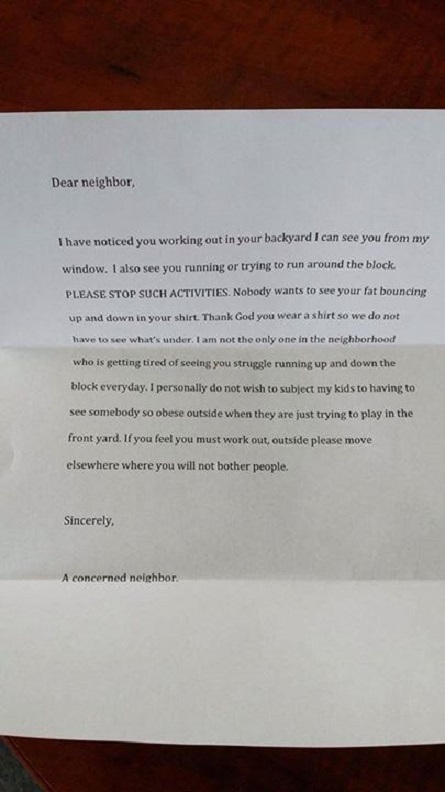
A Facebook friend posted the following letter, posted by one of her friends, and supposedly passed along by the target of the letter. The individual subjected to the complaint is reputedly trying to overcome obesity and various health issues. The letter:

Mean letter

I have my doubts regarding the authenticity of this, but it doesn’t matter to this post. I assume we can all agree that the letter itself, if genuine, is cruel, mean-spirited, cowardly (it is anonymous), hurtful, and indefensible. It does raise an valid ethics question, though, which is this: Do we have any ethical obligation any more to exhibit modesty and a degree of public decorum out of doors, when we are likely to come under the gaze of others? If so, what are that obligation’s parameters? Continue reading

The Academy’s “In Memoriam” Snubs: Much Better This Year—Thanks, Oscar

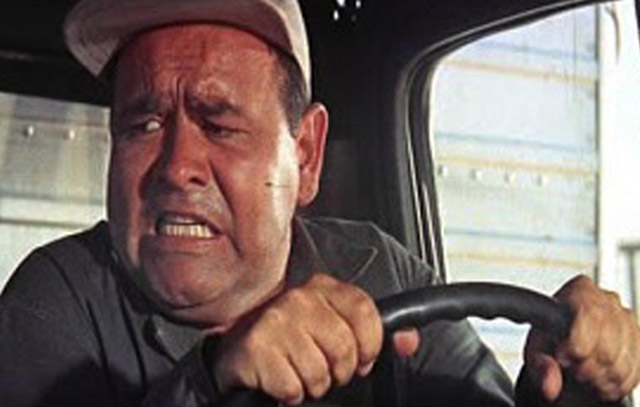
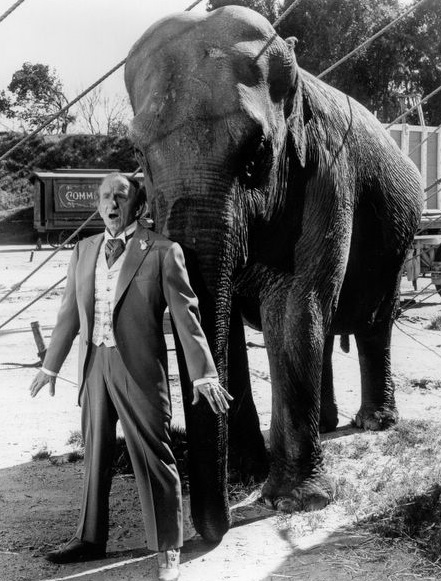
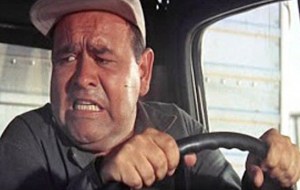
The great Jonathan Winters in the not-so-great "It's a Mad, Mad, Mad, Mad World"

The great Jonathan Winters in the not-so-great “It’s a Mad, Mad, Mad, Mad World”

In past years I have taken the Academy of Motion Picture Arts and Sciences to task for the ethical breach of ingratitude and disrespect, as the honor roll of the year’s deceased film notables have omitted important figures who deserved their final bows. Omissions are inevitable, I suppose, but some of the past examples were unforgivable—last year alone, for example, the Academy snubbed Ann Rutherford, Andy Griffith, R.G. Armstrong, Russell Means, Harry Carey, Jr., and Susan Tyrell. 2012 was worse.

2013, however, shows that the Academy is being more careful, and Oscar deserves credit for cleaning up its act. I have ethical and historical objections to bestowing the prestigious final slot on actor Phillip Seymour Hoffman, dead prematurely of self-inflicted drug abuse, when a genuine, bona fide Hollywood legend, Shirley Temple, was on the list. I understand the thinking: Hoffman had friends and colleagues in the room, and Temple is of another generation; his premature death was a tragedy, and she lived a long and productive life. Still, the priorities and relative values such a choice exemplifies is disturbing. Great actor that he was, Hoffman was a criminal, an addict, and left his children fatherless. Shirley was the greatest child star who ever will be, a ray of sunshine in the dark days of the Depression, a one-of-a kind talent and icon, and later a lifetime public servant who raised a family. She represented the best of Hollywood and the profession; Hoffman represents its dark side. Naturally, he’s the one who received the greatest recognition. I will suppress my dark suspicions that Shirley was docked because she was a Republican. A  Facebook friend actually wrote that Shirley deserved to be penalized because some of her movies were racist. My response to this slur was not friendly. Continue reading

Ethics Quiz: “12 Years A Slave” Plays The Racial Guilt Card On Oscar Voters

12_years_ad_2.jpeg

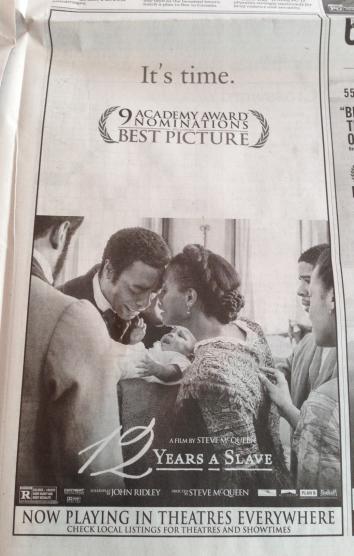
“It’s time.”

This is the  tag line in the post-Oscar nomination ads being prominently run in New York and California for  “12 Years A Slave,” a strong Academy Award contender (nine nominations, including best film).

Although there is room for disagreement, and the ad has the virtue of all clever advertising that it conveys different messages to different markets—Haven’t seen the film yet? “It’s time!”  Desperate to see the best movie you saw in 2013 finally get its due? “It’s time!”  When will the question of whether the most honored film of the last 12 months will win the biggest honor of them all be answered? “It’s time!”…or almost time, as the Oscar ceremonies are coming up on March 2—the consensus is that “It’s time” is mainly aimed at Oscar voters, and the message it conveys is, as Slate puts it, “it’s time for a movie about slavery, and with a significantly black cast and crew, to be recognized by the Academy of Motion Picture Arts and Sciences.” Film critic Phil Hammond puts it slightly differently:

“The ad not only can be interpreted as shining a light on a very dark period in American history, it also shines a light on the Academy’s fairly dismal record of awarding its top honor to any movie about the black experience. In fact there has been only one Best Picture winner in the 85 years the Academy of Motion Picture Arts and Sciences has been handing out Oscars that even remotely qualifies in this regard. In 1968, In The Heat Of The Night, a murder mystery set against the racial divide in a small Southern town, won Best Picture and four other Oscars just a few days after the assassination of Martin Luther King (the ceremony was even postponed two days out of respect). The votes were in before the King assassination, but it seemed then that “It’s Time” would have been an appropriate way to describe that victory. However, outside of lead actor Sidney Poitier — who also co-starred in another racially themed Best Pic nominee that year, Guess Who’s Coming To Dinner —  this movie  featured a largely white cast, white producer, screenwriter and director (Norman Jewison).”

If so many in the industry are interpreting the ad this way, it is fair to assume that this was at least one of the ad’s objectives, and on the assumption that it was an objective, your Ethics Alarms Ethics Quiz today is this:

“Is appealing to Oscar voters on this basis fair and ethical?”

I can see strong arguments for each position. Continue reading

What A Hollywood Journalist Calls “Ethics”

Listen to me, Roger, and I mean this in the nicest way: stick to gossip.

Listen to me, Roger, and I mean this in the nicest way: stick to gossip.

The Hollywood wagons are already circling around Woody Allen, accused—again, but now as an adult who can speak for herself—by Dylan Farrow of sexually abusing her when she was only 7 years old. Reading some of the statements issuing from Tinseltown, I am struck again by the ugly opposition any non-celebrity victim must face when accusing a powerful industry figure of wrongdoing. Luckily, many of the most vociferous defenders signal their desperation and their lack of basic comprehension of the issues, undermining their arguments.

Exhibit A is veteran Hollywood journalist Roger Friedman, who was quick to issue an article alleging, as he has for 20 years, that Dylan’s story is all part of a Mia Farrow plot to destroy innocent Woody. On his website, Friedman headlines his piece, “Mia Farrow Uses Close Pal Journalist in Woody Allen War: Writer of Latest Piece is Close Friend.” Friedman’s concept of what constitutes a “conflict of interest” is intriguing. His argument is that Times journalist Nicholas Kristof, who published Dylan’s open letter on his blog, is friends with Mia Farrow (Friedman implies that they are romantically involved while specifically saying that he isn’t implying it–his evident journalistic sliminess would undermine even a fair article, which this is not), and that this makes Dylan’s letter less credible. What he doesn’t explain, since he can’t, is why the same letter would be any more credible or reliable whether Kristof published it or someone else did. Continue reading

Ethics Hero: Dylan Farrow (and Observations On Her Open Letter To Woody Allen’s Fans)

dylan-farrow

Dylan Farrow was 7 years old when, she alleges, her adoptive father Woody Allen began sexually molesting her. Although this became the focus of the legal and public relations battle between her mother, actress Mia Farrow and Allen as their once romantic and domestic relationship—-already destroyed by Allen’s courtship, seduction and marriage of Dylan’s older, also-adopted sister Soon Yi—exploded onto the scandal sheets more than 20 years ago, the now-married Dylan has never spoken out about it herself, though her mother and other siblings have. Allen avoided any criminal charges despite an investigation that found probable cause, and his popularity among film-goers and his stature in Hollywood seemed to be undamaged. Last month, however, a lifetime achievement award at the Golden Globes (accepted by a fawning Diane Keaton) re-opened the unhealed wounds for the Farrows, and Allen’s Oscar nomination last week for his original screenplay for “Blue Jasmine” was apparently too much.

Now Dylan Farrow has decided to tell her own story, and has done so in open letter form, published on the blog of New York Times columnist Nicholas Kristof.

I ask that you read it now, here, before you read anything else. Her courage in writing this powerful statement earns the right to have it received on its own terms.

Observations: Continue reading

The Fifth Annual Ethics Alarms Awards: The Worst of Ethics 2013 (Part Two of Three)

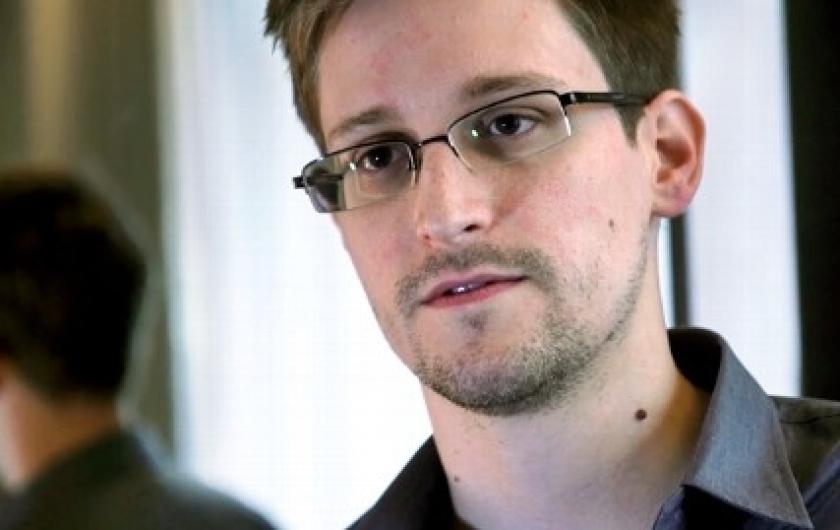
Snowden

The Ethics Alarms review of a truly disheartening year in ethics continues with fallen heroes, ficks, fools and follies with Part Two of the 2013 Worst of Ethics awards….and there’s one last section to come. Be afraid..be very afraid:

Fallen Hero of the Year

Edward Snowden, whose claim to civil disobedience was marred by his unwillingness to accept the consequences of his actions, whose pose as a whistle-blower was ruined by the disclosure that he took his job with the intention of exposing national secrets, and whose status as a freedom-defending patriot lies in ruins as he seeks harbor with not only America’s enemy, but a human rights-crushing enemy at that. The NSA’s over-reach and mismanagement is a scandal, but Snowden proved that he is no hero.

Unmitigated Gall of  The Year

Minnesota divorce lawyer Thomas P. Lowes not only violated the bar’s ethics rules by having sex with his female  client…he also billed her his hourly fee for the time they spent having sex , a breach of the legal profession’s rule against “unreasonable fees.” Yes, he was suspended. But for not long enough…

Jumbo Of The Year

(Awarded To The Most Futile And Obvious Lie)

Jumbo film

“Now, if you had one of these plans before the Affordable Care Act came into law and you really liked that plan, what we said was you can keep it if it hasn’t changed since the law passed.”

—–President Obama

2013 Conflicts of Interest of the Year Continue reading

If You Are Surprised To Learn That “No Animals Were Harmed During The Making Of This Film” Doesn’t Mean That No Animals Were Harmed During The Making Of The Film, Then You Havn’t Been Paying Attention To The Ethical Culture In Hollywood

"OK, the tiger almost drowned. No harm, no foul, right?"

“OK, the tiger almost drowned. No harm, no foul, right?”

Hollywood abuses its child actors routinely, and you really believed it was kind to animals?

Today the Hollywood Insider carries a thorough exposé revealing that the American Humane Association, which supposedly monitors films for their treatment of  animals and grants the familiar“No Animals Were Harmed” trademark accreditation seen at the end of film and TV credits, participates in the covering-up of animal deaths and cruelty as much as it prevents them. The report suggests that the AHA  has been thoroughly co-opted by the industry, so that it is not an objective advocate for the creatures it supposedly represents, but a willing participant in audience deception.

The smoking gun quote may be this one, from Dr. S. Kwane Stewart, the veterinarian who took over as the national director of the AHA’s “No Animals Were Harmed” program in April:

“This whole idea that we’re cozy with the industry — it’s simply not the case. We first and foremost want to keep the animals safe…[but] we need to keep in mind that [the producers and directors of productions the AHA monitors] want to arrive at their vision as well.”

This means, of course, that the AHA representatives are not acting as an advocate for the animals, but as a participant in the film-making process that balances the lives and welfare of the animals against the concerns, needs and profit motives of the speaking, spending, threatening and otherwise powerful human beings with which they share a species and common values. Gee–I wonder who has the most weight in reaching that balance… Continue reading

The Right Thing In Spite Of Themselves: CNN And NBC Abandon Their Hillary Projects

Hillary Clinton, in her dreams...and Bill's...

Hillary Clinton, in her dreams…and Bill’s…

If CNN and NBC had any sense of responsibility, fairness and respect for the American political system, neither would have planned Hillary Clinton projects—CNN, a documentary, NBC, a “docudrama” mini-series—for the coming year, in which the controversial Ms. Clinton is expected to begin running for President of the United States. Neither deserves any credit for cancelling them now, after pundits and especially the Republican Party screamed foul, and foul it was.

There is no way either product could avoid making difficult content choices that would be inevitably influenced by such non-ethical considerations as entertainment value, ratings, political pressure, and artist bias. The documentary and the mini-series would necessarily distort fact and history, because so much of any contemporary figure’s life and career has yet to be objectively examined, and no more so than Hillary Clinton, as polarizing and mysterious figure as U.S. politics has ever produced, rivaling Richard Nixon and Aaron Burr. Continue reading

Ed Asner’s Important, Troubling And Bewildering Theory

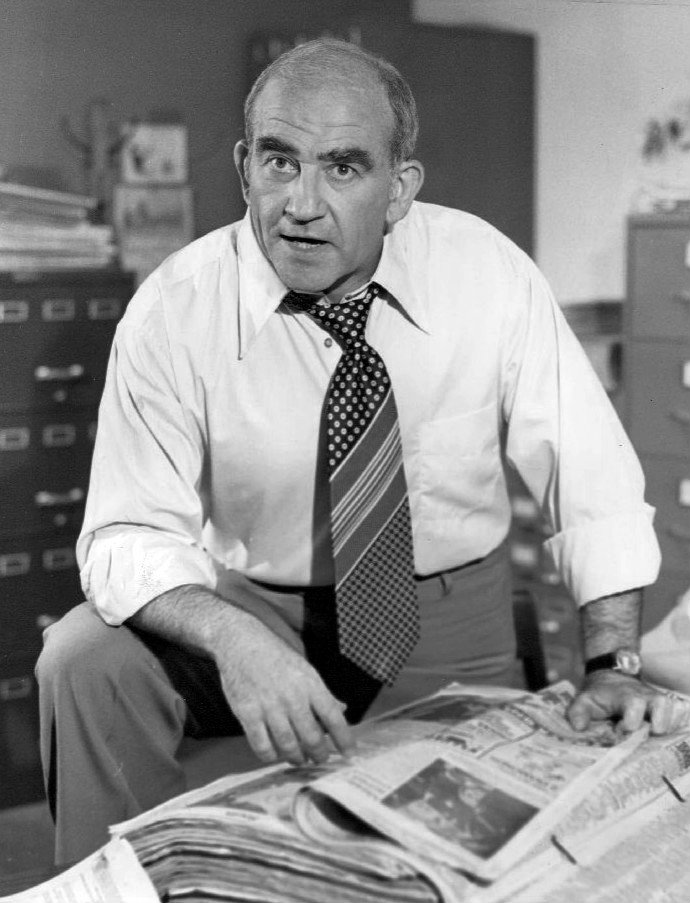
"Oh, Mr. Grant!"

“Oh, Mr. Grant!”

I really don’t know what to make of this, but I think it means something, and whatever it is, it’s important to remember and learn from it. Now if I could only figure out what it is.

Here is what Ed Asner, the elderly “Mary Tyler Moore Show” and “Up” actor—he was also a bad guy in one of my favorite John Wayne Westerns, “El Dorado”—said in response to an interviewer’s question about why the Hollywood anti-war left was staying out of Obama’s self-made Syria controversy, in such marked contrast to its vocal opposition to the Iraq invasion (Where have you gone Janeane Garafolo, our nation turns its lonely eyes to you…OOOOO! ).

Spake Ed:

“A lot of people don’t want to feel anti-black by being opposed to Obama.”

Now, Asner has long been a vocal member of the Hollywood liberal activist community. Presumably, he still is well-connected and knows something about the culture and political pulse in Tinseltown. So I want to know: What can we glean from this ridiculous statement? What does it mean? Continue reading

Comment of the Day: “Clark Gable, Loretta Young, and the Betrayal of Judy Lewis”

-judy-lewis

Ethics Alarms has had an influx of new readers lately (Thanks, “O’Reilly Factor”!) and many have been visiting and commenting on older posts that I hadn’t thought about for a long time. “Evangeline” found one of the saddest and strangest, my post in December of 2011 about the death of Judy Lewis, who was the love child of Hollywood legends Loretta Young and Clark Gable. Gable, the “King of Hollywood,” never acknowledged her as his daughter, and Young, who like Gable was married and afraid of harming her reputation, pretended to adopt the girl, never revealing to her that she was her real mother, and the top leading man in movies was her father. (Judy was a dead ringer for him, too, as you can see in the photo above.) You should read the original post, here.

Evangeline apparently knows her Golden Age of Hollywood history, and makes a case that I was too hard on “Rhett Butler.” I’ll be back at the end for a rebuttal. Here is her Comment of the Day on the post, “Clark Gable, Loretta Young, and the Betrayal of Judy Lewis.” Continue reading