Ethics Quiz: How Unethical Is This Lawyer?

"Dr." Susan Friery with "Bowser", who for the last ten years has claimed to be a poodle.

Newburyport (Mass.) lawyer Susan Friery, a partner at the New York-based law firm Kreindler & Kreindler, has been suspended from being able to practice law in Massachusetts until February 2014.

Why? Two years..that seems pretty stiff. Well, it seems that from the time she joined the firm as a part-time paralegal and medical consultant in 1986 to her resignation, she represented her self to the firm and its clients as an MD.  Friery joined the law firm in August 1986 . In truth, she had only completed taken four semesters of medical courses at SUNY Buffalo School of Medicine, and never got a degree. But she got her entre into the  firm by falsely claiming that she had graduated from another school, the College of Physicians and Surgeons of Columbia University in New York. In 1989, the firm paid most of her tuition to law school,and by 1993, Friery became an associate, specializing in medical malpractice cases and personal injury law suits with medical injuries. Her name appeared with the title MD or Dr. on the firm’s letterhead, business cards, legal correspondence and other documents filed in numerous courts.

Court documents also show that Friery presented herself as a doctor at seminars and meetings. By 1998, the law firm had included Friery’s alleged medical credentials in its web-based advertising.

Your Ethics Quiz for today, therefore, is this…TWO YEARS??? I’m sorry, let me calm down. <big breath> Ok, here’s the question:

Do you think a suspension of two years for 25 years of falsely holding oneself out to the public as well as colleagues as a medical doctor is sufficient punishment? Continue reading
Social Science, Group Research and Bigotry: The Most Slippery Slope

Typical...

Decades ago, Arthur Jensen became a target of critics and a pariah in his field by publishing a controversial study that indicated that differences in racial performance on intelligence tests probably had a genetic component. He was, and is, called a racist, though Jensen has continued to produce respected research. Since the publication of the 1969 Harvard Educational Review article that made him infamous, Jensen has won the prestigious Kistler Prize in 2003 for original contributions to the understanding of the connection between the human genome and human society.

The problem with Jensen’s research results, whatever the legitimacy of the data and his methods, was this: What do you do with it? Like other studies that show women, as a group, with less aptitude for the sciences, or those that show superior traits in other races and ethnic groups, this information just serves as a catalyst for bigotry. Whatever the trends within a large group may be, they tells us nothing about any individual in that group. Yet the existence of a study creates a natural tendency to apply the claimed group characteristics to every group member. Most people think like that, always have and always will. This is similar to the problem with stereotypes. Many, perhaps most, stereotypes have some truth in them. I was raised in a Greek family, and Greeks are reputed to be clannish, cheap, bigoted, and gifted in the kitchen. Well, that would describe a large proportion of my relatives, too, but not all of them. My Aunt Bea is fanatically liberal. My Mom couldn’t cook a lick.  All right, they all were cheap, but the point is that it would be foolish and unfair to assume what any of them would be like without knowing them.

Knowledge is an absolute good, but perversely, some knowledge also guarantees abuse, and thus results in more bad than good. Jensen’s study, as far as I can see, has no good use in a democracy where every individual has the right to be assessed according to his or her conduct and character. Nor do any studies that “prove” character or ability differences in broadly defined groups.

This is all a prelude to my conclusion that the now widely publicized National Academy of Science study that has this conclusion-“Higher social class predicts increased unethical behavior”—is just throwing gasoline on a fire, and has no useful or benign purpose at all. Continue reading

Unethical Headline of the Month

From the Scientific American website:

“Should Global-Warming Activists Lie to Defend Their Cause?”

"Hmmm... that's a real brain-teaser!"

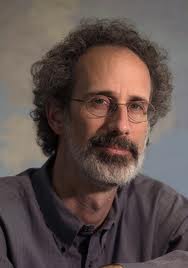
The fact that this question can even be asked in seriousness, or be deemed worthy of debate in scientific circles, tells us all we need to know about why climatologist Peter Gleick decided to use deception and theft to try to discredit the Heartland Institute, a vocal critic of global warming research. It also makes it impossible to know who to trust and when, in the global warming debate and others.

Great.

Nice job, everybody.

Ethics Hero: Richard Dawkins

The headlines shout out: “World’s Most Famous Atheist Admits: I Can’t Be Sure God Doesn’t Exist!”

Wow, what a confession. Stop the presses.

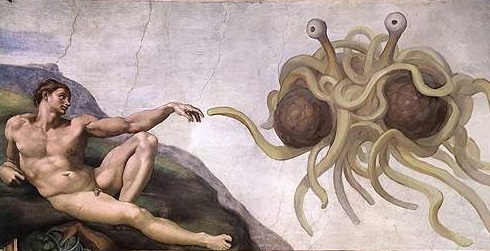
Can anyone be 100% sure this doesn't belong in the Sistine Chapel?

To his great credit, and knowing how the 50% (that is, those of below median intelligence, a sad number of whom reside in the profession of journalism) would react, Prof. Richard Dawkins, the British evolutionary biologist who is point man for the atheist assault on religion, told a student audience at Oxford during a “discussion” ( translation: informal debate) with the Archbishop of Canterbury that he thinks “the probability of a supernatural creator existing is very very low,” but he can’t be 100% certain.

Well, of course not. While this will be taken as a sign of weakness by the faithful who, of course, are 100% certain of the Supreme Being’s existence, no honest, intelligent, fair individual suffering from less than clinical levels of egomania and omniscience could possibly claim to know with certainly where the universe came from. Bravo to Dawkins for his honesty and integrity.

Climate Wars Ethics: Gleick’s Lie, and the Death of Trust

You cannot fight for the truth with lies. Why is this so hard to learn?

This is a big ethics story, with general ethics lessons and serious public policy repercussions in an area already muddled with ethical misconduct on all sides. I’m going to restrict Ethics Alarms to the purely ethical analysis. and, at the end, point out some of the excellent articles that the incident has inspired regarding the policy implications of it all.

Last week, leaked documents prepared for a board meeting of the libertarian think tank, the Heartland Institute, were published on various blogs and websites. The Institute is a major player in the effort to disprove, debunk or discredit scientific studies showing man-made climate change, and block the adoption of anti-climate change policies while undermining public support for them.  One of the most provocative documents was a “Climate Strategy” memorandum laying out Heartland’s secret efforts in sinister terms. The source of the documents, and the one who made them available to global-warming promoting bloggers, was a mysterious individual calling himself “Heartland Insider.”

Now the source has revealed himself, and it is a prominent climatologist on the front lines of the climate change battle, scientist Peter Gleick of the Pacific Institute. Gleick explained what occurred in a column at the Huffington Post: Continue reading

Wikipedia Ethics

An article in the Chronicle Of Higher Education serves as a stark lesson in how policies, procedures and bureaucracy can warp an organization’s purpose and lead to self-destructive conduct that injures stakeholders and destroys trust. The entity at issue: Wikipedia. And now we know why, despite the immense growth and improvement in the web’s community encyclopedia, it still can’t be trusted….and may never be trustworthy.

Historian and researcher Timothy Messer-Kruse tells of his decade-long effort to correct misinformation in Wikipedia relating to the Haymarket riot and subsequent trial in 1886, a landmark episode in the social, political and labor history of America. Messer-Kruse discovered that the entry included an outright error that had become standard in the historical accounts, but that he had personally proven was false through meticulous research. But Wikipedia wasn’t interested in accuracy: Continue reading

When Leaders Are Phonies: Douglas Wilder’s National Slavery Museum Betrayal

The Washington Post sets the stage adroitly:

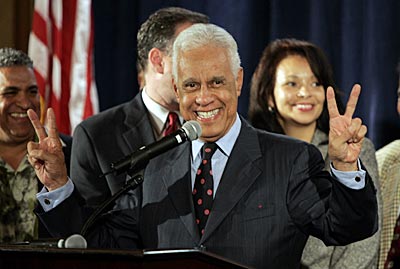
Douglas Wilder, phony.

“Nearly 20 years ago, former Virginia governor Douglas Wilder announced that he wanted to create a museum that would tell the story of slavery in the United States. He had the vision, the clout, the charm to make it seem attainable, and he had already made history: the grandson of slaves, he was the nation’s first elected African-American governor.

“He assembled a high-profile board, hosted splashy galas with entertainer Bill Cosby promising at least $1 million in support, accepted a gift of some 38 acres of prime real estate smack along Interstate 95 in Fredericksburg and showed plans for a $100 million showstopper museum designed by an internationally renowned architect.”

And now? Now the  U.S. National Slavery Museum project is bankrupt, filing for protection last fall. Claims against it total more than $7 million. The city of Fredericksburg has threatened to sell the land to make up for almost $200,000 in unpaid real-estate taxes. Officials have asked the court to either liquidate the organization or to appoint a trustee to oversee its finances. Through all of this, the Post reports, Doug Wilder has remained aloof, refusing interviews or even to answer phone calls. Having created the project, started an organization, induced collectors and other citizens to contribute priceless artifacts and documents to the aspiring museum’s collection, and accepted contributions, all in the justified belief that he, an established political leader, a powerful member of the African-American community and someone with access to resources and allies, would see the project through to a successful conclusion, whatever it took. Instead, Wilder abandoned the project he began completely, leaving to others the responsibility of organizing and guiding it, and making certain that its promises were fulfilled. Continue reading

Funeral Ethics: The Embalmer, the Board, and the Bearskin Rug Baby

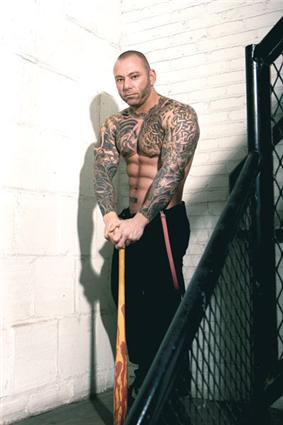
Troy Schoeller

Should the state board that licenses embalmers have yanked the license of Massachusetts embalmer Troy Schoeller after he described his work in graphic and disgusting terms to a reporter?

Schoeller is suing, claiming that the discipline violates his First Amendment rights, and I would think that he has a strong case. That’s a constitutional law question, however. My question is: did Schoeller do anything so unethical that it would justify taking his profession away…by telling the Boston Phoenix writer how he works to restore traumatized corpses, how the bodies of fat people react to the embalming process , how revolting the fumes emanating from bodies can be, and, most memorable of all, how he reconstructed the smashed body of a baby “that looked like a bearskin rug,” saying…

“I had to rebuild it in nine hours. I used everything: duct tape, masking tape, tissue builder, wound filler. … I put, like, coat hangers and caulk in there and put him into a little baby outfit. … He looked awesome.” Continue reading

Ethics Hero Emeritus: Roger Boisjoly (1938-2012)

Roger Boisjoly’s death was originally just reported locally when he died in Utah last month at the age of 73. Only now is the media reminding the public of Boisjoly’s life, his tragic role in a national tragedy, and how he tried and failed to avert it.

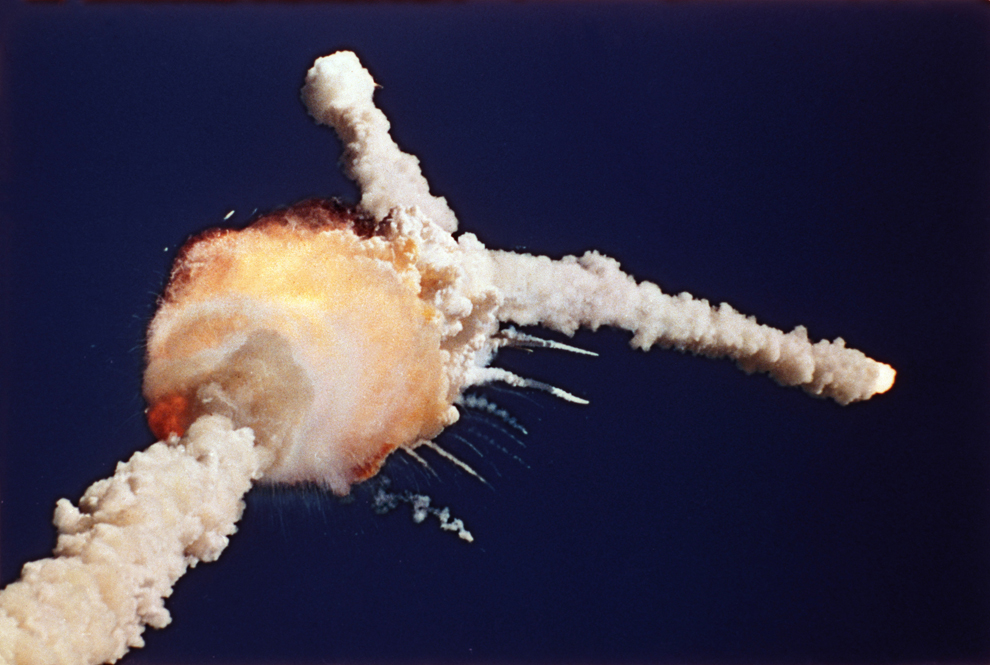
In 1986, Boisjoly was a booster rocket engineer at Morton Thiokol, the NASA contractor that, infamously, manufactured the faulty O-ring that was installed in the Space Shuttle Challenger, and that caused it to explode. Six months before the Challenger disaster, he wrote a memo to his bosses at Thiokol predicting”a catastrophe of the highest order” involving “loss of human life.” He had identified a flaw in the elastic seals at the joints of the multi-stage booster rockets: they tended to stiffen and unseal in cold weather.  NASA’s shuttle launch schedule included winter lift-offs, and Boisjoly  warned his company that send the Shuttle into space at low temperatures was too risky. On January 27, 1986, the day before the scheduled launch of the Challenger, Boisjoly and his colleague Allan J. McDonald argued for hours with NASA officials to persuade NASA to delay the launch, only to be over-ruled, first by NASA, then by Thiokol, which deferred to its client.

And the next day, on a clear and beautiful morning, the Shuttle’s rocket exploded after take-off, killing the crew of seven and mortally wounding the space program. Continue reading

Forget About “Minority Report”—The Sure Fire Way To Stop Pre-Crime Is To Round Up Newt Gingrich Supporters

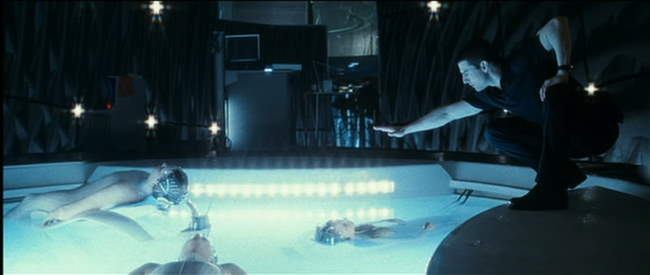
Forget those psychics in the pool, Tom! All you need to identify pre-criminals is to check Newt Gingrich's donor list!

All right, maybe that’s a little extreme. Still, in America today we have a putative Presidential candidate who is virtually carrying a billboard stating, “I am dishonest! I am a narcissist! I am angry, mean and vindictive! I am incapable of shame, and I have the self-control and judgment of a mad scientist from an old Vincent Price movie!“, and yet people still call up talk shows and say, “Why isn’t everyone backing Newt?

Why? WHY? Well, how about this, from CNN:

“As recently as last week, Newt Gingrich’s communications director has been criticized by editors on Wikipedia for dozens of edits he has made and requested in defense of his candidate. While some of the changes were minor, Joe DeSantis has removed or asked to remove factual references to Gingrich’s three marriages as well as mentions of ethics charges brought against him while he served as speaker of the House. These efforts continued as recently as Monday.”

That’s right: Newt Gingrich has his staff trying to re-write the more distasteful episodes in his history—all the better to fool you with. This is the candidate remember, who now says he is the one running on “principles.” What principle would Stalin-style censorship come under, Newt?

Oh, never mind—we know the answer. Win at any cost. The ends justify the means.

Back to the title: perhaps they aren’t slam-dunk future criminals, but at this point, I really do believe that individuals continuing to support Newt Gingrich after he began the campaign with a certifiable character deficit and has managed to show with every passing week that it was even worse than his worst critics could have imagined really do create a prima facie case that they are unethical by nature. There just is no other plausible explanation.