Morning Ethics Warm-Up. 11/27/18: Unethical Perry Mason, Icky Science, Race Card-Playing Democrats, Intrusive Bosses And Slanted History

Good morning…

1. They are showing “Perry Mason” reruns again on cable TV. That was the show that made my generation want to be lawyers, under the delusion that a defense attorney could regularly prove a criminal defendant innocent. (Pssst! They are almost all guilty.) The show holds up, but boy, Perry was sleazy. In an episode I watched while I was sick, he had his investigator tell the hapless prosecutor, Hamilton Burger (Ham Burger to his friends) that he had found an incriminating piece of evidence that proved someone other than Perry’s client had committed murder. Ham relied on the information and got the killer to confess once he was faced with the production of the “smoking gun.” But Perry’s investigator hadn’t really found anything.

Having one’s agent lie to the state prosecutor is a serious ethics breach. Perry also caused the DA to tell a falsehood to get the confession, though Burger wasn’t lying, since he believed Perry’s contrivance. Prosecutors are no more allowed to lie than other lawyers, but when they do lie “in the public interest,” they seldom get more than a slap on the wrist from courts and bar ethics committees, if that. Burger didn’t seem very upset that Perry conned him, because the real killer was caught. The ends justifies the means, or did in “Perry Mason.”

2. Ick or ethics? A Chinese scientist claims that he had successfully employed embryonic gene editing to help protect twin baby girls from infection with HIV. We are told that bioethicists in China and elsewhere are reacting with “horror.” Writes the Times,

“Ever since scientists created the powerful gene editing technique Crispr, they have braced apprehensively for the day when it would be used to create a genetically altered human being. Many nations banned such work, fearing it could be misused to alter everything from eye color to I.Q….If human embryos can be routinely edited, many scientists, ethicists and policymakers fear a slippery slope to a future in which babies are genetically engineered for traits — like athletic or intellectual prowess — that have nothing to do with preventing devastating medical conditions.”

As with cloning, my view on this controversy is that a new technology does not become unethical because of how it might be used. That unethical use will be unethical, and that is what needs to be addressed when and if the problem arises. (Airplanes could be used to drop atom bombs!) The fear of “designer babies” also seems to be an example of “ick”—it’s strange and creepy!—being mistaken for unethical. Making stronger, smarter, more talented and healthier human beings is not in itself unethical, even if it is the stuff of science fiction horror novels and Josef Mengele’s dreams. Continue reading

Saturday Morning Ethics Warm-Up, 11/10/18: “Ugh!” “Bah!” “Arf!””Ew!”And “Ahh!”

Why are these guys happy? Read on…

Goooood morning!

1. Why does anyone pay attention to what Dan Rather has to say about the trustworthiness of the news media? Interviewed in some Trump-bashing forum or another, the man who was fired from CBS for using a fake document to bolster an anti-President Bush story argued that President Trump was waging a “war on the press” in order  to “undermine the public’s trust in the rule of law, ” and that he was making “some headway” in undermining the press’s legitimacy.

To the contrary, Dan Rather and his biased news media colleagues have been 100% responsible for undermining the public’s trust in journalists. All of the Presidents attacks and insults would come to nothing if it were not so obvious, which more evidence every day, that the news media was biased, incompetent, dishonest, and pursuing a partisan agenda. Indeed, the fact that CNN, MSNBC and other news sources still resort to Rather as a credible commentator is enough to justify distrusting the new media all by itself.

2. Yup, those Republicans won’t return to civility…Kathy Griffin, trenchant as always and teeming with wit, has now called President Trump a “stupid racist piece of shit.” It is time to definitively establish that the “Trump is a racist” slur is a Democrat/”resistance” Big Lie, and nothing else. There is no evidence that Donald Trump is a racist. I have reviewed the episodes that supported support that contention, and ultimately they boil down to “If you aren’t a progressive, you’re a racist.” Trump opposes illegal immigration, and the dishonest advocacy of open borders has relied on intimidating supporters of this self-evidently correct position by tarring them as racist. Trump challenged Barack Obana’s birthright citizenship exactly as he challenged Ted Cruz’s citizenship in the 2016 campaign for the GOP nomination. (Ted’s not black, in case you hadn’t noticed.) The argument that this proves Trump is a racist is a failed syllogism: Many racists were birthers, Trump was a birther, ergo he’s a racist. False. He’s an asshole. He would have trolled any President, of any color, with the same idiotic accusation if it suited his purposes. But, again, the Democratic play-book for eight years now has dictated that any criticism of Obama is suspect of racist motives. And, of course, the President must be racist because he wants to limit the number of Muslims who enter the country from hotbeds of terrorism.

The hypocrisy of Trump’s foes using the Nazi Big Lie tactic while accusing him of being a fascist is so obvious that it’s hard to believe everyone doesn’t see it. I admit, it’s a versatile Big Lie, allowing pundits to equate Trump’s advocacy of “nationalism,” meaning opposition to the world government dreams the Democratic Party (and quite a few Republicans) have been promoting since Woodrow Wilson (who WAS as racist) with “white nationalism.”

Griffin’s “evidence”? The President said the White House might pull the press credentials of April Ryan, who happens to be black. If CNN was real news organization, it would have fired Ryan, who is a biased, ideologically-driven hack, long ago. Here are the Ethics Alarms Ryan files. Here is what April Ryan considers legitimate questioning of the White House Press Secretary:

“Sarah, is slavery wrong? Sarah, is slavery wrong? Does this administration think that slavery was wrong? Sarah, does this administration believe slavery was wrong?”

Stop making me defend President Trump. Continue reading

Sunday Ethics Warm-Up, 11/4/2018 (Part II): Halloween Leftovers, Hot Yoga, And Polls

Today’s extended Warm-Up continues…

5. Halloween ethics left-overs:

  • Nah, there’s no Trump Derangement…In Hastings, Michigan, young Benny Drake wore a Donald Trump mask and costume around the neighborhood to solicit candy. At one house, the woman who answered the door threw candy at him and “asked me if she could slap me,” Drake said.

Benny should build a wall around her house.

  • Confession: I once wore a KKK-themed costume to a party. In Fort Smith, Arkansas, a Ku Klux Klan costume won a Halloween contest and a prize at the Lil’ Dude Tavern. After the photo of the costume “went viral,” the bar was attacked on social media and condemned by the local NAACP. A few points:

a) Many of the news media reports discussed the costume but wouldn’t share the photo with readers or TV viewers, presumably out of fear of upsetting some of them. This is incompetent and cowardly journalism, in the same category as writing about the Danish anti-Muhammad cartoons without showing them, or writing that an “epithet” set off a controversy without stating what the epithet was.

b) I assume the ethics issues here are the same as in the Hitler costume controversy, correct?

c) When I wore a KKK-themed costume decades ago, it was after a prominent white supremacist had been killed in a plane crash. KKK costumes always looked a lot like ghosts to me,  so I made a hybrid ghost-KKK costume and carried a travel case with the victim’s name on it and the airline’s sticker.  And I won a prize, too: for Costume in the Worst Taste.

  • I don’t understand this one at ALL.  In Vermont, a trick-or-treater received a bag of poop deposited in his candy bag. According to police, who investigated, it was just a mistake. How could something like that be a mistake? If the bag contained rat poison or an “explosive device,” would “Oops! Silly me!” still be an effective explanation? What if the kid ate the poop, and got violently ill? Same result?

Continue reading

Comment Of The Day: “Ick Or Ethics? The Officers’ Coin Flip”

I haven’t posted a Comment of the Day this month, and it’s me, not you. I have a high quality backlog, in fact: my apologies. I’ll be working diligently to catch up.

First in the queue is Arthur in Maine‘s deft reflections on the post about the police officers who flipped a coin to decide whether or not to arrest a reckless driver.  (I tend to think that it is a very well-argued “Everybody does it” rationalization, but never mind…).

Here is his Comment of the Day on the post, Ick Or Ethics? The Officers’ “Coin Flip”:

When I was going to school in Boston, I made my beer money by working in emergency medical services. Part of that work was in a district of the city, and part of it was in the northern suburbs; the latter company was a private concern that had the EMS contract for three contiguous towns and did a boatload of transfer work on top of it. A terrible company, long since sold out, but that’s another story. Suffice to say that I liked the work itself, even if the company itself was lousy.

In that role, I came to know a lot of cops and firefighters really well. They weren’t that different from us, other than the fact that their jobs were a lot more dangerous than ours – and ours were dangerous.

First-response work requires that the teams work in very close proximity with one another, and teams are mostly together for their entire shifts. Depending on the branch, shifts can last between eight hours and 48 (yes, you sleep if there’s nothing going on). Inherent in a smoothly functioning unit in all three first-response disciplines is a good relationship between crew members; partners or teams at odds with each other become a huge problem. If they can, supervisory personnel will usually do their best to ensure that the personnel in a given car or truck get along well. It’s remarkably intimate. Continue reading

Ick Or Ethics? The Officers’ “Coin Flip”

OK, it wasn’t really a coin flip, as many news sources inaccurately reported. And, true, there is no definitive evidence that the virtual coin flip two police officers allegedly resorted to in order to make the call whether to arrest a reckless driver or not actually was the reason they arrested her. It is even possible that they did the opposite of what the cell phone app told them to do.

Never mind. It’s still an interesting ethics story. I would make it an ethics quiz, except that I am sure of the answer.

Here is the background: In the city of Roswell,  outside of Atlanta on April 7,  Sarah Webb was running late for work. Police saw her go by at what they estimated was over 80 miles an hour, caught up to her, and told her she was diving recklessly, especially since the roads were wet.

She was arrested. Then it came out that this happened, (from the New York Times account):

In the footage of the arrest, the officers can be heard talking about what to do. One said that she had not been able to measure the exact speed of Ms. Webb’s vehicle but had to drive as fast as 90 miles per hour to catch up with her. Then she could be seen pulling out a phone.

“A, head. R, tail,” said one of the officers — A for arrest, or R for release.

“O.K.,” said the other.

Then a sound effect can be heard: a cartoonish chime and click, like a coin flipping and landing.

“This is tail, right?” said one officer.

“Yeah. So, release?” said another.

“23,” came the reply, referring to a police code for an arrest. Ms. Webb was handcuffed moments later.

In the aftermath, the charges were dropped and the officers involved have been suspended, with the police chief saying, “This behavior is not indicative of the hard-working officers of the Roswell Police Department. I have much higher expectations of our police officers and I am appalled that any law enforcement officer would trivialize the decision-making process of something as important as the arrest of a person.” Meanwhile, the reckless driver, in an exhibition that should at least be entered for the 2018 Gall of the Year award, is vocally claiming victimhood, saying, Continue reading

Morning Ethics Warm-Up, 4/30/18: Going Out Like A Lamb

Good Morning!

It’s especially good because this is the last day of one of the worst Ethics Alarms months ever, with the lowest daily average of views for an April since 2013. I have no idea why, and I wouldn’t change anything anyway. I have my dark suspicions, though….

1 Pig brain ethics. Researchers at Yale University restored circulation to the brains of decapitated pigs, and kept the organs alive for several hours.  Now ethicists are wondering if this was ethical.

Hmmmm:

  • I’m going to go out on a limb here and guess that if you asked the pig, he’d say that cutting his head off was more unethical than keeping his brain alive afterwards.
  • Like a lot of bioethics controversies, this is more “ick” than ethics.
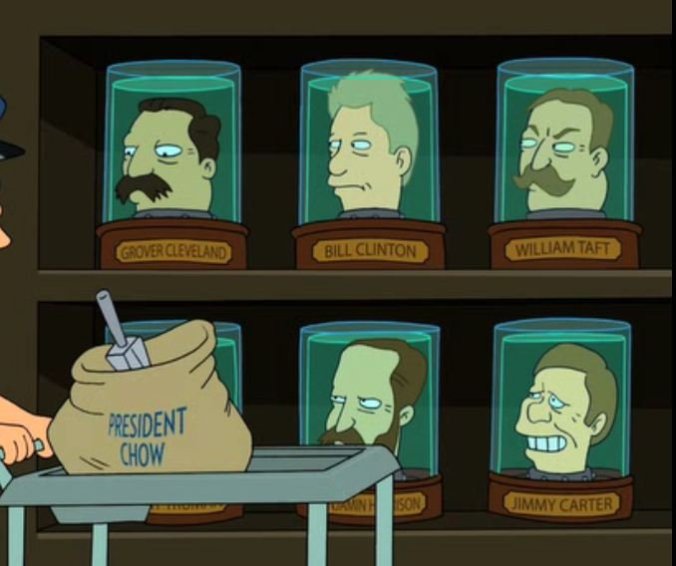
  • Go on, make a “Futurama” joke.

2. Human brain ethics. Is we getting dumber? This Facebook quiz claims that “nobody” can get even 5 of these 10 questions right, and that if you get all ten right, you’re a genius. I hope that isn’t true. I would say that anyone who can’t get at least 8 of the 10 right is either under 15 or cognitively damaged. I really want to know what the average score is. If most Americans really can’t answer these, then we need to dismantle the public school system and start from scratch. And any teacher who can’t answer at least nine of the ten questions should be fired. Continue reading

Review: Ethics Alarms Concepts And Special Terms

Recently updating the Ethics Alarms list of concepts and frequently used terms reminded me that I had been meaning to post them for review and assistance to those relatively new here. Of course, the link has always been right there at the top of the home page, but I have this sneaking suspicion that it isn’t visited very often.  Here, then, is the up-to-date list.

CONCEPTS

Non-Ethical Considerations: Defined above, non-ethical considerations are important because they are often the powerful impediments to ethical conduct, and the cause of many conflicts of interest. Non-ethical considerations are many and diverse, and include:

  • The need and desire for shelter, health, wealth, fame, security, self-esteem, reputation, power, professional advancement, comfort, love, sex, praise, credit, appreciation, affection, or satisfaction
  • The desire for the health, comfort, safety, welfare and happiness for one’s family, loved ones, friends, colleagues, an co-workers
  • The pursuit of vengeance or retribution
  • Hunger, lust, pain, ambition, prejudice, bias, hatred, laziness, fatigue, disgust, anger, fear
  • …and many more

Ethical Dilemma: This is an ethical problem in which the ethical choice involves ignoring a powerful non-ethical consideration. Do the right thing, but lose your job, a friend, a lover, or an opportunity for advancement. A non-ethical consideration can be powerful and important enough to justify choosing it over the strict ethical action.

Ethical Conflict: When two ethical principles demand opposite results in the same situation, this is an ethical conflict. Solving ethical conflicts may require establishing a hierarchy or priority of ethical principles, or examining the situation through another ethical system.

Ethical Gray Area: Gray areas are situations and problems that don’t fit neatly into any existing mode of ethical analysis. In some cases, there may even be a dispute regarding whether ethics is involved.

Reciprocity: The ethical system embodied by The Golden Rule, and given slightly different form in other religions and philosophies. It is a straight-forward way of judging conduct affecting others by putting oneself in the position of those affected. Reciprocity should always be available in any ethical analysis, but it is frequently too simple to be helpful in complex ethical situations with multiple competing interests.

Absolutism: Absolutist systems do not permit any exception to certain ethical principles. The champion of all absolutists, philosopher Immanuel Kant, declared that the ethical act was one that the actor was willing to have stand as a universal principle.

One principle of absolutism is that human beings can never be harmed for any objective, no matter how otherwise worthwhile. Absolutism has the advantage of making tough ethical calls seem easy, and the disadvantage of making debate impossible. One sees absolutism reflected today in the controversies over war, torture, abortion, cloning, and capital punishment.

Utilitarianism: Utilitarianism accepts the existence of ethical conflicts and the legitimacy of some ethical dilemmas, and proposes ethical analysis based on the question, “Which act will result in the greatest good for the greatest number of people?’ It entails the balancing of greater and lesser goods, and is useful for unraveling complex ethical problems. Its drawback, or trap, is that utilitarianism can slide into “The ends justify the means” without some application of absolutist and reciprocity principles.

Consequentialism: In formal ethics, utilitarian schools of philosophy are sometimes lumped together as “consequentialism,” in that the ethical decision-making is based on seeking the best result. Here we just uses the above term, utilitarianism.  Consequentialsm, in contrast, is the flawed belief that the rightness or wrongness, or even wisdom, of chosen conduct is measures by its actual results rather than its intended results. If “if all worked out for the best,” in other words, the conduct that created the desirable result most have been ethical, whatever its intent or however the conduct was determined to be necessary or desirable. This is a fallacy.

Cognitive Dissonance:
Cognitive dissonance is a psychological phenomenon first identified by Leon Festinger. It occurs when there is a discrepancy between what a person believes, knows and values, and persuasive information that calls these into question. The discrepancy causes psychological discomfort, and the mind adjusts to reduce the discrepancy. In ethics, cognitive dissonance is important in its ability to alter values, such as when an admired celebrity embraces behavior that his or her admirers deplore. Their dissonance will often result in changing their attitudes toward the behavior. Dissonance also leads to rationalizations of unethical conduct, as when the appeal and potential benefits of a large amount of money makes unethical actions to acquire it seem less objectionable than if they were applied to smaller amounts.

Moral Luck: The common situation where an unethical act is only discovered, noticed, or deemed worthy of condemnation due to unpredictable occurrences that come as a result of the act or that affect its consequences. Moral luck is the difference, for example, between two mildly intoxicated drivers, one of whom arrives home without incident, while the other has an unwary child dash in front of his automobile, leading to a fatal accident that he couldn’t have avoided if completely sober. Yet the unlucky driver will be a pariah in the community, while the more fortunate driver goes on with his life.

SPECIAL TERMS USED ON ETHICS ALARMS

Continue reading

Ethics Quiz: Your Swedish Post-Mortem Avatar

Swedish scientists believe artificial intelligence can be used to make “fully conscious copies” of dead people, so a Swedish funeral home is currently looking for volunteers who are willing let the scientists use their dead relatives in their experiments. The scientists want to build robot replicas, and to try to approximate their personalities and knowledge base in their artificial “brains.”

For those of you who are fans of the Netflix series “Black Mirror,” there was an episode closely on point in which  grieving woman bought an AI -installed mechanical clone of her dead boyfriend. (This did not work out too well.)

I was about to discard objections to such “progress” as based on ick rather than ethics, when I wondered about the issues we already discussed in the posts here about zombie actors in movies and advertising. Is it ethical for someone else to program a virtual clone of me after I’m dead that will be close enough in resemblance to blur what I did in my life with what Jack 2.0 does using an approximation of my abilities, memories and personality?

I think I’m forced to vote “Unethical” on this one as a matter of consistency. Heck, I’ve written that it’s unethical for movies and novels to intentionally misrepresent the character of historical figures to such an extent that future generations can’t extract the fiction from the fact. (Other examples are here and here.) Respect for an individual has to extend to their reputation and how they wanted to present themselves when they were alive. Absent express consent, individuals should not have to worry that greedy or needy relatives, loved ones, artists or entrepreneurs will allow something that looks like, sounds like and sort of thinks like them to show up and do tricks after the eulogy.

I am not quite so certain about this branch of the issue, however, and am willing to be convinced otherwise. After all, pseudo Jack could stay inside, and only be programmed to do a nude Macarena while wearing a bikini for my wife, while no one else would be the wiser. Or nauseous. And after all, I’m dead. Why should I care? Well, the fact is I do care. For me, this is a Golden Rule issue.

Your Ethics Alarms Ethics Quiz of the Day is this:

Will the Swedes who elect to allow scientists to try to perfect Dad-in-a-Box for nostalgia, amusement, companionship  and to take out the garbage be unethical, betraying their departed loved ones’ dignity?


Morning Ethics Warm-Up, 2/27/18: “Mrs. Miniver” Ethics, “Ick!,” And A Poll

Rugby in the morning

1 One of my favorite Hollywood ethics scenes. I watched “Mrs. Miniver” again last night, the 1942 WWII drama starring the magnificent Greer Garson. It has a wonderful ethics moment late in the film, when Lady Beldon, the wealthy town battleaxe (and the grandmother Mrs. Miniver’s recently minted daughter-in-law, soon to die tragically) presides over the English village’s annual flower show, in which she has won the coveted “Best Rose” prize every year. But beloved old stationmaster Mr. Ballard has developed a magnificent new rose (named after Garson’s character) and desperately wants to win as well. The Minivers tease their elderly relative about the near certainty that she will win as always regardless of the relative merits of her entry and “The Miniver” entered by Mr. Ballard, since the judges are terrified of her, and Lady Beldon has made it clear to all that she regards the annual prize as a virtual entitlement. After all, the prize is even called “The Beldon Challenge Cup.” Sure enough, the judges, who seemed to be having a harder time than usual concluding that Lady Beldon’s rose deserved the award, hand her a slip that places her rose in first place, and Mr. Ballard’s in second.

Lady Beldon shows the slip to Mrs. Miniver with an air of triumph.

MINIVER: This is really important to you, isn’t it?

LADY BELDON: Yes. It’s stupid of me, but there it is. I’ve won that cup for as long as I can remember.

MINIVER: Mr. Ballard’s terribly keen too.

BELDON: Well, he’s had his chance. Hasn’t he? You have such a way of looking at people. What do you expect me to do? Reverse the judges’ decision?

MINIVER: I wouldn’t put it past you. If you happened to disagree with it.

“But I don’t!” she harrumphs. She keeps looking at the two competing roses, though, and also at old Mr. Ballard (played by Henry Traverse, later to portray Clarence the Wingless Angel”in “It’s a Wonderful Life.” His look of anticipation and hope approximately mirrors the expression of a six-year-old on Christmas morning. And when it comes time to announce the winner, Lady Ballard pauses, looks at the two roses again, ponders,  crumples up the judges’ slip, and announces that “The Miniver” wins the prize.

Dame May Witty, one of the best character actors England ever produced, shows us with her face that she realizes she did the right thing as soon as she sees Ballard’s reaction to winning. And the assembled crowd gives her an even louder ovation than they give the winner. They didn’t even have to see the slip like the Minivers: they know what she did. And she knows they know.

I had a Lady Beldon moment many years ago, before I had even seen the movie. Continue reading

Afternoon Ethics Warm-Up, 1/29/2018: Alexa, Hillary, The Grammys, And The LED Rocket Copters

Good afternoon.

(Where did the morning go?)

1 Regarding Alexa the Feminist: I had said that I would wait for 20 comment before revealing my own answer to the recent Ethics Quiz, which asked readers whether it was ethical for Amazon to  program its Artificial Intelligence-wielding personal assistant Alexa with the rhetoric and the sensibilities of a feminist. As usual, Ethics Alarms readers covered a full range of considerations, from the fact that consumers weren’t being forced to take a feminist robot into their homes, and could choose a non-woke personal assistant if they pleased, to the pithy,

“My screwdriver should not tell me it is a communist. My toothbrush should not tell me it is a Republican. My lamp should not tell me it is Hindu. My car should not tell me it likes polka music. My sunglasses should not ask me if I’ve heard the good news. My refrigerator should not tell me I should have more meat in my diet, and by no means should it be vegan.”.

I don’t trust the big tech companies, and the more I see them becoming involved in politics and culture, the less I trust them. It is unethical for Amazon to try to indoctrinate its customers into its values and political views, and if that isn’t what the feminist Alexa portends, it certainly opens the door. If there is a market for communist screwdrivers, however, there is nothing unethical about filling it.

As long as consumers have the power to reject AI-imbued tools with a tendency to proselytize, there seems to be no ethics foul in making them available.  It’s creepy, and since these aren’t women but pieces of plastic and metal, it’s absurd, but in the end, so far at least, Alexa’s feminist grandstanding is “ick,” not unethical.

2. If you think that there was nothing wrong with Hillary’s surprise cameo at the Grammys, you’re hopeless. Continue reading