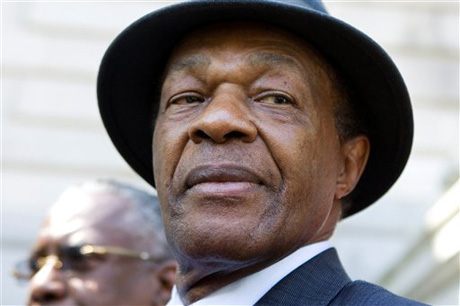
Somewhere, Marion Berry is smiling…
This is juuuust the beginning…
I have noted before that our President Elect never expresses any ethical awareness, and uses rationalizations exclusively to explain and justify his conduct. This is typical of say, 12-year-olds, but is less common among professionals in responsible positions.
Trump just authored a classic example, following the expression of concerns about his conflicts of interest, which are massive, unavoidable, and which should have been addressed seriously long ago, like in a Presidential debate, and at length. Unfortunately, Hillary Clinton and various journalists felt it would be more helpful to their cause to spend time talking about what Trump had said about an over-weight Miss Universe and in a private conversation with Billy Bush. How did that work out for you, guys?
Now various lawyers and ethics experts are saying that Trump “must” sell off his business holdings because his company’s myriad business entanglements will cast many White House decisions under a cloud. The President Elect has a neat answer for them, to wit:
“The law’s totally on my side, meaning, the president can’t have a conflict of interest.”
— Donald Trump, interview with the New York Times, Nov. 22, 2016
Bravo! This is a perfect expression of Ethics Alarms Rationalizations #4, and #5…
4. Marion Barry’s Misdirection, or “If it isn’t illegal, it’s ethical.”
The late D.C. Mayor and lovable rogue Marion Barry earned himself a place in the Ethics Distortion Hall of Fame with his defense of his giving his blatantly unqualified girlfriend a high-paying job with the DC government. Barry declared that since there was no law against using the public payroll as his own private gift service, there was nothing unethical about it. Once the law was passed (because of him), he then agreed that what he did would be wrong the next time he did it.
Ethics is far broader than law, which is a system of behavior enforced by the state with penalties for violations. Ethics is good conduct as determined by the values and customs of society. Professions promulgate codes of ethics precisely because the law cannot proscribe all inappropriate or harmful behavior. Much that is unethical is not illegal. Lying. Betrayal. Nepotism. Many other kinds of behavior as well, but that is just the factual error in the this rationalization.
The greater problem with it is that it omits the concept of ethics at all. Ethical conduct is self-motivated, based on the individual’s values and the internalized desire to do the right thing. Barry’s construct assumes that people only behave ethically if there is a tangible, state-enforced penalty for not doing so, and that not incurring a penalty (that is, not breaking the law) is, by definition, ethical.
Nonsense, of course. It is wrong to intentionally muddle the ethical consciousness of the public, and Barry’s statement simply reinforces a misunderstanding of right and wrong.
 Ethics Alarms