The position here has always been that nobody has any business telling you how to spend your money. This topic usually comes up in the context of charity, as in, “How dare that individual spend money on what they think is important when they should be spending money on what I think is important!” A couple of recent developments have raised the issue in a different context, however: incompetent and irresponsible expenditures of large amounts of money.
Take “Cats,” for example. The already immortal flop film cost a reported $100,000,000 to make, and marketing costs are on top of that. It is sure to lose many, many millions of dollars, and the question becomes, “How could movie professionals make a blunder like that?”
I always assumed that “Cats” could not be a successful movie because of its purely theatrical nature. Surely the lesson of the film version of “A Chorus Line,” another Broadway musical that never should have move to the screen, was guide enough. Yet it happened. The fiasco put me in mind of other infamous and avoidable screen disasters, like 1978’s “Sgt. Pepper’s Lonely Hearts Club Band” starring Peter Frampton and the Beegees. Before the film’s release, Robin Gibb of the Bee Gees announced: “There is no such thing as the Beatles now. They don’t exist as a band and never performed Sgt Pepper live in any case. When ours comes out, it will be, in effect, as if theirs never existed.”
Good prediction. The huge MGM film with dozens of celebrity cameos was instantly and universally reviled. Even worse, a few years later, was “The Pirate Movie,” another misbegotten big budget musical. The idea here was to do a new version of “The Pirates of Penzance” but without the dialogue, plot and music that has made the Gilbert and Sullivan show popular for more than a century….and to star Kristy MacNichol, the androgynous, non-singing teen star, as the heroine. How could such a brilliant concept fail? Continue reading →
In Part I, I said I was glad that Clint Eastwood’s latest film “Richard Jewell” was bombing, because the film impugns the integrity of a now-deceased reporter simply to spice up its story. After I read some of Clint’s comments yesterday in response to the controversy, I’m even more glad. Clint said that nobody knows how reporter Kathy Scruggs got a crucial leak from the FBI, but that it could have occurred because she traded sex for information. That’s despicable.
Nevertheless, the other dud among the Hollywood releases over the weekend, “Black Christmas,” deserved to flop even more than Eastwood’s epic.
The original “Black Christmas” (1974) was released under the name “Silent Night, Evil Night.” I saw it with my sister a few days after its opening (I was amused at the ad’s catchline, “If this movie doesn’t make your skin crawl, IT’S ON TOO TIGHT!!!”) and it scared the bejesus out of both of us, but especially her: she slept with the light on for weeks, and to this day my uncanny imitations of the maniac’s phone calls upset her (so I keep doing them, of course.)
Arriving before John Carpenter’s “Halloween” and its later, cheesier rip-off “Friday the 13th,” what was soon re-titled “Black Christmas” anticipated many of the themes and techniques of the slasher genre, perhaps too well. Blessed with a much better cast than any subsequent movie of the type (Olivia Hussey, Keir Dullea, Andrea Martin, John Saxon, and Margot Kidder) and clever and gutsy director Bob Clark (“A Christmas Story,” “Porky’s”), the film was declared too disturbing by many critics. I thought it was easily the best horror movie I had ever seen, and recommended it to many friends, some of whom were not grateful after spending the following night jumping at every sound. It was very gratifying to see “Black Christmas” finally emerge as a cult film and the acknowledged inspiration for the slasher film genre (along with “Psycho,” of course.)
I saw the 2006 “sequel,” which was terrible, and had a sense of dread when I learned that Hollywood would try again. It was clear that the new film was already off to an unethical start when I saw the trailer: this was another example of producers hijacking a familiar title while making a movie barely connected to the older film it was evoking. That trick, essentially a bait and switch, always ticks me off. In the trailer for the new film, we could see that the killer wears a black robe and uses a longbow. Clark’s original famously never shows the maniac murderer at all: much of the movie is shot from his perspective (I assume it’s a he), though we see his shadow, one mad eye, and his arm at various times. We also hear him, and a more crazy-sounding killer has never been recorded.
The new “Black Christmas” takes place in a sorority house around Christmas, and there’s someone knocking off the girls. That’s about the extent of the similarity. To be fair, the advent of cell phones ruined the original film’s most iconic scare: it was the first movie in which we heard the chilling words, “The phone calls are coming from inside the house!”
The promotion of more female film directors is a feminist cause right now. There’s even a Christmas commercial where a little girl tells her parents who have just bought Disney princess toys to put under the tree for her, “I don’t want to be a princess any more. I want to be a film director!” I have always championed female directors for the stage; there is no question that there are multiple biases against them in theater, and I assume the same bias afflicts them in Hollywood. However, I do not want to see more female directors because they bring a special, feminine perspective to their work, and I really don’t want to see more female directors so they can use their plays and films as feminist propaganda vehicles. Just make a good movie, kid: if your work only stands for the proposition that women can’t just make entertaining and effective films, but have to clobber the audience with feminist tropes, you will have created a legitimate reason for the industry to be wary of female directors. Continue reading →
1. Now THIS ia an abuse of power! It sure looks as if outgoing Kentucky governor Matt Bevin—he’s a Republican, remember— has decided to take revenge on the state that narrowly defeated him for re-election. Right before he moved out of the Governor’s Mansion, Bevin issued 428 pardons and commutations, often without apparent regard to who or what he was pardoning. He pardoned a man convicted of homicide, after the murderer’s family raised more than $20,000 to help Bevin pay off a debt owed from his previous gubernatorial campaign. That wasn’t the only murderer Kentucky got back in its Christmas stocking; there were more, like the man who paid to have his business partner killed, and another who killed his parents.. Bevin released a man convicted of raping a child.
While many of the pardons issued did involve cases where there were allegations of sloppy police work and injustice, many did not. Bevin pardoned Dayton Ross Jones, who pleaded guilty to the 2014 sexual assault of a 15-year-old boy, for example. That crime was captured on video and shared on social media. Jones was sentenced to 15 years in prison in 2016. Now he’s out.
“A young man was attacked, was violated, it was filmed, it was sent out to different people at his school,” Kentucky’s new governor, Andy Beshear said. “It was one of the worst crimes that we have seen. I fully disagree with that pardon. It is a shame and its wrong.”
But there isn’t a thing he or Kentucky citizens can do about it.
2. Let’s ask Chris Wallace about this sterling example of fair and balanced journalism...I know that Ethics Alarms has documented over many years what a partisan, biased, incompetent and dishonest hack Chris Cillizza is, so this is hardly news. Still, he has a job at CNN, which allows him to inflict his hackery on the public. An ethical news organization wouldn’t keep someone like Cillizza around., but as James Earl Jones used to say, “This is CNN.” The disturbing part is that he’s far from the worst hack on its payroll.
A Monmouth University poll this week claimed that Republican voters believed that George Washington was a better President than Donald Trump by only a 44%-37% margin. (Remember: polls.) Cillizza said that fact that 37% of Republican respondents chose Trump over Washington provides “a useful way into understanding just how rote the fealty is to Trump within the ranks of the Republican Party at the moment.”
Let me just interject here that almost no Americans could tell you anything about George Washington’s terms in office other than the fact that he was the first President. (This is another reason to watch “John Adams.”)
While implying that Republicans are ignorant morons, however, Cillizza neglected to mention another alleged result of the poll: Democratic voters said former President Barack Obama was a better President than George an embarrassing 63%-29% margin. Continue reading →
Lots of excellent comments around the blog this week, perhaps because the number of quality comments tends to be inverse to the number of posts I’m able to put up. I haven’t even scratched the surface of Tuesday’s Open Forum, which, I am told, contains many treasures.
I’m putting up two Comments of the Day that resulted from the two Christmas music posts. The first is unusually short for a COTD, but it made me laugh out loud, which is hard to do these days. Joel Mundt was commenting on a Christmas song from Hell called “Fairytale of New York” that Steve-O was kind enough to plant on our brains. The upbeat ditty’s lyrics:
You’re a bum You’re a punk You’re an old slut on junk Lying there almost dead on a drip in that bed You scumbag, you maggot You cheap lousy faggot Happy Christmas your arse I pray God it’s our last
Joel earned Comment of the Day honors by writing,
“Fairytale of New York” still sounds better than “Simply Having a Wonderful Christmastime”, which is the worst song – Christmas-related or otherwise – in the history of humanity.
If there was a Christmas song with the title of “I Chopped the Presents Up With an Axe on Christmas Day Before I Kicked the Neighbor in the Head and Burned the Churches Down and Spit on the Mistletoe and Let the Dog Pee in the Egg Nog”…that song would still be better than “Simply Having a Wonderful Christmastime.”
And I LOVE Egg Nog…
A bit harsh, perhaps (my son, who is an afficianado of all pop music written after 1963 likes Paul’s Christmas song), especially when the competition for Worst Song Ever is so fierce. By all means, submit your nominees.
For some reason, just like the Hallmark cable channels, the satellite radio monopoly Sirius-XM has gone nuts this pre-Christmas season. I count six channels devoted to Christmas music, and I’m sure there are some other buried in there. There are two traditional Christmas music stations that appear to be playing the same songs and recordings; a Country Christmas channel, which means really bad compositions like “Santa Looked A Lot Like Daddy,” a poor rip-off of the slightly less revolting, “I Saw Mommy Kissing Santa Claus” and better songs and carols sung with a twang; a Gospel Christmas channel, and “Nativity,” which includes only carols and songs referencing Jesus, and “Holly,” which avoid religious references completely and is required listening if you want to know how few modern Christmas ballads deserve annual airing. I could two: “Last Christmas,” and Mariah Carey’s “All I Want for Christmas is You,” neither of which can be sung around a piano anywhere but backstage at the Grammys.
I been forcing myself to listen to all of it for days, and have reached some rueful conclusions:
In their rush to avoid referring to Jesus, the programmers over-play the established Winter Solstice canon to the point of madness. We’re talking “Snowfall,” “Winter Wonderland,” “I’ve Got Your Love To Keep Me Warm,” “Sleighride,” “It’s a Marshmallow World,” “Let It Snow,” “Frosty the Snowman,’ and of course, “Baby It’s Cold Outside” by every possible artist, over and over. None of these songs are about Christmas, but if you’re a Druid, I suppose they are appropriate and festive.
At least some versions have lyric changes made to refer to Christmas. Sometimes Frosty says, instead of “I’ll be back again some day!” that he’ll be back on Christmas day. (Is Frosty some kind of a weird Christ figure?). In Winter Wonderland, Farmer Brown’s birthday party is sometimes turned into a Christmas party.
Boy, the ex-Beatles’ attempts at Christmas songs are awful, especially John Lennon’s, with its depressive message, and the lame and gloomy couplet,
And so Merry Christmas, and a happy new year
Let’s make it a good one, without any fear.
There hasn’t been a decent Christmas standard entering the canon since 1963’s “Do You Hear What I Hear?”, which I wrote about last year.
It is also the last popular Christmas song to be written with a religious theme. Think about that, and what it says about the status of religion in U.S. culture.
I know this is a personal preference, but when Bing Crosby’s recordings come on, his warm, smooth, impeccably-crafted delivery just blows everyone else out of the metaphorical water. Yes, even Old Blue Eyes.
Christmas keeps Bing’s legacy alive, though in an unfairly narrow context. We will never hear a voice like that again, I fear.
Having been forced to listen to “Rudolph the Red-Nosed Reindeer” until it kept me awake at night, I have concluded that the suddenly au courant criticism of the song—bullying, you know—is baloney. It teaches the valuable lesson that being a target and a victim need not be permanent, and that if one has character and develops skills, there will be opportunities to prove one’s critics wrong.
I think of Rudolph as a reindeer version of Desmond Doss.
At the risk of being repetitive (I’ve know I mentioned many of these before), here are some Christmas song lyrics that could be, and in some cases, should be, fixed.
What’s a drummer doing by the manger, with a baby sleeping? This has bothered me since the first time I heard “The Little Drummer Boy.”
Speaking of “Do You Hear What I Hear?”: I get the wind talking to the lamb, and I’ll even accept the lamb talking to the shepherd boy, but I’ve never understood how the boy had a chance to meet the mighty king, much less tell him to bring the child “silver and gold.”
Listen to Bobby Helms sing his 1957 hit “Jingle Bell Rock,” and then tell me he doesn’t keep singing “feet” when the lyrics obviously are “beat.” Amazingly, some covers of this song also seem to be singing “feet.”
Dumbest Christmas lyric of all time: The Beach Boys’ repeated (In “Little Saint Nick”) “Christmas comes this time each year.”
I’m tempted to nominate “see the kids bunch” from “Silver Bells” for the second worst. That requires assuming that “then we got upsot” in Jingle Bells is an intentional howler.
The lovely and wistful World War II Christmas ballad “I’ll Be Home For Christmas” refers to “presents on the tree.” Who hangs presents on a Christmas tree? How would you do that? Many recent versions substitute “”round” for on. Good.
The late Andy Williams’ Christmas standard, “It’s The Most Wonderful Time of the Year,” he lists ‘scary ghost stories” as a feature of Christmas. I know the song is referring to “A Christmas Carol,” but that’s a single ghost story. Andy makes Christmas sound like Halloween…
Finally, here’s an example of how attention to tone and craft improved a Christmas song and allowed it to become, deservedly, a classic.
“Have Yourself A Merry Little Christmas” is certainly somber, but having been through some sad Christmases, it’s an essential part of the canon, and a wonderful song. It almost was too sad, however. Hugh Martin and Ralph Blaine, who wrote the song ” for Judy Garland’s 1944 movie, “Meet Me in St. Louis”, originally had the lyrics…
Have yourself a merry little Christmas It may be your last… Next year we may all be living in the past…
Yikes! Judy Garland and others insisted on a revision, and the songwriters ultimately settled on …
Have yourself a merry little Christmas Let your heart be light… Next year all our troubles will be out of sight..
Another gloomy lyric that was vetoed:
No good times like the olden days Happy golden days of yore Faithful friends who were dear to us Will be near to us no more..
Nice. That one became,
Once again as in olden days Happy golden days of yore Faithful friends who are dear to us Will be near to us once more.
“O Come All Ye Faithful” is so stirring that it almost makes up for all other Christmas music botches.
This isn’t so much an ethics analysis as an expression of frustration. For a cultural holiday that relies so much on music, Christmas is wounded today by accumulated incompetence on that front, as well as a lack of diligence. Just a little more attention and industry could make the traditional repertoire so much better. You know those AT&T wireless commercials about how “good enough” isn’t good enough? That’s the issue in a nutshell. We have to hear these songs year after year. Can’t they be cleaned up?
Let’s begin with the traditional songs and carols that weren’t written to avoid the origins of Christmas. These are the strongest and most evocative of all the season’s songs, in contrast to the”popular” Christmas music that came down to us from Tin Pan Alley. I have to ask, though: What the hell is “I Saw Three Ships” about?
I saw three ships come sailing in, On Christmas day, on Christmas day, I saw three ships come sailing in, On Christmas day in the morning.
And what was in those ships all three? On Christmas day, on Christmas day, And what was in those ships all three? On Christmas day in the morning.
The Virgin Mary and Christ were there On Christmas day, on Christmas day, The Virgin Mary and Christ were there On Christmas day in the morning.
Pray whither sailed those ships all three? On Christmas day, on Christmas day, Pray whither sailed those ships all three? On Christmas day in the morning.
Oh, they sailed into Bethlehem, On Christmas day, on Christmas day, Oh, they sailed into Bethlehem, On Christmas day in the morning.
I assumed that there was an acknowledged and well-researched metaphor buried here, but no, there really isn’t. The nearest body of water to Bethlehem is the Dead Sea, and it’s 20 miles away: Bethlehem is land-locked. Where were those ships coming from? How did Jesus and Mary end up on a ship, and why were three necessary? This is the fake news of Christmas Carols. The song makes no sense, so scholars and critics have been positing justifications for this nonsense, without any evidence at all other than, “It must mean something!” One batty theory is that the the three ships are references to the Nina, the Pinta, and the Santa Maria. Wikipedia concludes that the reference to three ships “is thought to originate in the three ships that bore the purported relics of the Biblical magi to Cologne Cathedral in the 12th century.” Then the song has nothing to do with Christmas at all? The entry continues, “Another possible reference is to Wenceslaus II, King of Bohemia, who bore a coat of arms “Azure three galleys argent”. Ah! It’s a song about a coat of arms! Sure! THAT makes sense. Then it goes on to a theory that I considered years ago along with everyone else, that the ships represent the camels used by the Magi, as camels are frequently referred to as “ships of the desert.” Continue reading →
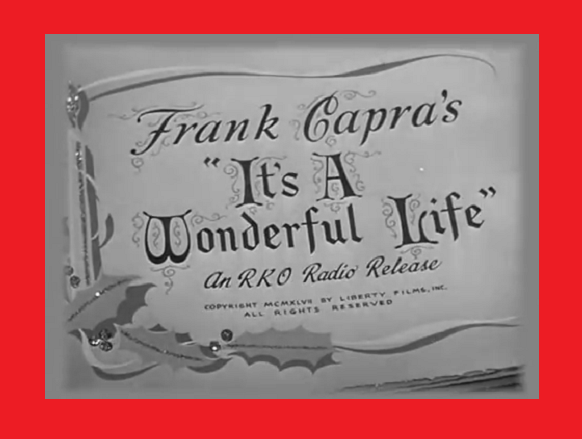
The Ethics Alarms Ethics Guide to Frank Capra’s 1946 masterpiece “It’s A Wonderful Life,”perhaps the greatest ethics movies of all time, has become this blog’s official welcome to the holiday season. Once again, I have reviewed the post after another viewing of the film. It is a mark of the movie’s vitality that I always find something else of interest from an ethics perspective.
The movie is an important shared cultural touch-point,and exemplifies the reasons why I harp on cultural literacy as so vital to maintaining our nation’s connective tissue. The film teaches about values, family, sacrifice and human failings unlike any other. I hope its power and uniqueness disproves the assertion, made in one online debate here this year, that new cultural creations inevitably and effectively supersede older ones, which, like copies of copies, eventually the cultural values conveyed get fainter and less influential.
Last year I wrote with confidence, “No, they really don’t,” but now I am not so sure. In , I learned that my druggist, about 35, married and with children, had never seen the movie. I gave him a DVD over the summer, and suggested that he watch it with his whole family, which he said he would: he moved on to another CVS branch, so I have no idea if he did or will. I used to be amazed at how many people haven’t seen the movie; now I am not. Last year I wrote that my son’s girlfriend admitted that she hadn’t; this year he has a new girlfriend, and she hasn’t either.
The movie is in black and white, and many Gen Xers and Millennials disdain uncolored films the way I once avoided silent movies. Will anyone be watching “It’s A Wonderful Life” 20 years from now? I wonder. The movie begins in heaven, and has a strong religious undercurrent. Religion is increasingly mocked and marginalized today, and I see no signs that the trend is reversing. Aside from the nauseating Hallmark Christmas movies, most of this century’s holiday fair is openly cynical about Christmas and everything connected to it.
Here’s an example of how rapidly cultural touchpoints vanish: I’m going to poll how many readers remember this:
Deck us all with Boston Charlie, Walla Walla, Wash., an’ Kalamazoo!
Nora’s freezin’ on the trolley, Swaller dollar cauliflower alley-garoo!
Don’t we know archaic barrel Lullaby Lilla Boy, Louisville Lou?
Trolley Molly don’t love Harold, Boola boola Pensacoola hullabaloo!
Bark us all bow-wows of folly, Polly wolly cracker ‘n’ too-da-loo!
Donkey Bonny brays a carol, Antelope Cantaloupe, ‘lope with you!
Hunky Dory’s pop is lolly, Gaggin’ on the wagon, Willy, folly go through!
Chollie’s collie barks at Barrow, Harum scarum five alarm bung-a-loo!
Dunk us all in bowls of barley, Hinky dinky dink an’ polly voo!
Chilly Filly’s name is Chollie, Chollie Filly’s jolly chilly view halloo!
Bark us all bow-wows of folly, Double-bubble, toyland trouble! Woof, woof, woof!
Tizzy seas on melon collie! Dibble-dabble, scribble-scrabble! Goof, goof, goof!
Now just answer the poll, don’t go giving away the answer. Nobody knows all the lyrics that I just posted, nobody but the author ever did. The first verse, however, was once familiar.
Maybe there is hope: it was recently announced that a new musical adaptation of the movie may be coming to Broadway as early as next year. The songs will be written by Sir Paul McCartney, and interest in The Beatles is surging.
“It’s A Wonderful Life” would be an excellent basis for a middle school ethics course. I haven’t seen a better, richer film for that purpose come along since, and I’ve been looking. Despite the many ethics complexities and nuances that the film glosses over or distorts, its basic, core message is crucial to all human beings, and needs to be hammered into our skulls at regular intervals, far more often than once a year.
What is this message? In an earlier posting of The Guide I described it like this:
Everyone’s life does touch many others, and everyone has played a part in the chaotic ordering of random occurrences for good. Think about the children who have been born because you somehow were involved in the chain of events that linked their parents. And if you can’t think of something in your life that has a positive impact on someone–although there has to have been one, and probably many—then do something now. It doesn’t take much; sometimes a smile and a kind word is enough. Remembering the lessons of “It’s a Wonderful Life” really can make life more wonderful, and not just for you
Finally, I hope you all have a terrific Thanksgiving, and that the holiday season is joyous for all.
Yikes. Just as he is surging in the Iowa polls, “It” guy Democratic Presidential candidate Pete Buttigieg’s campaign organization made an epic botch of sufficient scope as to raise competence, honesty and responsibility questions.
On October 24, Buttigieg released an op-ed claiming more than 400 South Carolinians had endorsed his “Douglass Plan for Black America.” The mayor of South Bend has a strained relationship with African Americans, so this was obviously an important initiative. The problem: the three black politicians listed at the top of his press release never endorsed his him, and while the campaign had implied otherwise, 40 % of the endorsement names listed were not black but white. “There is one presidential candidate who has proven to have intentional policies designed to make a difference in the Black experience, and that’s Pete Buttigieg. We are over 400 South Carolinians, including business owners, pastors, community leaders, and students. Together, we endorse his Douglass Plan for Black America, the most comprehensive roadmap for tackling systemic racism offered by a 2020 presidential candidate,” the press release read.
Incredibly, Buttigieg’s campaign sent out an email telling black politicians they needed to opt out if they did not want their name on the endorsement list. That’s outrageous. No candidate can assume an affirmative endorsement because an individual doesn’t explicitly deny one. Continue reading →
Sure, be happy and proud, Mr. Mayor! After all, you didn’t commit those murders, and better still, you weren’t the victim of any of them!
“I’m not committing the murders. And that’s what people need to understand. I’m not committing the murders. The police commissioner is not committing it. The council is not committing it. So how can you fault leadership? You know this has been five years of 300-plus murders, and I don’t see it as a lack of leadership.”
—Baltimore Mayor Jack Young,responding to criticism over another year of violent crime in the city, with the number of murders about to reach 300.
Any elected official foolish enough to make such a statement should just resign in disgrace. He is incapable of competent leadership, because he doesn’t understand what it is that leaders do. They are responsible for the welfare of those who follow them, depend on them, trust them. Because they have taken on this responsibility, they are accountable to everyone in the organization—in his case, a municipality—for a deterioration in conditions there. Continue reading →
1. So we can’t trust Intel, either. Good to know. Last May, Intel released a patch for a group of security vulnerabilities researchers had found in the company’s computer processors. Intel implied that all the problems were solved. The official public message from Intel was “everything is fixed,” said Cristiano Giuffrida, a professor of computer science at Vrije Universiteit Amsterdam and one of the researchers who first reported the vulnerabilities. “And we knew that was not accurate.”
Indeed, the software patch meant to fix the processor problem addressed only some of the issues the researchers had identified. A second patch, publicly disclosed by the company last week, finally fixed all of the vulnerabilities Intel had said were fixed in May…six months after the company said that all was well.
2. So they finally bullied the NFL into re-considering Colin Kaepernick. Kaepernick, the mediocre NFL quarterback whose political grandstanding before games made him an albatross for the league and any team foolish enough to employ him, has had woke “fans,” who couldn’t care less about football but who loved his race-bating and police-bashing protests, claiming that he was “blackballed” from pro football for exercising his right of free speech.
This was never true—let a grocery store clerk try that argument when he’s fired for making political demonstrations during store hours—but never mind: Kaepernick was styled as a martyr anyway. Why the NFL capitulated to bogus complaints and gave the player a showcase for NFL scouts, I cannot fathom. He’s 36, hasn’t played for three years, and wasn’t that good in 2016. If no team signs him, the NFL will be told again that it is racist and oppressive. If a team does sign him, the message will be that enough agitation can force an organization to elevate politics above its legitimate priorities.
3. This is why our politician aren’t civil, collaborative, respectful and ethical: the public doesn’t want them to be. Senator Chuck Schumer, the Democratic Minority Leader,praised Representative Peter King, the long time Long Island Republican House member who announced his retirement this week, by tweeting warm words on Twitter. “I will miss him in Congress & value his friendship,” the effusive message concluded.
For this once-standard professional reaction to a fellow Congress member’s retirement, Schumer was roundly attacked by Democrats and progressives on social media. To his credit, despite more than 10,000 mostly negative replies and even calls for his resignation, Schumer neither apologized for his tribute to a colleague nor took down the tweet. Continue reading →



 Ethics Alarms
Joel earned Comment of the Day honors by writing,
A bit harsh, perhaps (my son, who is an afficianado of all pop music written after 1963 likes Paul’s Christmas song), especially when the competition for Worst Song Ever is so fierce. By all means, submit your nominees.
Joel’s COTD was in the Part II thread, about modern Christmas songs. Paul Compton’s Comment of the Day was in reaction to My Annual Christmas Music Lament: Part I, The Worst Carols.
His addendum about Bing Crosby’s star power compared to his disciples Frank and Dean also went straight to my heart… Continue reading →