Double Standard Chronicles: Why Is Mocking The Rolling Stones For Their Appearance More Ethical Than Fat-Shaming Kelly Clarkson?

Rolling Stones

It isn’t. It is just as wrong.

Fox’s Chris Wallace has apologized for making a gratuitous and unkind crack about pop singer Kelly Clarkson’s weight on a conservative talk radio show (he was suckered into it by the host, Mike Gallagher, who has also apologized to Clarkson.)

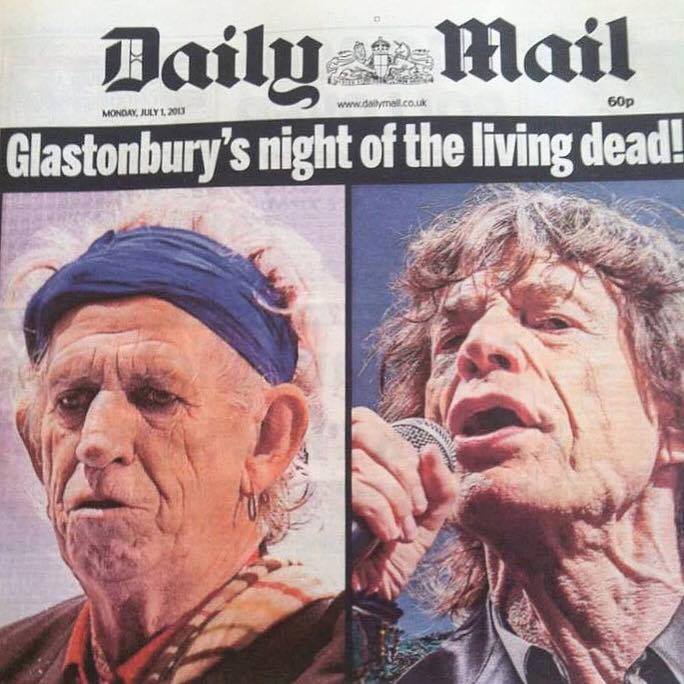
Today I have seen the above graphic circulating on Facebook with many “likes” and snarky comments about Mick and Keith’s faces.

My restrained reply is “Shut up, jerks, and show some respect.

Original members Mick Jagger, Keith Richards and Charlie Watts are over 70 now. Nevertheless, they are embarking on another North America tour. They can still play, in some ways better than ever; Mick can still sing, and can still dance like a chicken. The Stones show passion and professionalism in every performance; those who have seen their concerts leave amazed. The Stones are not like the Beach Boys or the Turtles, croaking out 50-year-old hits to grandparents at county fairs. The Stones can still rock, still have musical integrity, still give their audiences their money’s worth and then some.

I wonder how many of the Facebook trolls writing about how the Stones, who are going to be 73 this year, look old—they are old, and so what? What exactly are they supposed to do about that?—know how hard performing at a professional level is, how exhausting it is, how it impossible to get to sleep for hours after a show because you are soaked with adrenaline, and how much wear and tear it places on the body, emotions and mind.

My guess? Very few. And very few of these obnoxious critics will be able to walk upstairs quickly at the age that the Stones are still rocking arenas. I give three hour, interactive ethics seminars, and I’m a lively speaker. After about two seminars in a week with the related travel, I am fried—and the Stones are expending more energy, more often, then I am. They are also a decade older than I am. I can’t be certain I’ll be able to do my Ethics Chicken Dance when I’m 73. They are an inspiration. Continue reading

Ethics Dunce: Tucker Carlson (No, I Mean Seriously, This Guy Is Really, REALLY An Ethics Dunce!!!)

Oh NO!!! Tucker Carlson is trapped by a conflict of interest! I'm coming, Tucker...just hold on! I'M COMING!!!!

Oh NO!!! Tucker Carlson is trapped by a conflict of interest! I’m coming, Tucker…just hold on! I’M COMING!!!!

Tucker Carlson is the founder and publisher of the conservative commentary and news site, The Daily Caller. In this post, I recently discussed Carlson’s ethical obtuseness in pulling a column by a Daily Caller contributor because it criticized Fox News, where Carlson has a gig as a weekend host of the network’s embarrassing happy conservative talk morning news show. I wrote,

The conflicts of interest on display here, the insensitivity to them, and the lack of any pretense of journalistic fairness or integrity is staggering. Carlson has placed The Daily Caller in the same, discredited ethics no-man’s land of Media Matters, Move-on.org, the Daily Kos and other sites that blatantly distort the news and their commentary on it for specific, ideological and personal agendas, and a personal agenda is the most unethical and cynical conflict of all. Carlson likes his Fox paycheck, apparently. Well, then, his ethical obligation is to have an independent journalist edit his website. In the alternative, he needs to refuse to work for Fox unless the network agrees to allow him full reign to say and write what he believes on his website, and to allow others to do so as well.

Apparently Carlson doesn’t read Ethics Alarms—I am shocked and disappointed—and moreover, has the imagination and ethics problem-solving skills of a banana slug.  Mediaite reports that he was discussing his ethics problem with RealClearPolitics, and admitted that he was totally flummoxed about what to do, poor dear:

“I have two rules,” Carlson said, “One is you can’t criticize the families of the people who work here, and the other is you can’t go after Fox” because he works there. Sigh. “Yes, it’s a conflict, for sure…but I don’t know what to do about it.” Continue reading

The Phenom, The Agent And The Cubbies: 2015’s First Baseball Ethics Controversy

No, I don’t count Pete Rose.

Kris Bryant, whose day will come.

Kris Bryant, whose day will come.

The lesson of the Kris Bryant dispute is that sometimes the result that seems the least fair is also the right one. Bryant, in case you don’t follow baseball or do not live in Chicago, is the hot Chicago Cubs minor leaguer—what used to be called a “phenom” in the old days—who will not be playing third base for the Cubs when the season opens despite everyone’s agreement that he is not just ready for National League, but ready to star in it. Last week, the young man was assigned  to  the Cubs’ Triple-A Iowa farm team.  Cubs fans are upset. Sports pundits are outraged. Bryant’s agent is furious.

What’s going on here?

A lot.

The MLB  collective bargaining agreement, negotiated and signed by both baseball management and the players union, gives teams control over players for six years before a player can enter free agency and sell his talents to the highest bidder. Thus most young players earn a small percentage of their true market value initially, and, if they are good, hit the jackpot after that. (The average salary in Major League Baseball is $4 million a year). There is a catch, however—and an unavoidable loophole. A full season is defined as 172 days, though the season is 180 days. If a young player is left off the roster until there are fewer than 172 days remaining in the regular season, that season doesn’t count as one of the six years; a player can’t become a free agent mid-season six years later. Before the demise of the reserve system that bound a player to one team until the team released or traded him, there was no reason not to promote a promising minor league star to the big team the second it looked like he was ready. Now, there is a big reason: delaying those few games will give the team an extra year of control, since under the rule, 6 years and 171 games is still just six years. That means an extra year of the player at bargain compensation, and possibly an extra year of the player, since he can fly the coop once the clock has run.

This is not a new issue: players and agents have been complaining about teams doing this for years, but the rules allow it. Since the rules allow it, and since the monetary and competitive benefits of waiting those extra nine days can be huge, there is nothing unfair or unethical about a team taking advantage of the provision. Indeed, it would be irresponsible and a breach of management’s fiduciary duties not to save millions and ensure the extra year of a star’s services. What, then, has made Bryant’s case so contentious?

It’s the Cubs, that’s what. Continue reading

Advocacy Ethics And Larry Tribe’s “Betrayal”

Bought, believed, or both?

Bought, believed, or both?

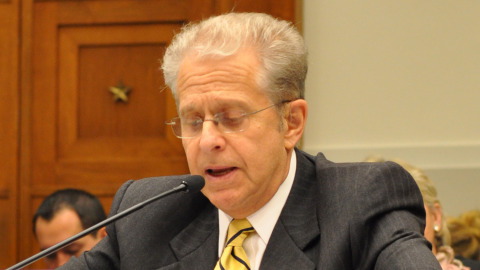
One of my favorite topics here, the public’s (and news media’s) misunderstanding of legal ethics and the function of lawyers, recently broke into the news with a crash as progressives saw Barack Obama’s constitutional law professor at Harvard and liberal icon Lawrence Tribe go before Congress and testified against the President’s climate change initiative, the Clean Power Plan, saying that it was the equivalent of “burning the Constitution.” This has been called every name in the book by progressives, from betrayal to greed to dishonesty.

“Laurence Tribe must not have been sworn in over a Bible today before testifying before Congress, because if he had been, that Bible would have burst into flames after his phony testimony about EPA’s legal authority to set standards for unlimited carbon pollution from power plants,” said David DiMartino, adviser to the Climate Action Campaign.“But I guess we shouldn’t be surprised— a wad of coal industry money burning a hole in your pocket can make you do strange things,” he added.

Indeed, Tribe was hired to represent its interests by Peabody Energy, the world’s largest private-sector coal company, and is the company’s counsel in a lawsuit that seeks to invalidate the EPA plan. That is what lawyers do, and what they exist to do: represent citizens and companies as they seek to avail themselves of their guaranteed right to use the law to protect their interests. Continue reading

Ethics Quiz: The Lettering Of Michael Kelley

Michael-Kelley-Down-Syndrome

Controversy in Kansas:

Michael Kelley is a high school student who has Down Syndrome and autism. He plays extra-curricular special needs basketball, so his family bought him a varsity letter and had it sewed to a school jacket to resemble the jacket the school’s athletes wear. The school’s special needs teams are not regarded as  varsity sports.

The school asked Michael to remove the jacket or the letter, since East High’s policies dictate that only varsity teams can wear the letter.

Now Michael’s mother is petitioning the school board to ensure that special needs team members get letters. Public reaction in Wichita is running against the school, which is being painted as cruel and lacking compassion by not letting Michael wear his letter jacket.

Your Ethics Alarm Ethics Quiz this almost spring weekend (March is back to being a lion here in the D.C. area) is this:

Should the school have let the special needs athlete wear his counterfeit letter jacket?

Continue reading

Tales of “The King’s Pass”: Pete Rose and Jeremy Clarkson

King

The King’s Pass has been much in the ethics news of late—Brian Williams, Bill O’Reilly, David Petraeus, Hillary. Let’s review, shall we?

11. The King’s Pass, The Star Syndrome, or “What Will We Do Without Him?”

One will often hear unethical behavior excused because the person involved is so important, so accomplished, and has done such great things for so many people that we should look the other way, just this once. This is a terribly dangerous mindset, because celebrities and powerful public figures come to depend on it. Their achievements, in their own minds and those of their supporters and fans, have earned them a more lenient ethical standard. This pass for bad behavior is as insidious as it is pervasive, and should be recognized and rejected whenever it raises its slimy head.  In fact, the more respectable and accomplished an individual is, the more damage he or she can do through unethical conduct, because such individuals engender great trust. Thus the corrupting influence on the individual of The King’s Pass leads to the corruption of others…

1. The BBC just demonstrated how the King’s Pass should be rejected—with courage and gusto.

Jeremy Clarkson, the main host of the popular BBC auto show “Top Gear,” spent March misbehaving. He got in a shoving match with a producer, verbally abused staff and was recorded trashing the network. When Clarkson topped it off with a physical altercation with a show staffer, the BBC decided not to renew his contract. BBC head Tony Hall said in a statement:

It is with great regret that I have told Jeremy Clarkson today that the BBC will not be renewing his contract. It is not a decision I have taken lightly. I have done so only after a very careful consideration of the facts…I take no pleasure in doing so. I am only making [the facts] public so people can better understand the background. I know how popular the programme is and I know that this decision will divide opinion. The main facts are not disputed by those involved.

The BBC is a broad church…We need distinctive and different voices but they cannot come at any price. Common to all at the BBC have to be standards of decency and respect. I cannot condone what has happened on this occasion. A member of staff – who is a completely innocent party – took himself to Accident and Emergency after a physical altercation accompanied by sustained and prolonged verbal abuse of an extreme nature. For me a line has been crossed. There cannot be one rule for one and one rule for another dictated by either rank, or public relations and commercial considerations… Obviously none of us wanted to find ourselves in this position. This decision should in no way detract from the extraordinary contribution that Jeremy Clarkson has made to the BBC. I have always personally been a great fan of his work and “Top Gear”…The BBC must now look to renew Top Gear for 2016. This will be a big challenge and there is no point in pretending otherwise. I have asked Kim Shillinglaw [Controller of BBC Two] to look at how best we might take this forward over the coming months. I have also asked her to look at how we put out the last programmes in the current series.

The show, without Clarkson, is toast, and Hall knows it. Nonetheless, he had the guts to do the necessary and ethical act: not allowing its indispensable star to abuse his power and popularity . Once Clarkson did that, “Top Gear” was doomed anyway; firing him now just minimizes the carnage. Although Hall has no responsibility to other networks and organizations, his decisive handling of the episode has saved other programs even as it destroys his own. It is a precedent and a role model for employers refusing to allow themselves to be turned into enablers  by stars assuming the King’s Pass works. When they say, “You can’t fire me, I’m irreplaceable! There’s no show without me!”, the response now can be, per the BBC: “If there’s no show without a jerk like you, then there’s no show. Bye!”

2. Once again, Pete Rose is sucking the ethics right out of people’s brains.

Ah, Pete Rose. He was the topic of the first ethics post I ever wrote, way back in 2004. Then, in 2007, he became my first and only Ethics Dunce Emeritus.

The Pete Rose case is simple. Baseball has an absolute, no exceptions rule that demands a lifetime ban of any player, coach or manager who gambles on major league baseball games. Such banned players can’t be hired by major league teams for any purpose, and cannot be considered for Hall of Fame membership., ever, even after they are dead. Everyone in baseball knows why this rule exists—baseball was nearly destroyed in 1919 when gamblers bribed the Chicago White Sox to throw the World Series—and the rule is posted in every clubhouse. Rose bet on baseball while a major league manager, and also bet on his own team. Thus he is banned.

The significance of the fact that he is, as a player, the all-time hits leader and was the face of the game is that it led Rose to believe that the game would never ban him, and that if caught, he would be treated with special leniency. His excellence on the playing field doesn’t mitigate his conduct, or justify minimizing the ban it earned, at all.

The New York Times published a story about Rose’s efforts to get baseball to lift the ban, now that a new Commissioner, Rob Manfred, is in office. You can read the article here, which is remarkable for the many jaw-droppingly unethical arguments put forth by the baseball people the article quotes, contrasted with the occasional quote that shows that a speaker comprehends the concepts of consequences, accountability, and why letting stars break the rules is suicidal to any culture. It would be an excellent ethics exam.

Here are the quotes; my comments follow in bold. Continue reading

“Trying To Bring Ethics To Project Veritas? How Dare You? GET OUT!”

James O’Keefe is the famous or infamous (depending on your point of view and whether you believe that the ends justify the means) guerrilla hidden-camera master who sets out to deceive Democrats, liberals and progressives into exposing their evil ways. He is not a journalist. He is an unethical conservative operative who has, though dishonest means, occasionally managed to expose wrongdoing or hypocrisy. He is to an ethics blog what Rice Krispie Squares are to Fine Dining Magazine.

Richard Valdes, a former top staffer with O’Keefe’s oxymoronicly named Project Veritas, reports that O’Keefe assigned an undercover employee to attend a meeting of anti-police violence protesters and to bait them by saying: “Sometimes, I wish I could just kill some of these cops. Don’t you just wish we could have one of the cops right here in the middle of our group?” Presumably he was to secretly record the responses, thus discrediting them.

The undercover agent refused, sending an e-mail to his supervisor Valdes that was copied to O’Keefe. It read,

“I will not say words that will jeopardize my entity, especially when they involve an illegal act of ‘murdering police.’ 

Valdes claims O’Keefe fired him “because he was unhappy with me for being unwilling to strong-arm the guy.” He is considering a lawsuit for wrongful termination.  Valdes is threatening to sue for wrongful termination.

A Veritas spokesman denies the allegations, saying, “Project Veritas would never do anything that we believe would incite violence against police officers. Anyone suggesting otherwise is clearly unfamiliar with our body of work.”

Observations:

1. Anyone “familiar”with the organization’s body of work..

  • …would not be surprised at anything it did, no matter how outrageous.
  • ….would not believe a spokesperson, since Project Veritas is all about lying.

2. If it didn’t happen, why did the undercover employee think this was his assignment?

3. No ethical individual would work for O’Keefe anyway. What are the damages for being wrongfully terminated from a job you are lucky not to be in any more?

4. I believe Valdes.

It Appears, And Not For The First Time, That Tucker Carlson And The Daily Caller Do Not Understand This Thing Called “Ethics”

Tucker Carlson

Tucker Carlson

Conservative blogger Mickey Kaus wrote a piece criticizing Fox News for not meeting its obligation (as Kaus sees it) to take on the role of media opposition on the issues of illegal immigration and amnesty, and instead, as Kaus told Politico, “filling up the airwaves with reports on ISIS and terrorism.”  (Kaus is wrong, but never mind) Kaus posted his commentary on the DC only to discover later that Daily Caller founder and editor Tucker Carlson had taken it down. Carlson’s explanation: “We can’t trash Fox on the site. I work there.'”

Indeed, Carlson, who co-founded The Daily Caller in 2010, is a conservative contributor to Fox News as well as the host of its weekend edition of “Fox & Friends,” on which he has been known to fall asleep on the air. Carlson told Kaus that the ‘no criticizing Fox News, ever’  policy was an unwaivable rule.

Kaus quit, as he should have.

The conflicts of interest on display here, the insensitivity to them, and the lack of any pretense of journalistic fairness or integrity is staggering. Carlson has placed The Daily Caller in the same, discredited ethics no-man’s land of Media Matters, Move-on.org, the Daily Kos and other sites that blatantly distort the news and their commentary on it for specific, ideological and personal agendas, and a personal agenda is the most unethical and cynical conflict of all. Carlson likes his Fox paycheck, apparently. Well, then, his ethical obligation is to have an independent journalist edit his website. In the alternative, he needs to refuse to work for Fox unless the network agrees to allow him full reign to say and write what he believes on his website, and to allow others to do so as well. Continue reading

Sign Language Interpreter Ethics

Let’s see, I haven’t gotten disability advocates angry at me in a while. It might be time.

Jonathan Turley posted the video above in a blog post titled “You Decide: Which Is The Greater Draw – The Singer Or The Signer?” The title, and especially the video, reminded me of a live entertainment phenomenon that has annoyed me for decades. I had forgotten about it, because producers learned long ago that I wouldn’t tolerate it in shows I was involved in. The ethics issue: showboating sign language interpreters for deaf audience members.

I have no objection to having signers at special performances of live stage presentations, as long as those signers understand their purpose and obligation. Their purpose is to communicate the words to hearing-impaired audience members. Their obligation is to do so as unobtrusively as possible, so as not to draw focus from the performance itself, or  interfere with the integrity of the production.

Unfortunately, a large percentage of the sign language interpreters who specialize in signing plays and operas don’t see their job this way. They think they are supposed to be as flamboyant–that is, obtrusive–and demonstrative as possible. Well, they’re not going to do that in one of my shows.

I’m not going to work over a grueling six week rehearsal schedule to perfect audience focus, the arc of the show, the lighting, sound, stage picture and all the other artistic elements that need to be coordinated to fully realize a work of live performance art  only to have someone show up who I have never seen before and improvise his or her own act in competition with the performance on stage. If I thought it would enhance “A Steetcar Named Desire” or “The Music Man” to have Marcel Marceau or Red Skelton jumping around and waving their arms next to the performers, I would have staged the shows that way. Continue reading

Some Hillary E-Mail Ethics Test Results: Dowd, Carville, Maher, Whitehouse, Boxer, Huffington

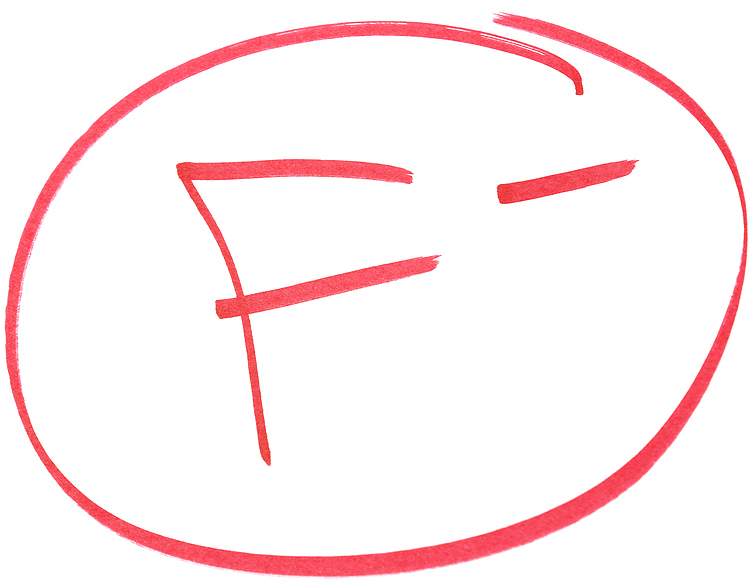
F minusLast week I pointed out that the controversy over Hillary’s secret e-mail server and the various deceits and lies she has employed to justify is invaluable, not merely as further evidence of the character of the woman Democrats seem determine to stuff down America’s throat as the next President, but also as an integrity and values test for the politicians, elected officials, pundits and journalists who choose to publicly defend her…or not.

So it has been, and continues to be. Unfortunately, Republicans and reliably conservative pundits are disqualified from the test, as they would be condemning Hillary whether there was an ethical defense of her e-mails or not. They will end up on the right side of this issue by simply following their ideological proclivities, and thus deserve no credit for being incidentally correct.

Here is what you have to remember, however: the fact the Republicans and conservatives who reached their position on this issue without giving it any thought detest and distrust Hillary Clinton and are being, in some cases, unattractively gleeful about the scandal does not make Hillary’s defense any stronger. As I explained in the earlier posts, she has no legitimate defense, just spin, rationalizations and deceit. That’s why the e-mail incident challenges the non-Hillary haters to exhibit integrity.

I was tempted to exempt Democratic strategists and Clinton consultants from the test as well, since they are, in essence, paid liars. For anyone inclined to believe them, however, the fact that these people—Karen Finney, Donna Brazile, Lanny Davis, David Brock, James Carville— will go on national TV, look an interviewer and the American public in the eye and say what they know is false should prove that their level of trustworthiness is below sea level.

Carville, for example, gave a tour de force of rationalizations on ABC’s “This Week” yesterday, making the recently popular argument that the Clinton’s just can’t get away with fudges and sneaks that other politicians do, and that this is so, so unfair.  Let’s go to the Rationalizations List! This is the Golden Rationalization (“Everybody does it”) squared by the #39. The Pioneer’s Lament, or “Why should I be the first?” (That argument is disingenuous, because the Clintons are not like everyone else. They have a long, ugly record of deception and rule-breaking. At this point, they cannot credibly claim, “We just made a mistake” —# 19 and #20. There is a pattern. Once a pattern is established, you have to be especially careful not to repeat it, or there is a rebuttable presumption that you can’t help yourself. Is it unfair to an alcoholic to make a bigger deal out of him coming home drunk than when an occasional drinker does the same thing?) Continue reading