Ethics Dunce: Tony Kornheiser

Ugh.

No pardon for you, Tony...

No pardon for you, Tony…

Tony Kornheiser is a sportswriter and humorist as well as a television and radio personality. I’ve been reading, watching and occasionally laughing at him since I moved to D.C. eons ago, when he was a Washington Post columnist. This post has nothing to do with sports, however, though the issue arose in a sports context. It has to do with the depressing fact that Tony’s mode of ethical analysis is still based on consequentialism and an ignorance of moral luck, and that he is, despite being an educated, erudite and clever man, typical of the public in this respect.

It is depressing, and thus I say, “Ugh.”

For the second time in two days,  the ten minutes I had time to watch TV randomly brought me to a discussion of umpire Marty Foster’s botched third strike call to end a close game between the Tampa Bay Rays and the Texas Rangers. Tony was arguing with Michael Wilbon on their hit ESPN show, “Pardon the Interruption.” [ Aside: And why did my channel surfing pause there? Because the project that has eaten my life the last couple weeks requires me to mention, in a speech, the HBO Larry David show “Curb Your Enthusiasm, ” and I keep wanting to say “Pardon the Interruption.” I blew it again last night, so naturally, the first thing I see this morning is the show I’m trying to purge from my brain.] They were debating whether Foster should be disciplined for his bad call, an idiotic issue, since the answer is “Of course not; are you nuts?” Umpires make hundreds of judgment calls every game, and mistakes are inevitable. As I wrote yesterday, Foster’s handling of this botched call was exemplary, because he admitted that he had erred. Punishing him or any umpire who misses a visual call would be unfair and destructive; such punishment could only be valid in the case of actual misconduct or negligence, as in the case of an umpire ignoring or not knowing the rules. Continue reading

Ethics Quote of The Week: Umpire Marty Foster

“I saw the pitch and of course don’t have the chance to do it again. But had I had a chance to do it again, I wouldn’t call that pitch a strike.”

—– American League Umpire Marty Foster, in the wake of the controversy over his game-ending strike call in the Texas-Tampa Bay game last night.

In other words, “I missed it. I was wrong.”

Strike Three?

Strike Three?

Good for Foster. His wildly inaccurate call was strike three on Rays batter Ben Zobrist, who thought that he had worked a base on balls. This would have placed Rays runners on first and second with two outs, creating a reasonable opportunity for the Rays to tie or win the game.  Instead, the Rangers got a gift. Rays manager Joe Maddon, in interviews and in a tweet to his followers, said, “That can’t happen in a major league game,” meaning that the call was beneath major league umpiring standards.  Of Maddon, Foster said,  “He was frustrated and I understand .He acted probably the best he can under that situation.”

Obviously, there have been many, many worse calls, nearly as bad calls, and only a smidge better calls, and there will be this season. In the vast majority of those, umpires have and will remain mum, maintaining that they were in the best position to judge the pitch or the play, and that even video showing their gaffes are misleading. Foster, however, did the hardest thing for many of us: admitting a mistake. Admitting so, to himself as well as the world, doesn’t make him a worse umpire; it makes him a better one.

Note: I apologize for the sparse postings the last few days. I am involved in a night and day project that is preventing me from doing thinking and working on anything else…even baseball. Naturally, the only game update I happened to watch, at 2:20 AM, was an ethics story.

___________________________________

Sources: NBC Sports (and Graphic); Townhall

Q: What Do You Get When You Cross The Cheerleading Prosecutor With President Obama? A: An Unethical Quote of the Week!

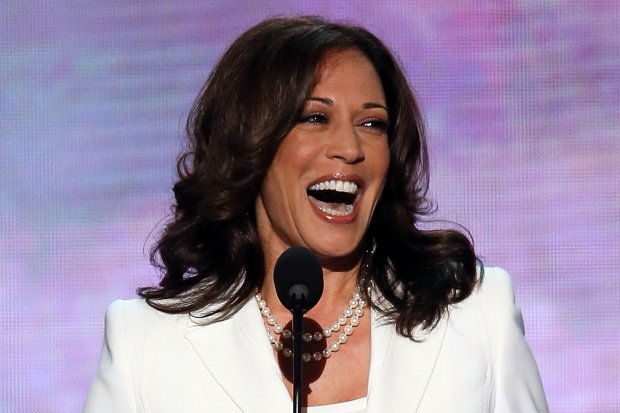
“You have to be careful to, first of all, say she is brilliant and she is dedicated and she is tough, and she is exactly what you’d want in anybody who is administering the law, and making sure that everybody is getting a fair shake. She also happens to be, by far, the best looking attorney general in the country.”

—- President Obama, introducing California’s attorney general (and a possible future gubernatorial candidate) Kamala Harris, at a party fundraiser in Atherton, a wealthy suburb of San Francisco

Hey, she IS hot! I'd love to see HER shake her pom-poms! What is it she does again?

Hey, she IS hot! I’d love to see HER shake her pom-poms! What is it she does again?

You see, all you nay-sayers, another reason why it is inappropriate and unethical for a prosecutor to prominently display herself in the role of unadulterated male eye candy is that it reinforces this kind of subtle (well, not so subtle, really), insidious marginalization of female professionals that occurs daily in offices and places of business all over America. I have taught this in sexual harassment seminars for decades: when a male boss, manager, or superior references a woman’s attractiveness, beauty, or allure in a public settling, it relegates her and all women in that organization to second-class status, and reinforces the glass ceiling. Women who are the target of this sexist, if often innocently intended, practice are usually lulled by the flattery into dismissing such incidents. That has to change. They must register their objections to the speaker for their own sake and that of generations of women to come. Continue reading

Ethics Hero: Lawyer/Blogger Scott Greenfield

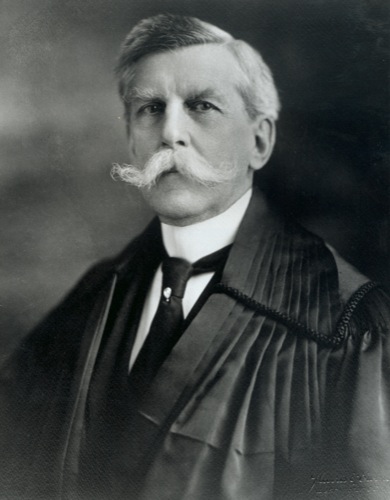
No question: Justice Holmes would think Scott Greenfield is a good man.

No question: Justice Holmes would think Scott Greenfield is a good man.

Criminal defense lawyer and caustic, if trenchant, blogger Scott Greenfield stakes out a noble and correct stand on legal ethics and ethics generally in a superb post titled, “What Tastes Good To You?” Read the entire post, but his essay springs from a question that has been posed in various forums (including,  in slightly different form,the Jack Lemmon comedy “How To Murder Your Wife”), to wit:

If you could commit any crime and get away with it, what would it be? 

Greenfield’s answer, the ethically correct one, is “none” : “Just because we can get away with it isn’t a reason to do wrong.” Thus does he definitively separate himself from what Justice Oliver Wendell Holmes referred to as “the Bad Man” in his famous 1897 essay, “The Path of the Law.”  For Holmes’ “bad man” never breaks a law, but only because he abhors punishment.From this starting point, Greenfield considers a professional debate about whether the legal marketing tactic (as determined by the courts) of buying up another firm’s name as a web “key word” to lead customers to one’s competing firm is “unseemly,” which is to say, unethical, though not technically unethical under the professional rules of conduct. One of the defenders of the practice describes the division on the issue to a difference in “taste,” leading Greenfield to aim carefully and fire: Continue reading

The Portman Reversal: Why He Did It DOES Matter

reversalI feel it necessary to return to the topic of  Senator Rob Portman’s reversal of his long-held and much-publicized opposition to same sex marriage and homosexuality in general in the wake of his son’s disclosure that he is gay.

Anyone who required further evidence that current events analysis, not to mention public consciousness, is almost untouched by an understanding of ethics, need look no further than the near universal pronouncements in the editorial pages and the Sunday talk shows that “it doesn’t matter” why  Portman suddenly decided that he was in favor of gay marriage once the issue affected someone he cared about.

It is not yet 11:00 AM in Virginia, and I have already read and heard this reaction so many times that the flashing red light on my head that signals an imminent explosion is flashing bright. It doesn’t matter? It doesn’t matter that Senator Portman firmly, strongly, extensively and consistently declared in public forums, to interviewers and in op-ed pieces that the sanctity of the institution of marriage as well as the moral fiber of the nation depended on withholding the right to marry from millions of law-abiding American citizens, but that the minute one such citizen, someone he actually gave a damn about, risked being adversely affected by his supposedly heart-felt and principled position, he changed his “principles” like he was changing his socks? That doesn’t matter? Continue reading

No Hero He: Sen. Portman Demonstrates How To Make Doing The Right Thing Look Terrible

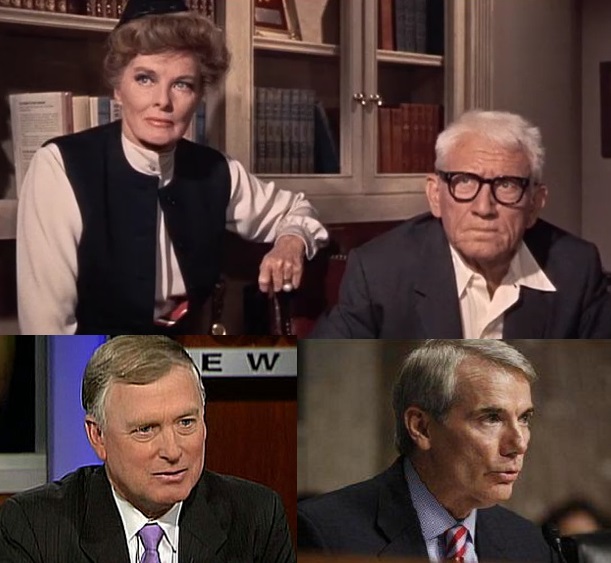
PortmanQuayleTracy

Guess Who’s A Hypocrite?

Sen. Rob Portman’s sudden reversal of his long-held and vocally expressed revulsion toward everything gay—including marriage—is being hailed by some as a virtuous, generous, open-minded and courageous act. It is nothing of the sort.

Portman’s change was precipitated by the fact that his own son….that is, a real person he  cares about…revealed that he was gay, requiring Portman to choose between following through, in ways that would, for the first time, have unpleasant personal consequences, on his supposedly deeply held, faith-based opposition to gay rights in America, or to abandon those core moral beliefs in the time it takes to throw out an ill-fitting pair of pants. What Portman has gone through is a classic “foxhole conversion,” in the manner of the atheist who suddenly finds God when death is near and it seems wise to hedge his bets.

There is nothing courageous or admirable about this at all. To the contrary, it proves that Portman’s earlier position condemning people like his son was based on political expediency, ignorance, recklessness, cold disregard for anyone not like him, or dishonesty, and I really don’t care which.

We have seen such conduct from the Right before, memorably in Dan Quayle’s admission that despite his absolute conviction, or so he had said, that abortion was morally wrong and ought to be illegal even in cases of rape or incest, he would, hypothetically, support his teen-aged daughter’s decision to have an abortion because he loved her. We have seen it from the Left, too, as in the situation memorably dramatized in the film “Guess Who’s Coming To Dinner?” Individuals who advocate political, economic, moral and policy positions that they would oppose in the jerk of a knee if they had real, personal consequences are undercover hypocrites. They have not applied the Golden Rule;  how they would feel if the were in the position of those whose lives they so cavalierly would affect has never entered their consciousness. What this flip-flop tells us about Sen. Rob Portman is that nobody should respect or take notice of what he thinks or says he thinks, and that having such a man casting one of a hundred votes in the U.S. Senate means that the body is, at best, only 99% responsible, competent or trustworthy. Continue reading

The Corrupting Culture of MSNBC: A Case Study

Get out while your ethics alarms still work, Rachel. They're already breaking down.

Get out while your ethics alarms still work, Rachel. They’re already breaking down.

I’m not interested in criticizing MSNBC for bias. It intends to be biased; serving as the far Left alternative to Fox News is its niche, and was a conscious business choice. What is interesting is observing MSNBC as a case study in how the pressures of a corrupt institutional culture eventually destroy the integrity and ethical judgment of essentially ethical people. From a point where it was merely left-leaning, MSNBC has gradually jettisoned any shred of objectivity, and most remnants of fairness. Much of the transformation was wrought by Keith Olbermann during his fiery tenure, but others have picked up the baton.

The most obviously corrupted have been Andrea Mitchell, Chris Matthews, and Rachel Maddow, all previously well-credentialed and with distinguished service as legitimate and respectable journalists. Under the spell of MSNBC, Matthews has devolved into an angry, race-baiting, smearing hack; the days of grilling Republicans and Democrats with equal fervor on “Hardball” have yielded to shrill, one-sided advocacy. Mitchell’s reporting has gradually abandoned any pretense of neutrality. The greatest tragedy here, however, is Maddow. She is young, smart, articulate and skilled. She doesn’t hide her progressive orientation, but once she appeared to be a rising star, a probing journalist with a point of view, but one committed to being professional and fair within that point of view.

Maddow has joined the MSNBC gun control push, but she has so much company there among the entire span of U.S. journalists that I can hardly blame her that on MSNBC. Misleading video editing has become a staple of her employers, however, as in the disgraceful Neil Heslin “heckling” story, and now Maddow appears to have embraced the technique when it suits her narrative. Last week, to add to the “gun control opponents are heartless and callous monsters” theme that is currently popular in the media, Maddow showed a video of Sen. John McCain at an Arizona town meeting, responding to a woman whose son was killed in the Aurora shooting asserting that assault weapons were responsible and ought to be banned. Maddow introduced the clip by saying,“this happened.” What was then seen and heard was McCain tersely answering the woman by saying she needed “straight talk,” and that the legislation she favored would never pass Congress. [See Maddow’s video here] Continue reading

The Washington Post Gives Up On Independent Ombudsmen: 1) Too Bad, Because It Needs One Desperately and 2) No Wonder, Since Its Last One Was A Bozo

Agreed: He's an improvement over the last ombudsman. But the Washington Post readers deserve better.

Agreed: He’s an improvement over the last ombudsman. But the Washington Post readers deserve better.

The Washington Post, which in 1970 became the first newspaper to employ a full-time “independent ombudsman” to explore reader complaints and exercise ethical oversight, has given up on the concept, pronouncing it a device “created decades ago for a different era.” You know–that era when people trusted the news media, and occasionally were given good cause to do so. Now the Post will rely on a “reader representative” named from the newspaper’s staff.

So much for “independence.”

Giving up on ombudsmen after having Patrick B. Pexton filling the role for the last two years is a little like giving up eating after Thanksgiving at my late Aunt Anna’s house. Her green, slimy, Wonder Bread turkey stuffing had to be tasted (but, oh God, never swallowed!) to be believed. Similarly, Pexton was an utter disgrace as an ombudsman, making excuses for unethical Post excursions into partisan hackery, and apparently completely unaware that his own biases mirrored those of his paper, which supposedly placed him in his job to offer perspective, not cover. And just as I seriously considered never again taking the risk of putting food in my mouth after that memorable holiday dinner in 1966, I can understand the Post thinking, as Pexton’s two year contract mercifully expired last week, thinking, “If we can’t do better than this clown, why have the position at all?” Continue reading

Picking Through The Wreckage of An Ethics Tesla Wreck

The wreck participants. Not pictured: the Tesla.

The wreck participants. Not pictured: the Tesla.

There was questionable ethical conduct galore in the recently-stilled ethics wreck sparked by a New York Times review of the new Tesla electric car, the Model S. Times reporter John Broder test drove the car from Washington, D.C., to Boston, using the  charging stations Tesla has opened along the way.  Broder’s Tesla ran out of juice, and the article concluded with a sad photo of the highly-anticipated Model S  on a tow truck. In short, it was not a positive review.

In response to the review, Tesla’s CEO Elon Musk called it a “fake” on Twitter, then wrote a rebuttal using the data logs of the vehicle Broder tested. Broder wrote a rebuttal to the rebuttal, and eventually the Times “public editor” (others would call her its ombudsman), Margaret Sullivan, was drawn into the battle, performing an investigation and concluding that…

“…I am convinced that [Broder]  took on the test drive in good faith, and told the story as he experienced it. Did he use good judgment along the way? Not especially. In particular, decisions he made at a crucial juncture – when he recharged the Model S in Norwich, Conn., a stop forced by the unexpected loss of charge overnight – were certainly instrumental in this saga’s high-drama ending. In addition, Mr. Broder left himself open to valid criticism by taking what seem to be casual and imprecise notes along the journey, unaware that his every move was being monitored. A little red notebook in the front seat is no match for digitally recorded driving logs, which Mr. Musk has used, in the most damaging (and sometimes quite misleading) ways possible, as he defended his vehicle’s reputation…People will go on contesting these points – and insisting that they know what they prove — and that’s understandable. In the matter of the Tesla Model S and its now infamous test drive, there is still plenty to argue about and few conclusions that are unassailable.”

Perhaps realizing that his vigorous defense of his car had triggered the Streisand Effect, Musk took to Twitter again, this time saying that the ombudsmadam’s article was “thoughtful” and that his faith in the Times was hereby restored. This put a nicely disingenuous spin on the whole episode.

Here is the final ethics tally: Continue reading

Being Clear on Pete Rose and the Hall of Fame

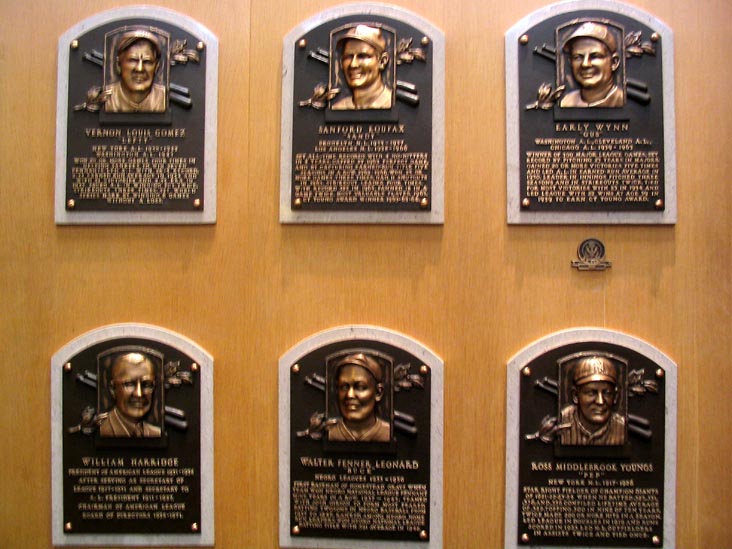
Hall OFLast week, I raised the greasy topic of Pete Rose, in fact defending Pete against the unethical efforts by Topps to avoid invoking his name on their cards, as if he were baseball’s Voldemort. Somehow, the comments morphed into debate about whether Pete deserves to be in the Hall of Fame, and I fear that my position regarding Pete’s qualifications was muddled in the various exchanges.

No, Pete doesn’t deserve to be in the Hall of Fame, for two very clear reasons. His conduct in betting on baseball games, including his own team’s games, while he was a Major League manager requires that he be banned from baseball for life under Rule 21 of Major League Baseball’s official rules, and the Major League Baseball Hall of Fame in Cooperstown has its own rule that makes any player so banned ineligible for enshrinement. Rose is prevented from admission to the Hall by those rules, which were in place when his conduct brought them into play. He doesn’t deserve to be in the Hall, because the rules say so. Pete Rose broke a cardinal rule that potential Hall candidates cannot break. The ethical reason he should not be in the Hall is accountability, or as Tony Baretta used to say on the old TV show, “Don’t do the crime, if you can’t do the time.”

Is there anything at all about Rose’s career record as a player that doesn’t qualify him for the Hall, indeed, over-qualify him? No. Unlike Barry Bonds or Mark McGwire, his statistics are beyond challenge or criticism. He didn’t cheat. He was a great and admirable player in every way.

Was there anything in his conduct as a player on the field, as a player off the field, or off the field as a retired player, that constituted such egregious misconduct that it would justify refusing his admission the Hall of Fame under its so-called character clause? [ “Voting shall be based upon the player’s record, playing ability, integrity, sportsmanship, character and contribution to the team(s) on which the player played.”]

Here is where I want to clarify my position. My answer to this is “No.” Continue reading