Incompetent Elected Official of the Month, Sandy Hook Ethics Train Wreck Division: Rep. Charles Rangel (D-NY)….Plus A Major News Media Ethics Foul

Now if she gave a statistic like this, it would be news.

Now if she gave a statistic like this, it would be news.

Rep. Charlie Rangel, I should mention at the outset, should have been sent home by his constituents after demonstrating beyond question that he had reached the point of entitlement and arrogance where he believes principles of ethics no longer apply to him. But the Democratic Party chose to nominate the venerable Harlem icon, and his loyal, if irresponsible, New York district re-elected him, as it has been doing approximately since the dawn of time. Don’t think for a moment that this doesn’t have relevance to Rangel’s recklessness in the case I’m going to discuss. Why should we expect Rangel to be responsible, accurate or prudent in his public statements if nobody will hold him accountable? It’s not as if ethics is going to be a priority for him for its own sake.

Discussing the demise of Diane Feinstein’s assault weapon ban in the U.S. Senate, Rangel blamed the National Rifle Association in a videotaped, semi-incoherent rant that included this:

“I’m ashamed to admit it but its politics and its money. The NRA has taken this position, there is no reason, there is no foundation. There is no hunter that needs automatic military weapons to enjoy the culture of going hunting. But you know it’s really basically the absence of the voices of good people. I cannot believe that politicians are afraid of the NRA. We’re talking about millions of kids dying — being shot down by assault weapons, were talking about handguns easier in the inner cities, to get these guns in the inner cities, than to get computers. This is not just a political issue, it’s a moral issue and so when we condemn the NRA we should not ignore the fact that a lot of people that have taken moral positions have been solid on this big one.”

That’s right: Rep. Rangel said that millions of kids are being shot down by assault weapons. That’s what he said, on camera. Now, the facts in this case are not only easily checked, they are also at variance with reality in the approximate proportion that 2013’s America is not like Oz. Continue reading

“Being White In Philly” And Mayor Nutter’s Unethical Attack

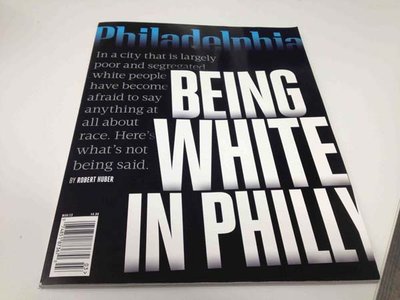
phillymagcoverPhiladelphia Magazine published an article this month titled “Being White in Philly.” Written by Robert Huber, who includes his personal reflections as well as interviews with white Philadelphians, the piece raises troubling and real problems in current U.S. race relations in an open and fearless way that does not usually characterize the media’s handling of the topic. The letters from readers, which you can also read at the link provided above, demonstrate that the article drilled directly into a nerve, and exposed feelings by white citizens, not just in Philadelphia but elsewhere in America, that need to be considered, analyzed, and dealt with whether or not one believes that they are justified or fair. Huber uncovered some of the most stubborn obstacles to a post-racial U.S., and they persist because we remain reluctant to discuss them

It’s an excellent piece of journalism that reminded me of my late roommate in law school, a young, Irish Catholic ex-Marine from the “rough” parts of Philly, who opened my eyes about racial attitudes like no one else I have ever known. He was intelligent, observant, and beyond any question, a racist, and openly admitted it. He also vividly describe the Philadelphia experiences that he felt justified his racism. I could see his handsome smile as I read Huber’s piece. The article itself, however, is not racist in any way.

Mayor Michael Nutter, however, either out of careless reading, racial identification, foolishness or willful blindness, decided to attack the article and the magazine for running it.  He wrote a furious letter of protest to Philadelphia Magazine, a letter which, as I will shortly demonstrate, crossed bright lines of ethical reasoning and appropriate conduct by a government official. Philadelphia Magazine’s editor, Tom McGrath responded perfectly:

“I applaud the mayor for asking for an inquiry into the state of racial issues in Philadelphia. The need to have a deeper discussion about race in Philadelphia is exactly why we ran our story in the first place. Like any reader, the mayor is entitled to think and say what he wants about the story. That said, his sophomoric statements about the magazine and mischaracterization of the piece make me wonder if he’s more interested in scoring political points than having a serious conversation about the issues. Furthermore, his call for a “rebuke” of the magazine by the PHRC is rich with irony. This is the same mayor who just yesterday was shouted down by an unruly mob in City Council; now he himself wants shut down conversation about an important issue in our city. In short, the mayor loves the First Amendment–as long as he and the government can control what gets said.”

Now let’s consider, piece by piece, Nutter’s letter to the magazine, and why it deserved McGrath’s criticism, and more. My comments will be in bold. Continue reading

The Misleading Photo And A Senator’s Trauma: Emotions Over Reason In Policymaking And Public Opinion

misleading photo

Here is Senator Diane Feinstein explaining her qualifications to lead the charge on Capital Hill to restrict firearms, after Sen Ted Cruz (R-Tx) implied that she was not sufficiently schooled in the Second Amendment: “I’m not a sixth grader. Senator, I’ve been on the committee for 20 years,” Feinstein said angrily. “I was a mayor for nine years. I walked in, I saw people shot, I’ve looked at bodies that have been shot with these weapons, I’ve seen the bullets that implode. And Sandy Hook youngsters were dismembered… I’m not a lawyer, but after 20 years, I’ve been up close and personal with the Constitution. I have great respect for it.” Her emotional statement echoed her similar response to a challenge during another assault weapon ban debate, twenty years ago, when she was a freshman and could not cite her legislative experience. Then she said,

“I am quite familiar with firearms. I became mayor as a product of assassination. I found my assassinated colleague [Harvey Milk] and put a finger through a bullet hole trying to get a pulse. Senator, I know something about what firearms can do.”

So now we know. Diane Feinstein has reason to know guns can kill people, and has been personally traumatized by them. That is supposed to qualify her as a cool, rational, balanced and fair legislator in deliberations over whether citizens who have never broken the law and don’t intend to can buy the weapons they want to. Continue reading

Ethics Note To Paul Krugman: The News Media Isn’t Your Toy

Not bankrupt, at least, not financially...

Not bankrupt, at least, not financially…

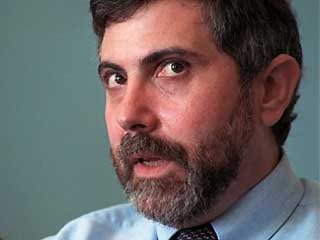
The crippling lack of respect and contempt our warring ideological factions have for those on the other side is never better illustrated that when one partisan believes a satirical negative story about an adversary stalwart that any unbiased observer whose brain wasn’t partially melted by hatred would have flagged as false in a heartbeat. Thus do our biases make us stupid. The phenomenon was the basis of some well-derived mockery  last month, when Washington Post blogger Suzy Parker fell for the silly published on the parody website The Daily Currant that Sarah Palin had joined Al-Jazeera, and used the obviously phony tale to hammer Palin for hypocrisy.  I suggested that a journalist this gullible and biased wasn’t qualified to practice her craft, as she was obviously incapable of overcoming her prejudices and personal dislikes so that she could distinguish truth from comforting fiction.

The Right mocked Parker and the Post hardest of all—suuure there’s no liberal bias in the media!—- especially the Bad Boy of rightward blogs, Breitbart. Then along comes another gag story from the same source, The Daily Currant, announcing that New York Times tax-and-spend advocate, progressive cheerleader and Pulitzer prize-winning economist Paul Krugman has declared for bankruptcy, and Brietbart, for exactly the same reasons Parker believed that Palin would go to work for the Arabs,  couldn’t figure out that it wasn’t  true. Breitbart published this: Continue reading

James O’Keefe Gets What He Deserves…Just Like ACORN

That will be $100,000, please,

That will be $100,000, please,

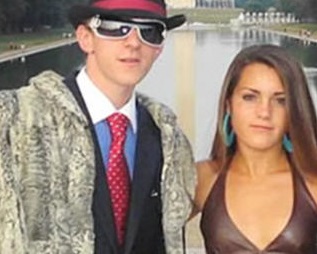
James O’Keefe is a darling of the right who has executed, with varying levels of success, deceptive, unethical and sometimes illegal vigilante ‘stings’ (using hidden cameras) to prove various conservative targets like NPR and Planned Parenthood are secretly as bad as the right thinks they are. Everything about this is wrong, of course, beginning with his methods, which would be unethical journalism if he were a journalist (rather than a partisan hit man), and ending with his targets, which, if O’Keefe had integrity, would include both right and left. That wouldn’t be good for business, though.

O’Keefe’s biggest hit was on ACORN, the progressive, many-armed community-organizing non-profit that was operating on considerable taxpayer largesse. In 2009, O’Keefe and a female colleague dressed as a young prostitute secretly videotaped themselves seeking help from several ACORN offices, including those in Brooklyn, Baltimore, Washington, D.C., San Diego ( actually National City), and San Bernardino. O’Keefe spun various versions of a tale about a cruel pimp importing underage girls to stock his inventory, and and O’Keefe’s  plan to house them in secret and safety, but the sham’s goal always was to gull ACORN employees into giving advice regarding how to hide  illegal activities and how to get financial assistance for the prostitutes.  In San Bernardino, an ACORN employee told O’Keefe and the woman that the girls could classify their underage brothel as a “group home” to avoid detection, or maybe they should open a massage parlor. The Brooklyn office gave advice to the “prostitute” about how to hide her money, including opening multiple bank accounts.  D.C.’s  ACORN staffer provided advice on how to file tax returns without revealing her true trade. The Baltimore ACORN employee opined, “Well then, you know what, you can always claim them as dependents” and suggested, “You are gonna use three of them; they are gonna be under 16, so you is eligible to get child tax credit and additional child tax credit.” When O’Keefe asked, as the helpful friend of the girls,”What if they are going to be making money because they are performing tricks too?”,  the ACORN employee replied, “But if they making money and they are underage, then you shouldn’t be letting anybody know anyway.”

In National City, near San Diego, however, O’Keefe’s luck ran out.  Continue reading

The Washington Post Gives Up On Independent Ombudsmen: 1) Too Bad, Because It Needs One Desperately and 2) No Wonder, Since Its Last One Was A Bozo

Agreed: He's an improvement over the last ombudsman. But the Washington Post readers deserve better.

Agreed: He’s an improvement over the last ombudsman. But the Washington Post readers deserve better.

The Washington Post, which in 1970 became the first newspaper to employ a full-time “independent ombudsman” to explore reader complaints and exercise ethical oversight, has given up on the concept, pronouncing it a device “created decades ago for a different era.” You know–that era when people trusted the news media, and occasionally were given good cause to do so. Now the Post will rely on a “reader representative” named from the newspaper’s staff.

So much for “independence.”

Giving up on ombudsmen after having Patrick B. Pexton filling the role for the last two years is a little like giving up eating after Thanksgiving at my late Aunt Anna’s house. Her green, slimy, Wonder Bread turkey stuffing had to be tasted (but, oh God, never swallowed!) to be believed. Similarly, Pexton was an utter disgrace as an ombudsman, making excuses for unethical Post excursions into partisan hackery, and apparently completely unaware that his own biases mirrored those of his paper, which supposedly placed him in his job to offer perspective, not cover. And just as I seriously considered never again taking the risk of putting food in my mouth after that memorable holiday dinner in 1966, I can understand the Post thinking, as Pexton’s two year contract mercifully expired last week, thinking, “If we can’t do better than this clown, why have the position at all?” Continue reading

Comment of the Day: “The ‘So What?’ Follies”

My brilliant friend, lawyer/writer/actor/singer/dancer Loarraine McGee, scores with a  Comment of the Day that it probably takes a Broadway musicals buff, Stephen Sondheim worshiper, Mandy Patinkin lover or “Glee” fan to fully appreciate, a lyrical comment to the melody of Sondheim’s “Buddy’s Blues” from the second act of his great, troubling 1971 musical “Follies.”  Here is the song (Bronson Pinchot is no Mandy, but he’s OK), and then Lorraine’s Comment of the Day, to the today’s post “The “So What?’ Follies,” follows.

“Did you sayFollies”????”

I’ve got those

“Gotta keep the numbers up-Find something!-I can make it Neeeews” Blues!

That

“Long as there are photos I can make it seem important” feeling!

That

“If you’re slightly famous all you do is enough,
As long as there’s a talking head involved it’s good stuff,”
And “Bring the camera closer, gotta make the public buy this!” feeeeeeling!

Those

“Everything is ad sales so I gotta make the nonsense neeeews!” blues!

The “So What?” Follies

So what?

So what?

Reluctant to report actual news, in many cases, that makes their favorite politicians and elected leaders look bad, or perhaps as they really are, our sad, inept and juvenile news media attempts to balance its lack of diligence by promoting other stories as brewing scandals that have no legitimacy whatsoever, and are similarly fueled by bias. Two particularly offensive examples: Continue reading

Jonah Lehrer Shows Us A Level One Apology: Remorse, Regret, Contrition. Sincerity? Who Knows…

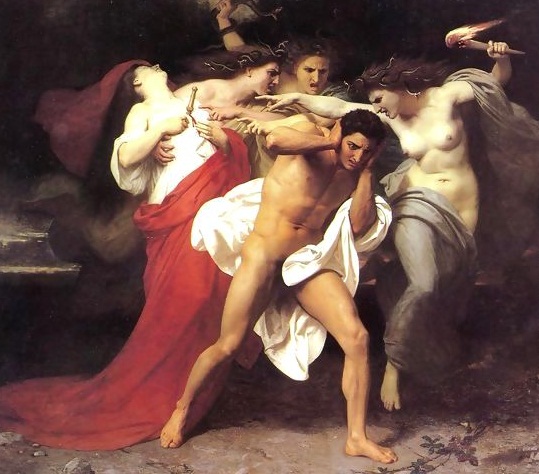
The-Remorse-Of-OrestesWhen we last looked in on writer Jonah Lehrer last summer, he had detonated his career and credibility with a series of incidents of serious professional misconduct that led to his ignominious firing from The New Yorker, where he once was regarded as a rising star. First he was caught plagiarizing himself, recycling a previously published work as an original  essay for the magazine. That led to an investigation showing that this was not the first time he had taken such an unethical short-cut. Finally, it was discovered that he had fabricated Bob Dylan quotes in his best-selling book about, ironically enough, creativity. When confronted about this, Lehrer lied. Soon he was out of a job and condemned to the limbo reserved for writers who deceive their readers: Jason Blair, Stephen Glass, James Frey, Janet Cooke, and others. It is not a pleasant or profitable place to be.

Lehrer was recently invited to speak to a gathering at the Knight Foundation, and chose the forum to deliver an apology for his conduct. It would be difficult, I think, to deliver a better one. On the Ethics Alarms Apology Scale, the most ethical apology, at the top of the scale, is this one:

1. An apology motivated by the realization that one’s past conduct was unjust, unfair, and wrong, constituting an unequivocal admission of wrongdoing as well as regret, remorse and contrition, as part of a sincere effort to make amends and seek forgiveness.

That is exactly what Lehrer delivered to the Knight Foundation, and through his blog, the rest of us. He said…

“..I am the author of a book on creativity that contained several fabricated Bob Dylan quotes. I committed plagiarism on my blog, taking, without credit or citation, an entire paragraph from the blog of Christian Jarrett. I also plagiarized from myself. I lied to a journalist named Michael Moynihan to cover up the Dylan fabrications.

“My mistakes have caused deep pain to those I care about. I am constantly remembering all those people I’ve hurt and let down – friends, family, colleagues. My wife, my parents, my editors. I think about all the readers I’ve disappointed, people who paid good money for my book and now don’t want it on their shelves.I have broken their trust. For that, I am profoundly sorry. It is my hope that, someday, my transgressions might be forgiven.

“I could stop here. But I am convinced that unless I talk openly about what I’ve learned so far – unless I hold myself accountable in public – then the lessons will not last. I will lose the only consolation of my failure, which is the promise that I will not fail like this again. That I might, one day, find a way to fail better.

“The lessons have arrived in phases. The first phase involved a literal reconstruction of my mistakes. I wanted to have an accounting, in my head, of how I fabricated those Dylan quotes. I wanted to understand the mechanics of every lapse, to relive all those errors that led to my disgrace. I wanted to understand so that I could explain it to people, so that I could explain it in a talk like this. So that I could say that I found the broken part and that part has a name. My arrogance. My desire for attention. My willingness to take shortcuts, provided I don’t think anyone else will notice. My carelessness, matched with an ability to excuse my carelessness away. My tendency to believe my own excuses.

“But then, once I came up with this list of flaws, and once I began to understand how these flaws led to each of my mistakes, I realized that all of my explanations changed nothing. They cannot undo what I’ve done, not even a little. A confession is not a solution. It does not restore trust. Not the trust of others and not the trust of myself. What’s more, I came to see that my explanations were distracting me from the more important reality I need to deal with.

“Because my flaws – these flaws that led to my failure – they are a basic part of me. They are as fundamental to my self as those other parts I’m not ashamed of. This is the phase that comes next, the phase I’m in now. It is the slow realization that all the apologies and regrets are just the beginning. That my harshest words will not fix me, that I cannot quickly become the person I need to be. It is finally understanding how hard it is to change.

“Character, Joan Didion wrote, is the willingness to accept responsibility for one’s own life. For too long, I did not accept responsibility. And by not accepting responsibility – by pretending that all of my errors were accidents, that my carelessness was not a choice – I kept myself from getting better. I postponed the reckoning that was needed.

“There is no secret to good decision-making. There is only the obvious truth: We either confront our mistakes and gain a little wisdom, or we don’t and remain a fool.”

You can read the whole speech here. Continue reading

Ethics Quiz: Which Reporter Would You Fire?

If this box of hammers can do their jobs as well as they can, should they really be journalists?

If this box of hammers can do their jobs as well as they can, should they really be journalists?

Stipulated:

  • The U.S. media establishment is in horrendous shape.
  • Its news coverage is untrustworthy, because so many of its members are untrustworthy.
  • The field of journalism is polluted with shallow, self-righteous, biased, narrow-minded hacks, and whatever genuine insight, ethics and talent the profession contains is usually overwhelmed by mediocrity.
  • Any hope of addressing the current grim state of the news media must begin with ejecting prominent reporters and journalists who have proven beyond a reasonable doubt the lack of temperament, standards, skills or values to practice responsible journalism.

With this as background, behold today’s Ethics Quiz, which is…

Which journalist, CBS News reporter Major Garrett, Washington Post reporter Suzi Parker, both, or neither, deserves to be asked to seek a career elsewhere? Continue reading