Arthur King of WGAN newsradio engaged me in a segment of his show “Inside Maine” this afternoon.
You can, if you are so inclined, hear it here.
Much thanks to Arthur for the chance to chat with him about these issues.
Arthur King of WGAN newsradio engaged me in a segment of his show “Inside Maine” this afternoon.
You can, if you are so inclined, hear it here.
Much thanks to Arthur for the chance to chat with him about these issues.

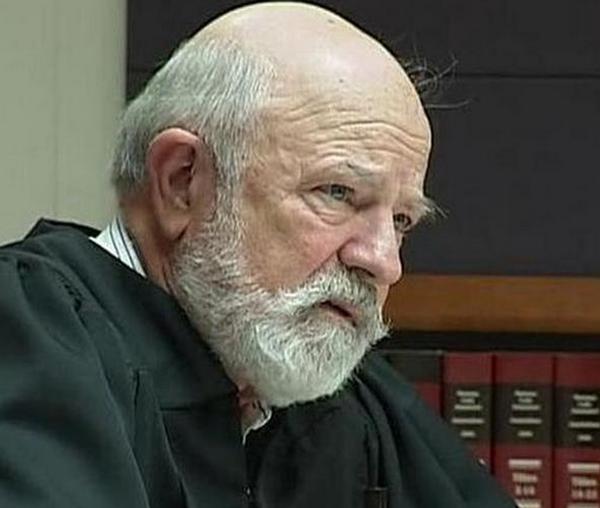
Judge Boyd, being judged. (The earlier photo posted was NOT Judge Boyd. I apologize to the judge, readers, and whoever’s photo that was, for the error)
The newsmedia and blogosphere are going bonkers over the sentence given to Ethan Couch, the 16-year-old Texan who pleaded guilty last week to four counts of intoxication manslaughter and two counts of intoxication assault causing serious bodily injury. He had a blood-alcohol level three times the legal limit (Couch had stolen beer from a Walmart), plus traces of Valium in his system, when he lost control of the Ford F-350 pick-up he was driving (over the speed limit) and slammed into four people trying to fix a disabled car on the shoulder. They were killed; two of his seven passengers were critically injured. Prosecutors proposed 20 years in jail as the proper punishment for Couch, but his attorneys tried a novel defense: they had experts testify that their client suffered from “affluenza,” a malady caused by his rich, amoral, neglectful parents, who taught him (the theory goes) that there are no consequences for anything, if one has enough money.
Rejecting the prosecution’s argument, State District Judge Jean Boyd, presiding over the Fort Worth Juvenile Court, shocked everyone by sentencing Couch to only 10 years of probation—no prison time at all. The gist of the media outrage: once again, the life philosophy of Couch’s sociopathic parents is validated. The rich get away with everything: a poor, minority defendant who engaged in the same conduct would have been imprisoned. This is the injustice of the criminal law system in America.
Maybe. But let’s not get ahead of ourselves.
I think the judge, despite what we are hearing from the media, may have done her job well.
The Georgia Court of Appeals has ordered new trials for five men convicted of serious crimes in Fayette County because their trial judge was having an undisclosed affair with defendants’ public defender.
Doesn’t that seem strange to you? After all, the clients of the judge’s secret love were convicted and sentenced. Why should they get the benefit of new trials when the judge’s evident conflict and judicial misconduct didn’t benefit them or harm them in any way (unless a judge making sure his lover’s clients get prison time is a quirky way to say “I love you” in the Peach Tree State). This isn’t like the horrendous Charles Dean Hood case in Texas, where a man was sentenced to death after a trial in which the state prosecutor was sleeping with the judge.
The Georgia judge-lawyer affair (and I thought Steven Bochco was making it all up!) came to light in 2010. Paschal English, who subsequently resigned as chief Superior Court judge, had been involved in a romantic relationship with assistant public defender Kimberly Cornwell, who has also moved on to new pursuits, ideally those that don’t require trust or ethics. A three judge panel recently agreed that this relationship, undisclosed and a clear cut ethical violation for both judge and attorney, required that there be new trials for Christopher Wakefield and Travion Willis on charges of armed robbery, kidnapping, aggravated assault and other crimes; William Nutt for aggravated child molestation and aggravated sexual battery; Rashad Arnold for burglary; and Calvin Boynton for armed robbery, aggravated assault, possession of a sawed-off shotgun and drug possession.
Hmmmm… Continue reading
On the CBS Tom Selleck drama “Blue Bloods,” fictional New York police commissioner Ryan (Selleck) must deal with a court-mandated monitor to prevent police abuse of the city’s stop-and-frisk tactics. The show might as well just sketch out its season following parallel developments in the real stop-and-frisk drama in the city, which has already taken some strange twists and turns and is bound to take others. It is now officially an Ethics Train Wreck, involving questionable ethical conduct by police, the city government, a former mayor, Fox News, a judge, college students, and an Ivy League college: Continue reading
Texas Judge Elizabeth E. Coker will be resigning from her post as judge in the 258th District Court of Polk, Trinity, and San Jacinto Counties as part of a deal that allows her to resign rather than face disciplinary action. The ethical transgressions she apparently engaged in were many, shocking and outrageous. Investigators found that she regularly engaged in ex parte communications with members of the Polk County District Attorney’s Office, the San Jacinto County District Attorney, and defense attorneys regarding cases pending in her court, favored certain attorneys and was prejudicial toward others in both trials and court appointments, and even met with jurors, without the knowledge of counsel, while they were deliberating in criminal trials, in order to influence their verdict. Even as she was being investigated for judicial misconduct, Coker attempted to influence a material witness against her prior to that witness’ testimony before the Disciplinary Commission, and lied about it when she was questioned about her contact with that witness.
Yet as awful as all that is, these are not the most spectacular of her ethical breaches. Continue reading
Senators should not intentionally set out to make the American public stupid, or to validate invalid ethical constructs. Thus this explanation of his current proposal from Sen. Rand Paul needs to be derided, and should also cause concern for anyone who thinks it’s important for the Republican party to find some leaders who are trustworthy. Paul, in the course of pushing his stillborn, grandstanding plan to use a constitutional amendment to require government bigwigs to live with the same health care laws they impose on the rest of us, said this to The Daily Caller:
See, the fact that U.S. Supreme Court Chief Justice John Roberts refused to declare the Affordable Care Act unconstitutional using a highly-controversial legal distinction in no way suggests that he personally “likes” it, and anyone who thinks that is what judicial opinions, especially Supreme Court Opinions, mean is shockingly ignorant of the judicial system, the legal system, the law, the role of judges in society, the Constitution, and by extension, pretty much most of the principles that give government, management and leadership any integrity or competence. The fact that such an anyone has risen to the level of U.S. Senator goes beyond shocking to terrifying. Continue reading
Prediction: Those who don’t comprehend the George Zimmerman verdict will never understand this one. Yet it is absolutely right and necessary in every way.
Summary: The Montana Supreme Court blocked an incompetent judge from changing an offensive and inexcusably inadequate sentence for a serious crime, because he was trying to do so as the result of public criticism.
Background: Judge G. Todd Baugh, an elected district judge in Montana’s Yellowstone County, sentenced former high school teacher Stacey Dean Rambold to 15 years in prison with all but 31 days suspended—that’s one lousy month, friends— for having sexual intercourse without consent, also known as rape, with a 14-year-old female student (the teacher was 49 at the time) who later committed suicide while the case was pending. The judge, who appears to be an idiot (he later said that he can’t imagine what came over him) explained his decision at the time by saying that the underaged victim of the statutory rape was “older than her chronological age” and had “as much control of the situation” as the teacher.
Beginning with the late student’s mother, who reacted to the absurd sentence by screaming “You suck!” at the judge (Excellent diagnosis, by the way) and storming out of the courtroom, the ridiculous verdict caused an overwhelming backlash of negative public sentiment that spread nationwide. There was so much wrong with the sentence and the way it was arrived at that the mind, and conscience, boggles: Continue reading
—–Law professors Charles Geyh and Stephen Gillers, arguing in Politico for the U.S. Supreme Court to adopt a Code of Ethics.
The U.S. Supreme Court, it might surprise you to know, is the only court in the U.S. without a formal Code of Ethics that its judges are required to follow. The idea appears to be that if one has risen to the tippity-top of the judicial tree, one’s ethics must be impeccable as matter of course.
Right.
On Politico, Charles Geyh and Stephen Gillers make a convincing argument that SCOTUS should not only hold itself to high ethical standards, but also make it clear to all what those standards are.
You can read the entire post here.
________________________
Pointer: Legal Ethics Forum
Once again the issue at hand is judicial restraint, as another unfortunate individual incurred judge’s anger with inappropriate courtroom conduct and paid a heavy price. The question is, was it too heavy?
The object of robed wrath this time was the former NFL star Chad Johnson, better known as Chad Ochocinco, in court for violating his parole arising from a domestic abuse conviction (he head-butted his wife—nice), which also ended his NFL career. His lawyers had worked out a plea deal giving Johnson community service and requiring him to attend counseling sessions, and the judge had approved it. But then Broward County Circuit Judge Kathleen McHugh asked the athlete if he was satisfied with his lawyer’s performance, and in response, Ochocinco slapped his lawyer on the butt. The entire courtroom laughed.
Judges don’t usually like to hear laughter in their courtrooms, unless they’re telling the jokes.
Judge McHugh proved to be no exception. “‘I don’t know that you’re taking this whole thing seriously,” she said. “I just saw you slap your attorney on the backside. Is there something funny about this? ‘The whole courtroom was laughing. I’m not going to accept these plea negotiations. This isn’t a joke.’’ Johnson tried to pacify her, but it didn’t work. She ordered him jailed, and the deal cancelled.
Thus, your Ethics Alarms Ethics Quiz is:
I think so. This was the worst possible combination for Johnson: domestic abuse conviction, a female judge, physical contact, though obviously playful, and laughter from spectators. Remove any of those factors, and I think the ex-player gets his deal. The judge over-reacted.
I’m betting she lets him cool in the cooler while she cools off herself, and reinstates the deal.
Or do you think levity when domestic violence is involved is especially obnoxious, and deserves what Chad O got?
__________________________________
Facts: The Inquisitor
Graphic: Adriatique

“You almost had me, Miss. Your plan was clever—you knew your boyfriend would answer that text message you sent, and timed your call so he would be driving on Dead Man’s Curve. It was almost a perfect crime!”
Last year, a Superior Court judge in Morristown, New Jersey ruled that Shannon Colonna should not and could not be made to pay damages to David and Linda Kubert, who both lost a leg after her boyfriend, Kyle Best, driving his car, read Colonna’s text message and crashed into the motorcycle the Kuberts were riding.
The Kuberts are appealing the ruling, with their attorney, Stephen “Skippy” Weinstein, arguing before a three-judge panel that texters should have “a duty of care” imposed on them, making them potentially liable when they send a message knowing that the intended recipient is driving, as Best was. It’s a novel theory and a genuinely terrible one, an insidious concept that would allow plaintiffs to drag completely innocent parties into crushing personal injury litigation, and that over time would be certain to ooze into other areas. Good for lawyer Weinstein, though; he’s doing his job, which is zealous representation. The future mischief such a duty would wreak isn’t his concern, only getting the best result for his clients is. Continue reading