The Amazing Saga Of Big Papi And Maverick Schutte: This One Has Everything, Folks: Baseball! The Bambino! Courage! Kindness! Compassion! Heroics! Moral Luck! Hubris! Consequentialism! And Dammit, I’m Crying Again

Let’s see if I can through this to the Ethics Quiz portion without shorting out my laptop.

Maverick Schutte, a 6-year-old from Cheyenne, Wyoming, has required over 30 surgeries, including five open chest procedures,  to treat a heart condition.He still must be hooked up to a ventilator most of each day to allow oxygen to reach his lungs, and more surgery will be needed, as he is in constant danger of heart failure.

The child’s greatest joy is baseball, and he has adopted his father’s team, the Boston Red Sox, as his passion. The Children’s Miracle Network put the family in touch with former Red Sox player Kevin Millar, now an MLB host and broadcaster, and Millar contacted Red Sox slugger David Ortiz, Maverick’s favorite, after the family explained that Maverick was in the hospital again and needed a morale boost. With Millar, Ortiz made a video for Maverick, ending with Ortiz promising to hit a home run that night, just for him. I didn’t believe it when I heard the story, but it was true. “Stay positive, keep the faith, and I’m going to hit a home run for you (Friday night),” Ortiz says in the video. “Remember that.”

Your Ethics Alarms Ethics Quiz for today before, as Paul Harvey would say, you learn “the rest of the story”…

Was it ethical for Ortiz to make such a promise to Maverick?

Continue reading

Ethic Quiz: The Jean Valjean Rule

There are no good pictures of Jean stealing a loaf of bread, but here's Yogi Bear stealing a picnic basket...

There are no good pictures of Jean stealing a loaf of bread, but here’s Yogi Bear stealing a picnic basket…

News from Italy, via the BBC:

Judges overturned a theft conviction against Roman Ostriakov after he stole cheese and sausages worth €4.07 (£3; $4.50) from a supermarket.Mr Ostriakov, a homeless man of Ukrainian background, had taken the food “in the face of the immediate and essential need for nourishment”, the court of cassation decided.

Therefore it was not a crime, it said.

A fellow customer informed the store’s security in 2011, when Mr Ostriakov attempted to leave a Genoa supermarket with two pieces of cheese and a packet of sausages in his pocket but paid only for breadsticks.

In 2015, Mr Ostriakov was convicted of theft and sentenced to six months in jail and a €100 fine.

For the judges, the “right to survival prevails over property”, said an op-ed in La Stampa newspaper (in Italian).

In times of economic hardship, the court of cassation’s judgement “reminds everyone that in a civilised country not even the worst of men should starve”.

An opinion piece in Corriere Della Sera says statistics suggest 615 people are added to the ranks of the poor in Italy every day – it was “unthinkable that the law should not take note of reality”.

It criticised the fact that a case concerning the taking of goods worth under €5 went through three rounds in the courts before being thrown out.

The “historic” ruling is “right and pertinent”, said Italiaglobale.it – and derives from a concept that “informed the Western world for centuries – it is called humanity”.

Your Ethics Alarms Ethics Quiz for today, involving  the eternal confusion between law and ethics::

Never mind legal: was this an ethical ruling?

Continue reading

Ethics Dunce: Guardian Journalist Mona Chalabi

But Mona, doesn't you correcting people who correct people's grammar and calling them purveyors of white privilege make you an ANTI-grammar snob?

But Mona, doesn’t you correcting people who correct people’s grammar and calling them purveyors of white privilege make you an ANTI-grammar snob?

This won’t take long. It’s like shooting fish in a barrel.

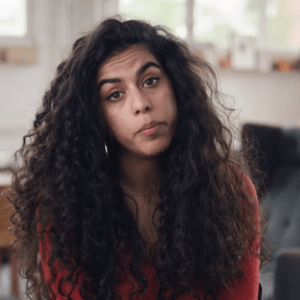
Mona Chalabi, a  journalist for the British tabloid “The Guardian,” has asserted that correcting someone’s grammar (and presumably word use, sentence structure and other aspects of effective communication) is racist.

“Grammar snobs are patronizing, pretentious, and just plain wrong, ” she says. “It doesn’t take much to see the power imbalance when it comes to grammar snobbery. The people pointing out he mistakes are more likely to be older, wealthier, whiter, or just plain academic than the people they’re treating with condescension. All too often, it’s a way to silence people, and that’s particularly offensive when it’s someone who might already be struggling to speak up.”

Of course, correcting anyone to humiliate them, embarrass them, or make them hesitant to speak is cruel and wrong, as would be slapping them in the face and shouting, “Shut up, fool!”  Neither of these, or other examples of bad manners and disrespectful treatment, is the conduct that Chalabi is condemning as a demonstration of white privilege, however. (Glenn Reynolds, the Instapundit, frequently quips, “White privilege—is there anything it can’t do?”) No, she is saying that the simple act of one human being pointing out to another that they have made a verbal mistake that may embarrass the speaker in the future makes the person offering the correction a “grammar snob,” and is unethical.

To the contrary, correcting anyone’s mistakes in speaking, when done with discretion and proper attention to the speaker’s feelings, is a gift, an act of social kindness and even a social obligation. Expressing oneself in a manner that causes others to conclude, possibly correctly, that you do not know correct meanings, grammar, construction and etiquette is a serious life handicap and an obstacle to success. A listener may conclude that you are badly educated, do not read, do not listen to those who speak to you correctly sufficiently to learn from them, are ignorant, are not very bright, or worse, know how to communicate but don’t have enough respect for the rest of the world to make an effort to do so. Unlike concluding such unflattering things about a stranger or casual acquaintance based on an accent or verbal regionalism, making judgments based on poor communication skills is not prejudice or bias. Communication is a vital life skill and occupational tool. Every individual has an obligation to master these as early as possible, certainly by young adulthood. Believing one has done this and being wrong is a dangerous and potentially tragic situation. Continue reading

Ethics Hero: James Fridman

Fridman 1

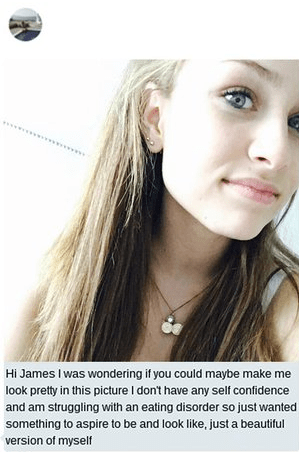
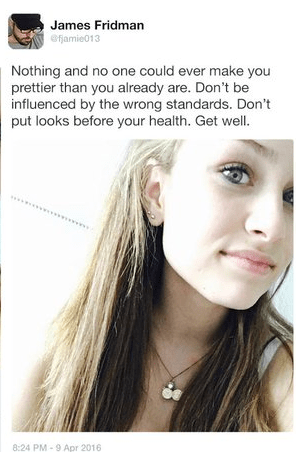
James Fridman, a Twitter artist who specializes in satirical Photoshopping was asked by a young woman in the tweet above to “make her look pretty,” supplying a selfie for the “before” shot.

Here is what Fridman tweeted back:

Fridman 2

Nice.

_______________________________

Pointer: The Blaze

Ethics Hero: Minu Pauline And Her Curbside Fridge

free food

Ethical people will come up with the damnedest ways to do good things.

After watching the poor and homeless rummage through the dumpster outside of the restaurant she owns in Kochi, India, Minu Pauline thought about how she could facilitate access to the perfectly edible food that her establishment had to dispose of on a regular basis. So when she opened a second restaurant, it included a fully functional refrigerator on the sdiewalk out front.  She stocks it with leftover food from her restaurant, and invites others to do likewise.  Now her customers and residents of the community leave their leftovers and excess food, marked with the date, in the curbside fridge too.The homeless and the poor can take whatever they need 24 hours a day, seven days a week, without having to beg.

Pauline calls the refrigerator  nanma maram, which means “tree of goodness” or “virtue tree.” The name is particularly apt, for she is providing dignity and kindness, as well as charity.

________________________

Pointer: Fred

Ethics Dunces: Salon And Old Donald Trump Date Lucy Klebanow

Stop picking on this guy. He vanished long ago.

Stop picking on this guy. He vanished long ago.

I’m not even going to quote from the lower-than-low-blow kiss-and-tell article by Lucy Klebanow in in Salon titled “My awful date with Donald Trump: The real story of a nightmare evening with a callow but cash-less heir.” I couldn’t finish reading it, so quickly was it apparently that I, like you, didn’t need to start, so self-evidently unethical and inexcusable was its motive and topic.  There is nothing newsworthy within it, and while its unjustifiable incursion into the area of privacy that every human being, even celebrities, have a right to enjoy isn’t quite at the Hulk Hogan sex tape level, it is no less wrong.

This same, mean-spirited, essay could be written about me, or you, and definitely about Lucy Klebanow, by anyone who happened to have a one-time social encounter with us that didn’t show us at our best. What has Donald Trump done to exempt him from the basic human courtesy of keeping the details of such inevitable social disasters on the way to maturity and wisdom between the two participants? Nothing. Nothing, because nothing, not even Trump’s own indiscretions about others, can do this. The Golden Rule applies here like epoxy: we don’t do this disgusting thing, because nobody wants their own repulsed bad dates to do it to them. It’s a terrible thing to do. To anyone. Period. No exceptions. Continue reading

Encore! Presidents Day Ethics: The Presidents of the United States on Ethics and Leadership

It’s President’s Day, and I see that it has been five years since the most popular Ethics Alarms President’s Day post was published. That one, from 2011, reminds us of the ethics wisdom and leadership acumen of the remarkable men who have served their country in the most challenging, difficult, and ethically complicated of all jobs, the U.S. Presidency.

In the middle of a campaign season littered with some disturbingly unethical candidates, it seems especially appropriate to re-post that entry now….with some updates. In 2011, I left out three Presidents, including the current one. Now all are represented, most of them well.

So…

Ladies and Gentlemen, the Presidents of the United States of America:


George Washington: “I hope I shall possess firmness and virtue enough to maintain what I consider the most enviable of all titles, the character of an honest man.”

John Adams: “Because power corrupts, society’s demands for moral authority and character increase as the importance of the position increases.” 

Thomas Jefferson: “On great occasions every good officer must be ready to risk himself in going beyond the strict line of law, when the public preservation requires it; his motives will be a justification…”

James Madison: “No government any more than any individual will long be respected without being truly respectable.”

James Monroe: “The best form of government is that which is most likely to prevent the greatest sum of evil.”

John Quincy Adams: “Always vote for principle, though you may vote alone, and you may cherish the sweetest reflection that your vote is never lost.”

Andrew Jackson: “One man with courage makes a majority.”   (Attributed)

Martin Van Buren: “No evil can result from its inhibition more pernicious than its toleration.”

William Henry Harrison: “There is nothing more corrupting, nothing more destructive of the noblest and finest feelings of our nature, than the exercise of unlimited power.” Continue reading

Ethics Quiz: The “420” Tattoo And GoFundMe Ethics

Tattoo 420

Tabitha West, of Fulton, New York, created a GoFundMe campaign to raise money for a worthy cause: paying for her to get a giant woman  “420” tattoo removed from her forehead. “420” apparently means “I’m a pot head.” Some madman tied her down and defaced her. Wait, no scratch that. She paid to have someone but the big, ugly, stupid tattoo there. Now she finds that having a tattoo on her face that proclaims her love of illegal drug use is an impediment to employment. Huh. Boy, knock me over with a feather: who could have foreseen that?

So, broke and desperate, Tabitha—did I mention that she is an imbecile? Did I need to?—is begging for kind and generous people to undo what she did.

Her message on the GoFundMe page, seeking a goal of  $800, reads:

“I am wanti,g $ to get that tattoo off my for head I want to have a better start out in life and have a second chance at life please help me I was young n dumb when I got that I’m older one looking for a job can’t get out and people call me a druggie every day of my life and being called 420 is not nice and I almost killed my self over it. … can’t stand to look at my face anymore. .save a life save me..invest in me and I will show you I can be better with my life. ..thank you.”

We can all see from that eloquent appeal that Tabitha is a dummy no longer, and thus a superb investment.

Surprisngly, some critics demur. Shawn Morse, for example, wrote in response to the appeal:

“It’s people like you that keep my (sick) girl from getting help. My daughter has three brain tumors, cerebral palsy, neurofibromatosis, an optic glioma, & a feeding tube. My daughter’s GoFundMe keeps getting passed over for things like this. There are too many people begging for money for their bad decisions in their life.”

Your Ethics Alarms Ethics Quiz of the day is…

Is it unethical for Tabitha to seek help on GoFundMe, and for donors to give her money?

Continue reading

Ethics Musings While Sitting In Line At The Gas Station

My future, if I don't figure this out...

My future, if I don’t figure this out…

In the middle of a 20 minute errand that became a 90 minute ordeal today, I found myself sitting in an unexpected long line at the gas station I usually patronize.  Maybe it was because people wanted to top off tanks before the blizzard hits tomorrow, but I was really almost out of gas, and the second I moved into the “tank on the right” line, I was socked in. Finally I had only  one car ahead of me, and an absurdly long line of automobiles behind.

The lady in the car ahead, however, was unbelievable. She wasn’t elderly, but she was obese, had something wrong with one leg, and apparently had never filled a gas tank before in her life. She dithered, she paused, she disappeared and returned. She punched in so many characters at the pump that her Debit card password must have been a chapter of “Martin Chuzzlewit.”

Finally she replaced the pump, after pausing and contemplating it like it was Yorick’s skull, walked around to the driver-side door, then decided to walk back—S-L-O-W-L-Y— and make sure she had replaced the gas tank cap, then again s-l-o-w-l-y  limped and waddled back to the door. She opened the it, stared, then decided to unzip her coat, started to take it off, changed her mind, paused again. The line of cars behind me now reached to Falls Church.

I was just a smidgen of impulse control away from getting out of my car, which was turned off, and walking up to her, whereupon I would have said, not especially nicely: Continue reading

The Seventh Annual Ethics Alarms Awards: The Best of Ethics 2015, Part II

DavisHand

The Awards continue (Part I is here)….

Most Important Ethical Act of the Year:

The US Supreme Court’s Decision in  Obergefell v. Hodges in which the Supreme Court considered whether states had to recognize a right to same-sex marriages, and narrowly decided that they must. The prejudice against homosexuality is ancient, deep, and complex, mixed up in confounding ways with morality and religion, and deeply divisive. Nonetheless, I felt that the opinion should have been unanimous; it’s a shame that it was not, but in the end, this will not matter. The result was preordained from the moment gays began coming out of the shadows and asserting their humanity and human rights. Since the Stonewall riot, the nation and the culture has learned a great deal about the number of talented and productive gay men and women in our society and our history, the pain, ostracizing, discrimination and mistreatment they have suffered, and the falseness of the myths and fears that lead to this suffering.  In the end, as Clarence Darrow said about blacks, it is human beings, not law, that will make gays equal. No topic immediately causes such emotional and intense debate, on this blog or in society, as this one, but the Supreme Court’s decision is a major step toward changing the ethical culture, by asserting  that gay men and women have the same rights,  in the eyes of the state, to marry those they love and want to build a life with, and by implication, that the beliefs of any religion regarding them or their marriages cannot eliminate that right.

Outstanding Ethical Leadership

Senator Rand Paul.   I am neither a Rand Paul supporter, nor an admirer, nor a fan.  However, his June filibuster-like Senate speech against National Security Agency counter-terrorism surveillance was a brave, principled,  important act, and a great public service. The point Paul made needs to be made again, and again, and again:  there is no reason to trust the NSA, and no reason to trust the current federal government either. The fact that on security matters we have no real choice is frightening and disheartening, but nevertheless, no American should be comfortable with his or her private communications, activities and other personal matters being tracked by the NSA, which has proven itself incompetent, dishonest, an untrustworthy.


Parent of the Year

Tonya Graham

Toya Graham, the Baltimore mother caught on video as she berated and beat on her son in the street for participating in the Freddie Gray rioting and looting. Continue reading