The Seventh Annual Ethics Alarms Awards: The Best of Ethics 2015, Part I

Sweet Briar montage

Welcome to the Seventh Annual Ethics Alarms Awards, our blog’s retrospective of the best and worst in ethics over the past year, 2015.

It was a rotten year in ethics again, it’s fair to say, and Ethics Alarms, which by its nature and mission must concentrate on episodes that have lessons to convey and cautionary tales to consider probably made it seem even more rotten that it was. Even with that admission, I didn’t come close to covering the field. My scouts, who I will honor anon, sent me many more wonderfully disturbing news stories than I could post on, and there were many more beyond them. I did not write about the drug company CEO, for example, who suddenly raised the price of an anti-AIDS drug to obscene levels, in part, it seems, to keep an investment fraud scheme afloat. (He’ll get his prize anyway.)

What was really best about 2o15 on Ethics Alarms was the commentary. I always envisioned the site as a cyber-symposium where interested, articulate and analytical readers could discuss current events and issues in an ethics context. Every year since the blog was launched has brought us closer to that goal. Commenters come and go, unfortunately (I take it personally when they go, which is silly), but the quality of commentary continues to be outstanding. It is also gratifying to check posts from 2010 and see such stalwarts who check in still, like Tim Levier, Neil Dorr, Julian Hung, Michael R, and King Kool.  There are a few blogs that have as consistently substantive, passionate and informative commenters as Ethics Alarms, but not many. Very frequently the comments materially enhance and expand on the original post. That was my hope and objective. Thank you.

The Best of Ethics 2015 is going to be a bit more self-congratulatory this year, beginning with the very first category. Among other virtues, this approach has the advantage of closing the gap in volume between the Best and the Worst, which last year was depressing. I’m also going to post the awards in more installments, to help me get them out faster. With that said….

Here are the 2015 Ethics Alarms Awards

For the Best in Ethics:

Most Encouraging Sign That Enough People Pay Attention For Ethics Alarms To Occasionally Have Some Impact…

The Sweet Briar College Rescue. In March, I read the shocking story of how Sweet Briar College, a remarkable and storied all-women’s college in Virginia, had been closed by a craven and duplicitous board that never informed alums or students that such action was imminent. I responded with a tough post titled “The Sweet Briar Betrayal,” and some passionate alumnae determined to fight for the school’s survival used it to inform others about the issues involved and to build support. Through the ensuing months before the school’s ultimate reversal of the closing and the triumph of its supporters, I was honored to exchange many e-mails with Sweet Briar grads, and gratified by their insistence that Ethics Alarms played a significant role in turning the tide. You can follow the saga in my posts, here.

Ethics Heroes Of The Year

Dog Train

Eugene and Corky Bostick, Dog Train Proprietors. OK, maybe this is just my favorite Ethics Hero story of the year, about two retired seniors who decided to adopt old  dogs abandoned on their property to die, and came up with the wacky idea of giving them regular rides on a ‘dog train” of their own design.

Ethical Mayor Of The Year

Thomas F. Williams. When the Ferguson-driven attacks on police as racist killers was at its peak (though it’s not far from that peak now) the mayor of Norwood, Ohio, Thomas F. Williams, did exactly the opposite of New York Mayor Bill de Blasio in response to activist attacks on the integrity of his police department. He released a letter supporting his police department without qualification. At the time, I criticized him for his simultaneously attacking activists as “race-baiters.” In the perspective of the year past, I hereby withdraw that criticism.

Most Ethical Celebrity

Actor Tom Selleck. In a terrible year for this category, Selleck wins for bravely pushing his TV show “Blue Bloods” into politically incorrect territory, examining issues like racial profiling and police shootings with surprising even-handedness. The show also has maintained its openly Catholic, pro-religion perspective. Yes, this is a redundant award, as “Blue Bloods” is also a winner, but the alternative in this horrific year when an unethical celebrity is threatening to be a major party’s nominee for the presidency is not to give the award at all.

Most Ethical Talk Show Host

Stephen Colbert, who, while maintaining most of his progressive bias from his previous Comedy Central show as the successor to David Letterman, set a high standard of fairness and civility, notably when he admonished his knee-jerk liberal audience for booing  Senator Ted Cruz

Sportsman of the Year

CC Sabathia

New York Yankee pitcher C.C. Sabathia, who courageously checked himself into rehab for alcohol abuse just as baseball’s play-offs were beginning, saying in part,

“Being an adult means being accountable. Being a baseball player means that others look up to you. I want my kids — and others who may have become fans of mine over the years — to know that I am not too big of a man to ask for help. I want to hold my head up high, have a full heart and be the type of person again that I can be proud of. And that’s exactly what I am going to do.”

Runner-up: MLB Commissioner Rob Manfred, who dismissed the ethically-addled arguments of Pete Rose fans to reject his appeal to be have his lifetime ban for gambling lifted.  For those who wonder why football never seems to figure in this category: You’ve got to be kidding.

Ethics Movie of the Year

SpotlightTIFF2015

“Spotlight”

Runner-up: “Concussion”

Most Ethical Corporation

Tesla Motors, the anti-GM, which recalled all of its models with a particular seatbelt because one belt had failed and they couldn’t determine why. Continue reading

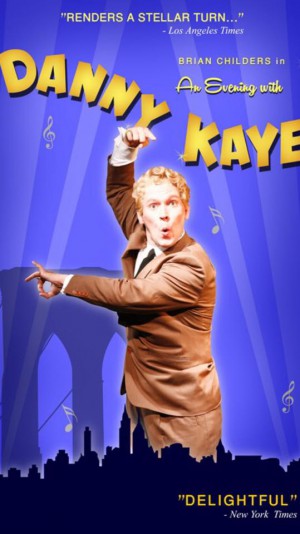
An Act Of Kindness, Danny Kaye And Me : An Ethics Case Study

Brian Childers

This isn’t a Christmas tale exactly, but it is a deeply personal one that will always make a big difference in how I make decisions in my life. It is episode that taught me, once and for all, that when you do the right thing, the amount of good that can come from it is unpredictable and sometimes unimaginable.

Maybe it will inspire you too.

In 2001, my friend Bob McElwaine handed me a script and a CD of a musical he had been working on about his long-time friends and clients, entertainer Danny Kaye and his wife, song writer Sylvia Fine. Bob was in his 70s, retired, a former Hollywood publicist and later an association executive who had taken up writing musicals with his childhood buddy, legendary movie score bassist Bob Bain (that’s Bain you hear playing the famous bass instrumental on the “Bonanza” theme, and the melody line in “The Munsters” intro too.)

McElwaine knew I was a long-time Danny Kaye admirer. He had been a wealth of information for me about Kaye when I was directing “Lady in the Dark,” the Broadway show that had made Danny a star in 1941, for the American Century Theater years before. One day, Bob asked me, as a favor, if I would agree to workshop the new piece, direct it, and see how it turned out in front of an audience.

I was not enthusiastic about the project, not at all. I had my ethics business as well as the theater to oversee; I had just finished directing a show, requiring me to be out of the house every weekday night and all day Saturday, and I thought the piece itself was too old-fashioned and formulaic to work. Mostly, however, I didn’t see how anyone could be a credible Danny Kaye, since Kaye was a unique performer—he wasn’t exactly a comedian, or a singer, or a dancer, yet  all of these and more—that has never had a close equivalent since. I was trying to find a way to turn Bob down nicely when I watched a performance of the show I had just gotten up and running. A young man named Brian Childers who was only in his second professional role played the romantic lead, and that night, for some reason, he handled a scene differently than I had ever seen him do it before—and for maybe three seconds, probably because Bob had just put the late performer’s image in my short term memory, reminded me of Danny Kaye.

After the performance I asked Brian if he would be interested in playing Kaye in this new musical, and he enthusiastically agreed, saying he was a huge Danny Kaye fan. (Later I learned that he barely knew who he was). Continue reading

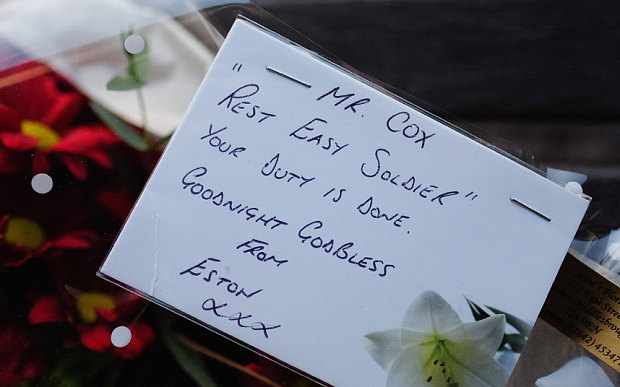
Ethics Heroes: The Community of Middlesborough, England.

COX_funeral_3524163b

Thomas Cox, a British World War Two vet who served in the Royal Pioneer Corps, died at the age of 90 with no known surviving relatives.

Hoping to give Cox the final salute he deserved, the Royal Pioneer Corps Association  posted an appeal on its Facebook page asking for people to attend his funeral. The plea was shared among veteran groups, military groups and others, and when the day came, hundreds of strangers to Cox were on hand to say farewell and thanks to the old soldier. Many of the mourners at the service in Middelborough, Teaside sent flowers and wreaths as well.

They didn’t do this for the family, for there was none, and Cox was beyond caring. They came out of respect for a generation, a pivotal moment in human history, and to assert that we are all part of a larger family, though we usually don’t behave that way.

There’s not a lot more to say, is there?

Mission accomplished.

On the Importance Of Christmas To The Culture And Our Nation : An Ethics Alarms Guide

christmas-hero-H

I don’t know what perverted instinct it is that has persuaded colleges and schools to make their campuses a Christmas-free experience. Nor can I get into the scrimy and misguided minds of people like Roselle Park New Jersey Councilwoman Charlene Storey, who resigned over the city council’s decision to call its Christmas tree lighting a Christmas Tree Lighting, pouting that this wasn’t “inclusive,” or the  CNN goon who dictated the bizarre policy that the Christmas Party shot up by the husband-wife Muslim terrorists had to be called a “Holiday Party.”  Christmas, as the cultural tradition it evolved to be, is about inclusion, and if someone feels excluded, they are excluding themselves.  Is it the name that is so forbidding? Well, too bad. That’s its name, not “holiday.” Arbor Day is a holiday. Christmas is a state of mind. [The Ethics Alarms Christmas posts are here.]

Many years ago, I lost a friend over a workplace dispute on this topic, when a colleague and fellow executive at a large Washington foundation threw a fit of indignation over the designation of the headquarters party as a Christmas party, and the gift exchange (yes, it was stupid) as “Christmas Elves.” Marcia was Jewish, and a militant unionist, pro-abortion, feminist, all-liberal all-the-time activist of considerable power and passion. She cowed our pusillanimous, spineless executive to re-name the party a “holiday party” and the gift giving “Holiday Pixies,” whatever the hell they are.

I told Marcia straight out that she was wrong, and that people like her were harming the culture. Christmas practiced in the workplace, streets, schools and the rest is a cultural holiday of immense value to everyone open enough to experience it, and I told her to read “A Christmas Carol” again. Dickens got it, Scrooge got it, and there was no reason that the time of year culturally assigned by tradition to re-establish our best instincts of love, kindness, gratitude, empathy, charity and generosity should be attacked, shunned or avoided as any kind of religious indoctrination or “government endorsement of religion.”  Jews, Muslims, atheists and Mayans who take part in a secular Christmas and all of its traditions—including the Christmas carols and the Christian traditions of the star, the manger and the rest, lose nothing, and gain a great deal. Christmas is supposed to bring everyone in a society together after the conflicts of the past years have pulled them apart, What could possibly be objectionable to that? What could be more important than that, especially in these especially divisive times? How could it possibly be responsible, sensible or ethical to try to sabotage such a benign, healing, joyful tradition and weaken it in our culture, when we need it most?

I liked and respected Marcia, but I deplore the negative and corrosive effect people like her have had on Christmas, and as a result, the strength of American community. I told her so too, and that was the end of that friendship. Killing America’s strong embrace of Christmas is a terrible, damaging, self-destructive activity, but it us well underway. I wrote about how the process was advancing here, and re-reading what I wrote, I can only see the phenomenon deepening, and hardening like Scrooge’s pre-ghost heart. Then I said…

Christmas just feels half-hearted, uncertain, unenthusiastic now. Forced. Dying.

It was a season culminating in a day in which a whole culture, or most of it, engaged in loving deeds, celebrated ethical values, thought the best of their neighbors and species, and tried to make each other happy and hopeful, and perhaps reverent and whimsical too.  I think it was a healthy phenomenon, and I think we will be the worse for its demise. All of us…even those who have worked so diligently and self-righteously to bring it to this diminished state.

Resuscitating and revitalizing Christmas in our nation’s heart will take more than three ghosts, and will require overcoming political correctness maniacs, victim-mongers and cultural bullies; a timid and dim-witted media, and spineless management everywhere. It is still worth fighting for.

More than five years ago, Ethics Alarms laid out a battle plan to resist the anti-Christmas crush, which this year is already underway. Nobody was reading the blog then; more are now. Here is the post: Continue reading

More “Blue Bloods” Ethics

Blue Bloods 2

Tom Selleck’s “Blue Bloods,” or “The Conflict of Interest Family” as we call it around our house, continues to explore difficult unethical dilemmas for an all-law enforcement family. Its latest episode’s message, however, was troubling.

Forget the secondary plot of Police Chief Frank Reagan’s staff squabbles. The meat of this installment was police detective Danny Reagan’s discovery that the well-oiled bank robbery he was on the scene to witness (it’s amazing how often the main characters in procedurals  just happen to be in banks when they are robbed) has been carried out by a group of three military combat veterans—just like Danny!. They have banded together to raise $100,000 so the female member of the trio can pay for expensive medical treatment for her wounded veteran husband. He lost his legs and sustained brain damage in Iraq.

Danny is seething at the injustice of the wounded hero being in an endless line writing for help from the Veterans Administration, and perplexed that the three perps who he has personally identified from his observations of them during the robbery—the loving spouse’s voice, one of the men’s scarred wrists, a neck tattoo on the other—are acting out love and loyalty, not greed. Continue reading

Ethics Hero, I Guess: High School Runner Zach Hougland

cross country

Today got an e-mail from an Ethics Alarms participant who hasn’t been by in a while. He commented that he was finding the blog too depressing. Almost immediately after that, another reader sent me this story.

In Iowa, Davis County High School runner Zach Hougland had already won his race, thereby becoming district cross country champion, his school’s first. As he was taking congratulations from his coach and track team mates, he saw another school’s runner stumble and fall, then remain motionless. Hougland rushed back on the track, scooped him up and tried to help him to the finish line.  He said, “It was about 15 meters from the finish line.  I did it for seven meters, so he had about eight left.  I knew I couldn’t help him finish so I just gave him a push and told him ‘You can do it!'” Continue reading

Ethics Reflections On The Sudden Death Of Wonderful Human Being

regret

I returned from a legal ethics teaching tour to the horrible news that a friend of mine had died in a freak accident at his home. I had just seen him for the first time in many months when he showed up unexpectedly on the final weekend of my theater company, and the production I directed for it as a final bow. When I spotted him in the theater lobby that day two months ago, I shouted his name and gave him a long hug. He was one of those amazing people who just made you feel better about the world knowing that people like him were still in it.

Now, just like that, he’s gone. An e-mail from him that arrived right before my trip sits unanswered in my in-box. I didn’t rush to return it—what was the rush? Life, of course, is the rush, and this has happened to me before. Why don’t I learn? Continue reading

Ethics Heroes: Eugene and Corky Bostick, Dog Train Proprietors

Dog Train

Eugene Bostick and his brother Corky are retired octogenarian who live on a farm by a dead-end street within the Fort Wort, Texas, city limits. Their property became  a popular dumping ground for unwanted dogs over time, as their owners dropped them off behind the Bostick brothers’ horse barn to starve to death. The brothers made a home for them on their land, feeding them, letting them in and out of their farm house, getting them spayed and neutered if necessary and cared for by a veterinarian, and generally making the abandoned dogs part of an expanded, and still expanding, primarily canine family.

The rescued dogs  run around and play together on the farm, but Eugene had the inspiration to take them on local trips around Fort Worth, like to local golf course. Taking his design from a tractor he saw hooked up to individual wagons carrying rocks, he decided to build “the dog train.’” “I’m a pretty good welder, so I took these plastic barrels with holes cut in them, and put wheels under them and tied them together,” says the train’s main engineer.

Now, a couple of times a week, Bostick loads up his dogs, all but the two smallest in their own compartments, and drives his charges through various Fort Worth locales. The dog train is a favorite photo subject for Fort Worth natives, and the dogs’ happy barking can be heard from quite a distance away.

“Whenever they hear me hooking the tractor up to it, man, they get so excited,” Bostick said. “They all come running and jump in on their own. They’re ready to go.”

If only Amtrack was this much fun.

Here’s a video…

_______________________

Facts and Graphic: Yahoo!

Fake Charities Update: The Unethical Conduct That Makes All Of Us Worse

scamsIt’s one of the world’s oldest scams, one of the most lucrative and perhaps the most damaging: people preying on the best instincts of human beings to take their money for personal gain. The internet has made it easier to do than ever, and the  con is flourishing. I don’t often write about the incidents when they arise, in part because there’s nothing to argue about: everybody agrees that it’s not just unethical conduct, but bordering on evil. Fake charities are worse than scams, however, because they actively make people less kind, generous and caring for their own protection. Every fake charity exposed makes it harder for real charities to help people who genuinely need it. Like a friend of mine who never helped a homeless person again after seeing a beggar whom he had just given 20 bucks on a New York City street briefly get out of his battered wheel chair and nimbly run over to get a cigarette from a compatriot, those who stop trusting pleas for help seldom start trusting again. The fakes make us less kind and generous, and that makes society worse for everyone.

Fake charities large and small have been much in the news lately, so a little catch-up is warranted. Continue reading

The Great Maine Diner Controversy

Marcys-Diner

Thanks to the internet, every day conflicts between ordinary citizens become opportunities for society-wide ethical evaluation . This can be extremely beneficial, helping to reveal disagreements regarding ethical conduct in common situations, and establishing social norms with efficiency that once would have been impossible. Of course, that requires that society reaches a reasonable consensus.

Last week a controversy emanating from a Portland, Maine diner called Marcy’s had blogs bloviating, pundits punditting and social media boiling over. Vacationing parents took their toddler to a crowded diner for breakfast, waited 30 minutes for a table and another 40 minutes for their food. The hungry child went on a crying jag that went on too long for the owner, who  suggested that the couple to leave in a less than polite manner, and finally shouted at the little girl to  “shut the hell up!” The couple left the diner.

The mother, Tara Carson, couldn’t resist registering her indignation on the Marcy’s Facebook page, the owner responded with even more colorful language than she did in the original confrontation, and social media appeared to divide into the “it takes a village so be sympathetic to parents of young kids and give them a break” camp and the “serves these entitled and incompetent parents right for being so inconsiderate and not controlling their child” camp, with the latter considerably smaller than the former. Then, not content to let the matter blow over, Carson got the Washington Post to publish her op-ed about the episode, which concluded, Continue reading