Ethics Reflections On The Sudden Death Of Wonderful Human Being

regret

I returned from a legal ethics teaching tour to the horrible news that a friend of mine had died in a freak accident at his home. I had just seen him for the first time in many months when he showed up unexpectedly on the final weekend of my theater company, and the production I directed for it as a final bow. When I spotted him in the theater lobby that day two months ago, I shouted his name and gave him a long hug. He was one of those amazing people who just made you feel better about the world knowing that people like him were still in it.

Now, just like that, he’s gone. An e-mail from him that arrived right before my trip sits unanswered in my in-box. I didn’t rush to return it—what was the rush? Life, of course, is the rush, and this has happened to me before. Why don’t I learn? Continue reading →

Ethics Heroes: Eugene and Corky Bostick, Dog Train Proprietors

Dog Train

Eugene Bostick and his brother Corky are retired octogenarian who live on a farm by a dead-end street within the Fort Wort, Texas, city limits. Their property became  a popular dumping ground for unwanted dogs over time, as their owners dropped them off behind the Bostick brothers’ horse barn to starve to death. The brothers made a home for them on their land, feeding them, letting them in and out of their farm house, getting them spayed and neutered if necessary and cared for by a veterinarian, and generally making the abandoned dogs part of an expanded, and still expanding, primarily canine family.

The rescued dogs  run around and play together on the farm, but Eugene had the inspiration to take them on local trips around Fort Worth, like to local golf course. Taking his design from a tractor he saw hooked up to individual wagons carrying rocks, he decided to build “the dog train.’” “I’m a pretty good welder, so I took these plastic barrels with holes cut in them, and put wheels under them and tied them together,” says the train’s main engineer.

Now, a couple of times a week, Bostick loads up his dogs, all but the two smallest in their own compartments, and drives his charges through various Fort Worth locales. The dog train is a favorite photo subject for Fort Worth natives, and the dogs’ happy barking can be heard from quite a distance away.

“Whenever they hear me hooking the tractor up to it, man, they get so excited,” Bostick said. “They all come running and jump in on their own. They’re ready to go.”

If only Amtrack was this much fun.

Here’s a video…

_______________________

Facts and Graphic: Yahoo!

Fake Charities Update: The Unethical Conduct That Makes All Of Us Worse

scamsIt’s one of the world’s oldest scams, one of the most lucrative and perhaps the most damaging: people preying on the best instincts of human beings to take their money for personal gain. The internet has made it easier to do than ever, and the  con is flourishing. I don’t often write about the incidents when they arise, in part because there’s nothing to argue about: everybody agrees that it’s not just unethical conduct, but bordering on evil. Fake charities are worse than scams, however, because they actively make people less kind, generous and caring for their own protection. Every fake charity exposed makes it harder for real charities to help people who genuinely need it. Like a friend of mine who never helped a homeless person again after seeing a beggar whom he had just given 20 bucks on a New York City street briefly get out of his battered wheel chair and nimbly run over to get a cigarette from a compatriot, those who stop trusting pleas for help seldom start trusting again. The fakes make us less kind and generous, and that makes society worse for everyone.

Fake charities large and small have been much in the news lately, so a little catch-up is warranted. Continue reading →

The Great Maine Diner Controversy

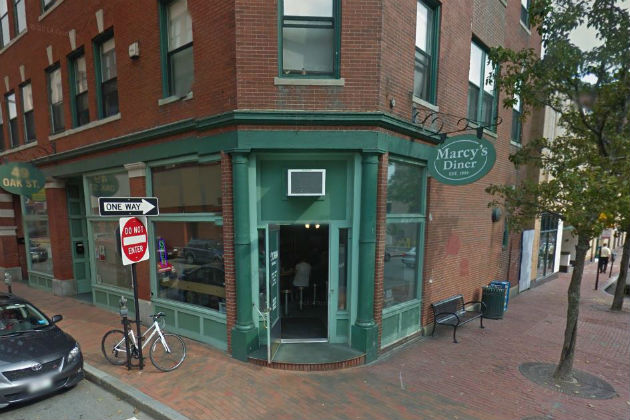
Marcys-Diner

Thanks to the internet, every day conflicts between ordinary citizens become opportunities for society-wide ethical evaluation . This can be extremely beneficial, helping to reveal disagreements regarding ethical conduct in common situations, and establishing social norms with efficiency that once would have been impossible. Of course, that requires that society reaches a reasonable consensus.

Last week a controversy emanating from a Portland, Maine diner called Marcy’s had blogs bloviating, pundits punditting and social media boiling over. Vacationing parents took their toddler to a crowded diner for breakfast, waited 30 minutes for a table and another 40 minutes for their food. The hungry child went on a crying jag that went on too long for the owner, who  suggested that the couple to leave in a less than polite manner, and finally shouted at the little girl to  “shut the hell up!” The couple left the diner.

The mother, Tara Carson, couldn’t resist registering her indignation on the Marcy’s Facebook page, the owner responded with even more colorful language than she did in the original confrontation, and social media appeared to divide into the “it takes a village so be sympathetic to parents of young kids and give them a break” camp and the “serves these entitled and incompetent parents right for being so inconsiderate and not controlling their child” camp, with the latter considerably smaller than the former. Then, not content to let the matter blow over, Carson got the Washington Post to publish her op-ed about the episode, which concluded, Continue reading →

Unethical Quote Of The Week: The Huffington Post, Which Is Having A Really Unethical Week

KKK assestance

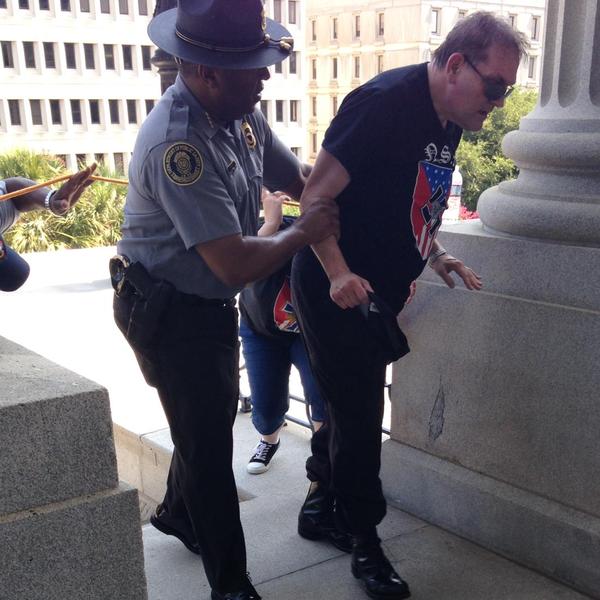
“The photo has gone viral this weekend as netizens praise the officer’s extraordinary show of professionalism and grace under such trying circumstances.”

–—The Huffington Post, commenting on the photo above, showing black police officer Leroy Smith giving a feeble white supremacist assistance during the Ku Klux Klan rally held at the South Carolina Statehouse over the weekend.

Does the Huffington Post have any idea what professionalism is? Ethical conduct? Increasingly, I have my doubts, and this is just the latest example.

We already know the average “netizen” doesn’t know ethics from shinola, but the Huffington Post is a news and culture commentary site. One would think a basic comprehension of such concepts as duty, fairness, justice, responsibility and ethics would be essential. Well, let me rephrase that: they are obviously essential. One would think the Huffington Post would know that without them, its analysis of pretty much anything is worthless.

Look, you ethics dolts: Smith was doing his job, that’s all. The fact that he personally may have objected to the beliefs and words of the protesters is completely irrelevant to his professional obligations. He must treat all professionals the same. To do otherwise would un-professional, un-ethical, and wrong. Dominique Mosbergen is  apparently  of the opinion that the normal, professional thing to do is to refuse to help people whom you don’t like, agree with, or whose views offend you. Wait—isn’t this what the jerks who refuse to sell cakes to gay couples do? Somehow I don’t think Dominique agrees with those anti-gay marriage zealots or that she feels to just treat such customers as human beings would constitute an “extraordinary show of professionalism and grace.” Why does she think a black cop helping a distressed racist like he would a similarly needy  NAACP member because they are both citizens and as a public servant he is duty-bound to treat them both exactly the same is an “extraordinary show of professionalism and grace,” then?

It is because she is incompetent and ignorant. It is because she doesn’t comprehend what professionalism is. It is because to her, “White Racist Lives Don’t Matter,” so she is just bowled over when an African American acts without employing her biases.

Leroy Smith behaved like any professional would, and should. Nothing more, nothing less. Most cops do their jobs, and do them professionally. There is nothing newsworthy or extraordinary  about the photo, except to people who believe that the primary motivating factor for most people is hate.

_____________________

Pointer: Fred

Ethics Hero Sighting At The 7-11

7 eleven

They are out there—just good, kind, ethical people who quietly do what they can to make society a little better whenever they can.

I was just at a 7-11 in Alexandria, Virginia. I was sitting in the car, waiting for Grace to pick up some things, along with Rugby, who loves sticking his head out the window and flirting with people going in and out of the store. He’s shameless and adorable, and almost every time we go there one or more shoppers will come over to the car, pat him and talk with him…and sometimes even me.

As I waited, I noticed a grim, middle-aged African American man standing quietly to the side of the store front, apparently asking people for spare change as they left the 7-11. He wasn’t having much luck. Then an SUV pulled up by my car, and a jolly, pudgy, smiley guy with curly gray hair and wearing  baggy shorts, with a loud, boisterous manner, got out. He immediately greeted Rugby, asking his name, scratching him behind the ears. “Does he have water?” he asked. I explained that we were just minutes from home. “Bye, Rugby!” he shouted, and started to enter the store.

I saw him stop as he opened the door and eye the other man. “Hi, brother!” he said loudly. “How are you doing?”

“Not too good,” was the soft reply.

“Really? Hey, come on in,” the curly haired man beckoned. The sad-looking black man followed him into the store. Grace returned, but I lingered in the parking space a bit. Sure enough, the man who had been asking for change emerged a few minutes later carrying a plastic bag that held a hot dog, a bottle of coke and some other items.

And he didn’t look quite so grim.

Nice.

In fact, perfect.

They are out there, all right.

There is hope.

Southwest Airlines And The Suicide Threat

Not exactly "friendly skies"

Not exactly “friendly skies”

We tend to assume someone was at fault when a terrible event results from the execution of a standard policy that was not appropriate to the crisis at hand. Who’s to blame in this nightmarish scenario?

Karen Momsen-Evers was on a Southwest Airlines plane about to take off from New Orleans to Milwaukee, where she lived. Then her husband Andy sent her a text asking her for forgiveness for his imminent suicide. “I go to sleep at night thinking what could I have done, what should I have done,” Evers said. She texted back “No,” but the text arrived as flight attendants were doing their final cabin checks. She wanted to call him. The flight attendant ordered her to turn her phone off, and when she insisted, was told that the FAA regulations prohibited any further use of her cellphone. “The steward slapped the phone down and said you need to go on airplane mode now,” Momsen-Evers told reporters.

Once the flight reached cruising altitude, the desperate woman explained the situation to another attendant. She begged her to have someone make an emergency phone call, but the attendant insisted there was nothing she could do.

So Karen Momsen-Evers sat in her seat, looking at the text and sobbing, all the way to Milwaukee. When she arrived home she was met by police officers, who told her Andy had killed himself. Continue reading →

Ethics Dunce (and Ethics Hero REVOKED): Sen. Ted Cruz

revoked

Uh-uh, Senator. You can’t have it both ways, not on Ethics Alarms. You can’t be gracious and forgiving and then turn around a couple days later and say what your red meat supporters want to hear. I call that an “Al Gore,” who gave a magnanimous and statesman-like speech conceding after the Supreme Court stopped the 2000 Florida recount, and then slammed the legitimacy of his defeat ever after.

Ethics Alarms gave the Republican rabblerouser an Ethics Hero designation for coming to pundit Mark Halperin’s defense when he was being pilloried all over the media for a demeaning interview of Cruz based on the assumption that he needed to prove that he was really Hispanic. After Halperin was battered into apologizing, Cruz said, in part,

“Mark Halperin is a serious and fair-minded journalist. Today he kindly issued an apology for some silly questions he asked me in an interview. The apology was unnecessary — no offense was taken, nor, I believe, intended — but is certainly appreciated.”

That was classy, and also apparently, a ploy and insincere.In comments about the episode to the conservative IJReview at an  American Conservative Union event, Senator Cruz essentially recycled the same Halperin critic complaints that his earlier comments were supposed to deflect, saying,

“Imagine if [Halperin] had asked Obama these same questions? He would have been run out of the industry.”

But no offense was taken, right, Ted?

Not cool, not kind, and definitely not consistent. The fact that he is absolutely correct about the double standard is beside the point. Cruz couldn’t help himself. He knew the right way to act (that is, his ethics alarms work and he can follow the Golden Rule), but he didn’t have the self-restraint or integrity to resist taking a shot at Halperin anyway. Now we know what he really thinks, and now we know that what he said initially was just a smart politician taking a high road that he didn’t want to be on.

Got it.

Fool me once, Ted…

Ethics Hero REVOKED

Ethics Hero: Sen. Ted Cruz

[UPDATE: Sen Cruz’s Ethics Hero designation has been REVOKED by Ethics Alarms. Details here.]

One of the Republican party’s most demonized  conservative politicians, Tea Party idol and Presidential candidate Sen. Ted Cruz of Texas, just challenged his progressive critics to concede that he has the character of a President, at least.

Cruz stood by politely as familiar TV pundit Mark Halperin cross-examined him on Bloomberg TV as if the Cuban-American was suspected of being born in Kenya. The demeaning interview (to both Cruz and Halperin, who disgraced himself) consisted of  Halperin pressing the Republican firebrand to prove his Hispanic bona fides with  cringe-worthy questions about his favorite Cuban food and what his tastes in Hispanic music were. (A Hispanic journalist quipped that Halperin had Cruz confused with Ricky Ricardo.) It all came to a nauseating climax when Halperin said: “I want to give you the opportunity to directly welcome your colleague Sen. Sanders to the race, and I’d like you to do it, if you would, en español.”

The fiasco of an interview took a while to register (apparently nobody watches Bloomberg), but when it did, Halperin was excoriated left, right, and center, called a racist, called a fool, called biased against Cruz and determined to trap him into a “Gotcha!” Mostly he was called an inept and unprofessional interviewer, and Halperin, who is playing talking head somewhere that actually has viewers almost every  day, had to issue an attempted career-salvaging apology.

Ted Cruz surprised everyone by coming to Halperin’s rescue. He wrote: Continue reading →

Ethics Heroes: Adam and Tanya Phillips

tattoos

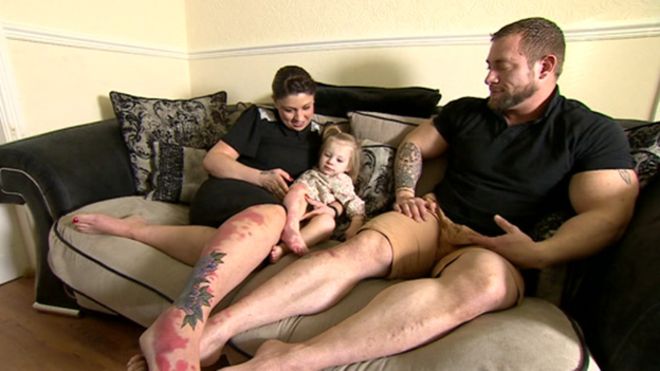
I’ve been searching for Ethics Heroes of late. They seem to be candidates for the endangered species list. Now a qualified couple, Adam and Tanya Phillips, has surfaced in the town of Grimsby, in Great Britain. Their 18-month old daughter, Honey-Rae, has a port wine birthmark running from her right foot to her lower back. After they noticed shoppers staring at their child at a local supermarket, the parents both got  tattoos the color and shape of the mark on their own right legs. Each took two-and a half hours, and was painful.

 When Honey-Rae  saw them for the first time, she said “match.”

Loving, selfless, kind…and clever.

And one of the best uses for tattoos I’ve heard of yet

.___________________

Pointer: Althouse

Facts and Graphic: BBC