Ethics Quiz: The Lettering Of Michael Kelley

Michael-Kelley-Down-Syndrome

Controversy in Kansas:

Michael Kelley is a high school student who has Down Syndrome and autism. He plays extra-curricular special needs basketball, so his family bought him a varsity letter and had it sewed to a school jacket to resemble the jacket the school’s athletes wear. The school’s special needs teams are not regarded as  varsity sports.

The school asked Michael to remove the jacket or the letter, since East High’s policies dictate that only varsity teams can wear the letter.

Now Michael’s mother is petitioning the school board to ensure that special needs team members get letters. Public reaction in Wichita is running against the school, which is being painted as cruel and lacking compassion by not letting Michael wear his letter jacket.

Your Ethics Alarm Ethics Quiz this almost spring weekend (March is back to being a lion here in the D.C. area) is this:

Should the school have let the special needs athlete wear his counterfeit letter jacket?

Continue reading →

Ethics Tales: How Julia Sand Saved A President And Changed The Nation

open book on concrete background

In my recent overview of the U.S. presidency (the four parts are now combined on a single page under “Rule Book” above), I noted that our 21st President, Chester A. Arthur, was one of my personal favorites and an Ethics Hero. He confounded all predictions and his previous undistinguished background, not to mention a career marked  by political hackery and toadying to corrupt Republican power broker Roscoe Conkling, to rise to the challenge of the office and to effectively fight the corrupt practices that had elevated him to power. Most significantly, he established the Civil Service system, which crippled the spoils and patronage practices that made the Federal government both incompetent and a breeding ground for scandal.

I did not mention, because I did not then know, the unlikely catalyst for his conversion. Recently a good friend, knowing of my interest in Arthur, his tragic predecessor, James Garfield, and presidential assassinations sent me a copy of Destiny of the Republic, the acclaimed history of the Garfield assassination and its aftermath by Candace Millard. It’s a wonderful book, and while I knew much of the history already, I definitely did not know about Julia Sand. Her tale is amazing, and it gives me hope. If you do not know about Julia and Chester, and it is not a well-known episode, you should.

Allow me to tell it to you?

James Garfield, an Ohio Congressman, had been the dark horse nominee of the Republican Party in 1880, foiling the ambitions of many powerful politicians, the most powerful among them being Sen. Roscoe Conkling of New York. In order to cement New York’s electoral votes, the convention gave the Vice Presidential nomination to Conkling’s lackey, the dignified-looking but otherwise unimpressive Chester A. Arthur, who may have been the least qualified individual ever to run for that office. The highest position he had ever held was Collector of Customs of the Port of New York, which had been handed to him by Conkling, and he was later removed from that post for incompetence and corruption.  He’d never been elected to significant office or been any kind of executive. Arthur’s career before becoming Vice President makes Sarah Palin look like Winston Churchill.

After the election, Arthur got to work being a disloyal Vice-President, acting as Conklin’s agent in the White House. (Arthur, a widower, even lived as a guest in Conkling’s Washington mansion.) He actively undermined Garfield’s efforts at government reform, at one point going so far as signing a petition supporting Conkling when Garfield refused to appoint only Cabinet members with the Conkling stamp of approval. Then,  on July 2, 1881, less than six months after taking office, the impressive Garfield was shot in Washington D.C.’s Union Station by Charles Guiteau, easily the craziest of the various crazies who have taken a shot at our leaders. (He was also the only lawyer in that group.)

Everybody was horrified, initially at the crime, but also at the prospect of Arthur becoming President. Some even suspected him of being complicit in the act; Guiteau didn’t help by writing Arthur a letter prior to his attack telling him what he needed to do as President.  Most, however, were just aghast at the prospect of the brilliant, courageous, skilled and honorable Garfield being replaced by this utter non-entity under Conkling’s thumb.

None were more aghast than Chester A. Arthur. He may have been a hack, but he was no fool, and he knew he wasn’t up to the job. It was reported that when he learned of Garfield’s shooting, Arthur began weeping like a child. During the nearly three months it took the hardy Garfield to die—he was killed by sepsis induced by the unsanitary prodding of his doctors as they searched for Guiteau’s bullet: the wound itself was probably survivable—Arthur descended into panic, shock, and depression.  For nearly two months, he stayed at home with the blinds drawn, fearing his own assassination. So invisible was he that there were  rumors that Arthur had poisoned himself.

Then Arthur received a letter, dated August 27, 1881, from a woman he did not know, Julia Sands. It immediately got his attention, for she addressed him in a manner he had never been spoken or written to before. The remarkable letter said in part… Continue reading →

Downton Abbey Ethics: Evil Barrow’s Ethics Lesson

Downton-abbey-season-5

If some of your PBS watching friends are unclear on those essential ethics analysis tools, the concepts of moral luck and consequentialism, the season finale of “Downton Abbey”( which you can view here) provided a wonderful example of both in action.

Now, settle down, because this takes some table-setting: Continue reading →

The Tangled Ethics of the Down Syndrome Cheerleader

There’s a lot going on here, and I may lack the ethics dexterity, or perhaps the courage, to figure it out.

I learned about the story on CNN this morning, as the newscasters were getting misty-eyed and “Awwing” all over the place. With a lot of fairly disturbing ethics issues rotting on my plate, I was looking for something uplifting to write about. I’m not sure whether this is it or not.

Here is the most recent on-line story about Kory Mitchell, a sophomore on the varsity cheerleading squad for Manitou Springs (Colorado) High School, who was born with Down Syndrome:

DENVER, Colo. – A Colorado teen with Down syndrome has made her dream of competing in a cheerleading competition come true.

Colorado’s 3-A cheerleading champions hail from Manitou Springs. At the top of their pyramid is a teenager who has overcome serious challenges in her life. The countdown is on as thirteen girls get one last practice in at the Colorado School of Mines. In minutes, the Manitou Springs Mustangs huddle will compete against other top teams.

Cheerleaders take center stage showcasing their spirit and synchronicity. The Manitou Springs Mustangs huddle one last time. And for the first time, joining them in competition is 16-year-old Kory Mitchell.

“She is full of life and full of energy and always wants to be a part of everything,” says her mom, Bonnie King, as she watches with pride.

Her daughter has dreamt about being a cheerleader since elementary school. Her mom is emotional.

But learning these already complicated routines is harder for Kory. “It`s just a tough road when you have a differently-abled child. And to see them have a sense of belonging and acceptance is what she wants, of course, is just so beautiful to see it,” mom says.

Kory’s teammates see what’s under the surface. Things like courage, patience and unconditional acceptance.

“She`s pretty spunky. And she`s got some sass. She loves being out there. It`s nice to see her smile and part of the team,” says one of her teammates. Sometimes competitions aren’t about who wins, but a little hardware doesn’t hurt.

Kory accepted the trophy and a hand from her teammates.

“It`s my dream come true. I love my girls a lot. I`m a big fan of cheerleaders,” Kory said.And Kory’s teammates are big fans of her. This was Kory`s first competition, but she has cheered with the team since last year at football and basketball games.

Observations (some of them reluctant): Continue reading →

Ethics Quiz: Eddie Murphy’s Golden Rule Moment

Wait..that's all?

Wait..that’s all?

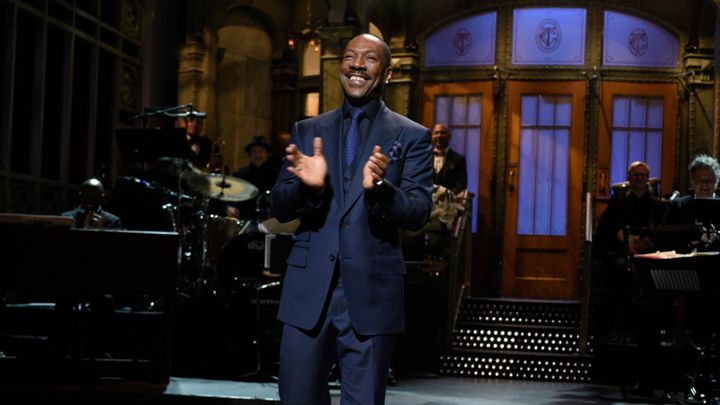
As the long, live, “Saturday Night Live” 4oth anniversary show was being aired on NBC, twitter and various websites gave moment by moment accounts of what was occurring. Everyone was puzzled by the much-ballyhooed appearance of Eddie Murphy, who had a returning hero’s introduction, and was on screen for about a minute, never to return. Why didn’t Eddie do anything funny? Later we found out, though backstage revelations by SNL mediocrity Norm McDonald.

From “Rolling Stone”:

At the tail end of the “Celebrity Jeopardy” sketch – which reintroduced Darrell Hammond as Sean Connery, Will Ferrell as Alex Trebek and Macdonald as Burt Reynolds/Turd Ferguson – a Video Daily Double appeared in the Potent Potables category. Current SNL cast member Kenan Thompson played Bill Cosby revealing his cocktail recipe, a nod to the sweeping allegations against the comedian.

As Macdonald revealed on Twitter, that cameo was originally written for Murphy, who – after a few days of being pursued by Macdonald, Michaels and even director Brett Ratner (the latter serving as an intermediary for the comic) – decided not to appear in the sketch.

“Murphy knew the laughs would bring the house down. Eddie Murphy knows what will work on SNL better than anyone. Eddie decides the laughs are not worth it. He will not kick a man when he is down,” Macdonald wrote.

Your Ethics Alarms Ethics Quiz is…

Is Eddie Murphy an Ethics Hero?

Continue reading →

A Presidents Day Celebration (PART 2): The Good, The Over-matched, And Then There’s Abe

presseal

The Presidents between #7, Jackson, and #16, Lincoln, are almost entirely unknown to most of the public: not one in a hundred can name them all, and of those almost none can name them in order. Eight one-term Presidents, all trying to stave off the civil war in various ways, and all failing that mission.

I will never understand why learning the Presidents in order isn’t a standard requirement in the public schools. It’s not hard; it is a useful tool in placing events in American history, and it prevents embarrassments like the Cornell law grad I once worked with who couldn’t place the Civil War in the right century. Besides, we’re Americans, damn it. The least we owe the 43 patriots who have tried to do this job, some at the cost of their lives, many their health, and many more their popularity, is their place in our history and their names.

On with hailing the Chiefs with some of my favorite facts about them:

James K. Polk

“Hail to the Chief,” which had been sporadically in use since Madison’s day, became the official anthem of the office during the Polk Administration. Polk was a small, unimpressive man, and it was said that he needed the musical announcement when he entered a room or no one would notice him. Looks can be deceiving. James K. Polk was as wily, tough and as ruthless as they come. One reason may be that he was another Presidential survivor of an ordeal that would kill most people: as a teenager, he underwent a bloody frontier operation for gallstones with no anesthesia, tied to a table, biting on a rag.

Zachary Taylor

zachary-taylor

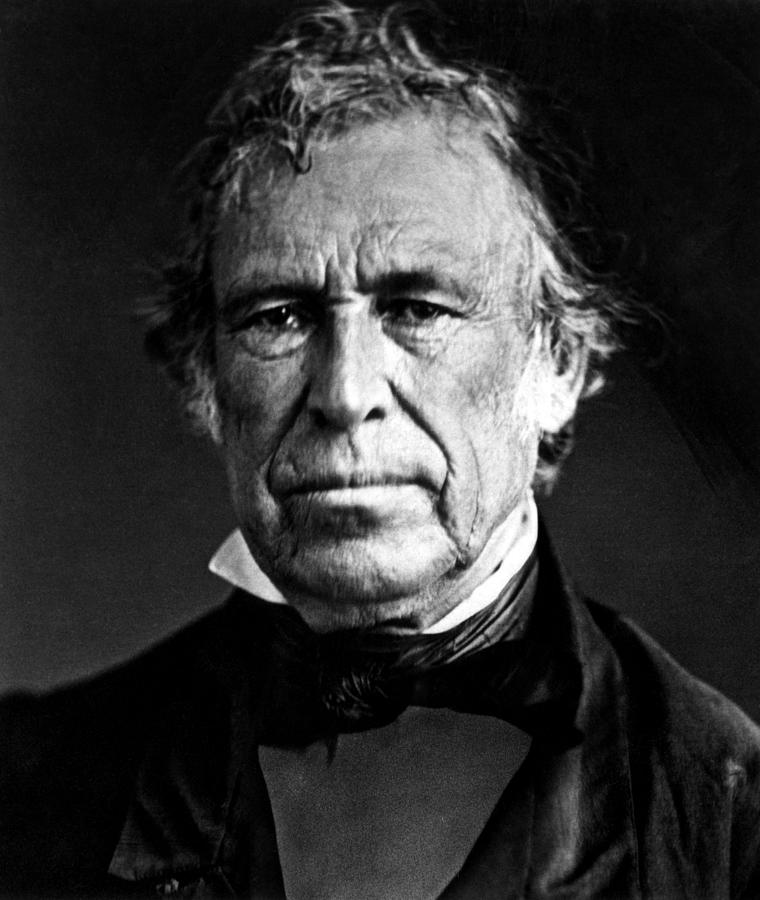
General Taylor, who was pursued by both the Whigs and the Democrats who both wanted to nominate him for President, was a great experiment  He was not a member of any political party, had never held public office prior  to becoming President, and had never even voted before becoming Chief Executive. He was also nearly illiterate. We often long for an apolitical President, a true, rather than a pretend, “outsider.” Taylor would have been an interesting test case, though the pre-Civil War political and social chaos was hardly the most promising period to try out the theory. Unfortunately he died of cholera less than half-way into his administration.

And he wasn’t even elected in a year ending in a zero! Continue reading →

Ethics Quiz: Honoring The Dead and Deadly Team Mate

Taveras

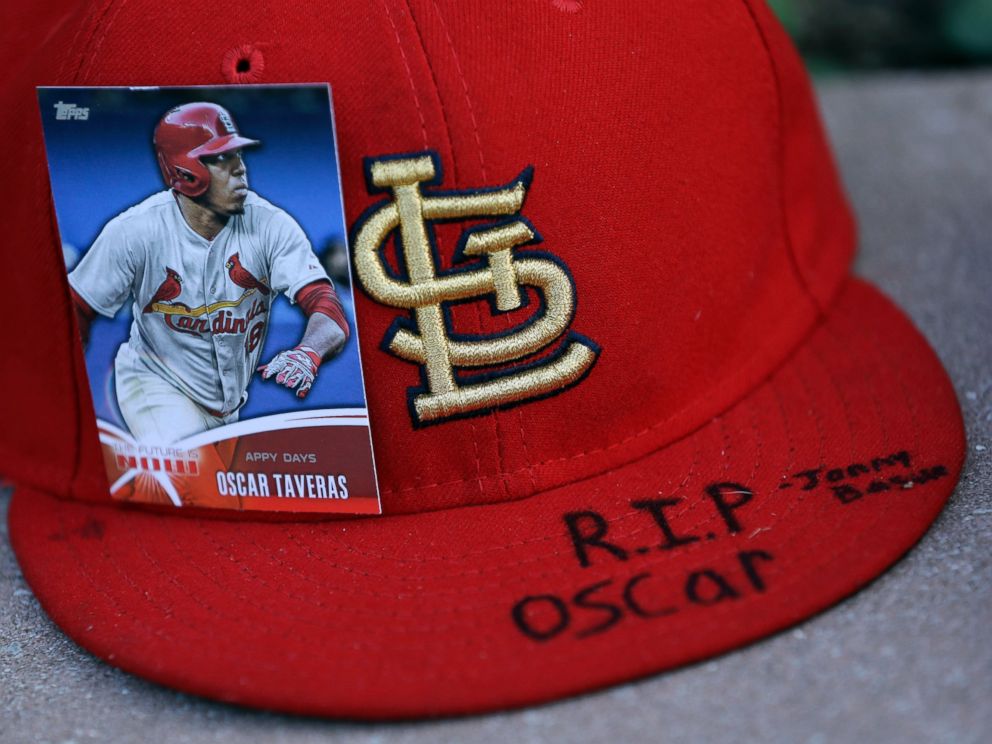
When they take the field in Spring Training and for the rest of the 2015 baseball season, the St. Louis Cardinals will be wearing a memorial patch reading “OT” in honor of outfielder Oscar Taveras, the 22-year-old budding star outfielder who died in a car crash in his native Dominican Republic last October. Such mourning patches have become common since 1972, when the Pittsburgh Pirates moved beyond the traditional black armband to a personalized patch following the tragic death of the team’s Hall of Fame outfielder Roberto Clemente in a plane crash, as he was flying humanitarian aid to Nicaragua.

Taveras, however, unlike Clemente, died in an act of reckless stupidity that took not only his own life but that of his 18-year-old girlfriend, Edilia Arvelo, as well. Toxicology tests showed that his blood alcohol level was five times the legal limit before the crash. situation is more complex because toxicology tests showed that his blood alcohol level at the time of his death was five times the legal limit. Moreover, Taveras’, also was killed in the crash. If Taveras had lived and Arvelo alone had died, he would have been prosecuted for manslaughter.

And thus your first Ethics Alarms Baseball Ethics Quiz of 2015 is this:

Is it ethical for the Cardinals to publicly honor Taveras with a uniform patch?

Continue reading →

Sarah Palin, The Animal Gene, and Some New Year’s Inspiration

Trig on dog

Gandhi famously said that the greatness of a nation can be judged by the way its animals are treated. I’m not sure that’s true, but it certainly is true that respect for the lives and welfare of animals is a useful symptom to diagnose sound ethical values, and the tendency toward animal cruelty is signature significance for a human being that I would not turn my back to in the dark.

The issue is complicated by the divergence of humans into “animal people” and “non-animal people,” with the latter claiming, with some justification, that they are not cruel or callous toward animals, just willing to recognize that they are, well, animals. These are the people who cannot understand someone wanting to take a sick day to mourn the passing of a cat. On the other hand, they are also clear-eyed about those animal lovers who dress their parrots in elaborate costumes and who hold birthday parties for their dogs. Those who live in the country or on farms are an interesting case: they are not prone to sentimentalize of anthropomorphize animals like city folk. Dogs and cats sleep outdoors unless there’s a freeze on, and they have jobs to do. My wife’s sister sold the family horse to a dog food company, and the two didn’t speak for months.

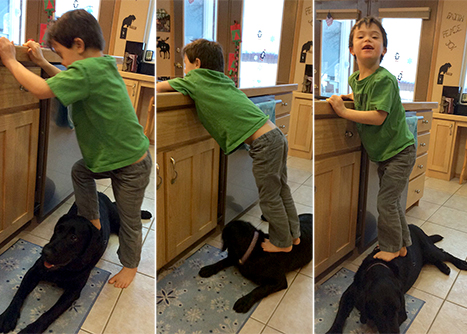
Sarah Palin blundered into this divide this week when she posted pictures (above) of her son Trig standing on the family dog in an inspirational post about overcoming obstacles. Now she’s being attacked for promoting cruelty to animals. Some points on this:

1. Many are always looking for justification to vilify Palin. This time, she gave them legitimate ammunition.

2. The sequence looks staged to me: otherwise, why was anyone taking photos of this?

3. If so, then this just wasn’t an innocent but mistaken choice by a special needs child, but the directive of someone who should know better.

4. Of course one doesn’t ever sit or stand on a dog, or allow or encourage a child to do so, unless we’re talking about a very small child.

5. We don’t know that Palin didn’t admonish Trig after the fact, while saluting his ingenuity.

6. It was still an irresponsible choice for the point she was making.

7. Assuming the dog isn’t ill, drugged of dead, however, he doesn’t seem in distress. One thing about dogs: if you are hurting or ignoring them, they aren’t shy about letting you know.

8. Trig is developmentally disabled. Animals, particularly dogs, have incredible tolerance and intuitive kindness in such situations. That was the real lesson of the photos.

Now, to wipe those images out of your mind, here are a group of photos showing normal, non-celebrity, non-Palin, human beings here and elsewhere demonstrating the kind of kindness and compassion for animals that we all should aspire to. Continue reading →

News From The “Pay It Forward” Front: Neal Shytles

Neal-Shytles-buys-goodies

At the beginning of this month, Ethics Alarms honored Ashley McLemore of Norfolk, Virginia, who answered the ad placed by a homeless man, Neal Shytles who wanted to spend Thanksgiving with a family. He spent the day with hers, and for Christmas, Shytles devised a way to help others like himself in need of holiday kindness.

Neal resolved to make goodie bags for the hundreds of men who always assemble for dinner at his local mission, creating a Facebook page to collect Walmart gift cards to purchase socks, gloves, hand warmers and candy. His efforts raised more than a thousand dollars that was matched by the local TV station that first broadcast the story of Ashley McLemore’s kindness.   Then WTKR took Neal to Walmart, where he filled four carts, and its staff helped him  assemble the gifts  into dozens of brown paper bags.

Thanks, Neal. I needed this story.

Ethics Quote Of The Day (Christmas Confusion File): Jonathan Turley

“Best wishes to everyone celebrating Christmas.”

—- Law Professor and blogger Jonathan Turley, wishing at least some of his readers a merry Christmas.

Get ready to duck, Fred!

Get ready to duck, Fred!

Prof. Turley is a lawyer, of course, and trained to express himself with precision. Thus I have to ask: what the heck is he trying to say here?

Is he wishing good tidings only those who, like his family, are celebrating Christmas, and rotten times to the rest? Is he editing the humanist message of Christmas to “Peace on Earth, and good will to those who are putting up Christmas trees and giving gifts, other wise you’re on your own”?

Or, as I fear greatly, given the fact that he is part of the U.S. education establishment and thus prone to have a spine of cream cheese, just observing the trendy political correctness that infects our times, and bowing to those who contrive to take offense when anyone smiles at them and offers a greeting that only says, at minimum, “We’re all in this together, so let’s try to be as good to each other as we can, OK?” Continue reading →