Ethics Hero: Keisha Thomas

Keisha Thomas

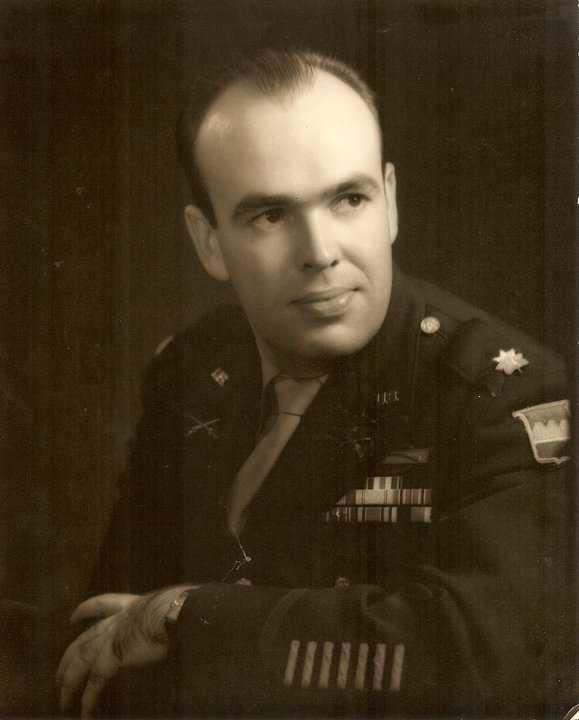
It is never too late to recognize an Ethics Hero, and thanks to a recent retrospective by the BBC, Ethics Alarms can salute Keisha Thomas, who 17 years ago exhibited both courage and other outstanding ethical values like kindness, sacrifice, responsibility, empathy and valor, by coming to the rescue of a man who would never have done the same for her.

In 1996, Keshia Thomas was just 18. The Ku Klux Klan held a rally in her home town, Ann Arbor, Michigan, then as now a college town and a bastion of liberalism. Predictably and as planned by the KKK, plenty of local protesters gathered to jeer the white robed marchers and to show their contempt.Thomas stood with a group of anti-KKK demonstrators on the other side of a security fence, as police in riot gear positioned themselves between the angry demonstrators and the Klan members. One of the anti-Klan counter-demonstrators spotted a white, middle-aged man with an SS tattoo on his arm and wearing a Confederate flag T-shirt  standing among the spectators.  “There’s a Klansman in the crowd!”  she shouted into her megaphone, and a group of protesters began to chase him, shouting threats and “Kill the Nazi!” He was knocked to the ground, and the group, now a mob, began kicking him and hitting him with wooden bases of their placards.

Thomas, an African-American girl still in high school, came to his rescue. She forced herself between the mob and their victim, fell to her knees, draped herself over him and became his shield, saving the stranger from serious injury. Continue reading

Strange Tales Of The Ethically Clueless 1%: When A Birthday Gift Is Worse Than No Gift At All

"Oh, thank you, kind sir!"

“Oh, thank you, kind sir!”

The title of Ethics Dunce doesn’t do Fort Wayne Newspapers CEO Mike Christman justice.

In order to “celebrate” his employees’ birthdays, and, of course, recognize his loyal staff’s value, hard work, industry and loyalty, he gives each member of his corporate family a small token of his  appreciation on his or her birthday, and I do mean small token: a $1.25 token that can be used to buy a soda or a snack at a company vending machine.

How condescending, demeaning, disrespectful, insulting and, of course, cheap: the equivalent of a pat on the head. In the Gilded Age, rich men would occasionally drop nickles on the street for the street urchins to pick up. John D. Rockefeller was the most famous practitioner of this form of low-level charity, though he would use dimes. During the Depression, though he was still a billionaire, he switched to nickels. (Nickels in the Great Depression were worth a lot more than $1.25 today.) His beneficiaries were children, however. Continue reading

The Thugs, The Talk Show Host, And The Obamacare Operator: An Ethics Drama

Sean and Earline

Sean and Earline

Here is what happened.

Conservative radio talk show host Sean Hannity called the Affordable Care Act 800 “Hotline” to determine what information was being disseminated there. After all, the news media, without calling the line, was misinforming the public about what awaited them: CNN Headline News’s cheery morning host Robin Meade, for example, said, “They don’t have to use the website to enroll, right? Now they can do it over the phone?” Wrong.

He called, and this transpired, as described by Mediaite (you can also hear the call at the link):

“After President Obama gave out the phone number for the official Obamacare registration hotline Monday morning, radio host Sean Hannity called in to speak with a human representative… Eventually, he made his way to a help line with a female operator named “Earline Davis.” Hannity proceeded to ask Earline questions about the difficulties experienced on HealthCare.gov, prompting her to explain that many people have called to vent their frustrations and that all she can tell them is that the site will likely experience difficulties for the next 42 hours. The radio host also asked the woman the particulars of her job: When did she begin working on Obamacare calls, how long she trained for answering calls, and whether her bosses have told her what to say when asked about the “glitchy” website. Hannity even managed to convince the woman to read the “script” aloud on the radio:

“Thanks for your interest in the health insurance marketplace. We are having a lot of visitors trying to use our website right now. This is causing some glitches for some people trying to create an account or log in. Keep trying and thanks for your patience. You might have better success during off-peak hours like later at night or early in the morning. We’ll continue working to improve the site so you can get covered.”

“And that’s the whole thing? So you went through a whole week of training so you can do that?” Hannity asked before attempting to cut her off, perhaps sensing the sensitivities involved with such a question. He then asked her questions for which she clearly had no answers: “Did you know how much the government spent on that website?” “Isn’t that crazy?” “Did you know the president promised the average family was going to save $2,500 dollars, and the average increase is $7,500 a year?” Hannity complimented for the operator for being so polite and kind, but also asked her questions that could possibly put her job on the line: “Have you ever gotten anyone who really likes it yet?” he asked at another point. “Um, not really,” she admitted, sending the radio host into a fit of laughter.

The conversation later switched to small talk about her residence in Panama City, Fla. , the weather in Florida versus New York, her non-registered voting status, and her lack of knowledge about Fox News or any major right-wing talk radio hosts.”

She was fired.

Hannity then had Davis on his radio and Fox TV shows, where she said she was fired for talking to the news media, though she had never been told that she was prohibited from doings so.  Hannity announced that he would pay her salary for the year and also help her find another job.

Now some ethics questions and answers about the incident: Continue reading

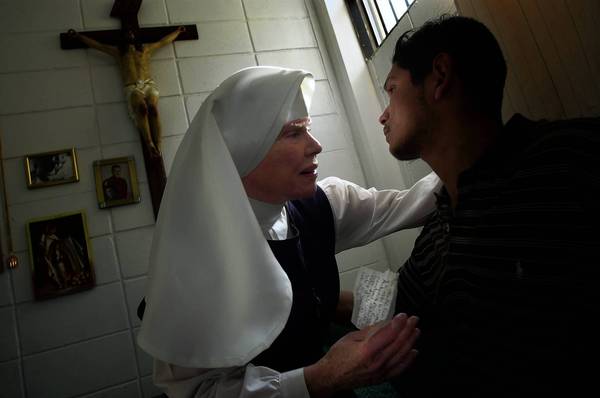
Ethics Hero Emeritus: Sister Antonia Brenner, 1926-2013


Sister Antonia dies at 86

Sister Antonia caring for a prisoner in La Mesa in 2002

Once again, someone remarkable has died whose life was insufficiently celebrated while she was alive. I had never heard of Antonia Brenner until yesterday. I wish I had.

Mary Clarke was born on Dec. 1, 1926—we share a birthday!— the second of three children. Her father, Joseph, was a prosperous business executive; the family had a second home overlooking the Pacific. After her second marriage, to Carl Brenner, she was known as Mary Brenner, and was the mother of eight children, comfortably ensconced in Beverly Hills.  While struggling through her second divorce, she began doing charity work for the poor in Los Angeles.  A priest friend, Monsignor Anthony Brouwers, took  her to La Mesa state penitentiary in Tijuana, Mexico, which was filled with convicted murderers, thieves, gang members, rapists and other hardened criminals, all living in brutal and inhumane  conditions even by the horrible standards of U.S. prisons. Everything—her life, her name, and most of all, the existence of the prisoners, changed after that.

She became devoted to their plight as human beings, and brought the prisoners basics of comfort that were being withheld from them, at her own expense. She gave them aspirin, blankets, tooth paste, soap, even prescription eyeglasses. She carried spare toilet paper with her, and kep a lookout for other missing essentials. Brenner acquired a prison contract to sell soda pop to prisoners and then used the proceeds to post bail for minor offenders. She began spending more and more time with the prisoners, gaining their affection and trust, even singing in their church services. She treated them with dignity and kindness: when prisoners died, it was Mary Brenner who prepared him for burial. Continue reading

Facebook Ethics: Making Your Facebook Friends As Ignorant As You Are

Foto-Facebook

All of a sudden, for some unknown reason (maybe THIS story!) there is an avalanche of Facebook users posting this language, or the equivalent:

Now that there has been a change in Facebook’s privacy policy, I am making the following change: I do not give Facebook or any entities associated with Facebook permission to use my pictures, information, or posts, both past and future. By this statement, I give notice to Facebook it is strictly forbidden to disclose, copy, distribute, or take any other action against me based on this profile and/or its contents. The content of this profile is private and confidential information. The violation of privacy can be punished by law.  NOTE: Facebook is now a public entity. All members must post a note like this. If you prefer, you can copy and paste this version. If you do not publish a statement at least once it will be tactically allowing the use of your photos, as well as the information contained in the profile status updates. DO NOT SHARE. You MUST copy and Paste.

================================
PRIVACY NOTICE: Warning – any person and/or institution and/or Agent and/or Agency of any governmental structure including but not limited to the United States Federal Government also using or monitoring/using this website or any of its associated websites, you do NOT have my permission to utilize any of my profile information nor any of the content contained herein including, but not limited to my photos, and/or the comments made about my photos or any other “picture” art posted on my profile. You are hereby notified that you are strictly prohibited from disclosing, copying, distributing, disseminating, or taking any other action against me with regard to this profile and the contents herein. The foregoing prohibitions also apply to your employee, agent, student or any personnel under your direction or control.

The contents of this profile are private and legally privileged and confidential information, and the violation of my personal privacy is punishable by law.

UCC 1-103 1-308 ALL RIGHTS RESERVED WITHOUT PREJUDICE.

Impressive!

Scary!

Legal sounding!

But oh so wrong in every way. Continue reading

Better Never Than Late: Steve Bartman’s False Exoneration

ALCS - Detroit Tigers v Boston Red Sox - Game TwoMy mind is much on the baseball play-offs today, an unavoidable hangover from last night’s amazing and exhilerating Red Sox-Tigers game, in which Boston went from hitless, five runs down and doomed in the 6th inning to miraculously victorious in the 9th thanks to a storybook grand slam by David Ortiz (you can see the immortal end result of that mighty blow in the photo to the left). It is 10 years to the day from when another remarkable play-off game occurred, infamous in Chicago, in which a fly ball foul that wasn’t caught by Cubs outfielder Moises Alou led to a furious rally by the Florida Marlins that resulted in the hapless Cubs being denied a trip to the World Series—the team’s first since 1935— that their fans thought was in the bag. The reason Alou missed the ball, or so the legend goes, was that a clueless Cubs fan wearing earphones reached out and deflected the ball. That fan, Steve Bartman, was awarded instant villain status. It was accompanied by media attacks and death threats, and poor Bartman left the city and may well have joined the witness protection program or jumped into a volcano. Nobody has heard from him in many years.

There is an ethics lesson in what happened to Bartman: one is never truly a bystander, and you have a duty to pay attention to your surroundings and to be ready to act. If you are present, you can make a difference, and might be needed, even it it is only to get out of the way. Call it the Duty of Life Competence.

The following post, however, is not about Bartman as much as it what happened to him, and how someone who could have come to his aid waited five years—too long—to do it. It was first posted on The Ethics Scoreboard in 2008:

Continue reading

The Ethics Of Demanding Charity

Joanna Leigh

Joanna Leigh

I can not imagine much more heartbreaking plights than that of Boston Marathon bombing victim Joanna Leigh.

By April 14, 2013, Leigh, 39, had a newly minted doctorate in international development, and a promising career as a consultant. On April 15, she was at the finish line of the marathon, waiting for a friend to cross it, when the second of two bombs exploded ten feet from her. She was shielded from the deadly flying metal by other spectators, but still knocked unconscious. When she awoke, there was chaos around her, people screaming, maimed, covered with blood. She helped some injured find help, and then, dazed, walked home. For various reasons, she did not get herself checked out at a hospital until more than a week had passed.

Gradually, however, the symptoms of her injuries began appearing. Soon, it became obvious that the closed head injuries she suffered in the explosion have caused devastating long-term damage to her brain, and it is doubtful that her life will ever be normal again. Today, she says, she has to sleep most of the day. She cannot work or drive, and is easily disoriented, even getting lost on her own block. She has blurred vision, her hearing is impaired and she cannot avoid the constant ringing in her ears. Concentration has become difficult, and the simplest everyday tasks are overwhelming.   Continue reading

From Oklahoma, A Remarkable Ethics Lesson

hartmanparkinglot_610x458

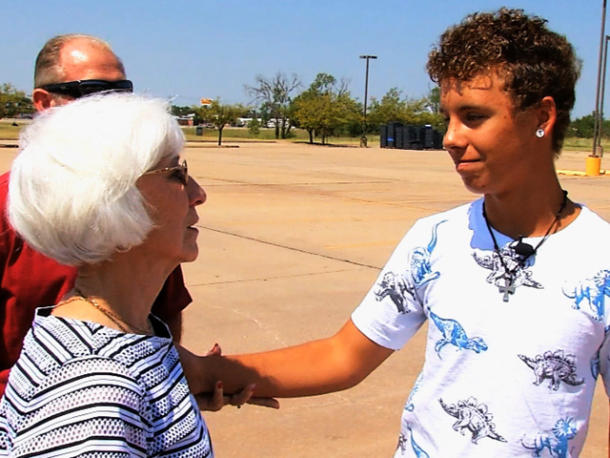
Young Christian Lunsford was disgusted when he saw the TV report about the mugging of seventy-eight-year-old Tona Herndon of Bethany, Oklahoma, robbed while visiting the gravesite of her husband of 60 years, who had died just two weeks earlier. It wasn’t merely that the mugger took a purse and $700 from a vulnerable and grieving woman, but that the culprit was Christian’s father. He had been quickly arrested, and his mug shot, shown on TV, was all-too-familiar to his fifteen-year-old son. Christian’s parents divorced when he was two, and his contact with his father had been minimal as the elder Lunsford kept ending up in jail. The teen had recently heard from his dad, however, when he sent Christian $250 to pay for his participation in a school band trip.

The latest crime, however, moved Christian to do something exemplary. He contacted Tona Herndon and asked her to meet him in a church parking lot. When she did, he mugged her too, as a tribute to his father.

No, that’s not what happened: I was just messing with you. Continue reading

Ethics Hero: Minneapolis Dairy Queen Manager Joey Prusak

"Good job, Joey!You made Dairy Queen proud and brought honor to the store, Here's 40 dollars."

“Good job, Joey!You made Dairy Queen proud and brought honor to the store, Here’s 40 dollars.”

It’s a simple story, trivial in a way, but with an important ethics lesson.

Joey Prusak, the 19-year-old store manager at a suburban Minneapolis Dairy Queen, watched as a female customer with a heart of ice saw a vision-impaired man drop a $20 bill, picked it up, and instead of returning the money to the unaware customer, slipped it into her own purse. When the certifiably awful woman got up to the counter to order, Prusak told her what he had seen and demanded that she return the bill as a condition of service. The woman, as one might expect from someone who would take money under such circumstances, refused, so Prusek reimbursed the visually impaired customer with $20 of his own.

A customer who saw the incident e-mailed Dairy Queen in praise, and now Prusak has become something of a folk hero.

The important ethics lesson is “Fix the problem.” If you are in a position to right a wrong or prevent one, it has become your obligation to do it. Don’t adopt  any of many rationalizations available to persuade you to do nothing— “It’s not my job,” “Mind your own business,” “Who am I to judge?”, “It’s not my fault”, “What if I’m wrong?”—or, in a case like this one, manufacture excuses for the vile miscreant who took the money—–“Maybe she’s desperate,” “Finders keepers”-–and just act. Fix the problem. Continue reading

Cher’s Ethics Tweets

Lan 159

Earlier this week, Cher used her interview with USA to take some well-aimed pot-shots at Miley Cyrus’s universally loathed “twerking” antics on the MTV Awards show. She said of Cyrus

“”I’m not old fashioned. She could have come out naked, and if she’d just rocked the house, I would have said, ‘You go, girl.’ She could have come out naked, and if she’d just rocked the house, I would have said, ‘You go, girl.’ It just wasn’t done well. She can’t dance, her body looked like hell, the song wasn’t great, one cheek was hanging out. And, chick, don’t stick out your tongue if it’s coated. If you’re going to go that far, then think about it before you do it.

These are wise words from a veteran and proven performing star to a young one on the way up, or heading for a crash. Essentially, Cher is stating the principles of professionalism: whatever you do, do it right, do it well, and respect your constituency. Cher has the bona fides to offer such an opinion since she has stretched the lines of sexual propriety on stage more than once, but it was always used as an additional enhancement on the way to her “rocking the house.”

The legendary pop diva was apparently surprised that her comments became a one-day sensation on the gossip websites and cable entertainment shows, and  had second thoughts about them, which she communicated in a couple of tweets to the Twitterverse. In Cher-ese, they are all about ethics:

Chers Tweets

Translation: Continue reading