Comment of the Day: “How People Rationalize Being Close-minded: A Case Study”

battle-marvel

The Ethics Alarms resident humanist, Bruce, has filed a passionate brief condemning the sometimes rough debate on Ethics Alarms, and, in some ways, the blog itself. This is the latest volley in an ongoing thread that has jumped around from multiple posts: my fault, because I keep raising the issue in various ways. I would normally append some reactions at the conclusion of such direct criticism, but it’s a busy day, so I’ll have to put them in the comments to Bruce’s post later, with this exception.

The Ethics Scoreboard, which was not a blog but a website, embodied Bruce’s suggestion of radically fewer posts, more carefully considered and proofread. I am proud of a lot of the work there, but the format was limiting. The goal of Ethics Alarms is to try to inject ethical considerations into the national analysis and discussion of daily events, including politics, that need them but hardly ever receive them, because, sadly, most commentators are either uninterested or incapable of it.  The reason I chose a blog format is that these issues are time-sensitive, and if I am to have even a wisp of a chance of elevating the discussion and encouraging valid analysis of right and wrong, I have to strike quickly, or I might as well be writing about the ethics of the Spanish American War.

Jeffrey Field, my favorite Occupier who often weighs in here, periodically sends me a note that says “Slow down!”  I appreciate that, and take it to heart. Nonetheless, when the news media was (lazily? maliciously?) misrepresenting the meaning of David Wildstein’s lawyers’ letter regarding Chris Christie’s involvement in the George Washington Bridge affair, and I could find nobody who was pointing out what miserably unethical journalism this was, I had to write about it immediately—and, frankly, Ethics Alarms readers were ahead of most of the public. A little later, the New York Times, for example, had to tune down its characterization of the document.

I know my analysis is not always air tight, but I’m not trying to end discussions, but begin them. I wish I could do ten posts a day.

Here’s Bruce, and his Comment of the Day on the post “How People Rationalize Being Close-minded: A Case Study”: Continue reading →

Déjà Vu: In D.C., It’s The Brooklyn EMTs All Over Again. How Can This Happen Even Once?

"Hey, I'm ready! Just go through the proper channels, and I'm On it! You can count on me!"

“Hey, I’m ready! Just go through the proper channels, and I’m On it! You can count on me!”

I guess it’s a sign of longevity that some ethics stories are recurring so exactly that I can handle them with previous posts. I never wanted to see this one repeat, however.

In 2004, two EMT’s let a pregnant woman die in front of them without offering aid, because they were on a break and wouldn’t abandon their coffee and bagels to save a mother and her unborn child. (They were suspended and yet kept their jobs.) Over the weekend, in Washington, D.C., a 77-year-old man, Medric Cecil Mills, collapsed across the street from a fire station. The man’s daughter ran across the street to seek help, and the firefighter she spoke to explained that he couldn’t respond until being dispatched and instructed her to call 911. The man died.

[A black humor note: when 911 was called and a rescue vehicle dispatched, it went to the wrong address.] Continue reading →

Ethics Dunce: Law Professor Josh Blackman, Too Desperate To Take A Cheap Shot At Justice Scalia

Supreme Court Justice Scalia, though not quite to the absurd degree of Sarah Palin, is a conservative who inspires such visceral dislike from the residents of the American Left that he often inspires them to behave irrationally in their eagerness to express their contempt. Such was the case this week, when Scalia sharply rebuked a lawyer making his oral argument before the high tribunal in the case of Marvin Brandt Revocable Trust v. United States, a property rights dispute over the conversion of abandoned railroad rights of way into public trails. The advocate, Steven Lechner, was before Scalia and his colleagues for the first time, and began his argument by reading from his notes. This is not cool, and violates Supreme Court tradition, rules, and long-observed standards.

Tony Mauro, blogging at the Legal Times, explains: Continue reading →

Signature Significance: The Sick Little Girl’s Stolen Puppy

pug-puppy

If you ever want to explain the concept of signature significance in ethics—how one act can be sufficient evidence to make a fair and valid judgment about someone’s character—to a friend or colleague, this story should do the trick.

In California, a kind woman named Shawna Hamon heard about a 7-year-old girl with leukemia whose Christmas wish was for Santa to bring her a pug puppy. So Hamon bought a pug puppy, and gave it to a friend who promised to deliver the little dog to the girl in Sacramento in time for the holidays.

The puppy never arrived, however.  The friend decided to keep it for herself. Hamon sent an animal delivery service and an attorney to the woman’s Los Angeles home, but the woman refused to give the dog back. Then Hamon  filed a theft complaint and police got a search warrant to search the home, but found no pug puppy. After searching some other nearby homes, they eventually found the little dog at a neighbor’s  house, where the pug-napper had hidden it.

Hamon now has the dog back, and learned her lesson. She will deliver it herself this time, a bit late, to the sick little girl. The child is currently receiving experimental treatment for leukemia in Philadelphia.

Now, what are the chances that the woman who took the dog, a desperately sick child’s Christmas gift, for herself, and foiled the compassionate act of a friend in the process, was just having a bad day, just made one mistake, really is a fine, upstanding, trustworthy individual and can’t be judged conclusively as an unethical cur (no offense, puppy…) based on this one incident, because a single episode has no statistical and predictive significance?

None.

____________________________

Pointer: Fark

Facts and graphic: NBC

Ethics Hero: Tom Wynkoop

Isn't it a beautiful day?

Isn’t it a beautiful day?

In Ligonier, Pennsylvania, Tom Wynkoop, owner of Fox’s Pizza Den, was inspired by the deadly cold of the last few days—below zero in  his region—to tweet an offer to pick up and deliver prescription medicines and other products to the elderly at no charge. The community, about 45 miles east of Pittsburgh, has many elderly residents. In his tweet,nice guy Wynkoop told those in need to just call his cellphone to arrange deliveries, and he’d be there. Several area seniors took him up on it, and kept out of the chill.

If I learn that Wynkoop had just hired a marketing consultant who suggested the idea as a publicity stunt, I think I’ll kill myself. Still, some needy seniors got their medicine, and in the end, that’s what matters. If Tom Wynkoop’s kindness ends up selling a few extra pizzas, good.

Gotta go inspire about 300 D.C .lawyers to be ethical now. Through a nasty rain storm.  And I just read yet another infuriating post on a baseball blog from a reader who calls treating steroid cheats as unfit for enshrinement in the Hall of Fame as “moralizing.” But thanks to a Pennsylvania pizza place owner, you just can’t  harsh my mellow.

__________________________

Pointer: Lianne Best

Facts: WTOP

Graphic: Daily design inspiration

Ethics Alarms attempts to give proper attribution and credit to all sources of facts, analysis and other assistance that go into its blog posts. If you are aware of one I missed, or believe your own work or property was used in any way without proper attribution, please contact me, Jack Marshall, at  jamproethics@verizon.net.

Mark Clemishire And The One That Got Away

Big Fish

Letting a fish you’ve caught swim off to be hooked another day doesn’t exactly place you in the altruism big leagues with Oscar Schindler,  but one takes one’s ethical opportunities as they arrive. For Mark Clemishire, a fly fisherman from Skiatook, Oklahoma, this qualifies as exemplary ethics, and attention should be paid.

It was about a month ago that  Clemishire was plying his craft in Lake Taneycomo, Missouri, and after an epic battle, caught a monster rainbow trout he immediately dubbed Troutzilla. Measured at 31 inches long with a girth of 22 inches, Troutzilla almost certainly weighed more than 20 pounds, which easily surpassed the existing record for a rainbow trout. To get credit for his achievement, a big deal for a serious fly fisherman, Clemishire’s trout had to comply with Missouri Department of Conservation rules that required the catch to be weighed on department certified scales. But instead of etching his own name in the record books, embracing immortailty and a place in the Fly Fishermen’s Hall of Fame, if there is such a thing, Mark had some photos taken of him posing with his Catch of the Day, and let Troutzilla go free. Continue reading →

The Fifth Annual Ethics Alarms Awards: The Best of Ethics 2013

Ethics Story 2013

I decided to start with the Best in Ethics this year, in contrast to other years, on the theory that it would get things off to a positive start in 2014. What it did, instead, was make me realize how negative Ethics Alarms was in 2013. Either there wasn’t much positive going on in ethics, or I wasn’t seeing it. My thanks to those of you who send me nominations for Ethics Heroes (and other stories); even when I don’t write about them, they are valuable. Please keep them coming. In the meantime, I pledge to try to keep the jaundice out of my eye in 2014. Things just can’t be as dire as they seemed last year.

Could they?

Here are the 2013 Ethics Alarms Awards for the Best in Ethics:

Most Important Ethical Act of the Year:

The U.S. Supreme Court declared the Defense of Marriage Act unconstitutional, paving the way for the universal legalization of gay marriage. Yes, it was a legal decision, but it was also based, as all such culturally important decisions are, on a societal recognition that what was once thought to be wrong and immoral was, in fact, not. This is ethics, an ongoing process of enlightenment and wisdom about what is right and wrong, and the U.S. Supreme Court did its part. Continue reading →

There May Not Be A War On Christmas, But Whatever It Is, Christmas Is Losing

??????????????????????????????????????????

I don’t think it’s my imagination, or that I’m watching too much Bill O’Reilly (since I almost never watch Bill O’Reilly), but it became very clear to me this year that Christmas, as a society-wide cultural convergence in America, is losing its grip.

The reasons are varied and many, and to pick out any in particular one would betray my own biases. But I am a fairly obsessive observer of the popular culture, and there was markedly less Christmas this year in every way. Religious references to the Christmas story—the manger, the Wise Men, the Star of Bethlehem and the rest, are almost invisible outside of church. On television, that part of Christmas is taboo, apparently; on radio too, traditional carols, which once were standard fare, whether sung by pop singers like Bing Crosby or classical artists, are mostly relegated to the classical music channels. On the other stations, there was less Christmas music than I can ever recall, and perhaps because of that, I was very conscious of how dated virtually all of it is. The last non-frivolous Christmas standard to enter the playlist was 1962’s “Do You Hear What I Hear?, ” and the other newer ones  are either songs about romance using Christmas as a backdrop, anti-Christmas novelties (“Grandma Got Run Over By  A Reindeer”), or just lousy.

Meanwhile, listening to the parade of pop yule classics is an exercise in morbidity. Almost all of them are sung by dead artists that no one under the age of thirty (or forty?) could have ever heard or seen perform live. Bing, Dean Martin, Karen Carpenter, Andy Williams, Burl Ives, Gene Autry, Judy Garland, Nat King Cole, Mel Torme, Frank Sinatra—Andy just left us, but most of the rest, with the lingering exceptions of Johnny Mathis and Harry Belafonte, are not merely dead, but long dead, like Marley. No one has taken their place in this genre, and that means that it’s a dying genre.

It is obvious that Christmas movies are being run on television less than ever before, too. It was once impossible to avoid encountering several versions of “A Christmas Carol,” and sometimes the same one would keep popping up, annoyingly so. Not any more. “It’s A Wonderful Life” had its annual showing, and I stumbled upon “White Christmas” a couple of times, but the pickings were slim.   The lousy Richard Attenborough “Miracle on 34th Street’ turned up; Turner Classics ran through most of the old Christmas classics once, but you had to look for them. There haven’t been any new Christmas movies from Hollywood that have made the grade for a very long time: with the exception of the first “The Santa Clause,” what Hollywood has been churning out are more or less bitter comedies (“Christmas With The Kranks,” “Jingle All The Way,” “Bad Santa,” “Christmas Vacation”–even the “Home Alone” films) that portray Christmas as suburban hell.

Then there are the wan or missing town hall and town center Christmas displays (Gotta watch out for those law suits), the tasteless Christmas TV commercials (the men in boxers jingling their “bells” is gross, in my opinion), and the hesitation you hear in strangers’ voices as they try to guess whether “Merry Christmas” will offend you or not.  I used to encounter carolers several times every Christmas, in shopping malls if nowhere else. The malls are disappearing, and kids don’t go caroling any more. They don’t know carols any more, because if their school teaches them one (because it’s a lovely song) some fanatic will raise a stink and claim its religious indoctrination.  Children, in a more innocent, less cynical age, were allowed to believe in Santa Claus well past the age of 5. (I was 26 before I knew the truth.) No longer. Christmas just feels half-hearted, uncertain, unenthusiastic now. Forced. Dying.

It was a season culminating in a day in which a whole culture, or most of it, engaged in loving deeds, celebrated ethical values, thought the best of their neighbors and species, and tried to make each other happy and hopeful, and perhaps reverent and whimsical too.  I think it was a healthy phenomenon, and I think we will be the worse for its demise. All of us…even those who have worked so diligently and self-righteously to bring it to this diminished state.

But anyway,

Merry Christmas.

For what it’s worth.

________________________________

Graphic: Stacy Gustafson

Ethics Hero Emeritus: Jack McDonald (1915-2013)

Jack McDonald

Before today, I had never heard of Jack McDonald, and outside of his co-workers , family and friends, not many had. That was the way he wanted it, for he was an unassuming man with a conventional career, including three decades as an attorney for the Veterans Administration. He clipped coupons, dressed humbly and allowed himself few luxuries. He got around his home town of Seattle using public transportation. Most who knew him thought he was struggling.

When Jack McDonald died this past September, his death received little notice in the local news, and none nationally—until about a week ago, when it was revealed that his will provided for the creation of a $187.6 million charitable trust for the benefit of Seattle Children’s Research Institute, the University of Washington School of Law and the Salvation Army. Continue reading →

The Five Truths Of Elan Gale’s Twitter Lie

"Diane"

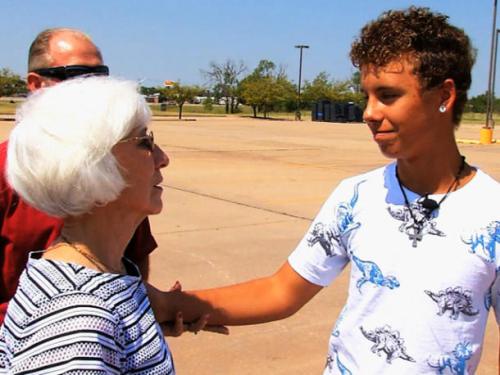
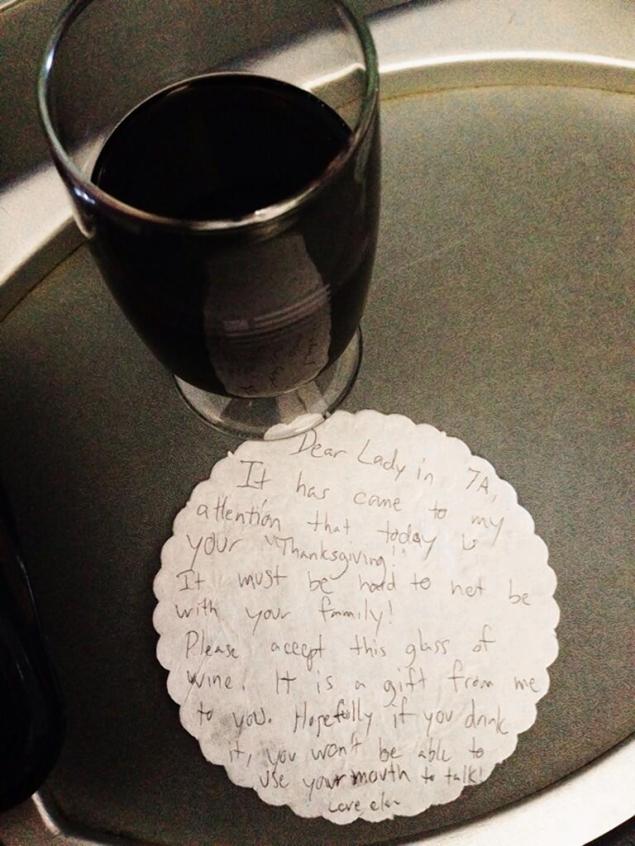
The above photo is how “The Bachelor” producer Elan Hale chose to announce to the world that his Twitter tale about “Diane” the hysterical Thanksgiving traveler and his campaign to shame her was all a “joke.”  This is Diane! Har!

Truth #1:

Elan Gale is an asshole, and because he is shameless about it, he is also a fick.

Truth #2 Continue reading →