Ethics Hero: Glen James

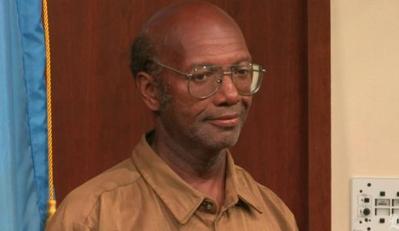
Glen James, role model.

Glen James, role model.

This is straightforward: Glen James, a Boston man who lives in shelters and has no money, found a backpack over the weekend that contained $2,400 in cash, $39,500 in traveler’s checks, passports, and other personal items. James flagged down a passing Boston police officer and gave him the backpack.  As is often the case with stories like this, he doesn’t think what he did was a big deal: after all, isn’t this what anyone would do?

We all know the answer to that question. Continue reading

No, It’s Actually Allison Benedikt Who’s A Bad Person

Hang in there--the schools will be better in a few generations...

Hang in there–the schools will be better in a few generations…

There may be some persuasive arguments to be made for sending your child to a public school system you don’t trust. The obvious one is that you have no choice, which is true for many Americans. There are also some good reasons to write a “manifesto” called “If You Send Your Kid to Private School, You Are a Bad Person,” the best of which is to cause people to focus on the problem of the failing and unacceptable public school system, and what should be done about it. However, Allison Benedikt, who actually wrote an article with this title and presumably this intent, failed so miserably at making a coherent and persuasive argument of any kind that her provocative title amounts to an unethical assertion itself: if you are going to make a blanket indictment of the character of millions of people, you had better be able to produce an ethical argument or two, or at least demonstrate that you comprehend a little bit about ethics. Allison doesn’t. Based on this piece, I not only wouldn’t trust her (oh, by the way, Allison, the core objective of ethical conduct in your profession—any profession, actually—is trust) to provide advice about how to educate my child, I wouldn’t trust her to walk my dog. Continue reading

Confections And Consequentialism

Busted!!!!

Busted!!!!

From across the pond comes a stupid story rich with buried ethics treasures.

Eleven-year-old Holli McCann was sent home from a week long school trip to the Isle of Wight (where Paul McCartney started vacationing  when he turned 64) because she violated one of the rules of the trip: no chocolate. The Bromet (in Watford, Herts) Primary School’s headmistress, Yvonne Graves, discovered the infraction by surreptitiously reading a private letter that Holly had written to her mother. After perusing the incriminating missive,Graves ordered teachers to search Holli’s room, which they did with the diligence and thoroughness of the FBI looking for forensic evidence of a serial killing, even emptying her toiletry bag into the sink and pulling out the lining of her suitcase. It was all worthwhile, however, because they discovered the yummy but incriminating substance they sought.

After the smoking chocolate was discovered, the headmistress contacted Holly’s mother and told her to pick up her daughter immediately—she had been voted off the Isle. The mother begged  Graves to reconsider, but was refused. She had to borrow money to make the 160-mile trip to pick up her daughter.

What have we learned? Continue reading

Ethics Hero Emeritus: Bob Fletcher (1911-2013)

Bob Fletcher

So many heroic citizens perform their exemplary ethical acts in near obscurity, never receiving widespread recognition or praise, never seeking it, and never missing it either. These are the best role models of all, but we learn about only a tiny percentage of them.

One such exemplar we learned about when he died this week is Bob Fletcher, a former government agriculture inspector who changed the course of his life to help his neighbors, who were in the midst of being abused and betrayed by their country. Continue reading

Ethics Hero: Indianapolis Big Tipper, “Miss Jo”

Big Tip

It has been a rotten week in every way. My good friend and mentor, legal ethics expert/ attorney/ professor/performer David Austern died, leaving me with memories of how much he meant to my life, and how inadequately I thanked him. My son has been off on his first extended road trip without us, giving his mother and I a preview of how much we will miss him as he prepares to leave the nest. And, of course, I simultaneously watched our government fulfill my most pessimistic predictions as it appeared to fairly shamelessly embrace lies and abuse of power as legitimate tools of governance, and lost  respect for many, many people I had once thought better of for not only excusing the inexcusable, but embracing a looming threat to democracy.

Depressing, discouraging, frightening, and rotten through and through.

I need a break.

I need hope.

Thank you, Miss Jo, whoever you are. Continue reading

Psychic Ethics: Sylvia Browne’s Dilemma

Sylvia Browne, under fire for not being a real psychic by people who should know better.

Sylvia Browne, under fire for not being a real psychic by people who should know better.

Growing up, I knew Sylvia Browne as one of the more colorful friends of my father, who knew her brother in the army. She visited from Kansas City every year or so, and her claims of psychic powers never came up, perhaps because my father didn’t believe in such things. My first inkling of “Aunt” Sylvia’s other life was when she pulled me aside in the fall of 1966, after hearing me bemoan the low state to which my beloved Boston Red Sox had fallen. They were going to finish the season in last place, the team’s vaunted youth movement was a flop, and I was disconsolate. “Don’t tell anyone I said this, ” she told me, “but the Red Sox will be in the pennant race next year to the very end. It will come down to the last two games.”

This seemed incredible to me, but what the heck: when the 1967 season tickets went on sale that winter, I sent in an order for two seats on the third base side for the next-to-last game of the season, against the Minnesota Twins. Baseball fans will recall that the ’67 season featured the closest race in American League history, with four teams, including the underdog Red Sox, staying essentially tied for months, with the pennant decided in the last two days at Fenway Park. Sure enough, Boston swept the Twins twice to make up a one game deficit and go the World Series. Sylvia called it.

During college and law school, Sylvia Browne fell out of my family’s life, but our paths intersected again when she showed up for a surprise visit at our home while I was studying for the Massachusetts bar exam in 1975. My job with the Mass Defenders had fallen through, and I had received an unexpected job offer from my law school to work for the new Dean. It would mean moving to D.C., which I didn’t want to do, and I was torn. This was the big topic of discussion while Sylvia was having dinner with us; my mother was emphatic that I should turn the offer down. For the second time, Sylvia pulled me aside for an unsolicited consultation. “Go to D.C.,” she said. “Your future wife is waiting for you.” I naturally assumed that she meant my current girl friend from law school, who was still in the District. “Not her,” Sylvia said. “Another. This job will bring you together, for good.”

I did take the job, although Sylvia’s advice played no part in it. Indeed, I forgot about the conversation completely until it came back to me right before I proposed to my wife, now my wife of 33 years, who was a work colleague of mine at the law school. Sylvia was two for two, at least where I was concerned.

Why I only had dealings with Sylvia Browne when the Red Sox were destined to go to the World Series I can’t imagine (Boston played Cincinnati in the 1975 classic), but the next time I heard from her was in 2004, the year they finally won it. She called me in my ProEthics office on November 17 of that year, and she was distraught. She was calling me, it turned out, not to give advice, but to receive it.  Continue reading

Law, Ethics and Gender: California’s “Bathroom Bill”

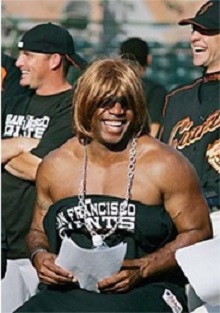
Barry Bonds identifying as female...kind of like he identified as "not being on steroids"

Barry Bonds identifying as female…kind of like he identified as “not being on steroids”

The fur is flying in California and also in the internet culture wars over California’s latest foray into social engineering, officially known as Assembly Bill 1266, and popularly known as “the bathroom bill.” In its current form, the proposed legislation states…

“A pupil shall be permitted to participate in sex-segregated school programs, and activities, and facilities, including athletic teams and competitions, and use facilities consistent with his or her gender identity, irrespective of the gender listed on the pupil’s records.”

Here is such a wonderful example of the inherent limitations of laws as opposed to ethics that I’m considering having it framed and mounted. Continue reading

On The Duty To Snuff Out Web Hoaxes

nigerian prince“Today’s” web page has a well-considered feature dealing with the common situation of a friend on Facebook or e-mail who is spreading a web hoax, false rumor or bad information. It’s threshold query: do you have an obligation to correct it? The short answer is yes, but with caveats. You can’t spend all your time knocking down web nonsense, and there are some hoaxes that aren’t important enough to devote much time to killing.

A few years ago, a smart and canny lawyer friend circulated an e-mail advising people who were in the throes of a heart attack to intentionally cough, citing a source that had given this as a helpful survival tip. One of those on her distribution list immediately e-mailed her and everyone else alerting them that the advice was completely wrong, and potentially deadly. That timely correction may have saved a life.

It is also prudent and kind to be especially protective of seniors and others you know who may be new to the internet. That damned Nigerian prince and your friend who is stranded in a foreign country and needs money to get home still fool nice, gullible people after all the warnings and articles. It’s a jungle out there, and we all have a duty to warn each other when we see predators lurking.

The Today article, “Friends Spreading Internet Hoaxes?…” is here.

____________________________________

Pointer: Fark

Source: Today (NBC)

Ethics Dunces: Bismarck, N.D. Supporters Of A.J. Clemente, The Obscene Ex-Newscaster

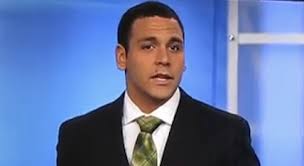
A.J. Clemente.

A.J. Clemente.

In an earlier post I referenced A.J. Clemente, a newscaster for KFYR-TV in Bismarck who debuted in his new role by saying “…fucking shit!” on the air, because he didn’t know his mic was on. Not surprisingly, he was fired. Now, apparently, many viewers have come to his defense and are admonishing the station for being too harsh.

The station is not being too harsh. The station is upholding correct professional standards, and removing an unprofessional employee whom they do not trust and have no reason to trust. The episode showed him to be careless, reckless and, obviously, subject to obscene outbursts, which only are appropriate if you are David Ortiz. Ah, but some of the good citizens of Bismarck, displaying the same entrenched ethics cluelessness that led to the nomination of the ridiculous Mark Sanford, ex-Romeo governor, to lose a GOP House seat in South Carolina, don’t comprehend accountability, trustworthiness or responsibility, because to them, the only values that matter are forgiveness and compassion. The technical terms for such people are “patsies” and “marks.” They would cripple society, business and government with their mindless, deadly niceness. Examples: Continue reading

Ethics Hero: Neil Diamond


Kansas City Royals v Boston Red Sox

The pop singer whose ear-worm of a 60’s hit, “Sweet Caroline,” inexplicably became a Fenway Park crowd sing-along tradition made a surprise appearance at the Red Sox-Royals game this afternoon, apparently voluntarily and at his own expense, to contribute to the festivities as Boston celebrated the end of a violent and frightening week. The song has been played at other ballparks in recent days, even at Yankee Stadium, in a show of solidarity with the besieged city and its residents.

Neil Diamond flew to Boston and contacted the Red Sox slightly before game time, saying he was eager to sing along with himself in the seventh inning. Surprised club officials assented. So he wandered out onto the field, looking paunchy, old and happy, and sang into a microphone while his ancient record played—since this was all impromptu, there was no other accompaniment available. And the crowd loved it: you can watch and listen here.

Unlike David Ortiz, Diamond didn’t have to resort to obscenity to give his appearance emphasis. He gave an unsolicited  gift to Boston and Red Sox fans, lending his talents to the celebration without compensation because it was a caring and classy thing to do. It didn’t matter that singing along with his 44 years younger self was hardly flattering, or that the sound was lousy, or even that “Sweet Caroline” is hardly Gershwin or even Billy Joel (I always preferred “Cracklin’ Rosie,” myself).  A big, wealthy recording star simply helped the city’s  healing along by a generous gesture when there was nothing in it for him.

Neil Diamond is a good guy.