Last Meal Ethics

Sure, the dinner was great, but the after-dinner entertainment was terrible...

The dragging-death killer of James Byrd, Lawrence Russell Brewer, went to his Texas execution last week after ordering up a true pig-out for his last meal: two chicken fried steaks smothered in gravy with sliced onions; a triple meat bacon cheeseburger with fixings on the side; a cheese omelet with ground beef, tomatoes, onions, bell peppers and jalapenos; a large bowl of fried okra with ketchup; one pound of barbecue with half a loaf of white bread; three fajitas with fixings; a Meat Lovers pizza; three root beers; one pint of Blue Bell vanilla ice cream; and a slab of peanut butter fudge with crushed peanuts. When it arrived, he didn’t eat any of it. Texas authorities were annoyed, or insulted (“I make you a delicious meal, your favorite, and this is the gratitude I get?”), or something. Brewer’s wasteful order caused the state  to re-consider the appropriateness of the tradition of the last meal accommodation for the condemned, and legislators decided to eliminate it entirely. Other states have begun to debate doing the same thing.

It’s time for the question that needs to start most ethics discussions: “What’s going on here?” Continue reading →

Do Nicer People Earn Less Money? Of Course They Do. And That’s the Way it Should be.

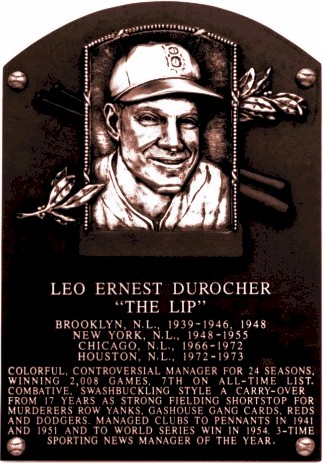
Leo Durocher figured out that "nice guys finish last" 60 years ago, and he never went to college. Now three academics, after extensive research, have "discovered" the same thing. Ah, scholarship!

A study by Cornell professor Beth A. Livingston,  Timothy A. Judge of the University of Notre Dame and Charlice Hurst of the University of Western Ontario study used survey data to examine “agreeableness” and found that disagreeable men made 18%, or $9,772 annually, more in salary than those who are more accommodating. The salary disparity was  less among women, with disagreeable females making 5% or $1,828, more than those who are easier to get along with. Does this shock you? It shouldn’t.

As is depressingly often the case, the academics who come up with such crack-brain studies—I read this one, and will want that wasted hour back when I’m on my death-bed so I can watch one last re-run of “Magnum, P.I.”—have so little experience with the working world and the reality of non-academic cultures that they don’t even comprehend their own research and draw absurd conclusions from it.

“The problem is, many managers often don’t realize they reward disagreeableness,” Livingston told the Wall Street Journal. “You can say this is what you value as a company, but your compensation system may not really reflect that, especially if you leave compensation decisions to individual managers.”

Oh brother. Continue reading →

Comment of the Day: “The Barefoot Contessa and the Compassion Bullies”

He's young, sick, and poor. His mother must be right, then.

Gary, an occasional commenter, grabs the Comment of the Day with a provocative one on a post from quite a while back. To refresh your memory, a sick child named Enzo Pereda asked the Make-A-Wish Foundation to get him a one-on-one cooking experience with “The Barefoot Contessa,” Ina Garten. Garten refused, and the boy’s mother led an online shaming exercise, condemning Garten, encouraging boycotts of her Food Channel show, and launching other bloggers and media on an anti-Ina rampage. Ethics Alarms’ verdict was that the boy’s mother was engaged in compassion bullying, demanding that this cable celebrity do her child’s bidding, alter her own schedule and priorities, and grant her son’s arbitrary “wish” because he happened to be ill. Garten had no obligation whatsoever to do what someone, or even everyone, might consider a kind act, and the one who was acting unethically was Enzo’s mother.

Gary’s comment goes to the heart of what Ethics Alarms is all about. Here is his Comment of the Day on “The Barefoot Contessa and the Compassion Bullies.”  I’ll have some additional comments at the end: Continue reading →

Comment of the Day: “The Folly of Sacrificing Integrity to Kindness in Competitions”

Today’s Comment of the Day is on the post about using awards and honors to make the less fortunate and unqualified feel good, as Michael carries the issue into the related matter of grading:

“I run into this every semester. I can’t give anyone a C in a class. I can’t give anyone a B in a class. You have to earn it by demonstrating that you understand and can apply the relevant material. You may be the most attractive, most charitable, most loved person on the planet, but if you can’t do this work, you can’t pass. Usually, they still don’t understand, and I have to give a speech I title “What a C student does.”

“Where do my ‘C’ students go? What do ‘C’ students do after they leave? ‘A’ and ‘B’ students go to graduate school, medical, and dental school. They may hold people’s lives in their hands in their careers. But what about the ‘C’ student? Surely there is no harm in letting someone squeak by with a ‘C’? Well… they test your water to make sure it is safe. They determine what amounts of new pesticides can be used without causing harm. They run the tests that determine if you raped someone or if that really was a bag of cocaine in your car, or just some borrowed powdered sugar (as you insisted). My ‘C’ students work jobs where people die if they mess up. The ‘C’ stands for competence. If you don’t have it, you don’t get a ‘C’. Continue reading →

The Folly of Sacrificing Integrity to Kindness in Competitions

"Great idea, Mandy! Let's elect President Obama our school Homecoming Queen! He could use a a boost."

Integrity. 

Violate it at your peril. This is especially true if you are running a competition, no matter how trivial it might be.

Not only may a momentary waiver of integrity for what seems like an admirable cause permanently render a competition and the honor of winning it meaningless, it well may inspire the well-meaning and misguided to stretch the questionable logic of your decision to the breaking point.

Almost everyone has seen the heart-tugging TV ad from the mysterious Foundation for a Better Life, in which a high school girl with Down Syndrome is crowned Homecoming Queen. (“True Beauty. Pass it on!”) It bothered me the moment I saw it—at least after I wiped the tear from my eye. Based on a real incident in Missouri in 2008, the spot illustrates an ethical conflict between kindness and caring on one side and fairness and integrity on the other.

Of course this was a nice thing to do. It was undeniably kind, and the student involved will surely regard it as a high point in her life. But what does the Homecoming Queen title mean now, once it has been awarded for purposes completely divorced from its original purpose? If there is another Down Syndrome student in future years who doesn’t get a crown, will this indicate to her that she is less deserving of the award, and somehow lacking, since, after all, a girl like her won in a past year? Continue reading →

To Jon Stewart, Ethics Hero: I’m Sorry I Doubted You.

Impossible conflict of interest? No problem!

I’m also glad that I waited before posting my article labeling Stewart, the much-revered cultural force who chairs Comedy Central’s satirical news hour, “The Daily Show,” an Ethics Dunce for wimping out in his initial tepid take on the Rep. Weiner scandal.

Stewart is a good friend of the sexting, lying New York Congressman, and for most comedians, leaving a high-profile friend in trouble off of their comic hit-list would not only be acceptable, but admirable. A comedian only has the obligation to be funny, and if he  chooses to be funny without slicing up a close friend in crisis, that just makes him a kind and loyal friend. Stewart, however, can no longer claim to be just a comedian. He has built a reputation as a truth-teller, leaning to the left, perhaps, but still willing to skewer idiocy, corruption, hypocrisy and dishonesty whenever and wherever they surface in current events. This means he is trusted, and that he has a duty to make  his audience laugh while displaying integrity, fairness, wisdom and good judgment. It’s a high standards to meet, but it is also the one Stewart set for himself by reaching it again and again. Continue reading →

Ethics Hero: Lincoln School in Spring Valley, Illinois

Thanks to Lincoln School, this isn't me. Yet.

Thank you, oh thank you, Lincoln School in Spring Valley, Illinois! Your superb and inspiring decision has stopped me, for the moment at least, from seeking species reassignment surgery. My membership in the human race has been an embarrassment to be of late, and I had been seeking alternatives. You give me hope.

Spring Valley’s Lincoln School gymnasium held a day of appreciation this week for custodian Edward “Red” Nestler,  88, who will retire on June 30. To his surprise, Red did not receive just a free lunch, or a watch, or a jacket, or a plaque in appreciation and commemoration of his many years with the school, a journey that began when he was a student there in the 1930s. On his “day,” Red learned that the school board, responding to a petition from students and staff, had voted to name the school gymnasium in his honor. Continue reading →

Comment of the Day: “Schadenfreude, Ethics, and Those Fanatics Inside Us All”

Maybe "The Broadcaster" was all Harry had inside...

Rick elaborates nicely on the theme of my post on handling those fanatic personas that reside in each of us, and in the process takes the ethical measure of an iconic baseball broadcaster whose charms always escaped me…the late Harry Carey.

“It strikes me that there’s another part of the equation, which you only hint at here, but which you have mentioned in other posts. That’s the “ethics alarm” (to coin a phrase) that goes off, or should, when the director or the Red Sox fan or whoever That Guy is says or does something unethical. Part of it is “heat of the moment” stuff: the egoism that slips out in a moment of excitement. No, of course you didn’t want Thurman Munson to die, but yes, he did play for the hated Yankees, and their team just got worse. You’re forgiven the fist-pump. Once. And provided you (Jack, as opposed to Red Sox fan) didn’t mean it.

“I was watching a Cubs game on WGN sometime in the mid-1980s when news came over the wire that Montreal Expos infielder Hubie Brooks had suffered a season-ending injury. Brooks had been a favorite of mine when he’d played for the Mets (“my team”), and I continued to follow his career with some interest, so the news was doubly sad for me: a player had been seriously injured, and that player was Hubie Brooks.

“In contrast, Cubs announcer Harry Carey proclaimed “well, if it helps the Cubs win, it’s OK by me.” I remember the exact words 25 years later. What struck me was not that they were uttered, but that no one—not Carey himself, not his broadcast partner, no one—made the slightest attempt to walk them back. That was the official verdict: a season-ending injury (Brooks was never the same again, by the way) was a good thing if it happened to somebody in a different uniform. I mentioned the incident to a couple of friends—Cubs fans—and they laughed and said “oh, that’s Harry.”

“Everyone understood that Carey was a Cubs fan first and an announcer second. That was, I am told, part of his charm—I never saw it, but others did. Still, I was sort of hoping that there would be a human being in there somewhere. On that particular day, at least, I was disappointed. We lived in WGN country for another seven years. I never watched another Cubs game without turning off the sound.”

Schadenfreude, Ethics, and Those Fanatics Inside Us All

NBC baseball blogger Craig Calcaterra recently raised the sensitive issue of sports fan Schadenfreude*, something that I have been afflicted with from time to time. The occasion was the recent injury to San Francisco Giants catcher Buster Posey in a particularly gruesome collision at home plate. His comments made me think about the obsessed and narrow personas in all of us, and how we should regard their occasional callousness.

Posey was the 2010 National League Rookie of the Year; he is also a cornerstone of the Giants’ recent success: the team is the reigning Major League Baseball World Champion. The collision with Florida Marlins’ Scott Cousins simultaneously broke Posey’s leg, ended his season, jeopardized the career of an exciting young player (players often return from such injuries permanently diminished) and dealt a serious blow to the Giants’ chances of returning to the World Series in 2011.  Reacting to a blogger who suggested that the injury caused most non-Giants fans to  give “a little fist-pump”… because “their team’s chances of dethroning the Giants as World Series champions just got a little bit better,” Calcaterra wrote… Continue reading →

From Hero to Idol: Congratulations, Scotty McCreery!

Way back in March, long before the 2011 edition of American Idol had winnowed its hopeful singers down to the final thirteen, 17-year-old Scotty McCreery earned an Ethics Hero here by bravely taking responsibility for the mistreatment of another contestant in the group segment of the audition process at a time when the judges seemed to be in the mood to make someone pay for it. The incident has been forgotten, but it showed Scott to be a young man of unusual integrity and courage. Little did Ethics Alarms realize  that he was also the singer to beat, and nobody beat him. Last night, he was crowned the American Idol.

Fame and fortune changes people, as we all know, and too often for the worse. Still, McCreery’s prospects of holding on to his core values look strong, because his character looks strong, and everyone, whether or not they follow American Idol and whether or not they groove to Scotty’s milieu, Country-Western music, should applaud the entry of a talented and ethical young man into the popular culture.

Congratulations, Scotty. In March we knew you were good; we didn’t know you were this good.