Comment of the Day: “The Beatles And Plagiarism”

Then there are Golden Rule considerations...

Then there are Golden Rule considerations…

There were many outstanding comments today, but I have a soft spot in my heart for any comment that completes a post that I decided to shorten by raising the issue I omitted for length. Thus johnburger2013 gets another Comment of the Day nod for his musings on the elusive lines between homage, inspirations, quotes and plagiarism in music.

The three examples discussed in my post are not close calls, I’d insist: my friend, actor/lawyer/ classic rock maven David Elias informs me that John Lennon actually confessed that he had plagiarized the Chuck Berry song, and his was the least egregious steal of the three. Other instances, however, are not so clear cut: If he hadn’t sung all of them, a case could be made that every Gary Puckett song was plagiarized from every other one. (The same, in fact, has been said of Chuck Berry.)

In researching the Beatles story, I found an entertaining site called Sounds Just Like which explores johnb’s “line.” Most are a stretch: No, I don’t think John Williams ripped off Darth Vader’s theme from Mary Poppins’ “A Spoonful of Sugar.” But I do know that Arthur Sullivan was imitating Mendelssohn big time in “Iolanthe,” and that recognizable musical quotes are important tools of the trade that should not be strangled by overzealous copyright prosecutions.

Here is johnburger2013’s Comment of the Day on the post, The Beatles And Plagiarism: Continue reading

Ethics Dunce: The State of Illinois

illinois-lottery

State lotteries are unethical, of course, being regressive crypto-taxes on the poor, dumb and gullible installed by gutless legislators to avoid more responsible revenue sources that might cost them votes. Illinois isn’t alone among the states engaging in these shameless scams; indeed it is in the vast, vast majority. This particular slippery slope also slipped exactly as the worst doomsayers predicted, with lotteries leading inexorably to widespread casino gambling and an explosion of gambling addiction and its attendant ruination. But never mind.

Illinois is not an ethics dunce for having a state lottery, although it is. Illinois is an ethics dunce for being the only state that has a state lottery and doesn’t pay up when one of those poor, dumb, gullible citizens gets lucky and wins a bundle. The state is in the throes of a huge fiscal deficit, and because the legislature and governor have failed to agree on a 2015-16 budget for the fiscal year that started July 1, the Illinois comptroller’s office doesn’t have  authority to write checks over $25,000. Lottery winners who have won that much or more when the ping-pong balls popped their way have been waiting for their giant checks. Meanwhile, the state continues to pay the salaries of those working inside the Illinois Lottery and the private company that manages it, and the lottery continues to advertise the games and sell tickets. Continue reading

The Beatles And Plagiarism

Chuck BerryI knew that Brian Wilson had ripped off Chuck Berry’s “Sweet Little Sixteen” to write “Surfin’ USA,” resulting in Berry owning the copyright to the Beach Boys hit. I knew that George Harrison had stolen the Chiffons’ “He’s So Fine” for his first solo hit “My Sweet Lord,” ultimately resulting in Harrison being found guilty of “subconscious plagiarism” (suuuuuure) and paying $1,599,987 of the earnings from “My Sweet Lord” to Bright Tunes, since songwriter Ronnie Mack had died in 1963, shortly after “He’s So Fine” was released. ( George did not cover himself in glory, telling an interviewer, “As far as I’m concerned, the effect the song has had far exceeds any bitching between copyright people and their greed and jealousy.” You stole the song, George.)

I did not know until this morning, when I had a chance to listen closely to Berry’s “You Can’t Catch Me” on my car radio, that The Beatles had plagiarized it for the opening cut on “Abbey Road,” “Come Together (Over Me.)”

First it was the lyrics that got my attention. I heard Chuck sing..

“I was rollin’ slowly ’cause of drizzlin’ showers
Here come a flat-top, he was movin’ up with me..”

Sounds familiar…where have I heard that before? Oh yeah!

“Here come old flattop, he come grooving up slowly…”

Then there was the melody, which was essentially identical, just differently arranged. Compare:

Continue reading

Ethics Alarms Update: The Borgata Babes

Borgata Babes

Twenty-one female servers at Atlantic City’s Borgata Casino sued their employer,  claiming that they were objectified, discriminated against and demeaned by being forced to maintain slim and fit figures  as “Borgata Babes.” I wrote about this case in 2013, saying,

“While it is true that physical attractiveness can be an employment asset in virtually any job—note #2 on fired TV reporter Shea Allen’s “confessions”— there are some jobs for which it is the primary, or at least a substantial and thus legitimate requirement. Strippers, of course. Fashion models. Cheerleaders. Actresses. Personal trainers. Fox newsreaders. Hooters girls, and pretty obviously, Borgata Babes. To say that a business can’t make a decision to have fantasy sex objects as part of its appeal is an excessive use of political correctness grafted to state power. Essentially, the suing Babes are arguing that they can pull a bait and switch—use their well-toned beauty to get hired, agree to maintain the high standard of visual perfection that they presented to their employer, then go to pot and sue if their employer objects. Beauty is an asset in the workplace and a tangible one: the pressure on the culture to behave as if that asset doesn’t exist (the pejorative labeling of a preference for the lovely over the hideous as “lookism” is the weapon of choice) and to prohibit employers from ever hiring on that basis in jobs where it is a substantial and relevant qualification is as unfair to the fit and comely as requiring an investment banker to look like Kate Upton….”

Now a state appellate court  has ruled that the casino can impose appearance requirements as long as it does so fairly and equally.

Score a victory for the freedom to acknowledge that beauty can be a legitimate job qualification, and against ludicrous political correctness.

_____________

Pointer: Res Ipsa Loquitur

Ethics Quiz: The Conundrum Of The Wrong Color Baby

mixed race child

[ I wrote about this case last fall, before the decision in the case. This Ethics Quiz is a follow up. No fair cheating by going back and reading the older post until you have your answer]

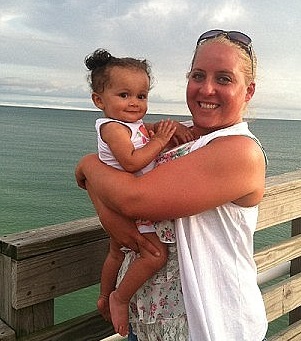
Jennifer Cramblett, one half of a white same-sex couple that wanted a child, went to Midwest Sperm Bank and chose adeposit from donor No. 380. The sperm bank made that ol’ “8 looks like 3” mistake, so instead of the white donor the couple wanted, they were given sperm from donor No. 330, a black man. Cramblett filed suit against the sperm bank in 2014 for damages because she gave birth to a mixed-race daughter, and that was not what she paid for.

The sperm bank apologized but refunded only part of the cost to Cramblett and her partner Amanda Zinkon, and denied that damages were warranted.  Cramblett’s suit alleged that the mistake caused her and her family stress, pain, suffering and medical expenses, and that she feared that her daughter, Payton, now 3, would grow up feeling like an “outcast.” Attorneys for the sperm bank argued that “wrongful birth” suits should only apply to cases where a child is born with a birth defect that was predictable. In this case, the girl, Payton, is normal and healthy. Being black, of course, is not a defect.

The judge threw out the case, but headlines have been misleading. The original suit—why, I don’t know—failed to allege negligence, which I would think would be a slam dunk. The suit can and presumably will be refiled with a negligence claim, and that’s res ipsa loquitur.  (If a black child is born to a white couple, someone goofed somewhere.) There will be damages, but the question is how much and on what basis.

Your Ethics Alarms Ethics Quiz of the Day is this:

Would it be ethical for a court to hold that having a child that is the “wrong” color is a hardship, injury, or misfortune worthy of damages?

Continue reading

The Case Of The Trash-Talking Doctors, And The Price Of Trust

So, did you hear the one about why surgeons wear those masks?

So, did you hear the one about why surgeons wear those masks?

When I first heard about this case, I thought the jury award of $500,000 was ridiculous. The more I think about it, the more I begin to think it was appropriate.

Before his colonoscopy, a Vienna, Virginia patient pressed record on his smartphone, not intending to record everything that was said but ending up with the entire proceedings anyway. That was a half-million dollar stroke of luck for him, and the confirmation of dark suspicions for the rest of us. The resulting recording revealed that the surgical team amused itself by insulting and demeaning the semi-conscious anesthetized man throughout the procedure.

The anesthesiologist, Tiffany M. Ingham, was the ringleader and the primary offender.  Among her inspired bon motsContinue reading

Ethics Heroes: The Sweet Briar Alumnae And Their Supporters

victory

What an inspiring story! I hoped, and I so wanted to believe, but I confess that I really thought that the traitorous, unethical Sweet Briar College board had delivered a fatal blow to this storied all-woman’s college by operating by surprise and stealth, waiting to announce its plan to close the institution so late in the academic year as to render counter-measures futile.

Like that disgraceful crew, I underestimated the determined women of Sweet Briar and their allies.

From the Washington Post:

Virginia Attorney General Mark R. Herring’s office announced Saturday night that an agreement has been reached to keep Sweet Briar College open next year.

The agreement, which requires court approval, involves a $12 million commitment from an alumnae group and permission from the attorney general to release $16 million from the school’s endowment.

The president of the private women’s college in rural Virginia shocked many in March when he abruptly announced that the college, which is more than 100 years old, would close in the summer. Since then, supporters have been working feverishly to save the school, protesting, raising money and filing lawsuits challenging the closure.

On Saturday, Herring’s office announced that — if Bedford County Circuit Court Judge James W. Updike Jr. approves the agreement — Saving Sweet Briar, the alumnae group, would give $12 million for the operation of the college for the 2015-2016 year, with the first $2.5 million installment to be delivered in early July….

Both the alumnae group and other challengers to the closure say the funding would be enough to keep the school operating for the 2015-2016 academic year.

The agreement comes barely a month before the historic school was slated to close — and in advance of court hearings on multiple lawsuits. It does not resolve the ongoing issues that the school’s current leadership cited in making the decision to close, such as concerns about enrollment and revenue. It does not explain where next year’s class will come from, since accepted students were told to apply elsewhere and current students were told to transfer. But it provides a stopgap…

Leadership would change: If the agreement is approved, at least 13 board members would resign, and 18 new ones would be appointed — a majority that would control the board… Continue reading

Sweet Briar College’s Fate And Fait Accompli Ethics

high-noon-clock

 UPDATE (6/15): I am officially nominating this post as the Most Typo-Riddled Ethics Alarms Article of 2015. At least I hope it is—alerted by a reader, I just found and fixed about 10, and I have no idea what happened. I suspect that I somehow pasted the next-to-last draft instead of the final. My proofreading is bad, but not THAT bad. I am embarrassed, and apologize to all: that kind of sloppiness is never excusable, but I especially regret it on a topic this important.

****

Sweet Briar College was officially scheduled for termination, date of execution later this summer, by a board that chose not to offer alumnae and other interested parties a fair opportunity to raise objections, propose solutions, or mount a rescue effort. Indeed it was almost an ambush.

Although the distinguished graduates of Virginia’s unique and venerable all-female college have mounted a spirited effort to reverse this dubious move, time is not on their side. Amherst County Attorney Ellen Bowyer, working with the passionate opposition to Sweet Briar’s closing, argued in court that this would violate the terms of the will upon which the college was founded, and that the college’s board has engaged in malfeasance or misfeasance, violating its fiduciary duties and misusing charitable funds. A circuit court refused Bowyer’s request for a temporary injunction that would at least delay the closing —Tick-Tick-Tick!—and the case was appealed to the Virginia Supreme Court. Those  justices concluded that the lower court, in denying the injunctive relief, erred by concluding that that the law of trusts do not apply to a corporation like the college.  It does. So now the case returns to the circuit court to reconsider the merits.

Tick-Tick-Tick!

I find this infuriating and heart-breaking. As I’m certain the college’s treacherous board knew in March, legal challenges and court decisions take time, and the realities of the academic year halt for no man, or woman. It’s June now, and Sweet Briar has no 2015 entering class. Its sophomores and juniors are seeking, or have found, other schools as well. One of Sweet Briar’s problems—not an insuperable one to a board appropriately dedicated to is traditions and mission—was increasingly lagging enrollment. Whatever the solutions to that may be, skipping a year of entering freshman is not one of them. Faculty have to eat: presumably most, if not all of them, and the staff, are seeking employment elsewhere. The battle to save Sweet Briar, as noble and as important as it is, may have been lost from the start, simply because the clock, and the calendar, keeps moving.

This was, I fear, a fait accompli of the worst variety, an unjust, unfair, even illegal action that is successful because once set in motion, there is no way to stop it. Using the fait accompli strategy is intrinsically unethical, and the mark of an “ends justifies the means” orientation. It is based on the principle that an omelet, once made, cannot be unmade, because eggs can’t be put together again. In a situation where the ethical, fair, procedurally just approach is to debate and challenge a proposed policy action before it takes place, the fait accompli approach operates on the practical maxim that if you have no options, you have no problem. In essence, it says, “Yes, you may be right, but what are you going to do about it?” Continue reading

The Sixth Annual Ethics Alarms Awards: The Worst of Ethics 2014 (Part 4 of 4)

mamoru-samuragochi2

Outrageous Hoax Of The Year

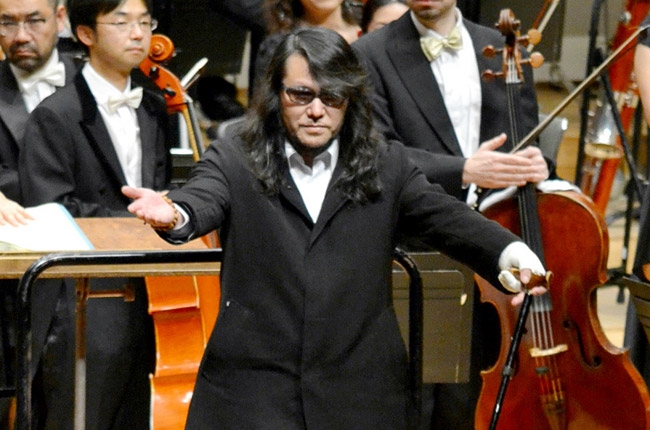
Mamoru Samuragochi, the composer sometimes known as “The Japanese Beethoven” because he composed critically acclaimed works despite being deaf, was exposed as double fraud: he didn’t compose the works that made him Japan’s most popular classical composer, and he isn’t even really deaf!  Samuragochi hired a musical ghostwriter named Takashi Niigaki to compose more than twenty compositions for Samuragochi since 1996.

Funniest Outrageous Hoax

Fake Panda

This.

Unethical Artist Of The Year

Performance artist Maximo Caminero, who  walked into the Pérez Art Museum in Miami, entered a special exhibit of sixteen ancient Chinese vases painted over in bright colors by celebrated Chinese dissident artist Ai Weiwei, picked up one of them, and immediately after a security guard instructed him not to touch the exhibit, allowed the vase to fall from his hands, shattering into bits. Caminero admitted that smashing the pottery, which was valued at a million dollars,  was intentional, and was his protest against in support of local artists like himself whose work is not exhibited at the museum while the art of international artists like Weiwei is.

Unethical Veterinarian Of The Year

Fort Worth, Texas veterinarian Lou Tierce lost his license for five years as a result of, among other transgressions, his telling the owners of a Leonburger (it’s a very big dog) that their pet was terminally ill and had to be euthanized, then secretly keeping the dog alive in a small cage so he could use Sid’s blood for transfusions to Dr. Tierce’s other canine patients. Eventually an assistant at the clinic blew the whistle and alerted Sid’s owners, who rescued their dog and sicced the law on the worst veterinarian since Dean Jones menaced Beethoven.

Unethical Doctor Of The Year

Dr. Nancy Snyderman, NBC’s medical expert, endangered the public by defying a voluntary quarantine for possible Ebola exposure,  because she just couldn’t bear to be without her favorite soup.

Scam of the Year

Jonathan-Gruber-1

The Affordable Care Act.

 Unethical Federal Agency Of The Year

The Secret Service. Lots of competition in this category: the Veterans Administration, the I.R.S., the CDC, the Justice Department, NSA…but when you essentially have one job to do and do it badly, sloppily carelessly and dangerously, there’s really not much more to say Continue reading

The Special Needs Student, the Compassionate Teacher and the “Awww!” Factor (UPDATED)

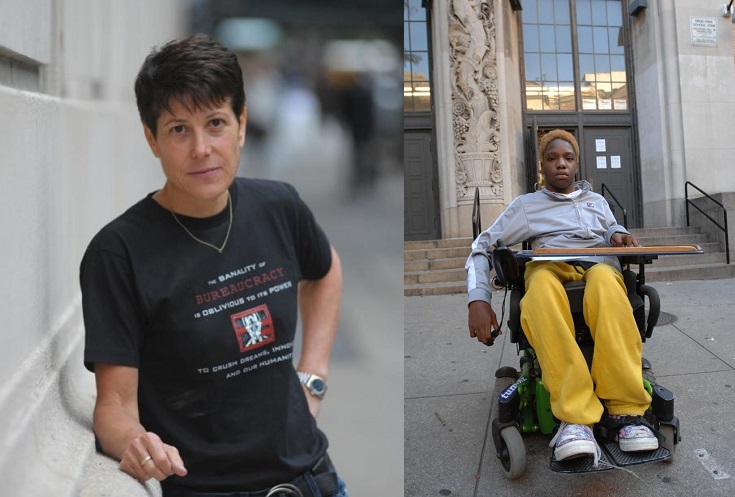
Debra Fisher

Regular readers here are familiar with the “Ick Factor,” the common phenomenon where a situation that causes an emotional response of revulsion, disgust or fear is labelled unethical when there is nothing unethical about it. Many kinds of conduct are icky, but still on the right side of ethics, if only one can put aside the gag reflex. The reverse of the Ick Factor is the less common “Awww!” Factor, where particular conduct seems loving, caring and nice, but is in fact unethical in one or more respects. Such is the case of New York City special needs teacher Debra Fisher.

In October, Fisher was suspended when e-mails were discovered on the school computer system showing that she had been spending school time raising funds for a special project on behalf of Aaron Phillip, a thirteen year old special needs student who is an aspiring animator with his own blog. The project’s goal was to raise $15,000 for a nonprofit devoted to developing Aaron’s talent, an organization called “This Ability Not Disability” founded and administered by Fisher.

Awww!

The problem was that while her efforts on behalf of the student were supported by the school, Fisher, an occupational therapist at Public School 333 with nine years of service, did not have permission to perform them during school hours. Thus she was suspended for six weeks. Now she is suing the school system for back pay, telling reporters, “I’m just trying to fight for what I believe is right.”

If she believes she is right, then she shouldn’t be working at the school at all, because she is in fact dead wrong.

But awfully nice. Continue reading