Unethical Quote Of The Week: Baltimore Activist Rev. Wesley West, From The Freddie Gray Ethics Train Wreck

Train Wreck

“I’m angry because this is what we deal with, and when I say ‘we,’ we’re talking about the black community and I’m a part of and represent that community as well, it seems like we have no voice when it comes to these issues. When it comes to conversations like this, we’re not involved. This should have been a jury trial where the community had a voice in this case. Of course a system works in a system’s favor, that’s how I look at it. That judge represents the system, and the police officer represents a system, but they’re all one system working together. And again I don’t think case was actually tried fairly when it comes down the community being involved.”

-Baltimore activist Reverend Wesley West, quoted by CBS news, in the wake of Freddie Gray’s arresting officer, Edward Nero, being found not guilty today of all charges brought against him as a result of Grey’s death following his arrest in April of 2015

The Freddie Grey Ethics Train Wreck, a bi-product of the Ferguson Ethics Train Wreck which was a direct result of the Trayvon Martin-George Zimmerman Ethics Train Wreck, is still rolling, in case you wondered.

This is the second trial of the accused officers to support the conclusion by many independent analysts that charges were brought against six Baltimore officers in the tragedy without sufficient evidence or investigation, in order to quell social unrest and mollify African American activists like West. That made the charges, by City Attorney Marilyn Mosby—whose husband just happened to be preparing a run for mayor, a coincidence, of course— unethical, and a capitulation to government by mob.

West is impugning the justice system despite knowing nothing of the evidence presented or what happened in the events leading to Gray’s death. His contention that “the community” should have a say in a police officer’s guilt or innocence is a direct appeal to mob justice. His statement is also factually false, especially in this instance. The community had far too much influence in the prosecution of Nero and the other officers already, using violence and the threat of more violence to extort the city. Continue reading

Ethics Dunce: San Antonio District Attorney Nico LaHood, The FUN Prosecutor!

my_cousin_vinny_9

Casual Friday was always a blight on the professional workplace landscape,and, predictably, it has come to this.

There is a cultural battle going on in San Antonio, Texas, where in the 187th District Court, District Judge Steven Hilbig  announced that he would not allow prosecutors in his courtroom if they were dressed like a local version of Joe Pesci’s Vinnie in “My Cousin Vinnie,” garbed in jeans and guayaberas rather than Vinnie’s leather jacket and leather pants. This wouldn’t be a problem for any sane DA’s office, since almost everywhere else no self-respecting (judge-respecting, court-respecting, law-respecting, respect-respecting…) lawyer would dream of appearing in the halls of justice dressed like an Acapulco tourist, or Cousin Vinnie, for that matter. It is a problem in Bexar County, however, because there District Attorney Nico LaHood thinks that local tradition trumps the legitimate needs of the justice system.

It is Fiesta time, you see, in Bexar county, a ten-day celebration that migrated legally from Mexico to parts of Texas, and previous judges foolishly allowed it to be recognized in their courthouses by permitting prosecutors to “dress down.”  The rough, and equally stupid, equivalent farther from the border would be allowing prosecutors to dress like elves during the Christmas shopping season or Minnie Mouse on Halloween.

Judge Hilbig, an adult, finally decided to put a stop to this nonsense by declaring, as did Judge Fred Gwynne, old Herman Munster himself in “My Cousin Vinnie,” that no lawyer was going to make a mockery of justice in his courtroom by setting foot in it dressed unprofessionally.

I love this guy! Continue reading

The Real Legal Ethics Conundrums In “Bridge of Spies”

bridge-of-spies

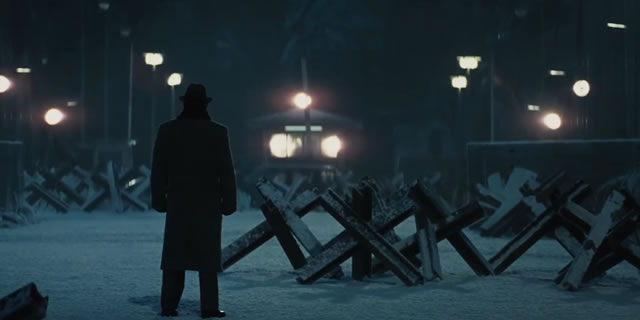
Quite a few readers have written that they would enjoy some of the problems I present in my seminars on legal ethics. I try to please, so here are some difficult legal ethics issues that arose in the screenplay of last year’s Oscar-nominated film “Bridge of Spies.”

I wrote about the film earlier this year, here.

The film tells the true story of Jim Donovan, an insurance lawyer who is recruited, in 1957, by his New York bar association to take on the representation of the accused Soviet spy Rudolf Abel, a job that we see Donovan not only do bravely and competently, but one that he takes all the way to the Supreme Court. He loses, and Abel goes to prison.

Legal ethics points:

  • That ends the representation, and Abel is no longer Donovan’s client, but a former client.
  • Lawyers still have duties to former clients: they must keep all of the confidences learned during the representation and after, and not use these against the interests of the ex-client, or reveal them ever, even after the ex-client is dead and buried, except under rare circumstances.
  • A lawyer is also not allowed to become adverse to the interests of a former client in a substantially related matter to the one he (or she) handled for the client.

Because when representing Abel, Donovan had argued against executing the spy on the grounds that he might a useful  bargaining chip if an American was captured by the Russians—an argument he made to save Abel’s life, not to provide unsolicited advice to the government—the capture of U2 pilot Gary Powers after he was shot down in a spy plane makes the lawyer a candidate to make his own scenario come true. An East German official sends Donovan a letter claiming to be able to broker an exchange of Powers for Abel. When the CIA learns about the letter, they ask Donovan to go to East German and negotiate the deal. Continue reading

The First Thing We Do, Let’s Slime All The Lawyers…

the-blob-88

In election years I tell all my legal ethics seminar classes to start teaching their non-lawyer neighbors and relatives ABA Model Rule 1.2 b, which reads,

(b) A lawyer’s representation of a client, including representation by appointment, does not constitute an endorsement of the client’s political, economic, social or moral views or activities.

This, combined with the principle of zealous representation of one’s client, as expressed, for example, in D.C. Rule of Professional Conduct Rule 1.3…

(a) A lawyer shall represent a client zealously and diligently within the bounds of the law.
(b) A lawyer shall not intentionally:

(1) Fail to seek the lawful objectives of a client through reasonably available means permitted by law and the disciplinary rules; or
(2) Prejudice or damage a client during the course of the professional relationship….

…means that lawyers represent clients, and are bound to seek those clients’ objectives when those objectives are legal whether the lawyer likes or agrees with those objectives or not.

It means that it is ignorant, wrong and dangerous to the rule of law as well as the right of citizens to be the beneficiaries of laws in a democracy and not the servants of them, for unscrupulous political opponents to attack lawyers for the positions, objectives and needs of the clients they represented. It means that it is disgusting for maleducated journalists to misinform the already disturbingly confused public by using a matter that a lawyer-turned-candidate’s client needed legal advocacy for as an excuse to impugn the candidate’s character.

Lawyers do not have to agree with or like their clients’ positions, objectives or character, is that clear? Everybody? Lawyers are not to be held accountable for their client’s motives, conduct or legal objectives. Bill Cosby’s lawyers do not approve of rapists. Johnnie Cochran did not support the hobby of ex-wife knifing.

Yet this happens every election cycle, without fail: cheap shots directed at candidates who are lawyers based on one or more of their unsavory clients.  There are two lawyers left in the current primary competition, and guess what?

You guessed it.

Hillary’s ancient defense of a rapist was used to slime her all the way back in 2014. The unfair attack raised its misshapen and empty head last week on CNN, when a Trump supporter brought it up. What we know about Clinton is that she defended a child rapist she was appointed to represent pro bono in 1975, and did an excellent job. She used all the tactics that she was allowed to use. She attacked the credibility of the twelve-year-old victim, and threw sufficient doubt on the the chain of evidence that Clinton got an advantageous  plea bargain for her client, who served just ten months in prison. Sure, he was guilty, and Hillary knew it.  It was her job to make the prosecution prove its case with sufficient evidence, and they failed. The victim, we are told, has had a hard life because of the experience. That is not in any way Clinton’s fault or responsibility.

Now it’s on to Ted Cruz. Here is Slate’s click-bait, misleading, deceitful headline to further the “Ted Cruz is a some kind of sexually repressed weirdo” trope the left-biased media is peddling: Continue reading

North Carolina’s Conflicted, Disloyal, Unethical Attorney General, Roy Cooper

A candidate masquerading as a lawyer...

A candidate masquerading as a lawyer…

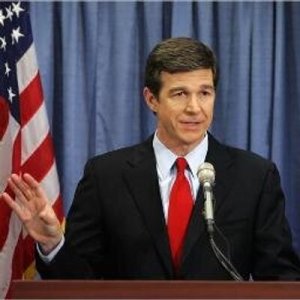
Roy Cooper, North Carolina’s elected Attorney General, has so many conflicts of interest that he can’t credibly do his job in an ethical manner. Fortunately for him doing his job ethically seems to hold no interest for him.

To start with, he is an announced political opponent of the current Republican governor, Pat McCrory. This situation is not unique, but if an Attorney General is going to do his job ethically, for remember he is the state’s lawyer, he has to make an effort to put his political interests aside and not allow them to interfere with his duty to represent his client the state, whose voters have made McCrory its top decision-maker.

Cooper, however, isn’t making any such effort. House Bill 2, a state law passed last week that bars local governments from enacting nondiscrimination protections for the LGBT community, is anathema to Cooper’s constituency, so he is refusing to defend it in court against a federal lawsuit. If he were a private attorney whose beliefs rendered it impossible for him to represent his client, Cooper would have to resign. Since he is elected, he need not do that, but he can’t actively interfere with his client’s legal needs either. His proper course under the legal ethics rules governing all lawyers would be to find an outside counsel to do his job in this case, since he is incapable of doing it, and to defend the law.

Instead, Cooper is actively undermining his client’s legitimate objectives.  Cooper said in a news conference that the law is a “national embarrassment” and it “will set North Carolina’s economy back if we don’t repeal it.” That’s the candidate talking, not the state’s lawyer, and thus the state’s lawyer is engaged in a bright-line breach of loyalty by talking like that in public. His duty, and his only ethical option, is to shut up. He may not be able to support his client’s objectives, but he absolutely must not impede them.

Cooper has even gone beyond that ethical violation to a massive conflict of interest breach. Instead of defending McCrory, the Board of Governors and the others being sued in the federal lawsuit, Cooper has announced that he will defend the two LGBT people and the lesbian professor bringing the lawsuit against the state! Continue reading

Now THAT’S The Unauthorized Practice Of Law!

The fake lawyer with her husband, if it really IS her husband....

The fake lawyer with her husband, if it really IS her husband….

Usually lawyers get sanctioned for engaging in the “unauthorized practice of law” when the unwittingly fail to pay their bar dues, or handle a matter from the comfort of their office involving a client in a state they can’t practice in. It’s a serious ethics violation and a crime as well in some cases, but seldom do you see an example of UPL, as it’s called, like this.

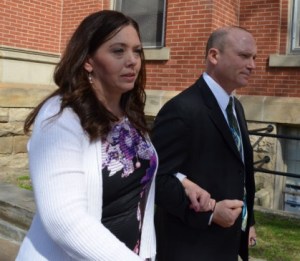
For ten years, Kimberly Kitchen worked as an estate planning lawyer at BMZ Law in Huntingdon County, Pennsylvania, and thrived.  She even served as president of the county bar.  She was never a lawyer, however; never went to law school, never took the bar exam. Prosecutors said she forged documents to show she graduated from law school at Duquesne University, passed the bar and was licensed to practice. Everything was a fake, and she was a fraud. Now she is facing jail time. Continue reading

Unethical Quote Of The Month: Above the Law’s Joe Patrice

[C]onsensual relationships with adults don’t seem like a big deal. Sure, the conflict of interest of sleeping with someone in your class is deserving of discipline, but, really, in a state where you can marry your sister, is it a fireable offense to hookup with a twenty-something attorney-to-be? Obviously, if there were more serious allegations that would be another matter, but so far we’ve only learned of this more benign brand of misconduct.

—-Above the Law writer Joe Patrice, commenting, incompetently, on the firing of Virginia University College of Law Professor Arthur Rizer, for having sexual relations with multiple students.

Professor Rizer, the Sam Malone of West Virginia University College of Law...

Professor Rizer, the Sam Malone of West Virginia University College of Law…

This commentary, from a regular writer for a website that covers law schools, is so ethically obtuse and legally ignorant that he should be fired. “Not a big deal”? Sexual harassment at law firms is a very big deal as well as a very big problem, and a law professor who flagrantly violates an anti-harassment policy like the prohibition against professors treating the student body as their own personal dating bar is teaching that seeking sex with subordinates is culturally acceptable in the legal profession. It isn’t. It never has been.

The professor’s conflict of interest is the least of his self-created problems. First, there is no valid consent in such cases. The professor has real and perceived control over students’ academic success and legal career viability. This is classic inequality of power that gives a professor implied leverage over a student’s “consent” to sexual relations. Moreover, the knowledge that a professor is having sex with students constitutes third-party sexual harassment. Do other students assume that they are expected to have sex with the professor if he requests it? Is the professor looking at female students as mere sex objects? Are students that provide sexual access more likely to get high grades? What happens to students who say “no”? This creates a hostile environment for study and education. Continue reading

Now THIS Is Hypocrisy (Among Other Things)…

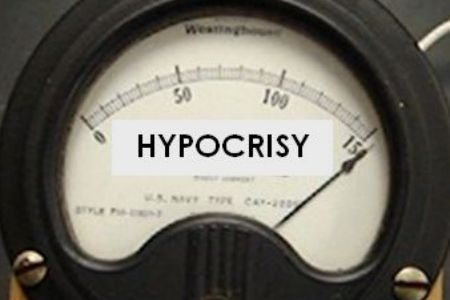
Hypocrisy meter

I thought Eliot Spitzer set a high bar for hypocritical prosecutors, but Ingham County (Michigan)  Prosecutor Stuart Dunnings makes him look like a piker.

Dunnings, a well-respected prosecutor since 1997 and an outspoken advocate for ending human trafficking and prostitution, is facing fifteen  criminal charges in Ingham, Clinton and Ionia counties, including ten counts of prostitution, pandering and four counts of willful neglect of duty.

Investigators connected to a 2015 federal investigation into a Michigan-based human trafficking ring determined that between 2010 and 2015, Dunnings paid for sex hundreds of times with many women whom he contacted using escort websites. Dunnings also allegedly induced one woman to become a prostitute,leading to the pandering charge, which carried a maximum sentence of 20 years. The prosecutor’s  brother, Lansing attorney Steven Dunnings, was also charged with two counts of prostitution.

Ethics Alarms frequently finds itself annoyed by mistaken, incorrect or unfair accusations of hypocrisy, and is grateful to Dunning, who claimed to be dedicated to wiping out human trafficking and prostitution while he was really supporting both with his patronage, for giving us a clear and unequivocal demonstration of what real hypocrisy looks like.

“Zodiac” And Real Lawyer, Fictional Lie Ethics

zodiac Belli

One of the problems with being an ethicist is that every movie seems like an ethics movie.

I watched “Zodiac” last night, struck by how much it resembled “Spotlight,” and not just because Mark Ruffalo had similar roles in the two films. It is a long, intense 2007 movie about the frustrating 1960s and early 1970s manhunt for the serial killer who called himself the “Zodiac” while killing seemingly random victims in the San Francisco Bay Area, and taunting police, Jack the Ripper-style, by sending them  letters, blood stained clothing, and in a special touch, ciphers mailed to local newspapers. The case remains unsolved.

What set off my ethics alarms, however, was a scene based on an actual incident in the case. From the website “Zodiac Killer Facts”:

On the night of October 11, 1969, the Zodiac murdered cabdriver Paul Stine and removed a portion of the victim’s shirt. Days later, the killer mailed an envelope to the offices of The San Francisco Chronicle. Inside, the Zodiac had included a blood-soaked piece of Stine’s shirt along with a letter that traumatized the Bay Area for decades. In his customary cavalier style, The Zodiac wrote, “School children make nice targets. I think I shall wipe out a school bus some morning just shoot out the frunt tire and pick off the kiddies as they come bouncing out.”

The Zodiac’s threat to assassinate school children terrified children and parents everywhere, and created a nightmare of security concerns for police and school officials. Armed men escorted children to and from schools while patrol cars and even aircraft followed along and monitored the surrounding area. As media coverage of Zodiac’s murderous plans increased and fears of a horrific ambush grew, a local television station was the setting for a chilling scene.

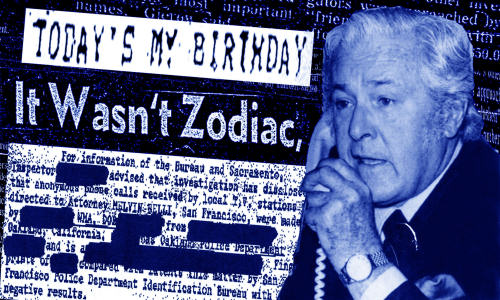
In the early morning hours of October 22, 1969, the Oakland police department received a phone call from a man claiming to be the Zodiac. The caller said he wanted famous Boston attorney F. Lee Bailey to appear on a local television talk show, but told the operator that he would settle for San Francisco lawyer Melvin Belli in the event Bailey was unable to appear.

Hours later, Belli was the guest on the show with host Jim Dunbar. A man called the KGO television station several times, and, in conversation with Belli, claimed he was the Zodiac and that his name was “Sam.”

Continue reading

Ethics Quiz: Therapist Biases And Ethics Confusion

(Boy, does this freak disgust me...)

(Boy, does this freak disgust me or what...)

The Tennessee Senate’s Senate Health and Welfare Committee members have overwhelmingly approved a proposed bill that seeks to protect  therapists from 2014 changes in the American Counseling Association’s Code of Ethics. The Code decrees that “counselors refrain from referring prospective and current clients based solely on the counselor’s personally held values, attitudes, beliefs and behaviors.” The bill, however, will allow practitioners to refuse to accept a patient without legal or professional penalties as long as they refer the individual  to another qualified professional.

The Tennessee Association for Marriage and Family Therapists opposes the legislation, saying “This bill is in direct opposition to the ethical code of the American Association of Marriage and Family Therapy and potentially harmful to clients,” the group said in a statement. “Our mandate to do no harm to the consumer, we believe, would be violated.” A therapist who testified before the committee opined that “they can keep their belief system and still offer good counseling but not based on their religious beliefs.” Others have objected to a legislative body dictating professional ethics.

Your Ethics Alarms Ethics Quiz today is…

Is the proposed bill reasonable and ethical, or just a way to allow bigoted counselors to discriminate?

Continue reading