Ethics Alarms Reminder: Don’t Forget About The Links…

Homemade-Sausage-Recipes jpg

Those links to other websites on the left are seldom accessed, I suppose because most blogs accumulate them on a quid pro quo basis: link to me, and I’ll link to you. Ethics Alarms doesn’t do that. If the link is there, it’s because I use the site to identify ethics issues or as an information resource. I don’t remove links because a site has removed mine or refuses to link to this one; I don’t take revenge on bloggers who write nasty things about me, either.

This isn’t personal, it’s just ethics.

I’ve been meaning to highlight some of the links for a long time, so readers might be moved to check them out. I assume you are familiar with the news aggregation sites, right, left and center, that I use the most: Mediaite, Politico, Drudge, The Daily Beast, Huffington Post, Google News, Think Progress, memeorandum, and Fark (great for teacher scandals!), as well as the ones that I don’t use, because they are either too biased to trust or have proved untrustworthy, like Breitbart, Buzzfeed, Gawker and The Daily Kos. (I am close to abandoning the Daily Caller as well.) Here are eleven links you should explore; I’ll have other lists of links for you now and then: Continue reading

Ethics Musings I : The Dark Side Of Personal Injury Lawyers

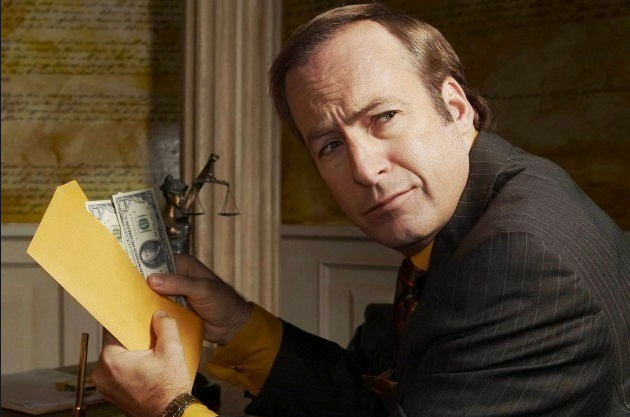
better-call-saul

I’ve been reflecting, since yesterday, on the bizarrely angry and intellectually dishonest protests registered here and on his own blog by trial lawyer Eric Turkewitz regarding the aunt who sued her 12-year-old nephew. His arguments, if you can call them that, consisted of constantly shifting the issue from ethics (what the aunt should have done) to law (what the aunt had a legal right to do), denying the core problem (Why would anyone assume that a child is harmed by dragging him into court, subjecting him to examination in front of strangers, and focusing on him as a wrongdoer and responsible for his aunt’s alleges misery, all mandated by the aunt who supposedly loves him?), and appealing to a dizzying list of rationalization and fallacies. He then made his exit by accusing me, a lawyer, of “knowing nothing about the law” (I made no assertions about the law at all—this is not a legal issue) making everyone stupid, and being a narcissist, a full-bore ad hominem attack ending in an ominous “May God have mercy on your soul!” Why would he act like that?

The reason, I realize, is that my posts challenge the basic belief system of the plaintiff’s bar, which I know very, very well having worked in an executive position and run such diverse programs as the research data base, conventions, sections, litigation groups and more over seven years with the Association of Trial Lawyers of America. Now ATLA is called “The American Association for Justice,” a name chosen purposefully to disguise the fact that it is a plaintiff’s lawyer’s lobby by keeping “trial lawyers” out of the name because it had a negative response in marketing studies. (I kid you not.)

Trial lawyers have done a lot of good and important things and continue to, but the profession is corrupting. There is a lot of money to be made, and ATLA–excuse me, AAJ, is devoted to eliminating any limits on their members’ ability to sue anyone for any amount, no matter what harm it does to the economy, the nation, the cost of health care, the bonds of trust in society, personal liberty, or public respect for the civil justice system. Individually, members of AAJ are among the top donors to the Democratic Party, in part to make sure that they can block all Republican efforts to limit jury awards, spurious lawsuits, and damages that have to be paid by negligent corporations when they destroy lives through shoddy products, conspiracies, and other conduct. The other reason is that Democrats support the redistribution of wealth, and trial lawyers profit by it.

In the matter of keeping corporations accountable, the AAJ is, as they will constantly remind us, on the side of the angels. But like other interest groups (the NRA, the ACLU, NOW, and may more) that stake out  extreme, self-serving and unethical positions in defense of legitimate rights, trial lawyers often feel that they must take the position that every injury and misfortune deserves compensation by someone else. Eventually, they believe it. Justice is taken out of the equation for all but the plaintiffs bar’s clients. Justice means that someone else is always at fault. Continue reading

My Reply To Eric Turkewitz’s Criticism Regarding “The Worst Aunt Ever”

This guy would have given The Bad Aunt the right advice...

This guy would have given The Bad Aunt the right advice…

Eric Turkewitz is a New York trial attorney, by all accounts a terrific lawyer, by the evidence of his writing an ethical and astute one, in our brief encounters a very nice guy, and the proprietor of “The New York Personal Injury Law Blog.” In a recent post, he defends the decision of Jennifer Connell to sue her young nephew for a four-year old injury she received when he hugged her too enthusiastically at her birthday party. He notes, correctly, that the decision to sue was based on the client accepting a “bad call” by her lawyer. He also includes a lot of information not mentioned in the early posts on the matter, including mine. Still, he defends Connell. He also specifically criticizes my post. Eric writes,

And this is from Jack Marshall, who says he actually teaches ethics and has a blog called Ethics Alarms (coded “no follow“):

“What’s going on is that Aunt Jennifer is pure hellspawn, a mysteriously animated pile of human excrement that embodies the worst of humanity.”

This is what happens when people elect to post stuff on the web based on an initial news report that was, shall we say, very selective on what it chose to report. This site is getting quite a bit of traffic, most likely from many who never knew it existed. So let me answer a question some of you may have: Yes, I know what it’s like to be on the receiving end of lawsuits, and they weren’t nearly as benign as this run-of-the-mill kind: On Suing and Being Sued.

Yes, I “actually teach ethics,” and I could, in fact, teach Eric some things that he would find useful and enlightening. I’m not going to get in a pissing match with him, in part because, as I learned from another tiff four years ago (in which I was wrong, and duly apologized), he has some very, very nasty pals, and I don’t want to throw blood in the water. This is, however, an excellent example of how lawyers often end up seeing the world, and in fact I may use his post, unattributed, in seminars to show where legal ethics and ethics diverge. It is wise for lawyers to be atuned to both.

Here was the response I made to Eric on his blog: Continue reading

Ethics Dunce: The Ninth Circuit Court Of Appeals

The unethical prosecutor in US v, Flores. Watch out for her!

The unethical prosecutor in State v. Flores. Watch out for her!

It’s always heartening to see a court cite the 1935 Supreme Court case of  Berger v. United States, 295 U.S. 78, (1935), famous in legal ethics circles for its ringing statement that government lawyers must understand that their obligation “in a criminal prosecution is not that it shall win . . . , but that justice shall be done.”  The principle has been extended by some judges to civil cases as well, making the point that the government in any legal dispute should be interested only in the best interests of citizens and getting the case right. It is less heartening when the cite is in a dissent, as in this case.

The Ninth Circuit, reviewing a conviction for illegal drug importation, conceded that the prosecutor crossed into unethical territory by misstating the law,misstating the defendant’s testimony, and improperly vouching for a witness. Nonetheless, the court in State v. Flores concluded that this misconduct didn’t rise to the level of “plain error,” meaning that the defendant would have been found guilty anyway:

“In sum, while the government misrepresented Flores’s testimony and misstated the law on multiple occasions, in the context of the trial as a whole, it is unlikely that the jury was misled about the law or the facts.”

That’s right: the government misrepresented facts and law, but the jury was probably not misled. Continue reading

Welcome To My World

Suicide jokes, however, are fine...

Suicide jokes, however, are fine

In the ethics CLE (Continuing Legal Education) world, seminar attendees rank presenters. Ethics is a much-detested topic; if you can crack 3 (out of 5, the best), you are doing well. My scores are usually between 4.6 and 4.9.

Attendees are also invited to write comments. I recently received the survey summaries from an out-of-state seminar I taught to a section of that state’s bar. The response during an immediately after the seminar was terrific, so I expected my usual ratings. The coordinator sent me an e-mail stating that my scores were “very good overall” (4.7, in fact) but that there were “concerns about a rape joke in my presentation.”

There was no rape joke in the session. I don’t make rape jokes.

I had been talking about Donald Trump’s lawyer, in an incident I posted about here, incompetently saying that “you can’t rape your spouse.” “You can rape your spouse,” I said. “I have this image of hopeful spousal abusers reading this idiot’s comments and saying, “This is great!”

I wrote back to the coordinator and said that I wanted my objection to this characterization in my files and on the record. I know how it works. All that is remembered later is the complaint, and groups, even bars, are controversy averse. Next year, when they are deciding whether to have me speak, all that has to happen is for someone to say, “Wasn’t there some rape joke he made that we got flack for?” That would be enough; nobody would check, nobody would investigate. I would be eliminated as a potential speaker, probably for all time. They might even tell another bar association about the episode when they are called about whether to use me. “Well, his seminar was popular, but there was some problem about a rape joke he told.”

I asked to see all the surveys. The “concern” about my “rape joke” consisted of exactly one anonymous comment out of a hundred attendees.

I would estimate political correctness hyper-sensitivity by single attendees cost me about a client a year. The other members of their groups have to be saddled with boring ethics seminars because one lawyer had to prove how vigilant he or she was in being properly offended.

(Now THIS is a rape joke...and I would never tell it.)

Ethics Quiz: The Lawyer’s Ned Beatty E-Mail

miss piggyArizona Supreme Court Rule 41(g), permits attorney discipline based on the bar’s determination that an Arizona lawyer has engaged in “offensive conduct.” Now Dennis Wilenchik, an Arizona lawyer who got in a nasty e-mail exchange with a client over a fee is challenging his “admonishment,” a significant form of bar discipline, based on the surprise declaration of his contentious client that he was never offended. An admonished lawyer will usually accept discipline by consent, which in Wilenchik’s case includes a one-year probation period and anger management treatment.

The e-mail exchange began getting heated when Wilenchik called his client, who owned a medical marijuana consulting business, a “cheap asshole.” Later he threatened to sue for his fee, to which his client replied,“Bring it, bitch!”

Wilenchik’s evocative response: “OK drug dealer—I look forward to the many nights and mornings when you think of my name and squeal—you mean nothing to me. Check out the movie Deliverance.

You know, like in this classic film moment…

Yes, cultural references to film classics are very useful. Still, it was this reference that clinched it with the disciplinary committee.

Wilenchik’s lawyer says there is newly discovered evidence showing that the client’s complaint to the bar was based on a claim that the client feared he would be gang raped because of the reference to “Deliverance.”

In a declaration, the complaining client now says he wasn’t offended by anything in Wilenchik’s emails:

“In fact, I thought that Mr. Wilenchik’s last Deliverance email to me was rather humorous actually, and stated in such a manner that neither I nor any reasonable person would or could seriously construe this to be a real intent to harm me or my family. Moreover, Mr. Wilenchik’s last Deliverance email to me was exactly what I would expect anyone, including a lawyer, to write after I sent an email saying, ‘Bring it bitch.’ In other words, these emails were harmless banter which I instigated and therefore it is impossible for me to have been offended.”

Your Ethics Alarms Labor Day Weekend Ethics Quiz is this:

Does someone have to be offended for a lawyer’s conduct to be sufficiently offensive to warrant discipline?

Continue reading

Three Florida Lawyers Discover How Reporting a Crime Can Be Unethical

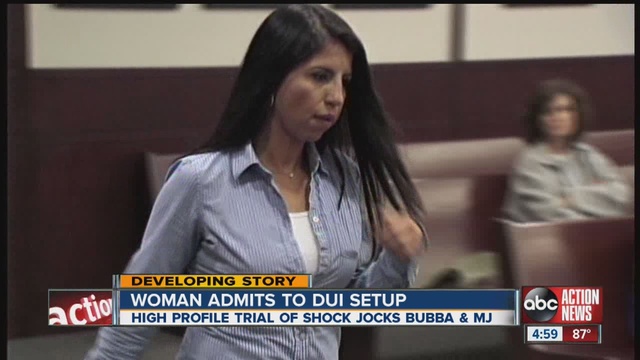
DUI_setup

How can you get disbarred for reporting a drunk driver? Three Florida lawyers were up to the task.

Stephen Diaco, Robert Adams and Adam Filthaut were found to have “maliciously” set up the drunken-driving arrest of their opposing counsel in a  high-profile defamation trial, and Judge W. Douglas Baird,  the referee in their legal ethics case,  wrote  that Stephen Diaco, Robert Adams and Adam Filthaut should lose their licenses permanently under the legal ethics standards of the Florida Bar.

In 2013, C. Philip Campbell was representing radio shock jock Todd “MJ” Schnitt in his slander suit against another DJ, “Bubba the Love Sponge” Clem. Clem was represented by the Adams and Diaco law firm. Campbell  left court and went to Malio’s Steakhouse in downtown Tampa, near his home and office. While Campbell was at the eatery, he was spotted by Melissa Personius, a young paralegal who worked for Adams and Diaco.

According to testimony, Personius called her boss, Adams, to report that Campbell was in the restaurant. Then Personius sat next to Campbell and the two bought each other drinks. As the night proceeded, Personius periodically relayed information to Adams. Adams then contacted Diaco and Diaco constacted Filthaut to agree upon next steps. The key was that Filthaut was friends with Sgt. Raymond Fernandez, who was then head of the Tampa police DUI unit, thus was able to sic  the DUI unit on the unsuspecting opposing counsel, who was in the process of being plied with liquor by Adams and Diaco’s attractive paralegal.

When it was time to for the targeted lawyer to leave, Campbell told Personius that she was too tipsy to drive and offered to call her a cab. Personius protested that she didn’t want to leave her car at the restaurant overnight and asked Campbell  if he would move the car for her. “Of course,” he said, nice guy that he is. As Campbell drove her vehicle up the street, he made an illegal turn and was pulled over by Fernandez officers, who were lying in wait. He was arrested and charged with DUI. Continue reading

Lowe’s, The Rights Of Racist Customers, And Why Lawyers and Doctors Aren’t Like Deliverymen

Now, if Lowe's drivers had law degree's, this would be a different story....

Now, if Lowe’s drivers had law degree’s, this would be a different story….

A fascinating story unearthed by master ethics sleuth Fred:

In Danville, Va., a customer specifically asked that a Lowe’s delivery be administered by delivery personnel who was not an African American. Marcus Bradley, the black driver assigned to the delivery, was called back to the store, and replaced. When the woman who made the request was interviewed, she said, “I got a right to have whatever I want and that’s it…No, I don’t feel bad about nothing.”

For hiss part, Bradley said that he was surprised that the store didn’t stand up for him, but that he would stay in his job. “I mean I gotta work. I’m going to keep going to work like I’ve always done. But I would think Lowe’s would take it into consideration to think about what they’re doing next time,” he said.

Lowe’s corporate office, when informed about the incident, released a statement that said in part… last week, and they said they’d look into it. Wednesday, we received this statement: Continue reading

Legally Competent, Ethically Bankrupt: The Zealous, Despicable Monique Pressley, Esq.

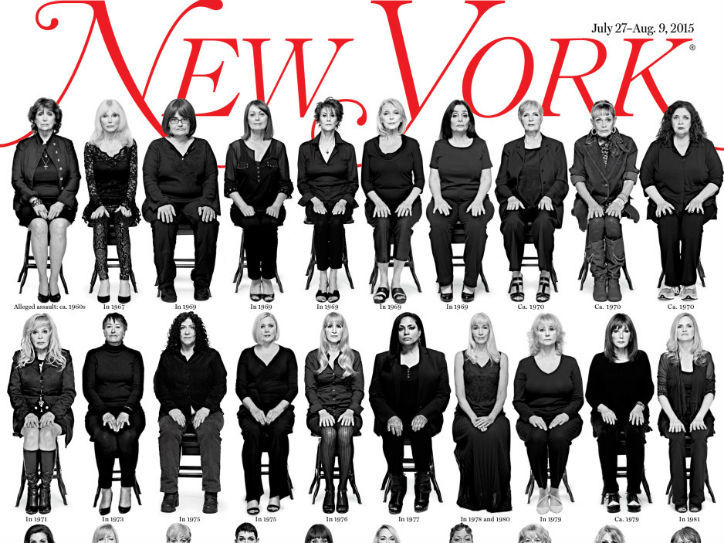
cosby-women-new-york-magazine-w724

Bill Cosby’s lawyer Monique Pressley decided to become a hybrid attorney-publicity agent yesterday, and in doing so provided an impromptu seminar on why people hate lawyers, and often should. She was carefully spinning and dissembling on behalf of her client without breaching the ethics rules against lying, parsing words and phrases with skill and deftness, all in the service of a serial sexual abuser and perhaps the greatest hypocrite pop culture has ever produced.

Brava!

Also, Yeeccch!

The impetus for her media spin tour, for that is all it was, is the New York magazine issue that features the stories of 35 of Cosby’s accusers. First Pressley told CNN’s Ashleigh Banfield that the women were comparable to a lynch mob: Continue reading

What A Surprise: Donald Trump Has An Unethical Lawyer!

One of these guys is Donald Trump's lawyer. Maybe both...

One of these guys is Donald Trump’s lawyer. Maybe both…

I realize I run the risk, by publishing this opinion, of Donald Trump’s thuggish, boorish, dolt of lawyer trying to “mess [my] life up … for as long as [I’m] on this frickin’ planet,” to put it in his well-measured, restrained and professional parlance. Well, so be it. Seldom do we see any lawyer befoul the image and dignity of his profession like Michael Cohen, Esquire, one of Donald Trump’s lawyers, did yesterday responding to a Daily Beast story about the dirty linen aired during Trump’s divorce from Ivana Trump over 20 years ago.

Ivana then compared a sexual encounter with her husband to sexual assault and rape,  and The Daily Beast wrote about it, as if Trump wasn’t doing enough already to make any decent American head to the loo at the sight of him. So Trump appointed Cohen as his media spokesman on the matter—just think: he was the best and most professional of the candidates for the job!—and he said this to The Daily Beast… Continue reading