Unthical Quote of the Week: Bill Cosby Attorney Martin Singer

lying-lawyers“The new, never-before-heard claims from women who have come forward in the past two weeks with unsubstantiated, fantastical stories about things they say occurred 30, 40 or even 50 years ago have escalated past the point of absurdity.These brand new claims about alleged decades-old events are becoming increasingly ridiculous, and it is completely illogical that so many people would have said nothing, done nothing and made no reports to law enforcement or asserted civil claims if they thought they had been assaulted over a span of so many years.  Lawsuits are filed against people in the public eye every day. There has never been a shortage of lawyers willing to represent people with claims against rich, powerful men, so it makes no sense that not one of these new women who just came forward for the first time now ever asserted a legal claim back at the time they alleged they had been sexually assaulted. This situation is an unprecedented example of the media’s breakneck rush to run stories without any corroboration or adherence to traditional journalistic standards. Over and over again, we have refuted these new unsubstantiated stories with documentary evidence, only to have a new uncorroborated story crop up out of the woodwork. When will it end?

—-Martin Singer, one of comedian Bill Cosby’s lawyers, trying to quell the public relations storm that threatens to blow the 77-year-old icon’s career and reputation apart.

Wow.

I advise lawyers not to make sweeping, emphatic statements like this, for several reasons. First, it comes very close to violating the ethical prohibition against dishonesty, misrepresentation, fraud and deceit. If the lawyer wants to say such words on behalf of his client, that’s one thing, and legitimate representation, though I would prefer to see such statements come from a publicist. For Singer to say something like this on his own behalf, however, harms all of his other clients by scarring his credibility. I don’t believe him, and when it becomes indisputable that Cosby is guilty and that his lawyers had to know, no one will be able to believe him again. Lawyers are supposed to tell the truth, and to represent even the most despicable clients without behaving unethically themselves, within the standards of the profession. That can be difficult, as in this instance. That is why lawyers get the big bucks, however. They should be able to walk that tightrope.

Singer falls right off: Continue reading

Now THIS Is An Incompetent Lawyer

Now that's who you want defending you in your capital murder trial..Thomas Jeffer..wait, WHAT???

Now that’s who you want defending you in your capital murder trial..Thomas Jeffer..wait, WHAT???

Dennis Hawver, an Ozawkie, Kansas attorney, was disbarred last week by the Kansas Supreme Court. The court ruled that Hawver showed “inexplicable incompetence” as a defense attorney for Phillip Cheatham, charged with first degree murder and tried in a 2005.  Cheatham’s conviction was overturned and  a new trial was ordered  in 2013, on the grounds that Hawver did not provide an adequate defense and thus Cheatham did not receive a fair trial. Yes, I think that was a fair assessment, given that..

  • In voir dire, Hawver told prospective jurors that his client was “a cocaine dealer” who had “killed another cocaine dealer with a gun.”
  • During the trial, he informed the jury that his client had previously been convicted of voluntary manslaughter, even though prosecutors had agreed to less prejudicial  stipulation that the Cheatham had a “prior felony conviction” without further details.
  • Hawlor failed to present evidence that might have shown that his client that was not in the city where the murder occurred at the time it occurred. He failed to investigate alibi witnesses.
  • He didn’t track his client’s cellphone to find his location at the time of the murders.
  • During the sentencing phase of the trial, after his client had been found guilty, Hawlor said “the killer” should be executed.


  • Hawver  made the creative argument at trial that his client would never have left a witness alive if he had been the one who shot the two female victims.

Continue reading

Two Deceitful Non-Denial Denials And An Unethically Tardy Whistleblower

Francis

TV shows like “Lie to Me” and “The Mentalist” as well as all the profiling shows like “Criminal Minds” have done a public service by schooling viewers in the tell-tale signs of non-denial denials. Nonetheless, people continue to use them, apparently because they work. Bill Cosby’s lawyers just launched a lulu, responding to the inexplicably re-booted accusations that Cosby was a serial sexual predator in the 70’s. You can’t get more non-denial than this, from lawyer John P. Schmitt on Cosby’s website:

“Over the last several weeks, decade-old, discredited allegations against Mr. Cosby have resurfaced. The fact that they are being repeated does not make them true..Mr. Cosby does not intend to dignify these allegations with any comment.”

There is no denial of the alleged rapes to be found here. Yes, the accusations are “decades old”: So what?  So are questions about whether Lizzie Borden was guilty.  The fact that the allegation are decades old means Cosby can’t be prosecuted because of the statute of limitations, but they don’t change anything about the seriousness of the accusations against the erstwhile “America’s Dad.”

Discredited? How have they been discredited? Cosby paid a settlement in one of the cases: that generally makes the allegations look credible (See: Paula Jones/Bill Clinton; Michael Jackson). Sure: “The fact that they are being repeated does not make them true,” and it also doesn’t make them false. That Cosby doesn’t intend to “dignify” the matter with further comment is strategy and posturing. It is significant that the lawyer did not say “He didn’t do it.”

——————-

[UPDATE: Ah HA! Today that statement was taken down, with this taking its place, a joint statement from Dolores Troiani, counsel to Andrea Constand, and Schmitt:

‘The statement released by Mr. Cosby’s attorney over the weekend was not intended to refer in any way to Andrea Constand. As previously reported, differences between Mr. Cosby and Ms. Constand were resolved to the mutual satisfaction of Mr. Cosby and Ms. Constand years ago. Neither Mr. Cosby nor Ms. Constand intends to comment further on the matter.”

Translation: “Oops. That settlement with the first of Cosby’s accusers was predicated on neither party impugning or accusing the other once the money was paid, and that “discredited” comment risked getting Bill in even more hot water. Never mind!”]

                                                                                                                                  ——————-

Lawyers aren’t permitted to lie, though. Then again, they aren’t supposed to mislead the public with deceitful non-denials, either.

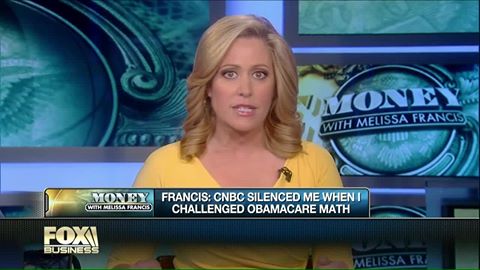
Then we have CNBC’s response to ex-CNBC reporter Melissa Francis, who followed Jonathan Gruber’s admissions of rigged math to get the Affordable Care Act past “stupid voters” with a relevant anecdote of her own. Francis, now a Fox Business anchor,  claims that the network “silenced” her when she questioned the merits and specifically the misleading numbers for the Affordable Care Act when it was being rammed through the legislative process. She told Fox News that she was called on the carpet by CNBC brass and told to stop, on the grounds that such criticism was “disrespectful to the President.”

A CNBC representative responded: Continue reading

Unethical Quote Of The Month (Lawyer Representing A Hypocritical And Unethical Client Division): Keith Wyatt

“She lied to her mother so she could have sex with her teacher. She went to a motel in which she engaged in voluntary consensual sex with her teacher. Why shouldn’t she be responsible for that?”

—-Lawyer Keith Wyatt, L.A. Unified School District’s trial attorney who successfully defended it in a law suit by the family of a middle school girl who had been engaged in a six month sexual relationship with her math teacher. The girl’s family claimed the district negligently permitted the teacher’s criminal conduct to occur and that the teacher’s exploitation of the girl had caused emotional damage to their daughter. Wyatt also told a radio interviewer that it was a more dangerous for a 14-year-old to cross a street in traffic than to have sex with her middle-school teacher.

Yes, he’s an idiot.

Yeah, those middle school tarts all want it, right, Keith?

Yeah, those middle school tarts all want it, right, Keith?

The school district fired him, disavowing and apologizing for his comments. Yet they were willing to let Wyatt argue in court—on the school’s behalf, remember— that a 14-year-old middle school student was mature enough to consent to having sex with her 28-year-old teacher, and that she shared responsibility for what happened. Wyatt introduced the girl’s sexual history into evidence as proof of his client’s lack of culpability.

There is nothing wrong or unethical about Wyatt’s tactics in the trial itself. State law is weird in this area—this is California, after all, home of Hollywood, Roman Polanski fans, Woody Allen enablers, Miley Cyrus and the Kardashians—for while the age of consent is 18 in criminal cases, two appellate court rulings have held that the argument that a minor can consent to sex with an adult is permissible in civil law suits. He did what the law permitted him to do in defense of his client. That’s not just ethical lawyering, it is at the core of legal ethics. The argument won. Wyatt did what he was trained to do, paid to do, and obligated to do if he agreed to take the case

However, it is a revolting and irresponsible argument for any school or school district to make. Wyatt should have made this clear, and maybe he did (though that quote doesn’t support such a supposition.) Who in their right mind–well, OK, this is L.A.–would send their child to a school system that takes the position that a 14-year-old student is responsible when she is raped by her 28-year-old teacher, and that she’s really not being harmed if he does? The teacher, Elkis Hermida, was convicted of lewd acts against a child and sentenced in July 2011 to three years in state prison.  Continue reading

Let’s Play “Pick The Most Unethical Lawsuit!”

Bad suits

Hello, hello, hello, Game Show fans! My, what a great crowd we have today. I’m your host, Wink Marshall, and today our contestants are going to compete for Most Unethical Law Suit. As always, you, our home audience, will decide who get the prize, a lifetime supply of extremely expensive boloney, courtesy of our sponsor, Oscar Meyer. Are you ready? Then, let’s meet our contestants! First, heeeere’s…

Andrew Rector!

You remember Andrew, right? In June, I wrote…

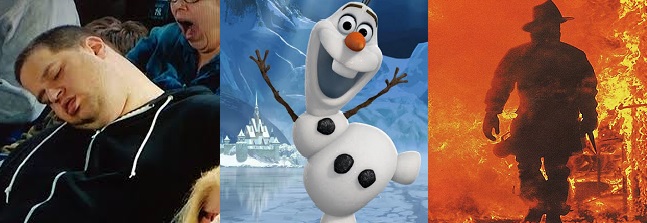
ESPN cameras caught Andrew Rector sleeping in his seat in the fourth inning of  the April 13 Boston Red Sox-New York Yankees game. In the time-honored tradition of TV play-by-play when something funny, weird or, most especially, sexy is spied in the stands, ESPN commentators Dan Shulman and John Kruk  began making fun of him. The clip ended up on YouTube, naturally, and thus on various sports websites, followed by the various idiotic, cruel, gratuitously mean-spirited insults, usually composed by brave anonymous commenters. …Let me say for the record that picking fans out of the crowd at sporting events and making fun of them, whatever they are doing, is generally a rotten thing to do. I know: it’s public, you know you might be on camera, and the fine print on the ticket stub puts you on notice. Unless, however, the conduct involved is actually newsworthy or despicable (as in instances where an adult has snatched a baseball from a child), the Golden Rule applies. …Unfortunately, Rector, whose name was unknown and whose sleeping form would have been quickly forgotten, decided that his humiliation was so great that he needed to sue…for $10, 000,000. Rector filed the suit against ESPN, Shulman, Kruk, the New York Yankees and Major League Baseball…and asks for damages for defamation and intentional infliction of emotional distress, citing malicious and false statements said about him,including that Rector is “a fatty cow” that represents a “symbol of failure.” …None of the defendants actually said any of these things (“fatty cow”?). Rector’s suit is apparently making the creative legal argument that ESPN’s mild mockery seeded the vicious mockery elsewhere on the web.

Welcome back to Ethics Alarms, Andrew, old friend!  Try to sta awake, now! Has the Streisand Effect kicked in yet? We’re doing what we can to help!

Now let’s meet someone completely new to Ethics Alarms, Contestant #2, Continue reading

When Ethical Causes Are Pursued By Unethical Means: The Anthony Porter-Alstory Simon Mess

What does this picture have in common with the Alstory Simon case and the Illinois criminal justice system? Read on...

What does this picture have in common with the Alstory Simon case and the Illinois criminal justice system? Read on…

All Americans owe a debt to the many non-profit organizations across the country dedicated to freeing innocent prisoners, some of them sentenced to die, who were wrongly prosecuted and convicted as a result of breakdowns in the justice system or prosecutorial corruption. Their work has served as an invaluable fail-safe, it has focused attention on needed reforms, and it has rescued innocent lives before they were completely destroyed. As a reminder of the corruptive power of good intentions, however, the recent release of a convicted murderer put in prison by one of these organizations serves as an ethics cautionary tale. Apparently one such “innocence project” believed that it was worth sending an innocent man to prison for a murder he did not commit in order to save the man originally convicted of the crime from execution.

In 1998,* Illinois death row inmate Anthony Porter, convicted in the 1982 murders of Marilyn Green and Jerry Hillard, was apparently proven innocent 48 hours before his scheduled execution. A Northwestern University professor and his students working with the Medill Innocence Project had obtained a videotaped confession by a man named Alstory Simon, admitting that he, not Porter, was the real killer. Porter was ultimately released, in 1999.

The governor of Illinois at the time, George Ryan, a longtime supporter of the death penalty, claimed that he was so shocked by the near fatal miscarriage of justice that he halted all executions less than a year after Porter’s exoneration. Eventually he commuted the sentences of every prisoner on death row, saying the state’s capital punishment system  could not be trusted. The Simon confession leading to Porter’s exoneration drove the shift in public opinion that caused the Illinois death penalty’s demise in 2011.

Happy ending? Not exactly. In 2005, witnesses who implicated Simon announced that they had fabricated their stories in exchange for money and a promise by the Northwestern professor, David Protess, that he would work to free two incarcerated relatives of one of the witnesses. Then Alstory Simon recanted his confession, saying that he had been persuaded by a faked videotape of witnesses implicating him in the crime, and promises of a short prison sentence and a movie deal if he confessed to a crime he didn’t commit. Last week, an Illinois judge ordered Simon released from prison after  prosecutors agreed that he was probably not guilty. He had spent almost 15 years in prison. Continue reading

“The Firm” Ethics: Mitch Should Have Known What He Was Getting Into

I was just watching “The Firm” again after many years—my old friend and the terrific actor, the late Bart Whiteman, played “Dutch”—to get the ick of “Cabin Fever 3” out of my head. (It was part of last night’s Halloween triple feature at my house.)

Pay attention, Tom...

Pay attention, Tom…

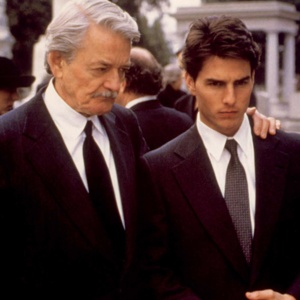
In an early scene in the film, Harvard Law student Mitch McDeere (Tom Cruise) is being courted by big law firms offering perks and cash. Then a small Memphis firm he never heard of —later, he learns that it is run by the Mob— blows him away with an offer he can’t refuse. The firms partners tell him that they wanted him so much, they bribed the clerk at Harvard’s placement office to learn what salaries the other firms had offered Mitch, then matched it plus 20% more. Tom is impressed, and flattered, and greedy, and takes the offer, even though the firm had openly revealed itself as unethical and proud of it.

He should have seen this as signature significance of a dangerously unethical culture in a profession with high ethical obligations, and walked out the door. A young lawyer with well-maintained ethics alarms would have. Who knows? Maybe this was a test the corrupt firm used to weed out ethical associates.

I always thought Mitch was just unlucky, but in the film, at least, he ended up in a bad firm because an ethics alarm wasn’t working.


Alleged Fraud And Corruption In Holder’s Justice Department: Why Isn’t This Considered News?

A drunken pumpkin riot! Now THAT'S News!

A drunken pumpkin riot! Now THAT’S News!

Possible answers to the question posed above:

1. Because everyone already knows that the Justice Department is corrupt and Eric Holder is an incompetent political hack.

2. There was a huge pumpkin festival riot in Keane, New Hampshire!

3. The news media is so biased that it will even treat an astounding judicial ruling as a made-up “conservative media” story.

4. It’s just more evidence of how abysmally the Obama administration is being run, and an election is coming up.

5. The world has gone mad.

I think any of them are plausible explanations.

Whichever it is, I guess I am honored to be able to help break some news, as it is not usually an Ethics Alarms function. This story has made it to exactly one news source as I write this, the New York Observor, though a few conservative blogs are noting it. Read the story itself and the links here.

Meanwhile, I’ll summarize:

Two former Assistant United States Attorneys say Holder ‘s Justice Department engaged in deceit and corruption  in pursuing  its litigation against Sierra Pacific Industries, a California lumber company. Responding to the allegations—and remember that false allegations of this magnitude would mean the end of these lawyers legal careers– Federal District Judge Morrison C. England Jr. has ordered the recusal of every federal judge in the Eastern District of California, on the theory that since the court may have been defrauded by the government,  an outside judge is needed to handle the matter to avoid a conflict of interest. Continue reading

“CSI” Ethics: Now THAT Was An Unethical Fictional Lawyer…

CSIWow. That was one unethical lawyer on CBS’s “CSI” last night, and I mean even before we found out that he had stolen a vile of an Ebola-like virus and used it to murder a doctor, almost setting off a viral epidemic in Las Vegas. (Gee, I wonder where the writers got the idea for that story? See, we don’t have to argue about politicians causing panic over Ebola: the entertainment media is way, way ahead of them.) Among the lawyer’s ethical transgressions:

1. He set out to use his law degree to gain access, through employment, to a company he blamed for allowing a deadly virus to wipe out his family in South America. Needless to say, this is a blatant conflict of interest, indeed, the worst one for a lawyer I have ever heard of in fact or fiction. He wanted to represent a corporate client so he could destroy it.  This is a clear breach of Model Rule 1.7:

(b), a lawyer shall not represent a client if the representation involves a concurrent conflict of interest. A concurrent conflict of interest exists if:

(2) there is a significant risk that the representation of one or more clients will be materially limited by… a personal interest of the lawyer.

Now, that conflict could be waived if the client were fully informed of the fact that its lawyer wanted to destroy it, and the client didn’t mind. That seems unlikely to me.

2. When it looked like his murder was going to set off a deadly epidemic, the lawyer decided to let CSI know that his client the biotech firm had lied about none of its supply of the virus being missing. He knew it was missing, because he had stolen it. The failure of a lawyer to remedy a client’s lie to police about a crime isn’t unethical in a criminal defense setting, but it is unethical if the lawyer would be aiding in another crime by doing so, which was the case here. Moreover, he is involved in the crime, unknown to his client. This would be a disqualifying conflict even if the one described above didn’t exist.

3, He also has an obligation under the ethics rules (Model Rule 1.4) to inform his client about matters relevant to the representation that the client needs to know, like “By the way, about that missing vial of deadly hemorrhagic virus you don’t want to tell the police about? I took it.”

4. THEN, he surreptitiously taped an employee and representative of the company who thought he was also representing her (if he wasn’t, he has an ethical obligation to make that clear—it’s called a “corporate Miranda warning.”) While it is legal in Nevada to secretly tape a conversation you are participating in, it is virtually never ethical for  a lawyer to do this with a client (That’s misrepresentation, violating Rule 8.4 in Nevada) , who is assured that her communications with her lawyer will be privileged, and held in strictest confidence under the attorney-client relationship.

5. Now, if the reason for the lawyer making the recording and handing it over to Ted Danson had been what CSI first assumed it was—that he was trying to save lives in imminent danger and deemed the revelation of a client confidence the only way to prevent it—he would have some support in the ethics rules, for there is an exception to the duty of confidentiality that can justify that.*  That wasn’t his motive, however, at least not all of it. He was also trying to make sure that the company—his client, which he was trying to destroy in revenge for his family’s deaths—was blamed for the virus that he had released. He had no justification for violating Rule 1.6, which says that a lawyer must keep client confidences.

6. Also, since he was representing both the employee he secretly taped and the company itself, he would have been obligated to report what she told him—evidence of a crime implicating the company–to his corporate client before reporting it to authorities, so the corporate client could report the lost vial itself, or at least have that option. If the attorney was going to exercise the “death or serious bodily injury” exception, he needed to tell the client that, too.

Yes, this was a very unethical lawyer.

Then there was that killing part…

* There was no reason to make the recording at all. This was a lame plot manipulation by “CSI.” Danson and his team used the biological residue on the recorder to prove that the same person who made the recording also stole the vial. But the lawyer could have just told the police about what his client admitted regarding the missing vial. No recording was necessary.

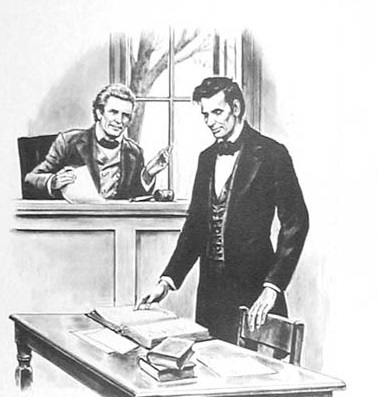
Abraham Lincoln: Good Lawyer, Bad Lawyer, Conflicted Lawyer

Lincoln in trialI recently quoted a fairly well-known section from some notes Abe Lincoln made for a lecture he was to present to young lawyers in 1850. Some of you asked if would post the whole document, which I am happy to do. Here it is:

I am not an accomplished lawyer. I find quite as much material for a lecture in those points wherein I have failed, as in those wherein I have been moderately successful. The leading rule for the lawyer, as for the man of every other calling, is diligence. Leave nothing for to-morrow which can be done to-day. Never let your correspondence fall behind. Whatever piece of business you have in hand, before stopping, do all the labor pertaining to it which can then be done. When you bring a common-law suit, if you have the facts for doing so, write the declaration at once. If a law point be involved, examine the books, and note the authority you rely on upon the declaration itself, where you are sure to find it when wanted. The same of defenses and pleas. In business not likely to be litigated, — ordinary collection cases, foreclosures, partitions, and the like, — make all examinations of titles, and note them, and even draft orders and decrees in advance. This course has a triple advantage; it avoids omissions and neglect, saves your labor when once done, performs the labor out of court when you have leisure, rather than in court when you have not. Extemporaneous speaking should be practised and cultivated. It is the lawyer’s avenue to the public. However able and faithful he may be in other respects, people are slow to bring him business if he cannot make a speech. And yet there is not a more fatal error to young lawyers than relying too much on speech-making. If any one, upon his rare powers of speaking, shall claim an exemption from the drudgery of the law, his case is a failure in advance.

Discourage litigation. Persuade your neighbors to compromise whenever you can. Point out to them how the nominal winner is often a real loser — in fees, expenses, and waste of time. As a peacemaker the lawyer has a superior opportunity of being a good man. There will still be business enough.

Never stir up litigation. A worse man can scarcely be found than one who does this. Who can be more nearly a fiend than he who habitually overhauls the register of deeds in search of defects in titles, whereon to stir up strife, and put money in his pocket? A moral tone ought to be infused into the profession which should drive such men out of it.

The matter of fees is important, far beyond the mere question of bread and butter involved. Properly attended to, fuller justice is done to both lawyer and client. An exorbitant fee should never be claimed. As a general rule never take your whole fee in advance, nor any more than a small retainer. When fully paid beforehand, you are more than a common mortal if you can feel the same interest in the case, as if something was still in prospect for you, as well as for your client. And when you lack interest in the case the job will very likely lack skill and diligence in the performance. Settle the amount of fee and take a note in advance. Then you will feel that you are working for something, and you are sure to do your work faithfully and well. Never sell a fee note — at least not before the consideration service is performed. It leads to negligence and dishonesty — negligence by losing interest in the case, and dishonesty in refusing to refund when you have allowed the consideration to fail.

There is a vague popular belief that lawyers are necessarily dishonest. I say vague, because when we consider to what extent confidence and honors are reposed in and conferred upon lawyers by the people, it appears improbable that their impression of dishonesty is very distinct and vivid. Yet the impression is common, almost universal. Let no young man choosing the law for a calling for a moment yield to the popular belief — resolve to be honest at all events; and if in your own judgment you cannot be an honest lawyer, resolve to be honest without being a lawyer. Choose some other occupation, rather than one in the choosing of which you do, in advance, consent to be a knave.

This is uniformly excellent, and justly cited to show Lincoln’s high ideals as a man and a professional. This quote, however, is also cited for that purpose, and I am not so fond of it. Since it comes to us second-hand, a.k.a as hearsay, from Lincoln’s law partner, friend and biographer William Herndon, I hesitate to hold it against him too much, for it may be a misrepresentation. I am more concerned with the fact that what follows is sometimes packaged with the notes above, as if they are equally worthy of emulation. No, they are not. Continue reading