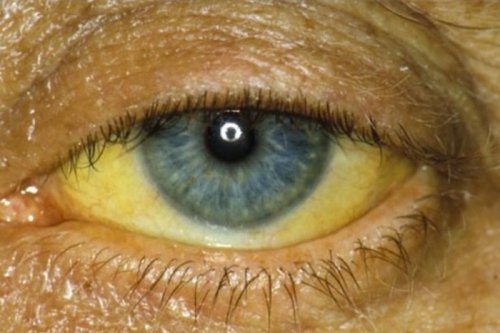
All looks yellow to the jaundiced eye.
Conservative writer John Hawkins published a post called “7 Brutal Truths That Will Make Your Life Better If You Accept Them.”
If I were as cynical as he is, I might say that a better title would be “How to Rationalize Being a Jerk,” but I’m not.
However, his post does demand some ethical perspective. Most, though not all, of his truths are really constructs to justify unethical conduct. Let’s examine them:
1. The average person cares more about what he eats for lunch than whether you live or die.
Maybe, and so what? That doesn’t mean that you should emulate them. To begin with, there is no “average person.” There are individual people, good, bad and in-between. Hawkins writes,
“You tell the average person that doesn’t know you very well that you have a fatal disease and he’ll say, “I’m so sorry to hear that.” Then he’ll forget about it in five minutes while he debates with his friends whether they’re going to Chili’s or the Mexican restaurant down the street. What that means is that everything you want out of life, you better prepare to earn without getting a lot of favors on the way. If you fall, you have to be the one to pick yourself up off the ground, brush yourself off and get your life back on track. You care. They don’t. So it’s up to you.”
But the a stranger doesn’t always react that way. Sometimes he gives you his kidney. Hawkins is supplying an excuse to be callous based on a Golden Rule Distortion: “Do Unto Others As They Would Do Unto You.” Don’t listen to him. Care about other people, and don’t hesitate to ask for help. People are better than you think: they will surprise you. In the meantime, it is your job to be as good as you would like them to be.
2. Life is not and will never be fair
I’ve written about this recently: fairness is a vague and broad concept in ethics. Life isn’t “fair” because life is often random, and nobody is tending the fairness meter. Systems either are fair or are not depending on your point of view. The mainstream conservative view about fairness is that one should play the cards one is dealt and stop complaining about it. It’s facile, though not without some truth: it is better to spend time trying to overcome obstacles than to bitch about them. On the other hand, each of us has an obligation to make the world better for those who follow us. Genuine unfairness, in systems, institutions, the culture and society, should be exposed, attacked, and fixed if possible. Hawkins’ approach would have left the U.S. with slavery, second class citizenship for women, Jim Crow, straight-only marriages, age discrimination, brutal monopolies and unchecked consumer fraud. His #2 is a license to be callous.
3. Most people are shallow
What an elitist and ignorant thing to say. If one has spent any time talking to and getting to know a wide range of people, it becomes clear that the opposite is the case. Again, assuming that most people are shallow provides Hawkins with an excuse to ignore them, or treat them with contempt. Most people will tend to behave as if they are shallow because they are rushed, stressed, distracted and focused on short-term exigencies. Give them time to think, a reason to consider a topic carefully, and the respect they deserve, and frequently unexpected depths will reveal themselves. “Most people are shallow” is a crippling bias for anyone to adopt. Expect the best of people: you will often be disappointed, perhaps, but you will also allow validations of your faith in humanity to bloom.
Writes Hawkins:
“So, use the shallowness of other people to your advantage. Learn to dress like a successful person. Pay attention to how you look. Find ways to give off the appearance that you are doing well. Don’t be a phony—be you, but also take advantage of the fact that a superficial appearance will be the reality to most people.”
Let’s see: pretend to be a successful person, but don’t be a phony; be you, but try to fool people by not revealing who you are. What?
People don’t assume that people who dress well, speak well, have manners and behave in a civilized fashion are successful because they are shallow. They assume that because they have learned from experience that certain traits both aid success and result from it. Hawkins is the one revealing shallowness. Continue reading →





 Ethics Alarms
“Man! I am BORED out of my GOURD!”
As one might expect, abortion is one of the topics that can be relied upon to spark a lively discussion every time it is raised on Ethics Alarms. This is because abortion is a true ethics dilemma, where valid ethical considerations point in opposite directions. In addition, this ethics dilemma cannot easily be solved by balancing, because determining which of the ethical values involved, personal autonomy and the primacy of human life, should hold the superior priority involves resolving conflicting definitions.Complicating things further is the fact that the three main ethics systems—reciprocity, Kantian ethics, and Utilitarianism— reach disparate conclusions.
The subject of this intense and extensive comment by Zoltar Speaks! is another commenters assertion that the unborn do not qualify as “persons” within the protection of the law because they do not, as far as we know, have self awareness and are incapable of thought. I personally detest this argument, but I’ll leave the exposition to Zoltar. He got extra credit for beginning with the trademark quote that Ethics Alarms uses to designate a “Popeye.“
Here is the Zoltar Speaks! Comment of the Day on the post, Morning Ethics Warm-Up, 11/13/17: Rushing In Panic Around My Boston Hotel Room Because I Didn’t Get My Wake-Up Call Edition: