The Free Range Mom, Bias, and the Perils Of Blind Loyalty

About  the blind leading the blind---not only is it dangerous, it looks ridiculous to those who can see.

About the blind leading the blind—not only is it dangerous, it looks ridiculous to those who can see.

One of my favorite bloggers just fell into the blind loyalty trap. I’m sympathetic, but this is something that those who accept the responsibility of  teaching us important lessons and clarifying difficult issues must avoid at all costs. Bias makes us stupid, and blind loyalty breeds bias like carrion breeds maggots. It pains me to see Lenore Skenazy, author of the Free Range Kids blog, undermine her credibility like this.

She titled her post Horrible Editorial Chides Mom for Not Predicting Unpredictable Crime. In it, she takes the side of a mother who left her four-year-old son in an unlocked, running van while she picked up her daughter at a northeast school. Someone was drove her van off with her son in it, and subsequently crashed. The boy was unhurt. Under the circumstances, there is nothing horrible about the editorial, which uses the incident—even Skenazy agrees that the mother’s conduct was “dumb”—to caution parents about leaving children in cars. This is the editorial that aroused Skenazy to defend the indefensible:

“A Calgary mom has no doubt learned her lesson. The woman recently left her four-year-old son in her unlocked, running van while she picked up her daughter at a northeast school. The mother said she was gone about six minutes, and when she came out, someone was stealing her van with her son in it.

Fortunately, the incident ended well, with the child unhurt after the thief crashed the van, and the suspect was taken into custody.…charges of child endangerment need to be pressed to set an example, because no matter how often these types of things occur, other parents continue to leave their kids in similar situations. It takes just a few minutes to get your child out of a vehicle and bring him or her along with you on whatever errand needs running. Sure, it’s more convenient just to leave a child in the car and do the errand, unencumbered. However, child safety should trump inconvenience every time. Better a few extra minutes lost bundling a little one in and out of a vehicle than a lifetime of regret and what-ifs.”

The rationalizations in Skenazy’s defense begin with the title of her post, which is dishonest and in her own words, “dumb.” She is using moral luck as a defense, arguing that the sequence of events as they unfolded were merely unfortunate, and the mother just as easily could have returned to her van and car with nothing amiss. The odds favor nothing bad happening in six minutes; on the other hand, the odds of nothing bad happening are much better if a child isn’t in an unlocked vehicle with the engine running at all. Continue reading
Ethics Quote of the Week: “Meet the Press” Host Chuck Todd

“Can Kentuckyians expect her to cast a tough vote on anything? Is she ever going to answer a tough question on anything? You want to be a U.S. Senator? If you can’t say — if you can’t find a way to stand behind your party’s president, you can disagree with him but can’t answer that basic question and come across looking ridiculous. I think she disqualified herself”

—–New “Meet the Press” host Chuck Todd on MSNBC’s “Morning Joe,” reacting with disgust to Kentucky’s Democratic U.S. Senate candidate Alison Lundergan Grimes refusal to answer a reporter’s question regarding whether she voted for President Obama.

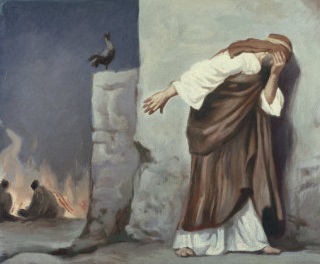
Did Allison hear the cock crow, I wonder? And is this why we call such conduct being "chicken"?

Did Allison hear the cock crow, I wonder? And is this why we call such conduct being “chicken”?

Well, she disqualified herself if voters believe senators should possess minimal levels of loyalty, candor, honesty, integrity or courage.

This latest fiasco for GOP Senate Minority Leader Mitch McConnell’s opponent comes on the heels of her staff and supporters being caught on video opining—Happily! Smugly! Proudly!— that she is lying about supporting the state’s coal industry in order to get elected. It takes a lot to make McConnell look good by comparison, but Grimes seems to have pulled off that amazing achievement with brio.

That’s something, I guess.

_____________________________

Pointer: RealClearPolitics

Comment of the Day: “Leon Panetta’s Memoirs, and Reconsidering Ethics Alarms’ Absolute Condemnation Of Such Books”

Obama's role model?

Obama’s role model?

Some thoughts as I read the comment below from Ethics Alarms stalwart Steve-O-in-NJ:

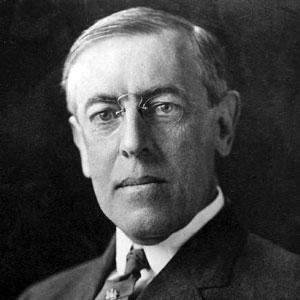
  • Woodrow Wilson is indeed, in many ways, one of the best comps for President Obama.
  • Yet there are still many, even those whose updates appear on my own Facebook page, who will shout to the skies that all such criticisms are partisan, racist, unfair attacks on a marvelous, brilliant, misunderstood  Chief Executive.
  • Why is that fading breed of Democrats fading? And where are the statesmanlike Republicans? Is there one?

Here is Steve’s Comment of the Day on the post, Leon Panetta’s Memoirs, and Reconsidering Ethics Alarms’ Absolute Condemnation Of Such Books:
Continue reading

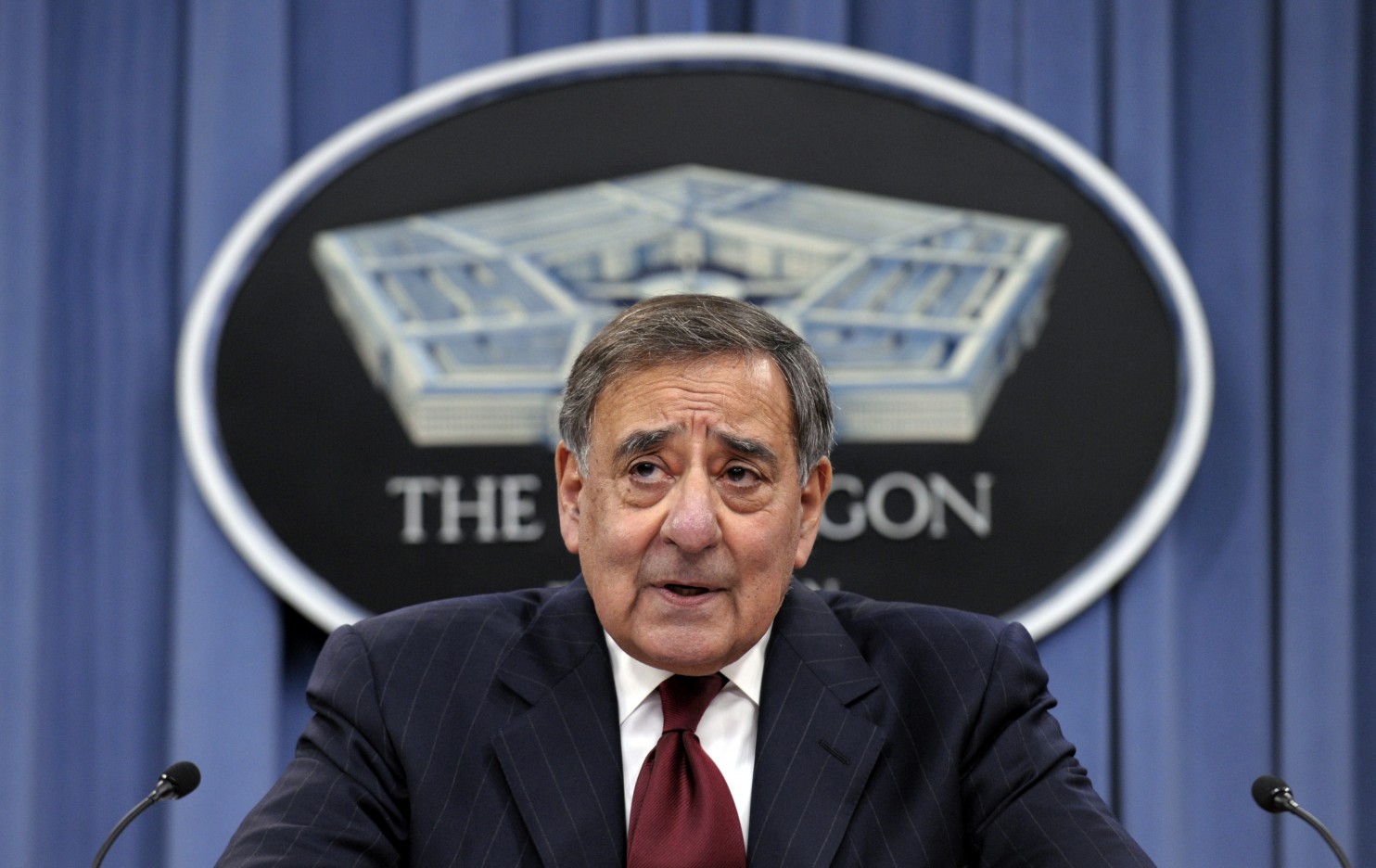
Leon Panetta’s Memoirs, and Reconsidering Ethics Alarms’ Absolute Condemnation Of Such Books

Panetta

When Robert Gates, formerly President Obama’s Secretary of Defense,  published his memoirs, I wrote:

Bottom line: these people betray their colleagues for money, and often, as is Robert Gates’s case, out of spite. Former Defense Secretary Gates, like the others, was given an opportunity to serve his country in a high executive branch position. He was privy to policy discussions and the inner workings of the administration. He was trusted. To reveal details of his tenure while the administration he worked for is still in office, done in a way designed to provoke criticism and embarrass his former associates and boss, is the height of disloyalty, and a breach of implicit confidentiality.

The honorable and ethical way to write such a book would be to wait until it could not actively interfere with the work of the Executive Branch. The people may have a right to know, but they do not have a right to know everything immediately. People in high policy-making positions must be able to be themselves, express opinions, and have productive meetings with the confidence that those they work with are not collecting notes for a future Book-of-the-Month sellout. Books like Gates’s undermine that trust, make it more difficult to get candid and controversial opinions and ideas into the decision-making process, and ultimately hurt all of us. The former  Secretary and those who appreciate the additional ammunition for administration-bashing can assemble a lot of rationalizations for the  book, but they all boil down to “Everybody Does It,” the most threadbare and cowardly rationalization of all.The ethical thing would have been for Gates to write the book in a few years, or not to write it at all.

You can’t get much more definite than that, can you?

I could, without much difficulty, distinguish between Gates’ book and the recently released book by former Obama CIA director and Secretary of Defense Leon Panetta, “Worthy Fights,” that is drawing fire from Obama loyalists. Gates’ book often seemed petty and hypocritical, and I do think he was cashing in. He is, in my view, nowhere near Panetta’s caliber as an administrator or a thinker, and I trust Panetta as a public servant who isn’t motivated by money or celebrity, but by love of country. (Yes, he was by far the best of Bill Clinton’s team.) But rather than do that, and open myself up to the legitimate accusation that I am accepting the identical conduct from Panetta that I condemned from Gates because I respect Panetta more, I’ll just admit that my attack on Gates’ book was excessive, and that there are legitimate reasons, sometimes, and patriotic ones, for a high appointee to write such a book. Continue reading

Abraham Lincoln: Good Lawyer, Bad Lawyer, Conflicted Lawyer

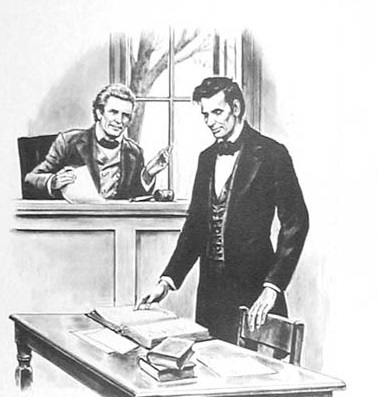
Lincoln in trialI recently quoted a fairly well-known section from some notes Abe Lincoln made for a lecture he was to present to young lawyers in 1850. Some of you asked if would post the whole document, which I am happy to do. Here it is:

I am not an accomplished lawyer. I find quite as much material for a lecture in those points wherein I have failed, as in those wherein I have been moderately successful. The leading rule for the lawyer, as for the man of every other calling, is diligence. Leave nothing for to-morrow which can be done to-day. Never let your correspondence fall behind. Whatever piece of business you have in hand, before stopping, do all the labor pertaining to it which can then be done. When you bring a common-law suit, if you have the facts for doing so, write the declaration at once. If a law point be involved, examine the books, and note the authority you rely on upon the declaration itself, where you are sure to find it when wanted. The same of defenses and pleas. In business not likely to be litigated, — ordinary collection cases, foreclosures, partitions, and the like, — make all examinations of titles, and note them, and even draft orders and decrees in advance. This course has a triple advantage; it avoids omissions and neglect, saves your labor when once done, performs the labor out of court when you have leisure, rather than in court when you have not. Extemporaneous speaking should be practised and cultivated. It is the lawyer’s avenue to the public. However able and faithful he may be in other respects, people are slow to bring him business if he cannot make a speech. And yet there is not a more fatal error to young lawyers than relying too much on speech-making. If any one, upon his rare powers of speaking, shall claim an exemption from the drudgery of the law, his case is a failure in advance.

Discourage litigation. Persuade your neighbors to compromise whenever you can. Point out to them how the nominal winner is often a real loser — in fees, expenses, and waste of time. As a peacemaker the lawyer has a superior opportunity of being a good man. There will still be business enough.

Never stir up litigation. A worse man can scarcely be found than one who does this. Who can be more nearly a fiend than he who habitually overhauls the register of deeds in search of defects in titles, whereon to stir up strife, and put money in his pocket? A moral tone ought to be infused into the profession which should drive such men out of it.

The matter of fees is important, far beyond the mere question of bread and butter involved. Properly attended to, fuller justice is done to both lawyer and client. An exorbitant fee should never be claimed. As a general rule never take your whole fee in advance, nor any more than a small retainer. When fully paid beforehand, you are more than a common mortal if you can feel the same interest in the case, as if something was still in prospect for you, as well as for your client. And when you lack interest in the case the job will very likely lack skill and diligence in the performance. Settle the amount of fee and take a note in advance. Then you will feel that you are working for something, and you are sure to do your work faithfully and well. Never sell a fee note — at least not before the consideration service is performed. It leads to negligence and dishonesty — negligence by losing interest in the case, and dishonesty in refusing to refund when you have allowed the consideration to fail.

There is a vague popular belief that lawyers are necessarily dishonest. I say vague, because when we consider to what extent confidence and honors are reposed in and conferred upon lawyers by the people, it appears improbable that their impression of dishonesty is very distinct and vivid. Yet the impression is common, almost universal. Let no young man choosing the law for a calling for a moment yield to the popular belief — resolve to be honest at all events; and if in your own judgment you cannot be an honest lawyer, resolve to be honest without being a lawyer. Choose some other occupation, rather than one in the choosing of which you do, in advance, consent to be a knave.

This is uniformly excellent, and justly cited to show Lincoln’s high ideals as a man and a professional. This quote, however, is also cited for that purpose, and I am not so fond of it. Since it comes to us second-hand, a.k.a as hearsay, from Lincoln’s law partner, friend and biographer William Herndon, I hesitate to hold it against him too much, for it may be a misrepresentation. I am more concerned with the fact that what follows is sometimes packaged with the notes above, as if they are equally worthy of emulation. No, they are not. Continue reading

Will President Obama’s New Leadership Model Cripple U.S. Management Competence For Decades?

America in ruins

 It seems to be a distinct possibility.

The President of the United States is the culture’s most powerful, visible and influential leader. Like it of not, he is also a role model for leadership and management across society. He has the most responsibility, the largest organization to oversee, and the most vital interests at stake. The management and leadership techniques he uses necessarily set a standard others, especially young, inexperienced, aspiring leaders and management, will be encouraged to emulate.

What are they learning? To begin with, they are learning to accept a startlingly low standard for “confidence.”

The President has now issued two statements that he has “confidence” in the Secret Service. The assessment has special significance because the health and safety, the very lives, of the President, his wife, his young children and his staff is in the Secret Service’s hands, and the agency would seem to have demonstrated beyond all doubt that it is incapable of meeting any reasonable expectations or trust. We know that the agents are barely trained, and that they lack professionalism and self discipline. We know that agents availed themselves of prostitutes in South America, and got drunk on duty in Amsterdam. We know that  a gunman fired at least seven bullets that struck the upstairs residence of the White House in 2011, aided by a botched Secret Service response, and that just this month a deranged fence-jumper got into the residence and was running amuck before he was stopped.

The Service’s statement on that incident was jaw-dropping, saying agents “showed tremendous restraint and discipline in dealing with” an intruder who could have had a bomb or deadly intent. How could this President, any President, any leader, any manager, have “confidence” in a security force under these circumstances, with its own management displaying such a bizarre attitude?

Well, I don’t know. It’s a brand new paradigm, the most lassez faire, gentle, kind,empathetic and understanding, hands-off, no-fault, no standards, no accountability leadership style I have ever seen at any management level higher than a lemonade stand. I’m sure many members of the public, especially those who goof off at their jobs, steal supplies, file fake reports, arrive to work stoned, never finish assigned tasks and think they have a right to keep their jobs and paychecks no matter how useless they are, would love to have Obama as a boss. Such a boss would express confidence in the most obviously inept and untrustworthy employee imaginable, and apparently mean it. And never, never fire him. Continue reading

When Does A Prosecutor’s Personal Life Become Relevant To Professional Performance? I Believe This Would Be An Example…

Love is blind.

Love is blind.

In Washington State, a Spokane County deputy prosecutor named Marriya Wright has resigned her position following the discovery of a photograph of her in a bikini (posing in a bodybuilding competition) in the possession of  Matthew Baumrucker, an inmate in the Spokane County Jail notable for having the word “criminal” tattooed on his forehead.

Police have determined that Baumrucker and Wright corresponded via text or phone calls 1,280 times between February 6 and March 5, during the time that the inmate was being investigated for his alleged role in an assault. On March 3, police were trying to find Baumrucker in connection with the assault charge, and found him in an apartment with a woman who later told police that Baumrucker had received legal advice from a woman he called  “Marriya.” Baumrucker told the woman that “Marriya told him she didn’t have to let the police in to search if they did not have a search warrant.” Another witness told police that they saw Baumrucker meet Wright in a car at a nearby gas station, and “overheard Marriya telling Baumrucker he needed to get his warrants taken care of.”   Surveillance video obtained by police confirms Baumrucker got into Wright’s vehicle at that gas station. Continue reading

Turning In Your Own Teen For Sexting?

sexting

I don’t understand this. I don’t understand the parents’ thinking at all.

I can understand reporting a child to the police who is a danger to others, who has committed a serious crime, who is a burgeoning sociopath or psychopath who needs to be stopped before something terrible occurs. I can understand when not doing so amounts to being an accessory and an accomplice. It has to be the most wrenching of parental decisions, but I understand these things.

This, however, I don’t understand.

In Dinwiddie County, Virginia, parents became suspicious, and checked their 13-year-old daughter’s cell phone and tablet. They discovered their daughter, soon to enter the eighth-grade, had been sending and receiving naked pictures of other teens, including those who were much older, 17 and 18.

CBS reports that the parents called in the sheriff’s office, even though it means that she might be charged with a crime.   “We did this now to protect her for now and in the future, because this could get worse. She could be taken,” she said.

She could also become the victim of an overzealous prosecutor, and end up in the criminal justice system for what is essentially pre-crime, become cynical and hardened before her time, and be permanently scarred, never to trust her parents again.

The story is sketchy, so there may be facts we don’t know. Before I would call the cops on my child at 13 for what is essentially high-tech flirting, I would consider..

  • Grounding her.
  • Taking away her electronic devices.
  • Getting her counseling.
  • Moving.

Wouldn’t you?

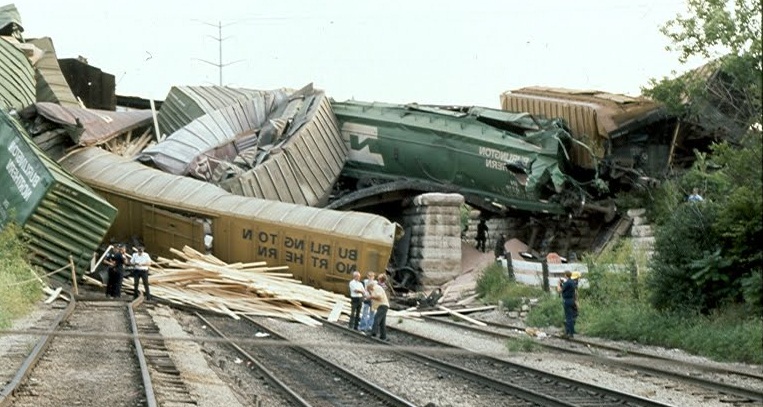
Mid-EthicsTrainwreck Observations On Ferguson

train_wreck

1. This is traveling the identical route as the Trayvon Martin-George Zimmerman fiasco, and I wonder when the intentional similarity will begin dawning on the public, discrediting the participants and embarrassing the news media, which is as Pavlovian as the most conditioned canine.

2. In an environment where race grievance vultures lie in wait, the usual rule of prudence—an ethical value— for law enforcement becomes a fatal error. Now, if a police department waits and investigates before making an official report or filing charges when a white individual has killed a black one, it will be spun by those seeking to find sinister motives, and the news media will take the cue.

3. As in the Martin case, the victim was immediately portrayed by his family as being as threatening as a Care Bear, except for his race. Martin was introduced to the public by the news media with an old photo that made him look about 12. Michael Brown was introduced by his promising future: he was going to college, and his parents were proud of him, as if these factors are proof of unquestionable virtue and innocence. He was unarmed, and a teenager. But as I learned for the first time by seeing the surveillance video of the alleged robbery, he was a huge teenager. A man that big doesn’t have to be armed to be dangerous. Naturally, all public impressions of the incident were formed before any of this came to light. This also addresses the new outrage by protesters that the video was released to “justify” the killing. The video let us know that Brown wasn’t a harmless kid, and that’s valid information now. Continue reading

When Ethics Becomes Impossible: Captain Johnson’s Ferguson “Solution”

Ron Johnson

Yesterday,  Ferguson, Missouri’s newly appointed police commander, Capt. Ron Johnson of the Missouri State Highway Patrol, walked with those protesting the shooting of African American teenager Michael Brown.The police shooting in Ferguson this week and its aftermath became an instant Ethics Train Wreck, its carnage seeded by tragedy, local tensions, growing distrust of police nationwide, worsening race relations exacerbated by Democrats and the media resorting to race-baiting to stifle criticism of the Obama administration, as well as such episodes as Occupy confrontations with police in Oakland and the Trayvon Martin-George Zimmerman fiasco.

Johnson’s actions calmed what had been escalating violence, with community protests spilling over into looting, irresponsible and inflammatory statements being made by both police and protesters, and an excessive, military-style response by St.Louis police that treated sometimes over-enthusiastic demonstrating as if it was Rodney King-style rioting. What Johnson did worked, in other words, and that’s both the best and the worst that can be said about it. Ethically, it was the best available option. When a situation reaches the ethics chaos stage that Ferguson has, however, this is rough utilitarianism at best. Continue reading