Confession of Faithless Fan

The 2012 Red Sox season

I’ve been meaning to write this post for more than a month, almost two., for it has been that long since I have watched a Boston Red Sox game, or indeed any baseball game at all. This, I knew, was complete abdication of everything I believe about loyalty, courage, faithfulness and gratitude, yet I could not force myself to meet my own standards, and I am ashamed.

For I hate sports fans like that, feckless, fair weather, Sunday soldiers who root loudly for their team when things are good, and who defect to the booers and the doubters when the tides of fortune turn. I have been the most loyal and faithful of Boston baseball fans since my childhood. I watched or listened to every game when the team was annually awful, from 1962-1966, and yet got reserved seats for the final series of the 1967 season a year in advance, because I thought, absurdly, that the team might be in a pennant race. (And I was right!) I endured team collapses and disappointments in many seasons since—all the famous ones, and others that only a dedicated lifelong fan would remember.

What happened to me this year? Continue reading

Comment of the Day: “The Washington Nationals’ Stephen Strasburg Dilemma”

John Glass, a superb and eclectic D.C. area blogger at DramaUrge, weighs in with his usual lucidity on the Stephen Strasburg controversy. Here is his Comment of the Day on the post, The Washington Nationals’ Stephen Strasburg Dilemma: Continue reading

The Washington Nationals’ Stephen Strasburg Dilemma

The real problem with Stephen Strasburg’s pitching arm is that it’s attached to his neck…

I must apologize to those who care about baseball-related ethics matters. I have been so immersed in the problems dogging my sad and dispirited Boston Red Sox that I have neglected the more glaring ethics issue looming over my current home town team, the Washington Nationals, currently on top of the National League East and almost certainly bound for their first post-season appearance. They face that prospect, however, with a problem: before the season began, management pledged that Stephen Strasburg, the team’s young fire-balling ace who seems destined for a Hall of Fame career, will be shut down for good once he hits 180 innings or less. Strasburg has already had serious arm surgery once, and conventional baseball wisdom now holds that throwing too many pitches before a pitcher has matured risks his arm, his effectiveness and his career. What this means now, however, that was hardly conceivable when the pledge was made, is that the Nationals could be battling the best teams in baseball in pursuit of a World Series title with their best pitcher completely healthy but in mothballs.

I had only given this matter perfunctory focus, concluding as a fan that it was a screwball plan that would never be executed, and not thinking much about the ethics of the controversy—and as you might imagine, it’s a big controversy in the Washington area sports pages. It took respected baseball writer John Feinstein to shock me out of my apathy with his sensible and well-reasoned column on the issue today, that ended thusly:

“Pitching a healthy Strasburg in October is not a betrayal, it’s simply recognizing that circumstances have changed. Not pitching him is a betrayal: to the pitcher, to the team, to the fans and to the city.” Continue reading

The Difference Between Legal Ethics and Ethics: A Son Takes Sides

“You’re doing WHAT???????”

Nevada lawyer Mark Liapis decided to represent a man sued for divorce by his longtime spouse. The spouse petitioned the court to have him barred from the case, and the court agreed: Mark was, after all, representing his father against his own mother.

Ick. Continue reading

Ethics Quiz: The Vetoed Wish

“When you wish upon a star…it depends how sick you are!”

This one is so convoluted with cross-cutting issues that I’m not going to even try to make the call until I read some responses.

McKenna May is four-years-old and has survived leukemia. Her mother and grandmother submitted her wish to go to Walt Disney World to the Make-A-Wish Foundation, which, according to its mission statement, selects children with life-threatening medical conditions and grants their wishes. McKenna’s wish was granted by the charity, but then withdrawn  because her father, William May, who is divorced from McKenna’s mother, refused to sign the required approvals. He believes that the Make-A-Wish funds should be spent on children who are terminally ill, and not children like McKenna, who have been cured. McKenna’s mother, Whitney Hughes, says that the real reason May has killed his daughter’s dream is to punish Hughes for restricting his visiting rights.

Your Ethics Alarms Quiz Question:

Assuming May is not doing so out of spite, is his decision to pass up his daughter’s dream trip to the Mouse Kingdom so that a more needy child can be helped an altruistic and noble gesture, or an unethical act of disloyalty and betrayal to his young daughter? Continue reading

Carolyn Hax Tackles An Ethics Classic

What do you do when you find out that the husband or boyfriend of one of your friends is cheating on her with another one of your friends?

This perennial advice column ethics teaser has been botched in more columns than I can count, so it was a pleasure to read the response to the dilemma by Carolyn Hax, the syndicated relationship advice columnist whose ethical instincts are invariably superb. Here was the substance of her answer:

“…to the husband or husband-poacher (whoever’s the closer friend), say something akin to: “I’ve heard this is happening, which means others have, too. That’s Issue 1. Issue 2: I want no part of this — I don’t even want to know what I already know. Issue 3: If Wife asks me something, I won’t lie. As someone who stands to lose friends in this mess, I hope you’ll clean it up.” Then butt out, knowing that if someone forces your hand, your next move has been declared in advance — and if your friend finds out that you knew, you can say: “I’m sorry. I did what I felt I could.” Continue reading

Jay Carney: How to Destroy Your Credibility Pointlessly

I have great sympathy for White House spokespeople like Jay Carney. It is almost impossible to avoid coming off as a weasel. You have to face the press and fend off questions, never revealing more than the White House chooses to reveal, seldom being fully candid, always being governed by talking points. Of course, being in such a role for an Administration that promised, in the person of its leader, to be transparent above all others shouldn’t be quite so hard, but we all know that this promise lies molding in the Trash Heap of Cynicism, buried by Guantanamo Bay, the  waivers of conflicts for lobbyists, the Obama Super-Pac, and especially the recent assertion of executive privilege. Eventually all Presidential spokesmen reach the point where they are barely believed and no longer trusted, which is all the more reason not to rush the process and savage one’s credibility by uttering stupid and pointless lies that are both unbelievable but also easily disproved. Continue reading

Should Black Journalists Be Promoting Race Loyalty As a Virtue?

Go Team!

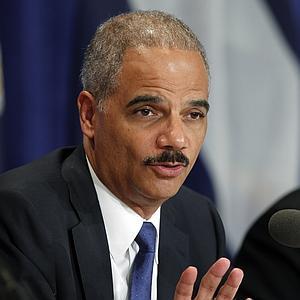
On Sunday’s “Washington Watch with Roland Martin” on TVOne, host Martin questioned several black journalists about the support shown by the Obama administration and black leaders for Attorney General Eric Holder, currently stonewalling Congress regarding a full accounting of what occurred in the “Fast and Furious” debacle.

“Many Republicans are calling on him to resign by demanding he release more documents, also in the Fast and Furious case,” Martin said.  “So, I want to ask the panel, is this White House doing enough to protect the attorney general? And also, where is black leadership? I mean, here you have Eric Holder, who has been — first of all, he was a high-ranking official in the Justice Department under President Bill Clinton. He becomes the black, first African-American attorney general. He has been very aggressive on many issues. But some folks are saying that look, he’s been taken to the woodshed and he is not getting the kind of support that you would think he would be getting.”

This is a disgraceful question that assumes that unethical conduct—racial bias— is somehow admirable. What difference does it make that Holder is the first black attorney general? How could that justify the media, the White House, black leaders or Congress treating  a black Attorney General any differently than they would treat a white, Asian or Cherokee Attorney General? Isn’t the issue whether he is a competent and effective Attorney General? Shouldn’t that judgment be race blind? Aren’t black journalists, like white journalists, obligated to keep race out of their assessments of how public officials behave? Continue reading

Reporting the Confessed Killer in Your Midst: An Ethical Dilemma That Isn’t

Pedro Hernandez, now under arrest for the murder of Etan Patz, the  6-year-old boy whose 1979 murder was a national mystery, confessed that he had strangled the child just a few years later to his prayer group at St. Anthony of Padua, a Catholic church in Camden, New Jersey.  No one, including Hernandez’s relatives who learned of his confession and the prayer group leader, reported the confession to authorities.

Hernandez’s sister, Milagros Hernandez, confessed what she described as a “family secret” to a reporter for the New York Daily News over the weekend, setting off “What would you do?” internet polls and blog posts, as if there was any question about the proper conduct for a family member or church group member who hears a murder confession. There is no question.  You report it. There are no debate issues, no competing considerations, no claims of loyalty or confidentiality.  It isn’t a Golden Rule dilemma, as in “Would I want someone to report me if I confessed to him in confidence that he had strangled a little boy?”  It isn’t a dilemma at all. There is only one right thing to do, and if you think otherwise, you missed a couple of key meetings when the ethics were being handed out. Continue reading

Stephen Decatur, Eduardo Saverin, and the Unpatriotic Hypocrisy of the Right

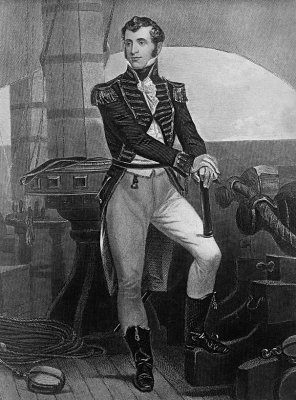
Stephen Decatur

I admit that I am often ambushed by the hypocrisy of both political parties and their followers. The ability of both conservatives and progressives to completely reverse positions and advocate exactly what they had passionately opposed mere months, weeks, or even minutes before is breathtaking, and I never seem ready for it. For example, after the Democrats had tried to pin the shooting of Rep. Giffords on the harsh rhetoric of  Sarah Palin, Rush Limbaugh and others in the conservative camp, I really wasn’t ready for them to ratchet up the metaphorically violent metaphors themselves within a few weeks, but they did. Similarly, after conservatives had mocked and condemned the discouraged liberals who had fled the U.S. in dismay after George W. Bush was re-elected, I was unprepared for the unseemly applause emanating from the Right when Facebook co-founder Eduardo Saverin decided to become an ex-American to save mega-millions on his tax bill.

Lock-step ideology is damaging enough, but lock-step ideology without consistent values, principles and priorities is dangerous, and that, I fear, is what we have on both ends of the political spectrum in America today.

Stephen Decatur (1779-1820) was a genuine American hero, once featured in grade school history lessons but now, like so many others, the victim of cultural oblivion. One of the greatest naval commanders in U.S. history, Decatur had his meteoric career was cut short by a duel, and as his exploits on the waves have faded from memory, the one feature of his remarkable life that is best remembered is his legendary  toast, made in April 1816,  that became an iconic, if often misunderstood, expression of American patriotism:

“Our Country! In her intercourse with foreign nations may she always be in the right; but our country, right or wrong.” Continue reading