The Ethics of Cheering Alex Rodriguez

Poor Alex Rodriguez and his wife...

Poor, downtrodden, Alex Rodriguez and his wife…

Baseball’s most embarrassing super-star, the steroid cheat Alex Rodriguez, in playing for the New York Yankees while appealing his long suspension by Major League baseball. As he is unquestionably a repeat liar and a serial violator of the game’s rules against PED’s (performance enhancing drugs), as he signed a contract, in part generated by the results of his cheating, that will both enrich him by millions and handicap his team competitively while conferring few, if any benefits, as he would qualify, by most objective standards, as the antithesis of a sports hero, the fact that Arod, as he is called, still was cheered by a vocal minority in Yankee Stadium when he made his season debut this week is intriguing. What does this mean? Can it be ethical to cheer Rodriquez now?

These are deceptively complex and difficult questions. The threshold  issue is whether cheering or jeering any sports figure, or any public figure at all, is an act with ethical content rather than just a communication of an opinion. Is it conduct, or just “words”? I think, in the context of the Rodriquez situation, a sound argument can be made that it is conduct. Registering group approval or disapproval of prominent conduct by someone of status and influence is a crucial societal function in setting standards, registering disapproval, and prompting shame, regret, apology and reform—none of which, so far at least, seem to register with Arod.

That is pretty clearly what the boos convey, but what about the cheers? If the boos are ethical—they are if the disapproval is proportionate, rational, fair, and just—then are the cheers automatically unethical? Not necessarily. Here are some of the things those cheers could be expressing: Continue reading →
Ethics Dunce: Huma Abedin, a.k.a Mrs. Anthony Weiner

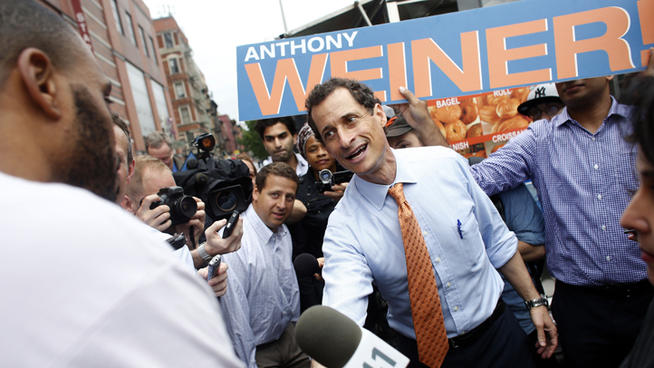
"Carlos Danger," running for an office that won't have anything to do with him if he wins it. Where is Monty Python when we need them?

“Carlos Danger,” running for an office that won’t have anything to do with him if he wins it, he tells us. Where is Monty Python when we need them?

There are periodic moments when I feel I am wasting my life. A recent one occurred when I heard Huma Abedin, the humiliated wife of New York mayoral candidate and serial penis-texter Anthony Weiner, or, as his friend call him when he’s showing his junk, “Carlos Danger,” say that his pathological and gross conduct, bolstered by public lies, deceit and posturing, isn’t a legitimate concern for voters, and that it is just “between us, and our marriage.”

As Stephen King would put it, a muffled scream builds to inevitability deep in my chest. Continue reading →

Dear Sincerely Shallow: “It’s True, You’re Horrible. Show Your Fiancé Your Letter, And Go Pimp Yourself Out Like Anna Nicole.”

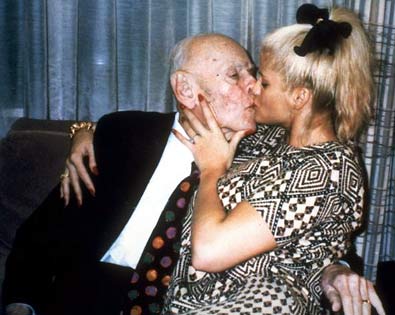
This could be you, SS!

This could be you, “Sincerely Shallow” ! Go for it!

Emily Yoffe is Slate’s stunt advice columnist, who in her “Dear Prudence” column answers questions reminiscent of the freak-show howlers they used to concoct for the “Penthouse Forum” (or so I’ve heard.) Sometimes Emily’s advice has me convinced she is the consort of Pazuzu, and other times her advice is measured and wise. This time, she sided with the demon, and I’m about finished with her.

Here is the query sent by “Sincerely Shallow” in its entirety. I’m sure it’s viral by now:

Dear Prudence,
I’m recently engaged to the most honest, thoughtful, and loving man I’ve ever met. He has supported me through many hard times, including losing my job and being assaulted. Here’s the but about him: He makes no money. He has ambitions, and he’s smart, but will likely only bring a middle-class income at best. I have an OK job and I’m self-sufficient. Now here’s the but about me: I’m really, really pretty. My whole life people have told me I could get any man I want, meaning a rich man, and are shocked that I’m engaged to my fiancé, nice though he is. I’ve never dated a rich man, but it does make me curious. So part of me thinks I’m squandering my good looks on this poor man, and the other part of me thinks that I’m so shallow that I don’t even deserve him or anyone else. Am I a fool for thinking that a poor man can make me happy, or an idiot for believing a sexist fantasy?

You can read “Prudence’s” annoying answer here, which concludes with this: Continue reading →

A Side Benefit of the I.R.S. Scandal: Self-Identification By Dishonest Partisan Hacks

You know better, Gov.

You know better, Governor.

I mentioned this once already, but it bears repeating: any spinner, excuser, minimizer or defender of the I.R.S. scandal who uses the “it was a Bush appointee” talking point has insulted your intelligence or impugned his own, as well as marked himself or herself as an untrustworthy hack. I’m taking names and making lists myself now, and it’s growing by the hour.

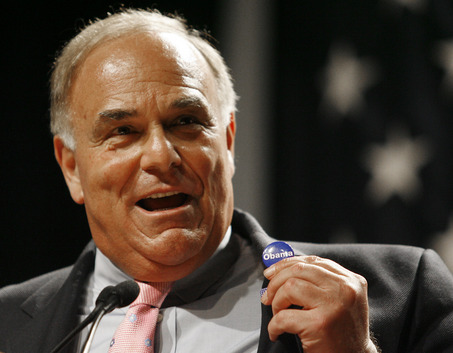
Yesterday I added Pennsylvania Governor Ed Rendell, whom I once believed had some integrity, and Donna Brazile. Today Richard Cohen, among others, joined the list. It really is shocking, and it’s increasingly more difficult to shock me. It is also ominous. Things we haven’t yet learned must really be ugly for such a transparently desperate excuse to be trotted out so early by people who almost certainly know what garbage it is.

Yesterday I heard Rendell literally drive Joe DiGenova, the former Attorney General, to apoplexy—Joe’s eyes were popping out of his head and I though he was going to fall over to the floor foaming at the mouth— by stating repeatedly that the I.R.S. fiasco “couldn’t be a conspiracy because a Bush appointee was in charge.” This is either unbelievably ignorant or despicably dishonest, and I suspect the latter. As I wrote in a previous post, Continue reading →

The Hagel Nomination: Integrity Test In The U.S. Senate

Chuck HagelI was able to watch the Senate’s questioning of Secretary of Defense designate Chuck Hagel on C-Span on and off, but clearly “on” enough to recognize a disaster unfolding. Whatever one might be tempted to say about Hillary Clinton’s performance during a day of bobbing and weaving about Benghazi under sometimes hostile questioning before both House and Senate committees, no one can question Clinton’s intelligence, knowledge and preparation. In contrast, no one who watched Hagel can honestly feel confident about his possession any of those qualities. He was uniformly awful, to the point of embarrassment. I found myself feeling sorry for him. He was unprepared. He was vague…he was contradictory; he did not seem to have a grasp on much of anything the job entailed. Several times, Democratic Senators rescued him by correcting his wording or reminding him of what he should have said. In short, he appeared incompetent.

Immediately, various news organizations and reporters told us that it didn’t matter, that Hagel “had the votes.”  If this is true, then the confirmation hearings are a sham, and our elected officials no longer care about trivial matters like the fate of the nation and national defense, but only political maneuvering and point-scoring. Why doesn’t it matter? If a highly touted applicant for an important corporate job botches the job interview, he doesn’t get the job. Are major management jobs in the U.S. Government so much less challenging and important that a lesser standard should adhere? Continue reading →

Sen. Inouye And The Duty To Leave

A distinguished life, missing one important act of leadership

A distinguished life, missing one important act of leadership

Washington D.C. and Hawaii are awash in tributes to the late Senator Daniel Inouye, who died last week, in office, at the age of 88. This is as it should be. Inouye was a historic figure in his state, a war hero (a Congressional Medal of Honor recipeient, in fact) , a statesman, in in all respects, from every source I’ve seen, the epitome of an honorable U.S. Senator and a good man.

But he stayed too long at his job. This is an obvious statement, since he dropped dead while still committed to filling his position for four more years. In 2010, Inouye ran for office knowing that he would be 92 when he finished his term. In this he was irresponsible, just as his former colleagues Robert Byrd, Strom Thurmond, Jesse Helms and many, many others were irresponsible before him. Senator Inouye even allowed himself to become President pro tem of the Senate, placing him third in line to succeed to the Presidency, after the Vice President and Speaker of the House.

We do not need term limits: if the voters, as they do, choose to keep electing representatives on the basis of nostalgia, or laziness, or fear of change, or loyalty, that’s democracy, just as it’s democracy that they elect officials for no better reasons than the fact that they had popular or successful grandfathers, parents, and spouses. The presumption in democracy is that we elect leaders who are better qualified to assess our best interests than we are, and that means that we should be able to trust them to know when it’s time to take themselves out of the active process of governing, and to remove from us the opportunity to irresponsibly confer power on those who are no longer fit to wield it. Continue reading →

Comment of the Day: “What’s Next for the Alisal Union School District…John Dillinger High School?”

The second Comment of the Day on my post about a Salinas, California school district choosing to name an elementary school after an executed thief and murderer from that state’s colorful past is an unusual one. When I was first presented with J.S.’s comment protesting what he took as a false assertion that Mr. Dillinger was a killer in addition to being an epic bank-robber, I took him to be Dillinger fetishist, like the warped souls who are obsessed with villains like Billy the Kid and Charles Manson. I was wrong: as he explains here, he is a Dillinger family member, and has a valid reason for insisting that the original Public Enemy #1 is only condemned for the (many) crimes he actually committed. Here is S.S’s  heartfelt Comment of the Day, on the post “What’s Next for the Alisal Union School District…John Dillinger High School?”: Continue reading →

The Complete “It’s A Wonderful Life” Ethics Guide [UPDATED]

 Frank Capra’s 1946 masterpiece “It’s A Wonderful Life” is one of the great ethics movies of all time, perhaps the ethics movie of all time. In 2011 I prepared a guide through its complex ethics thicket. The post was divided into three separate posts, and I eventually combined them s0 readers can have the pleasure, if one can call it that, of watching the film like I do: having ethics arguments the whole way through. And now, here is your guide. Additions are welcome and encouraged.

1. “If It’s About Ethics, God Must Be Involved”

The movie begins in heaven, represented by twinkling stars. There is no way around this, as divine intervention is at the core of the fantasy. Heaven and angels were big in Hollywood in the Forties. Nevertheless, the framing of the tale advances the anti-ethical idea, central to many religions, that good behavior on earth will be rewarded in the hereafter, bolstering the theory that without God and eternal rewards, doing good is pointless.

We are introduced to George Bailey, who, we are told, is in trouble and has prayed for help. He’s going to get it, too, or at least the heavenly authorities will make the effort. They are assigning an Angel 2nd Class, Clarence Oddbody, to the job. He is, we learn later, something of a second rate angel as well as a 2nd Class one, so it is interesting that whether or not George is in fact saved will be entrusted to less than heaven’s best. Some lack of commitment, there—then again, George says he’s “not a praying man.” This will teach him—sub-par service!

2. Extra Credit for Moral Luck Continue reading →

To The Un-American Secessionists

Led by Texans, the White House is being deluged with petitions from all around the nation asking that various states be allowed to secede from the U.S. because the prospect of another four years of President Obama is so heinous. My immediate reaction is that this proves that conservatives are lazier than progressives, whose solution to a similar disappointment with parties reversed in 2004 was to pack up and move to Canada, or at least to make noises about it.  Conservatives apparently want to stay at home and leave the U.S.too. How convenient.

In 2004, when liberals and Democrats were acting like spoiled brats, I posted the following essay entitled “Escape to Canada and the Ethics of Democracy.” I think it is instructive to re-publish this post unedited to clarify what is wrong with the conservative tantrum of 2012. Oh, I could have changed “left” to “right,” Canada to Texas and Bush to Obama and Alec Baldwin to Ted Nugent, but it hardly seemed necessary, for my diagnosis and conclusions are exactly the same, just with a different group. It also seems prudent to leave the essay in its original form to remind smug liberals like Jon Stewart, now having a ball mocking Republicans, that Democrats disgraced themselves in a similar manner not that long ago. Being a hysteric, an alarmist, a bad citizen and a poor loser isn’t confined to members of one partisan group—it just seems that way at the moment. Now the conservatives are the silly people who are rejecting the principles of self-government that they were fervently  lecturing us about, because, you see, those principles didn’t work out their way…this time.

Here is “Escape to Canada and the Ethics of Democracy,” from The Ethics Scoreboard on November 17, 2004: Continue reading →

Don’t Listen To John Feinstein, Nats Fans: He’s Wrong, And He’s Bad For You

I know how you feel, Nats fans. BOY do I know.

For me, as a Boston Red Sox fan, what befell the Washington Nationals last week stirred unpleasant memories of having my own hopes dashed by the cruel bounces and turns of that little white ball, as it turned my team from sure winners to embarrassed losers faster than you could say”Bucky Dent.” Luckily, as I have explained here, my temporary abandonment of the beloved Hose did not turn me into a Nationals devotee, so I could watch the horrors of the Nats’ ninth inning, decisive game catastrophe, which occurred when they were one strike away from victory and a step closer to their first World Series in 79 years, with analytical detachment. I have consoled my heart-broken friends, and am prepared to help them through the long, hard winter, when visions of “what ifs?”will dance through their heads instead of sugarplums. John Feinstein, the acclaimed sports writer, isn’t helping, however. Continue reading →