Afternoon Ethics Refresher, 1/15/2020: Firing, Tweeting, Protesting, Talking Friends Into Suicide…

Hello?

Traffic here inexplicably dead yesterday and today. Is there a secret ethics convention nobody told me about? There is, isn’t there? I’m hurt…

1. It’s too bad so many readers don’t pay attention to the baseball posts, because a lot of fascinating ethics issues with general applications arise…like right now. Yesterday, as already mentioned in an update to yesterday’s post and a couple of comments, the Boston Red Sox “parted ways with Manager Alex Cora by mutual agreement.” (He was fired.) In a press conference I just watched, the Red Sox brass said that Cora, who was both successful and popular in Boston, was let go solely because of the MLB investigation report regarding his involvement in cheating while serving as a coach for the Houston Astros in 2017, and the allegations of cheating  while managing the Sox in 2018, still under investigation, played no part in the decision. What they meant is that the Astros cheating was going to result in a long suspension for Cora anyway, so the team didn’t need to wait for the bad news regarding his cheating in Boston.

The weirdest thing about the press conference is that none of the four Sox officials would do anything but praise Cora, his character, his judgment, his dedication to the team, his devotion to baseball. Gee, why did they fire this saint, then? Alex Cora’s character is obviously flawed, or he wouldn’t have masterminded major cheating schemes that cost the Astros 5 million dollars and four key draft choices while losing the jobs of two men who advanced his career. Cora’s judgement also stinks, because his actions have now cast a shadow over two teams, their championships, and the records of the players his schemes benefited.

If he was so dedicated to the team, why is  it now facing a public relations and competitive disaster because of his actions? If he was devoted to baseball, how did he end up at the center of a scandal that undermines the perceived integrity of the game? Continue reading
Ethics Heroes: The Appeals Court For The Commonwealth Of Massachusetts

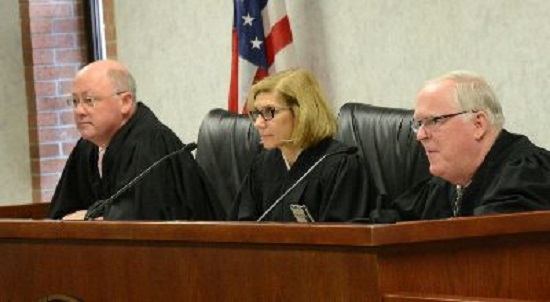
I am not honoring the appeals court that just upheld the lower court judgment in my favor in a two-year old (and probably not over yet) frivolous lawsuit against my for defamation by an angry ex-Ethics Alarms commenter. The court’s decision rejecting the plaintiff’s appeal was dictated by precedent and black letter law, as was the decision in the original case. It took no special courage or integrity to hold so, and in fact any other result would have evinced rank incompetence.

No, I am awarding the court Ethics Hero status after receiving today its  published opinion in case n. 18-p-1605, where the judgement of the lower court judge was affirmed. It is officially a summary decision, and thus not binding precedent, since the usual details a full appellate opinion would contain are missing. However, in the eight page opinion affirming the lower court dismissal of the complaint, the judges are impressively restrained, respectful, and thorough. They manage this despite the fact that the lawsuit was doomed from the beginning, without merit or law on its side. The persistence of the plaintiff has wasted taxpayer money (and mine) and occupied time the judges needed to address more serious and legitimate matters.

Nonetheless, the fact that a pro se litigant is able to receive more than perfunctory handling of even a complaint this misbegotten and trivial speaks well for our system, and very well for the judges. Despite all the attacks claiming that our system only caring about ‘justice for the rich,” a pro se litigant seeking justice (as he saw it) and using confused, garbled and outrageously long documents to that end,  cannot deny that his case and arguments were ignored. He lacked the financial resources to hire a lawyer to pursue them (though I wonder if any lawyer would have accepted the representation) and represented himself—rather badly, but still, he took his best shot. Continue reading

“It’s OK To Be White” Strikes Again, And Drives People Crazy Again! GOOD!

The first Ethics Alarms post about the trolling masterpiece “It’s OK to be white” was in 2017. The message, apparently launched by those puckish trouble-makers at 4Chan,  first appeared on stickers appearing on the Harvard campus, sparking an idiotic response from an African American dean. I concluded, in part, that the sticker campaign was brilliant “no matter who came up with it or what the motive was,”;  that anyone who was troubled by the message is part of the problem the stickers are responding to, and  that the stickers would have  been harmless if they were treated as harmless, and they should have been.

The Ethics Alarms’ self-appointed Voice of the Woke at the time took umbrage, saying, “The stickers are stupid. No one disputes that it’s OK to be white….The correct response from average citizens to this display of faux persecution should be mockery and ridicule, not outrage.” Realizing a hanging curve over the middle of the plate when I say one, I replied in part, ,

“You know, it’s easy to deal with any problem if you make up your own facts. Nobody says its not OK to be white? This list took me less than 10 minutes:

http://www.washingtonexaminer.com/texas-am-wont-fire-professor-who-called-for-killing-white-people/article/2622810
http://www.theroot.com/college-campus-shut-down-after-professors-letthemfucki-1796334903
http://www.theroot.com/for-black-people-who-have-to-deal-with-white-people-thi-1797835711
https://mobile.nytimes.com/2017/10/06/opinion/ta-nehisi-coates-whiteness-power.html?smid=fb-share&referer=http://m.facebook.com
http://www.thecollegefix.com/post/38149/
https://www.huffingtonpost.com/entry/lady-gaga-the-problems-with-non-racist-white_us_59960aeee4b033e0fbdec279
http://www.independent.co.uk/life-style/toxic-whiteness-healing-white-people-internalised-racism-woman-sandra-kim-new-york-a7595216.html

Then there’s the Ethics Alarms anti-white racism tag…https://ethicsalarms.com/tag/anti-white-racism/ All resulting in THIS:
http://www.npr.org/2017/10/24/559604836/majority-of-white-americans-think-theyre-discriminated-against

As I may have mentioned, I was explicitly told that the only reason I was not hired as an Assistant US Attorney in DC …a life and career-altering result for me…was that I was white. Now, I think it is reasonable to assume that if I was not hired because I was white, there was something “not OK” with my being white. I’m not unhappy or bitter about this, but it happened.

The problem with being an ideologue… is that it requires distorting reality.

Continue reading

Another Leap Down A Slippery Slope: Massachusetts Repeats The Michelle Carter Debacle

The Suffolk County (Mass.) District Attorney has charged Inyoung You, a 21-year-old South Korean native and former Boston College student,  with involuntary manslaughter in the suicide of 22-year-old Alexander Urtula, who jumped to his death on May 20, 2019, the day he was going to graduate.  You was in cellphone contact with her boyfriend that day, and was at the scene when he plunged to his death.

While Urtula struggled with mental health issues throughout the pair’s 18-month relationship,  You was “physically, verbally, and psychologically abusive, and was so “wanton and reckless” that it  “resulted in overwhelming Mr. Urtula’s will to live,” the DA told reporters. “She was aware of his spiraling depression and suicidal thoughts brought on by her abuse, yet she persisted, continuing to encourage him to take his own life.”  Among the over 47,000 text messages sent by You in the two months leading up to Urtula’s suicide, here were hundreds “where (You) instructed him” to take his own life, as well as “claims that she, his family and the world would be better off without him.”

Nice.

But is it criminal?

There are differences in the two cases, but this is redolent of the 2017 prosecution and conviction Michelle Carter, who was convicted in the Bay State of involuntary manslaughter for urging her 18-year-old boyfriend, Conrad Roy III, to kill himself, which he did. The conviction was upheld by an appeals court this past February, so Carter will apparently serve out her entire 15 month sentence—for the content of her text messages. Continue reading

From The Anti-Freedom of Speech Files: UConn And The Connecticut Hate Speech Law

The University of Connecticut  chapter of the NAACP is circulating a video that  shows two students walking through a parking lot blithely shouting out “nigger.” It also sent out a tweet stating, “If you have any information about this racist recording at UConn, please email naacpuconn1909@gmail.com We will not tolerate racist behavior on this campus.”

To make a relevant point at the outset, this is not “racist conduct,” but racist speech at most. Racist speech is constitutionally protected (that First Amendment thingy), but you wouldn’t know it from the Connecticut  law the two students have been charged with violating. It decrees:

Any person who, by his advertisement, ridicules or holds up to contempt any person or class of persons, on account of the creed, religion, color, denomination, nationality or race of such person or class of persons, shall be guilty of a class D misdemeanor.

Ridiculing individuals based on gender or sexual orientation is apparently just fine, though: it’s an old law.  The  charge is punishable by a maximum of 30 days in jail, a fine of up to $50, or both.

Jarred Karal and Ryan Mucaj, the two idiots involved, face  possible expulsion from UConn for violating the school’s code of conduct. That’s a separate issue. A school has a right to make reasonable demands on student comportment, and civility, but what is “reasonable” is an ethical gray area. If the students thought they were alone, for example, I am not sure that a state school should be able to punish them. These morons were just shouting the offensive word into the air. Can they be punished for saying “nigger” in their dorm rooms, when they are alone? If the campus NAACP’s circulation of the video is what is disrupting the campus, why isn’t that a punishable offense? The NAACP circulating the video upset and offended more students than the parking lot shouts. Continue reading

Catch-Up Ethics Warm-Up, 10/22/2019: Updates, Word Policing, And The World Series

Late start to the day…

…in part as a hangover from the lively Smithsonian Associates presentation on cross examination with my sister last night. The event was completely sold out, a first among my five Smithsonian programs, and it was an intense two hours, followed by lively questioning from some participants who stayed for nearly an hour to grill us.

1. Good ethics news follow-up: Marlon Anderson, the black security guard who was fired from Madison’s West High School last week for protesting being called “nigger” by  a student, thus triggering an unreasonable, brain-dead and indefensible “no-tolerance”  policy, is being reinstated.

Interim Superintendent Jane Belmore  rescinded the termination less than a week after Anderson was fired. The dismissal triggering intense criticism here and elsewhere, including a student walk-out.  One nice thing about incompetent bureaucracies is that their lazy, thoughtless, unethical actions seldom are accompanied by any real logic or conviction, so they will usually back down, following the path of least resistance.

Still, as Ethics Alarms has asked dozens of times, how can responsible parents trust educators whose judgment is so wretched?

I also want to note that most publications reporting on the story emulated the Wisconsin State Journal, which wrote, “A black security guard who was fired from Madison’s West High School last week for repeating a racial slur a student had hurled at him, in an attempt to correct the student, will get his job back.”

Gee, which racial slur? Isn’t the particular slur an essential part of this story? Was it “negro”? “Uncle Tom”? When is it ever competent journalism to withhold relevant information from readers? Is the theory that the mere word will upset some readers more than the tales of carnage the same publications include daily without censorship? Do we read stories that report, “Someone did something really terrible to 26 people in a church using a weapon of some kind”?

In this case, withholding the crucial word at issue supports the “logic” behind the no-tolerance policy that led to the whole fiasco.

2. In more news of progressive word-policing:  Massachusetts state Rep. Daniel HuntGuess what party he belongs to. Come on, guess!  Hey, you have a 50-50 chance of being right!—-has submitted a bill to the legislature that would criminalize use of the word “bitch.” There will be a hearing today on Beacon Hill. Of course the bill is unconstitutional, but why should we expect elected representatives to be able to figure that out?

Meanwhile, the Boston Herald, supposedly the city’s conservative paper (meaning it’s not as left-biased as the Boston Globe) didn’t dare publish the word, writing instead, “the B-word — the term for a female dog that is commonly used to slander women.”

Someone should  tell the Herald that calling a woman a “bitch,” no matter how unjustified, cannot possibly constitute slander. Continue reading

Prison Labor Ethics

Prison labor is an ethics issue that I have never considered before. Apparently that’s true of a lot of people. In Massachusetts, an Amherst-Pelham Regional High School  student named Spencer Cliche (great name!) was challenged to undertake an investigative journalism project, He eventually published a 3,000-word exposé  on prison labor topic in his school’s newspaper.

The high school, it seems, had contracted with a local prison to re-upholster its auditorium seats,  taking its low bid for the job over another bid by a local business. As a result of the uproar sparked by Spencer’s work, the school superintendent issued a statement to school staff members promising never to contract with the prison again.

It does not appear, however, that this decision was based on  careful balancing of the ethics issues involved, but rather, as usual, a lazy capitulation to avoid an emotion-based controversy.

The local  newspaper, The Daily Hampshire Gazette, eventually picked up the story. as did a local radio station that featured Cliche’s report as the “question of the morning.” Then the issue was raised by The Marshall Project, a prison and justice system reform project.

In addition to routine prison labor, which is usually handled in a prison facility, there are also state-run “correctional industries,” such as MassCor, which arranges for inmates to do work for  schools, nursing homes, towns, non-profits and other institutions. Obviously, their costs are lower than competing businesses, because prisoners earn less than a dollar an hour on average for their labor, according to Prison Policy Initiative.

Thus we have multiple looming ethics issues, among them…

  • Is it ethical to force prisoners to work at all?

I don’t see how an honest argument can be formulated that argues that it is not. Work organizes the time and attention of the jailed, keeps them occupied, minimizes boredom and the opportunity to get into trouble. Social justice advocates seem to think that prisons should be like summer camps, with sports, crafts, and other pleasant diversions. That approach is both expensive and undeserved. Prison, among other things, is and ought to be punishment.

  • Is it ethical to pay prisoners less than the minimum wage? Isn’t forced labor with no compensation or minimal compensation virtual slavery?

Convicted prisoners forfeit most of their constitutional rights. Some forms of forced labor might rise to the level of cruel and unusual punishment, and prison labor is ripe for abuse (just ask Andy Dufresne, the protagonist of “The Shawhsank Redemption”), but criminals are a burden on society, and warehousing them is expensive. There is nothing unethical about requiring those who have imposed that burden to help alleviate it.

  • Are prison-based businesses like MassCor unethical?

 Cara Savelli, a spokeswoman for the Massachusetts Department of Correction interviewed by the student journalist, defended the program, saying,

Continue reading

Comment Of The Day: “Memorial Day Weekend Ethics Warm-Up, 5/25/2019: Julian, Conan, Naomi, and Ousamequin”

The Myles Standish Monument

Regular readers  know that there are many superb comments here that I don’t re-publish as Comments of the Day.  One category of comment that is often neglected is the jeremiad, and dire predictions of the dystopian, Orwellian future that the current all-out assault on American values, traditions and institutions will eventually produce. 

I don’t like fearmongering as a tactic; if I ever did, the disgusting resort to it by Democrats as a way to sabotage President Trump would have been sufficient to reverse my approval forever. Nor am I a pessimist regarding this remarkable nation and the strength of its unique culture and the citizens who maintain it. 

That does not mean, however, that I think we should ignore the dangers to democracy that are now building in intensity. In this Memorial Day themed Comment of the Day, Steve-O-in NJ raises legitimate concerns. Remember that MSNBC host Chris Hayes once said that he was uncomfortable calling fallen soldiers heroes.

This is the predominant ethos of today’s American Left, an anti-patriotic, anti-exceptionalism, anti-American, anti-nationalist mindset that really has absorbed John Lennon’s infantile vision of utopia—no borders, no nations, nothing to live or die for—as a driving philosophy.

Here is Steve-O’s Comment of the Day on the post,Memorial Day Weekend Ethics Warm-Up,5/25/2019: Julian, Conan, Naomi, and Ousamequin:

This holiday itself might come under attack.

The origins of Memorial Day aren’t as clear as you might think. The idea of decorating the graves of the fallen with flowers dates back to before the founding of this country, but here it was largely confined to families or, occasionally communities until the time of the Civil War. In 1861 Southern women organized to clean up and decorate the graves of the South’s fallen in Warrenton, VA and Savannah, GA, which leads to the concept that the holiday has Confederate roots. On May 1, 1865, the freedmen of Charleston, SC, led a parade of 10,000 to honor 257 Union soldiers who they had rescued from a mass grave and reburied. The earliest record of Decoration Day in the North was in 1868, proclaimed by General John Logan, Commander in Chief of the Grand Army of the Republic (Union veterans’ organization). Only in 1967 does Federal statute make it the holiday we know today.

The holiday is not a Confederate invention, nor was that first observance, in Charleston, even about the dead of the South.

Continue reading

Memorial Day Weekend Ethics Warm-Up, 5/25/2019: Julian, Conan, Naomi, and Ousamequin

Happy Memorial Day Weekend!

It’s going to be a Sousa weekend here. The piece above is one I bet you haven’t heard before. President Chester A. Arthur ordered Sousa to compose a replacement for  1812’s   “Hail to the Chief,” which had announced Presidents since John Quincy Adams, although it went in and out of fashion. (President Polk, it is said, always had “Hail to the Chief” played because he was so physically unimpressive that nobody noticed when he entered a room without the fanfare!) After Arthur left office, Presidents returned to to”Hail to Chief,” and Eisenhower made it the official tune of the office in 1954.

1. A First Amendment stretch. Julian Assange has been indicted. Good. He conspired with a weak-minded and troubled soldier to prompt him, now her, to steal U.S. secrets so he could publish them and promote his anarchist website, Wikileaks. The act almost certainly got U.S. agents killed and did other irreparable harm. Assange isn’t a journalist, and publishing stolen classified information isn’t journalism. Naturally journalists are lining up to defend Assange, especially the New York Times, which was the beneficiary of the Pentagon Papers ruling. They see a conviction of Assange the way abortion zealots see bans on late-term abortions: a camel’s nose in the tent, the slippery slope.

The use of journalistic publications as illegal document laundering devices has always been the least compelling aspect of First Amendment protection of freedom of the Press. I have never believed that it was a wise and fair protection, and if Assange’s just desserts weaken the right of newspapers to publish troop movements,  private citizens’ tax returns, and grand jury proceedings, good.

2. Did Conan O’Brien steal a writer’s jokes? You decide! Here is a joke Robert Kaseberg wrote on Twitter on June 9, 2015: Continue reading

From The Ethics Alarms Frivolous And Vexatious Litigation Files: The Ethics Alarms Libel Case

Once again, the appellate brief for the appeal in Massachusetts courts involving the defamation lawsuit against me and ethics alarms has been rejected by the courts as non-compliant. This is actually somewhat annoying, as I had almost finished the brief brief in response (in market contrast to the 70-plus page monstrosity that was served on me. It took several hours to read the thing, several days to recuperate from the barn fervor, that is, bran flavor…no, brain fever! That’s it!

having to decipher the damn thing inflicted on me, and several more hours to almost finish my professional, clear document designed to give the poor clerk and judges that would have to read the appellate brief a break. That stalled, because while I am entitled to have the Appendix to the appellant’s brief to refer to, it was too big a file for the court to send to me, so they were making a special file.

So now I’m confused about 1) whether the deadline for my response is reset, 2) whether I’m going to have to start my response all over again, and most of all, 3), how many times a pro se litigant with no clue what he’s doing whose only motivation is revenge and to cause as much expense and inconvenience as possible because I banned him from Ethics Alarms after I figured out that he was, well, the kind of person who would behave like this?

It is a great virtue of our nation and its legal system that it allows amateurs—I was going to write well-meaning and sincere amateurs, but that obviously doesn’t apply here—to stumble around in the courts. After all, lawyers are expensive, even more expensive than psychiatrists. Nevertheless, there has to be a limit, don’t you think? People like my adversary cost the system, and taxpayers, millions of dollars as they play around being lawyer because they are bored, ” a few cherries short of a sundae,” to quote the comment that started this fiasco, without gainful employment, or all three.

Or does my home state assume that eventually pro se litigants will be so embarrassed by the constant rejection that they will give up? Boy, I hope not, because this guy is impossible to embarrass .

Well, I guess I have to call the Clerk of the Court again. We’re getting to be great pals.