Ethics Observations On Reactions To The Mueller Report, Continued: Quotes

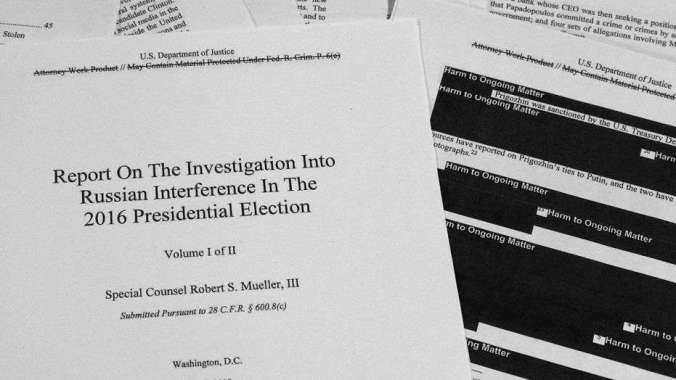
1. The most revealing quote is the New York Times headline I’m looking at, approximately the same size as the one announcing that the Titanic had sunk: “Mueller Report Lays Out Russian Contacts And Trump’s Frantic Effort To Foil Inquiry.” What it reveals is that the New York Times has no interest in objective reporting on this matter, and is still in the mode it announced during the campaign: it sees its job as not to report the news, but to take down Donald Trump. The headline, as well as the cherry-picked excerpts from the 400 page report, are calculated to mislead the public and impede the President’s ability to govern. “Contacts” are not collusion or conspiracy, as the report itself showed. Meeting with Russians is neither illegal nor unusual. “Frantic” is a subjective characterization that does not belong in a headline, and “foil” is misleading. The President wanted the investigation to end, as it made doing his job difficult (as it was intended to do), and he wanted to “foil” its illicit (and obvious) objective of carrying out the Democratic Party’s and the mainstream media’s attempted coup.

The Times, the Post and the rest know that most citizens won’t read the report and couldn’t understand it if they tried, so they are pushing the same false and misleading narrative, an abuse of the news media’s critical role, to see if, somehow, they can still take “get” Donald Trump.

2. Andrew McCarthy, who has been an invaluable analyst throughout this fiasco, clarified the “obstruction of justice” controversy yesterday, and William Barr’s comments on them. McCarthy’s quote:

The attorney general stated that the special counsel evaluated ten incidents with an eye toward whether they amounted to an obstruction offense. Barr elaborated that he and Deputy Attorney General Rod Rosenstein disagreed with Mueller on whether these incidents even could have amounted to obstruction as a matter of law…. Barr was not saying that Mueller found one or more of these incidents to constitute obstruction; Mueller was saying that the incidents involved actions that could theoretically have amounted to obstruction.

A concrete example may make this easier to grasp: the firing of FBI director James Comey. Before a prosecutor considered evidence regarding that incident, there would be a preliminary question: Could the president’s dismissal of an FBI director amount to an obstruction offense as a matter of law? If prosecutors were to decide that, even if the evidence showed corrupt intent on the part of the president, a president’s firing of the FBI director cannot constitutionally amount to an obstruction crime, then the prosecutors would not bother to investigate and make an assessment of the evidence.

What Barr is saying is that he and Mueller did not agree, with respect to all ten incidents, on whether the incident could legally amount to obstruction. What the attorney general therefore did was assume, for argument’s sake, that Mueller was correct on the law (i.e., that the incident could theoretically amount to obstruction), and then move on to the second phase of the analysis: Assuming this could be an obstruction offense as a matter of law, could we prove obstruction as a matter of fact? This requires an assessment of whether the evidence of each element of an obstruction offense – most significantly, corrupt intent – could be proved beyond a reasonable doubt. That is why Barr laid out the facts that the president could have shut down the investigation but did not; that he could have asserted executive privilege to withhold information from the investigation, but instead made numerous witnesses and well over a million documents available to the special counsel; and that – reportedly according to Mueller – the president sincerely felt frustrated that the investigation was unfairly undermining his presidency. The point is that these facts so cut against the idea of corruptly impeding an investigation that it is inconceivable the prosecutor could prove an obstruction case beyond a reasonable doubt.

What you keep reading and hearing the bitter-enders say is that Trump wanted to obstruct the investigation,  but his staff stopped him. Well, wanting to do something isn’t a crime or even unethical, and staffs and advisors saying “no” is what good staffs and advisors do. Continue reading


Sunday Morning Ethics Warm-Up, 3/17/19: March Ethics Madness!

Good morning!

Any week that starts off with John Belushi’s immortal reflections on March just has to be a good week.

1. Connecticut: Judicial ethics and guns. Anti-gun fanatics are cheering this week’s ruling by the Connecticut Supreme Court  reversing  a lower court judge dismissing a lawsuit by the families of victims of the Sandy Hook shooting against Remington Arms Company, allowing the case to proceed. In the 4-3 decision the court  possibly created a path that other mass shooting victims can follow to get around the federal Protection of Lawful Commerce in Arms Act, known as PLCAA, which has protected the manufacturers of the AR-15 assault rifle from lawsuits, thus setting the stage for a sensational “Runaway Jury”-type trial. The court’s reasoning is that the Sandy Hook families should have the opportunity to prove that Remington violated the Connecticut Unfair Trade Practices Act (CUTPA) by marketing what it knew was a weapon designed for military use to civilians. The problem is that the ruling ignores the law, as John Hinderaker explains (but he’s not the only analyst trashing the decision):

“Firearms of all kinds have been ‘designed for military use.’,” he writes. “The 1911, designed by John Browning, was the standard U.S. military pistol for many years and remains one of the most popular pistol designs today. So what? There is no such exception in the Second Amendment…Under the Supremacy Clause, federal law will govern over state law. The Protection of Lawful Commerce in Arms Act is intended to avoid precisely the result reached by the Connecticut Supreme Court. The PLCAA puts firearms manufacturers on the same plane with all others. If their products are not defective–if they do not malfunction–they are not liable. If someone stabs a victim to death with a knife, the victim’s heirs can’t sue the knife manufacturer. It is the same with firearms.”

Hinderaker correctly concludes that significance of the ruling is not that it opens a road for the Second Amendment to be constrained, or for ruinous liability to applied to gun-makers, but that it shows how courts will deliberately ignore the law to reach political goals. Continue reading

An Unethical Quote About An Unethical Quote!

This was Trump’s fault? OK, that makes sense, Senator….thanks for clarifying

I’m sorely tempted to write an unethical post, thus creating the first unethical quote about an unethical quote about an unethical quote…but that would be wrong, as Richard Nixon said.

The topic was the recent New Zealand terror attack, the venue was CNN,  the speaker was Connecticut Democratic Senator Richard  Blumenthal ,and the quote was

“Words have consequences like saying we have an invasion on our border and talking about people as though they were different in some fatal way…I think that the public discourse from the president on down is a factor in some of these actions…Words do have consequences, and we know that at the very pinnacle of power in our own country, people are talking about ‘good people on both sides.”

That’s right, the Senator was trying to blame a terrorist attack in New Zealand on Donald Trump. I wopuldn’t have to know a thing about Blumenthal to hear such a statement and conclude, with high confidence, that the speaker was a despicable, principle-free asshole. This is the unethical cognitive dissonance game that has the vile objective of ginning up hate by associating something universally understood as terrible to the person or group you want to demonize, despite the fact that there is no connection at all. President Trump plays this game on occasion, as when he links all illegal immigrants to gang members and murderers, the worst of their number, but at least there is some nexus there. Blumenthal’s smear is completely dishonest; it is in the same category as Hitler blaming Jews for the bad economy. (Don’t throw Godwin’s Law at me: an apt Hitler comparison is the clearest way to show how despicable the tactic is.) “If you hate massacres like this, then you should hate Trump too, because he helps make them happen!” No, he doesn’t, and didn’t, you irredeemable hack:

  • Calling illegal immigrants “invaders” is harsh language but not inaccurate. or unfair. An invader is “A person or group that invades a country, region, or other place.” Invade means “to enter (a place, situation, or sphere of activity) in large numbers, especially with intrusive effect.” There is no requirement, ethically or otherwise to describe those who seek to break our laws in nice terms. Failing to do so, moreover, does not cause maniacs to kill people in New Zealand. Did I mention that Blumenthal is an asshole?
  • “Talking about people as though they were different in some fatal way”…nice turn of phrase there, Senator Boob. The President makes distinctions between law breakers and law abiding citizens, and, in fact, there are many material differences between people, which your party increasingly wants to have embodied in law, so some groups have advantages over others in employment and other areas. But how does the vague conduct alluded to in this inarticulate blob of a phrase kill New Zealanders? I’m not seeing it.
  • “Words do have consequences”...True, and what a shame you don’t know how to use them…
  • “We know that at the very pinnacle of power in our own country, people are talking about ‘good people on both sides.” Yes, Senator, we know that the position of your party and supporters is that the only good people are those who believe what you want them to believe.  Everyone else is deplorable.

Continue reading

Morning Ethics Warm-Up, 3/5/2019: Knaves, Idiots, And Fools

Good Morning!

1. Stupid lawsuit update. The bitter ex-Ethics Alarms commenter now appealing the obvious ruling by a Massachusetts judge that his vindictive defamation suit against me continued his abuse of process by filing a spurious motion accusing me of contempt of court and perjury, and calling for sanctions.. It’s 100% baloney, but I still have to file an answer, thus wasting more of my time, which is the point. I’m debating whether to note in my opposition to the motion that the man is an asshole.

2. What an idiot, #1: You have been signed to a ridiculous contract by the Philadelphia Phillies, 13 years for $330 million dollars. You waited four months to do so, jamming up the careers and lives of dozens of lesser players because you really didn’t want to play there, and were determined to get a record setting amount. You know the city’s fans are dubious about your loyalty and commitment, though you have stated that you took such a long contract to demonstrate that commitment. Now you are being introduced to your new team, city and fan base after spending all of your career playing for one of their rival in the National League East, the Washington Nationals. Do you carefully plan out what you will say, when you have your turn at the microphone, knowing that one has only one chance to make a good first impression?

Not if you are Bryce Harper. Yesterday, at his press conference, he said that he wanted to bring a World Series title to Washington D.C.

It’s going to be a long 13 years. For everyone.

3.  What an idiot, #2: Special counsel Robert Mueller notified federal Judge Amy Berman Jackson that Roger Stone had sent  an Instagram post which containing a photo of Mueller under the words “Who framed Roger Stone,” despite Stone being under Jackson’s gag order barring him from speaking in public about Mueller’s team and its investigation.
Continue reading

Morning Ethics Warm-Up, 1/3/19: Morons, And More.

Good morning!

Still working on the appellee brief in my defense against the frivolous law suit by an angry banned Ethics Alarms commenter whose boo-boo I bruised. How do you write a professional, respectful, effective rebuttal of a 70 page brief that is basically nonsense? I know how to argue against a real good faith legal assertion–indeed, my enjoyment of brief-writing nearly got me stuck in the traditional practice of law. But “this is deranged crap that doesn’t constitute a valid appeal and that wastes the time of everyone involved” isn’t a professional response, just a fair one.

1. “You know…morons!” At least two people—I can’t find the link for the second one, but it was a child—were wounded when spent bullets shot into the air by New Year’s Eve celebrants fell back to earth and hit them. This happens every year. Why do people think shooting guns into the sky is safe? In WW II, my father had to promise a court martial for any soldier under his command who shot a weapon into the air.  This is basic Law of Gravity stuff, but it seems to elude an amazing number of gum owners. I’m only aware of one move that ever featured a death from a falling bullet: “The Mexican,” a failed 2001 Brad Pitt-Julia Roberts comedy.

2. “You know…morons!” (cont.) The Netflix horror hit “The Bird Box,” which involves a blindfolded Sandra Bullock leading her similarly burdened children on an odyssey to escape an apocalyptic threat that only strikes when it is seen, has spawned a web challenge in which people are encouraged to try doing everyday tasks wearing blindfolds. This prompted a warning from Netflix:

“Can’t believe I have to say this, but: PLEASE DO NOT HURT YOURSELVES WITH THIS BIRD BOX CHALLENGE. We don’t know how this started, and we appreciate the love, but Boy and Girl have just one wish for 2019 and it is that you not end up in the hospital due to memes.”

Boy and Girl are what Bullock’s character’s children are called, because she is so certain they are doomed that she doesn’t want to name them. I am tempted to say that anyone so stupid as to try this challenge should not be discouraged, because their demise will only benefit the rest of us. But that would be mean.

True, but mean.

3. Follow-Up…The Federalist has more on the unfolding Steele Dossier scandal. I do not see how any result of the Mueller investigation can hold up in court, no matter how much the mainstream news media spins it, with the degree of procedural irregularity and prosecutor misconduct we already know is behind it. Presumably this is why the focus has shifted to the extremely dubious theory that Trump violated election laws by paying off a sex partner, something he would have probably done whether he was running for office or not, and also a transaction that didn’t involve campaign funds. The media keeps reporting the latter as if it is an unquestioned crime (apparently because Michael Cohen was induced to plead guilty to it), but it just isn’t a crime, and I believe in the end that theory will be thrown out of court too. Continue reading

On The “Trump Said Military Should Shoot Rock-Throwing Migrants” Train Wreck Ride

This was a classic leg of the 2016 Post Election Ethics Train Wreck, the Horrible, Disuniting Ride That Never Ends.

On Facebook, one of my dear, hate-addled friends posted that President Trump had “ordered” the military to fire on any of the invasion-minded “caravan”—you know, these charming people,

laughing, dancing, singing, playing tambourines  and telling fortunes!—who threw rocks when they confront U.S. soldiers at the border. This statement, which seemed incredible to me but because it’s Donald Trump and he could literally say anything from “Give Peace a Chance!” to “I am the Lizard King!” at any moment for any reason, including his own amusement, I couldn’t be sure. All of my friend’s friends were sure, though, and the liked, sad-faced and angry-faced the post to death.

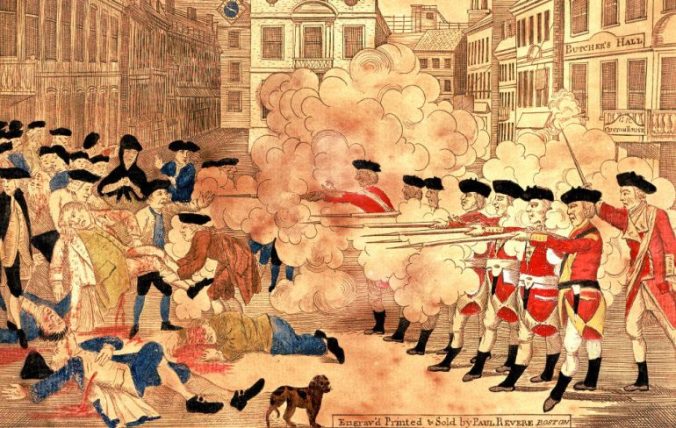
Of course, a President ordering the military to shoot unarmed civilians would be monstrous, as well as illegal. It would also be historically ignorant, as doing so would require cultural amnesia of the major national events that most closely mirror such a scenario, both with “massacre” attached: Kent State, and that little incident in Boston that where it was British soldiers doing the shooting.

That’s not what the President said, though. What he said was this:

“They want to throw rocks at our military, our military fights back. I told them to consider it a rifle. When they throw rocks like what they did to the Mexican military and police I say consider it a rifle.”

Continue reading

Morning Ethics Warm-Up, 8/20/2018: Racing The Battery Edition

Good Morning!

Well, I found a Best Buy in Erie (above), so barring a new catastrophe, I should have a full charge this afternoon and can begin catching up. I am sorry about the inconvenience caused by this self-inflicted problem. I’m afraid to even look at the Ethics Alarms traffic: this August has already been historically bad in that respect. Thanks for your patience.

Fell free to write about any ethics issue that concerns and interests you here while my little netbook is charging, assuming it does. Right now I’m on fumes…

1. Does the New York Times have access to a legal ethicist? How about a competent lawyer? In this story, the Times suggests that the White House doesn’t know what the White House Counsel told Robert Mueller in November. That’s ridiculous, and, I submit, impossible.

By all accounts, Don McGahn, is a competent, experienced ethical lawyer, and like all competent, experienced ethical lawyers, he knows that it is his core duty, under Rule 1.4 of every set of legal ethics Rules in the nation, to…

(1) promptly inform the client of any decision or circumstance with respect to which the client’s informed consent, as defined in Rule 1.0(e), is required by these Rules;

(2) reasonably consult with the client about the means by which the client’s objectives are to be accomplished;

(3) keep the client reasonably informed about the status of the matter;

(4) promptly comply with reasonable requests for information; and

(5) consult with the client about any relevant limitation on the lawyer’s conduct when the lawyer knows that the client expects assistance not permitted by the Rules of Professional Conduct or other law.

(b) A lawyer shall explain a matter to the extent reasonably necessary to permit the client to make informed decisions regarding the representation.

A lawyer doesn’t have to be asked to do this; a lawyer can never use the dodge, “Why didn’t I tell you? You never asked?” with his client. It is true, as the various talking heads kept repeating yesterday, that President Trump is not McGahn’s client, the Presidency is. However, in terms of the duty of communications for a lawyer with McGahn’s job, that distinction is meaningless. I’ve been trying to come up with any kind of statement or revelation that a White House Counsel could give to a Special Counsel that he would not be obligated to immediately reveal to the President.

I could write for hours on this topic, and eventually I will. But the starting point is that the Times is misleading the public. Again.

2. Fake news from the religious right: a Fox News headline today was “Little Girl Kissed By The Pope Is Cancer Free.” This is deceitful nonsense, implying that the Pope healed the girl by the touch of his Holy Lips.  She was undergoing cancer treatment. Her family credits the doctors there with the “miracle.” The Pope himself has not claimed that she was healed by his touch. “Little Girl Who Cheers For Boston Red Sox Is Cancer Free” would be a similar headline. Continue reading

Morning Ethics Warm-Up, 8/10/2008: Post-Newark Hangover Edition

Good morning!

Trying to get back to normal here. I hope it isn’t age, but I suspect it is: for quite a while now I have found myself foggy and exhausted up to three days after a period of stressful travel combined with one or more three-hour seminars. One reason is that I never can sleep in hotels;  another is all the walking around airports lugging two heavy bags, since 1) I cannot risk checking luggage 2) My presentation materials alone weigh more than ten pounds and 3) I object to bringing rollerboards on airplanes as inconsiderate and unfair to other passengers. The side effects right now include a sprained wrist and a swollen knee.

Speaking of side-effects, one of the unfortunate ones of the craven abandonment of the field of battle by the blogs’ “resistance” participants is that traffic collapses quickly without new posts. Over at Popehat, Ken sometimes goes weeks without posting anything. Then again, maybe he’s smart enough not to pay any attention to daily, weekly and monthly fluctuation in traffic, unlike me. Once, if travel and schedule snafus stopped me from posting, I could count on Chris, deery or Charles to have a long-exchange of contentious opinions with other commenters as they maintained that there was no media bias, that Trump should be impeached because he violated “norms,” and the FBI was as professional and uncorruptable as Elliot Ness, or at least Elliot Ness as portrayed by Robert Stack. Now they have retreated into the comforting warmth on the left-wing echo chamber.

1.  Tipping ethics. I was going to include this in yesterday’s salvage operation, but literally had to end the post so I could take a nap. The following tipping dilemmas occurred during my trip, not for the first time: Continue reading

Morning Ethics Warm-Up, 6/27/2018: Unhinged

http://www.youtube.com/watch?v=6QEDb3xzdec

Good Morning.

1. Nah, there’s no mainstream media bias…This is one of the times that I am sorry that the Trump Deranged on Ethics Alarms have temporarily withdrawn from the Comment section battles, as I would love to hear their self-indicting rationalizations.

Here was this morning’s New York Times, big black headline:

JUSTICES  BACK TRAVEL BAN, YIELDING TO TRUMP

Outrageous in every way. The Court did not “yield” to anyone or anything but the law as it stands and has stood for centuries. As Constitutional Law expert Eugene Volokh succinctly put it, “The federal government may pick and choose which foreigners to let into the country (at least setting aside foreigners who have are already been granted residence), even based on factors — political beliefs, religion, and likely race and sex — that would normally be unconstitutional.” He explains:

This used to be called the “plenary power” doctrine, referring to the principle that the government has essentially unlimited power when it comes to at least this aspect of immigration law, unlimited even by the Bill of Rights. It is not based on the constitutional text; textually, the First Amendment would apply to all exercise of Congressional authority, whether under the Commerce Clause or the District of Columbia Clause or the Necessary and Proper Clause under Congress’s power over immigration. But, right or wrong, it is based on longstanding American legal history; and the majority adheres to that history.

Historically, this has even be used to authorize Congress to discriminate based on race (query whether the Court would today condemn this as “irrational”; more on that below). It has long been seen as authorizing Congress to discriminate based on country of citizenship, without investigation into whether such discrimination might actually be motivated by ethnic hostility. And, most relevant to today’s decision, it was seen in Kleindienst v. Mandel (1972) as authorizing discrimination based on political ideology, which would otherwise be forbidden by the First Amendment….The Court rejected the First Amendment claim:

Recognition that First Amendment rights are implicated, however, is not dispositive of our inquiry here. In accord with ancient principles of the international law of nation-states, the Court in The Chinese Exclusion Case (1889), and in Fong Yue Ting v. United States (1893), held broadly, as the Government describes it, that the power to exclude aliens is “inherent in sovereignty, necessary for maintaining normal international relations and defending the country against foreign encroachments and dangers—a power to be exercised exclusively by the political branches of government ….” Since that time, the Court’s general reaffirmations of this principle have been legion. The Court without exception has sustained Congress’ “plenary power to make rules for the admission of aliens and to exclude those who possess those characteristics which Congress has forbidden.” Boutilier v. Immigration and Naturalization Service (1967). “[O]ver no conceivable subject is the legislative power of Congress more complete than it is over” the admission of aliens. Oceanic Navigation Co. v. Stranahan (1909)….

As a result, the Court held that, if decisions to exclude aliens could ever be set aside, this would be so only if there was no “facially legitimate and bona fide” reason to exclude the alien. In Mandel’s case, the dissent noted, those reasons — labeled by the government as Mandel’s “flagrant abuses” during his past visits to the U.S. — “appear merely to have been his speaking at more universities than his visa application indicated.” The dissent argued that “It would be difficult to invent a more trivial reason for denying the academic community the chance to exchange views with an internationally respected scholar.” But the Court didn’t investigate whether the government’s true motive might have been the Administration’s disapproval of Mandel’s political ideas, rather than the supposed violation of past visa conditions; the requirement of a “bona fide” reason did not appear to require an investigation into the government’s true motivations, but rather simply focused on whether the “facial[]” reasons seemed sufficient:

In summary, plenary congressional power to make policies and rules for exclusion of aliens has long been firmly established. In the case of an alien excludable under [the provision involved in Mandel], Congress has delegated conditional exercise of this power to the Executive.

We hold that when the Executive exercises this power negatively on the basis of a facially legitimate and bona fide reason, the courts will neither look behind the exercise of that discretion, nor test it by balancing its justification against the First Amendment interests of those who seek personal communication with the applicant.

The majority’s decision in Trump v. Hawaii basically applied this logic to another clause of the First Amendment — here, the Establishment Clause (which normally bars discrimination based on religious denomination, including the use of neutral rules in a discriminatorily motivated way) rather than the Free Speech Clause….

Continue reading

Wait: Does President Obama Consider THIS A Scandal? Because, You Know, It Is…

Every time either ex-President Obama or one of his slavish acolytes—you know, journalists?—make the statement that his tenure was “scandal free,” honest Americans who have been paying attention grind their teeth down a few more millimeters.

Of course, Obama had plenty of scandals, serious ones—at least they would have been serious in any other administration. The fact that the news media chose to minimize them or ignore them doesn’t make them less scandalous…in fact, that’s a scandal itself.  To name one example that especially rankles me, the IRS, an Executive Branch Agency, eventually admitted that it used its power to meddle in the 2012 Presidential election, against Obama’s opponent. However, the formula of lying, covering up, stalling, and having allies in the press call everything negative under Obama a “nothingburger” carried the day. This was SOP for eight years.

When Obama personally lied—20 times? 30?— about how his signature health care plan would work (All together now: “If you like your plan…”), somehow this Nixon-Clinton level of intentional dishonesty was shrugged off as “the ends justify the means.” The fact is that it was a real, calculated, intentional lie used to trick the American people, not just a case of a President being wrong. Bush didn’t know that Iraq didn’t have WMD’s. Obama had to know what his own health care bill would do.

Blecchh!. I can taste the tooth powder!

This week, another genuine Obama scandal was uncovered that would have had Democrats seeking impeachment votes if it had occurred under Reagan or Bush. The Obama administration secretly gave Iran access to the U.S. financial system, defying the sanctions still in place after the 2015 nuclear deal, despite repeatedly telling Congress and the public that it would not and did not do anything of the sort.

What would you call that?

After striking its bone-headed, constitutionally-dubious nuclear deal with Iran, the Obama administration wanted to give Iran the promised access to its freshly unfrozen overseas reserves, including $5.7 billion stuck sitting in an Omani bank.  Iran wanted to convert the money into U.S. dollars and then euros, but that would require our giving the rogue nation access to the U.S. financial system. Obama officials had  promised Congress that Iran would never gain such access. As was the usual solution for Obama when law, the Constitution or established procedure stopped something he had decided in his Wisdom was Good and Just, Obama had his Treasury Department issue a license in February 2016 that would have allowed Iran to convert $5.7 billion it held at a bank in Oman into euros by exchanging them for U.S. dollars. The scheme failed, for the Omani bank blocked the transaction, but this is just moral luck, and does not make the secret end-around the sanctions less wrong.

The license issued to Iran’s Bank Muscat made lies of public statements from the Obama White House, the Treasury and the State Department denying that the administration was contemplating allowing Iran access to the U.S. financial system. After the nuclear deal was announced  in July 2015, Obama Treasury Secretary Jack Lew testified under oath—lying to Congress is still a scandal, unless Obama officials do it, and they did it a lot—that even with the sanctions relief, Iran “will continue to be denied access to the world’s largest financial and commercial market.” A month after that, another Treasury official, Adam Szubin, testified that  “Iran will be denied access to the world’s most important market and unable to deal in the world’s most important currency.”

“The Obama administration misled the American people and Congress because they were desperate to get a deal with Iran,” said Senator Rob Portman (R-Ohio).   Verdict: Fair and accurate. And what is the rebuttal by the Obama-ites?

Ooooh, lame. Lamer than usual, in fact. Continue reading