Ethics Dunce: Tony Kornheiser

Ugh.

No pardon for you, Tony...

No pardon for you, Tony…

Tony Kornheiser is a sportswriter and humorist as well as a television and radio personality. I’ve been reading, watching and occasionally laughing at him since I moved to D.C. eons ago, when he was a Washington Post columnist. This post has nothing to do with sports, however, though the issue arose in a sports context. It has to do with the depressing fact that Tony’s mode of ethical analysis is still based on consequentialism and an ignorance of moral luck, and that he is, despite being an educated, erudite and clever man, typical of the public in this respect.

It is depressing, and thus I say, “Ugh.”

For the second time in two days,  the ten minutes I had time to watch TV randomly brought me to a discussion of umpire Marty Foster’s botched third strike call to end a close game between the Tampa Bay Rays and the Texas Rangers. Tony was arguing with Michael Wilbon on their hit ESPN show, “Pardon the Interruption.” [ Aside: And why did my channel surfing pause there? Because the project that has eaten my life the last couple weeks requires me to mention, in a speech, the HBO Larry David show “Curb Your Enthusiasm, ” and I keep wanting to say “Pardon the Interruption.” I blew it again last night, so naturally, the first thing I see this morning is the show I’m trying to purge from my brain.] They were debating whether Foster should be disciplined for his bad call, an idiotic issue, since the answer is “Of course not; are you nuts?” Umpires make hundreds of judgment calls every game, and mistakes are inevitable. As I wrote yesterday, Foster’s handling of this botched call was exemplary, because he admitted that he had erred. Punishing him or any umpire who misses a visual call would be unfair and destructive; such punishment could only be valid in the case of actual misconduct or negligence, as in the case of an umpire ignoring or not knowing the rules. Continue reading

Ethics Hero: Michael Bublé

This video, and therefore the incident, is three years old now and viewed on YouTube by millions,  but it’s new to me, and it raises my opinion of Michael Bublé , an old-fashioned but youngish Vegas-style crooner in the Andy Williams mold, but cuter.

Here is what’s ethical about the singer’s spontaneous conduct:

  • He was kind. Few performers allow their concerts to be hi-jacked like this.
  • He was courageous. Professionals know that any time you give up control, anything can happen.  Bublé was confident that he could handle whatever came his way, but it is still a risk.
  • He was generous. His reaction to realizing the kid could really sing was pitch-perfect.
  • He demonstrated the Golden Rule, and explicitly so, when he made the decision to bring the 15-year-old on stage, saying, “I remember being your age.”

…all marks of an Ethics Hero, and a lucky one, because this could have gone horribly wrong.

_________________________________

Pointer: Kathleen Dunn (via Facebook)

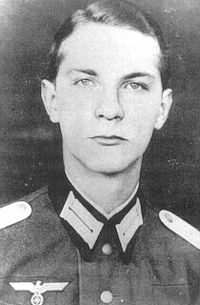
Ethics Hero Emeritus: Ewald-Heinrich von Kleist-Schmenzin

The first Nazi soldier Ethics Hero.

The SECOND Nazi soldier Ethics Hero!

Ewald-Heinrich von Kleist-Schmenzin didn’t accomplish anything heroic, but boy, did he try. The last surviving member of the most famous and closest call of the many failed plots to kill Adolf Hitler, von Kleist-Schmenzin is a ringing example of how the only difference between a a deathless hero and some guy with an unspellable name that you never hear of until he dies sometimes is just luck, and moral luck at that.

von Kleist-Schmenzin was 90 when he perished at his home in Munich this week, outliving almost all of his fellow conspirators in Operation Valkyrie by just short of seven decades. After that near-miss assassination attempt failed (because the bomb-in-a-briefcase dropped near Hitler’s feet by chief conspirator Claus von Stauffenberg was inadvertently moved just enough to save Der Fuhrer’s miserable life), von Kleist-Schmenzin managed to convince Gestapo interrogators that he wasn’t part of the plot, though in truth he was originally given the assignment of planting the bomb. He ended up in prison (the fact that his father was also involved in the plot and was one of those executed guaranteed that) and later was sent back onto the battlefield, but only random chance prevented him from being remembered as the man who ended the war…in fact, it foiled him twice. Continue reading

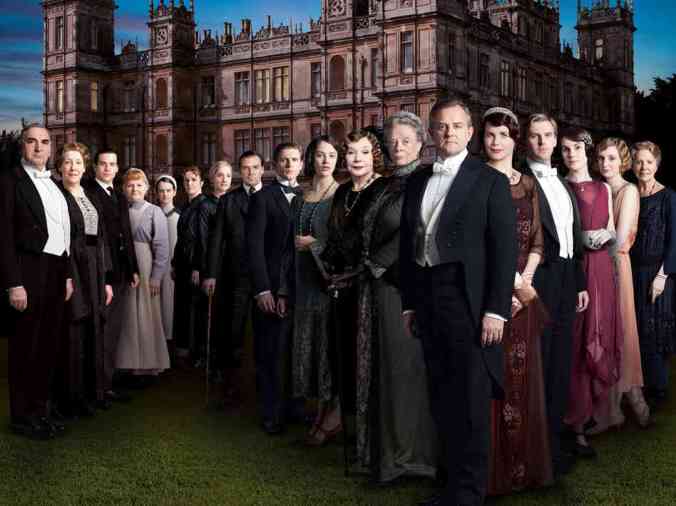
Consequentialism, Bias, Moral Luck and Malpractice on PBS’s “Downton Abbey”

downton_abbey

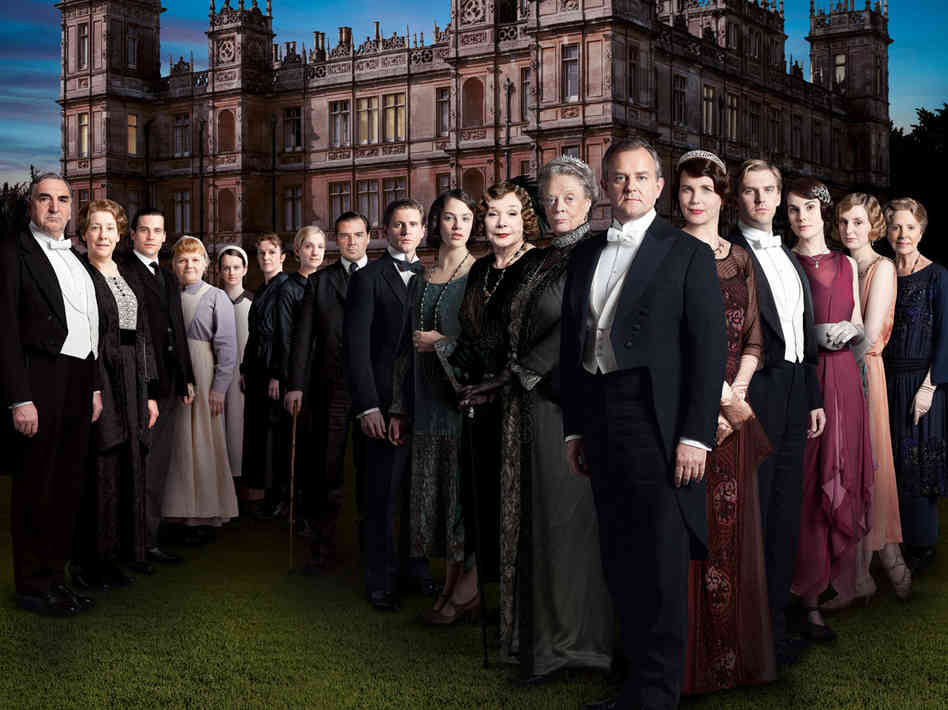
The fourth episode of the PBS sensation “Downton Abbey” provided a clinical examination of how bias of all kinds can rule the most important decisions in our lives, and how moral luck so frequently determines our conclusions about whether those decisions were right, wrong, or really, really wrong. It also shed some light on the  current policy conundrum of how best to consider medical malpractice suits—as a fair and necessary means of rewarding the victims of professional errors, or as a decidedly unfair device that distorts the practice of medicine and inflates its costs without improving treatment.

For those who have not caught the trans-Atlantic mania of following the saga of the Earl of Grantham and his extended family as they try to maintain their life of luxury as members of the landed aristocracy post-World War I, here are the relevant plot points of the most recent episode (in the U.S.; Great Britain is a season ahead of us):

Sybil, the much loved but rebellious daughter of the Earl is staying at the family estate (all right, castle) as she prepares for childbirth. (She and her Irish revolutionary husband Tom are on the lam from British authorities, but never mind that). The Earl naturally wants the best medical care for his daughter, and rejects the long-time family physician, Dr. Clarkson, for the task, because he has made some faulty diagnoses of late that led to all kinds of sorrow in last season’s drama. So the Earl calls in a renowned surgeon to the upper crust who is upper crust himself, Sir Philip Tapsell. (He appears to be an arrogant, pompous jerk, but the show’s writers show him giving sage and well-worded advice to the Earl’s non-Irish revolutionary son-in-law on the delicate matter of his sperm count, so we know he’s not a fraud as well.)

The Earl’s American but far too deferential wife Cora (in case you wondered whatever happened to the cute Elizabeth McGovern from “Ordinary People,” the answer is, “This!”) seeks to rescue Dr. Clarkson from a stinging snub by insisting that he come to Downton Abbey and be present for the childbirth as what we would call a consulting physician to Sir Philip, who doesn’t want one. Two head-strong doctors and hostile doctors looking after the same patient—yes, this will work out well.

Sure enough, Sybil’s pregnancy takes an ominous turn. Her ankles are swollen (“Perhaps she has thick ankles!” huffs Sir Philip, pooh-poohing the symptom. “She does not!” replies loyal Dr. Clarkson), her mental state is confused, and there is protein in her blood. Clarkson concludes that Sybil is toxemic and believes she could suffer eclampsia if she isn’t taken to the hospital immediately for a Caesarian section. Sir Philip dismisses him as a hysteric hack, and insists that Sybil’s pregnancy is normal and fine. Since Caesarians were risky in the 1920’s, often resulting in the deaths of the mother, the baby, or both, he believes Dr. Clarkson is giving irresponsible advice. As critical minutes tick away, Lord Grantham asks Clarkson if he can guarantee that Sybil will survive the ordeal of a Caesarian. “There are no guarantees,” he replies, correctly. Not hearing what he wanted to hear, the worried father turns to Sir Phillip and asks how certain the blue-blood doc is that the operation is unnecessary. “Completely certain,” is the ridiculous reply.

Announcing that certainty is a better bet than equivocation, Lord Grantham decrees that Sybil will remain at the castle to have her child, which she promptly does. All seems to be well, too, with a healthy baby, a beaming mother, a relieved family, and a smugly gloating Sir Phillip. But then Sybil goes into the violent seizures characteristic of eclampsia, and it is too late to save her. She dies. Dr. Clarkson’s diagnosis was correct. The family is devastated; Sir Philip is stunned, Cora is furious at both him and her husband, and the Earl of Grantham is feeling guilty.

Got that?

Cora’s anger, the Earl’s guilt and the vindication of Dr. Clarkson are all the result of a bad-tasting recipe of hindsight bias and moral luck. Sybil might have not gone into convulsions. She might not have survived the Caesarian, in which case Dr. Clarkson would be the one looking incompetent, Sir Phillip would say “I told you so,” and Cora would be furious at a different doctor but the same decision-maker, her husband, who would still be sleeping in the guest room. Continue reading

Robert Griffin III, Wally Pipp, and the Catch-22 of Lies

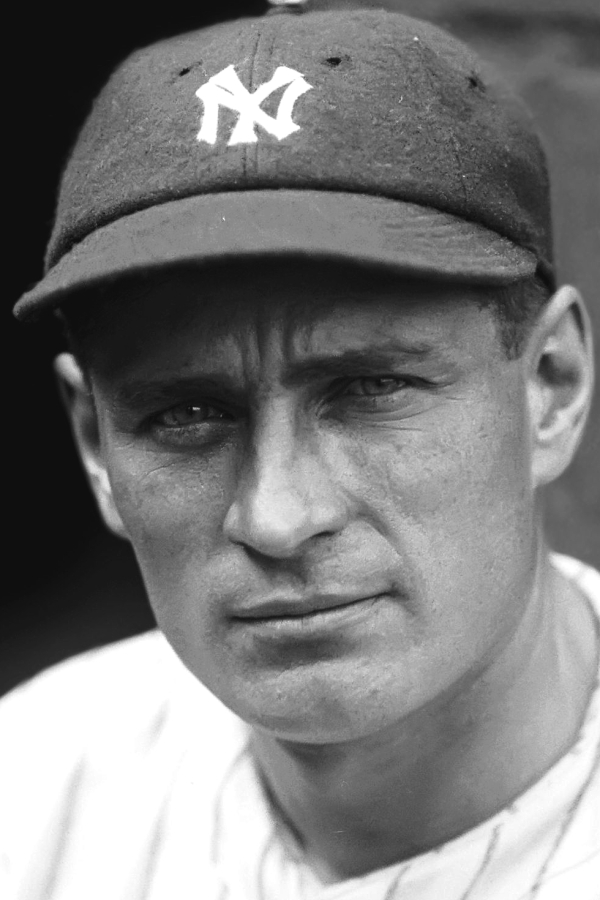
Dan Wetzel would have loved Wally Pipp

Dan Wetzel would have loved Wally Pipp

If you want to see the stark difference between the culture of baseball and the culture of football. look no further than Washington, D.C., where the city’s sports fans are in mourning for the second time in barely three months’ time. The surging Redskins just met play-off elimination, because their young star quarterback was injured but allowed to stay in the game. Back in October, the city’s new sports darlings, baseball’s Nationals, were eliminated in their first play-off round, in part, fans believe, because the team wouldn’t let its completely healthy young star pitcher play for fear that he would get injured.

This week everyone from my local sandwich shop proprietor to the driver of the cab I just got out of is furious  at Redskins coach Mike Shanahan for allowing the obviously hobbled Robert Griffin III to stay in the doomed game against the Seattle Seahawks when there was a competent back-up on the bench. And some, like Yahoo! sportswriter Dan Wetzel, are blaming Griffin, for “lying”:

“Robert Griffin III couldn’t do much of anything Sunday except lie, which is what he’s been trained to do in situations like this.
Lie to himself that he can still deliver like no backup could. Lie to his coach that this was nothing big. Lie to the doctors who tried to assess him in the swirl of a playoff sideline. So Robert Griffin III lied, which is to be excused because this is a sport that rewards toughness in the face of common sense, a culture that celebrates the warrior who is willing to leave everything on the field, a business that believes such lies are part of the road to greatness.” Continue reading

Consequentialism Alert At Redskins Park!

Washington, D.C. has a grand tradition of nepotism. Sometimes it works; it's wrong all the time.

Washington, D.C. has a grand tradition of nepotism. Sometimes it works; it’s wrong all the time.

A year ago, I wrote about the dilemma faced by Washington Redskins coach Mike Shanahan, who was mired in another terrible season with a failing offense engineered by his son Kyle, the team’s offensive coordinator.  Here we have the ethical problem with nepotism, I wrote…

“There is no way to tell what is happening or what the effect of the nepotism is, which is why all appearance of impropriety situations are toxic to trust; there is no way to tell whether the apparent conflict is causing real harm or not. When everything goes well, the doubts will be muted and there won’t be a crisis in public trust, but that is luck, and nothing more…Not only are the Skins losing, but the leaks have sprung in Nepotsim Central, where Kyle Shanahan is responsible. It was fully predictable, not that this would happen, but that it could very well happen, way back in 2010 when Mike Shanahan had the bright idea of hiring sonny boy. Not foreseeing this is a miserable failure to play ethics chess: when a choice is a good bet to create an ethics problem a few moves from now, don’t make it. Owner Snyder should have forbidden it; Kyle should have turned the job down.”

Ah, but that was then, and this is now. The vicissitudes of moral luck have struck again.  Now Kyle’s offense is working like a charm, thanks to the magic arm, legs and mind of rookie quarterback sensation Robert Griffin III. Now the ‘Skins are the NFL East Champions! Now Kyle is an offensive wizard, not a putz, and Coach Dad a visionary for hiring him. What’s the matter with a little nepotism? Never mind!

This is rank consequentialism in its worst form. Nepotism is an unethical way to run any staff, company, team, business or government, unfair, inherently conflicted, irresponsible, dangerous and corrupting. It should be recognized as such from the beginning, and rejected, not retroactively justified if it “works.”

I’m sure there were and are non-relatives of the Redskins coach who could have devised a successful offense with RG3 taking the hikes. The ethical thing to do was to find them and give one of them the job.

The Redskins coach’s nepotism is just as unethical in 2013 as it was in 2012, 2011, and 2010.

Tales From The Moral Luck Files: The Truck, The Ice, and the Hero

"I'm a hero!"

“Woo-Hoo! I’m a hero!”

A story from Manitoba, Canada raises the question, “Should someone get full credit for being a hero when he rescues the victim of his own poor judgment?”

A father on an ice fishing trip with his daughter drove his pick-up truck onto the ice of frozen Lake Manitoba, misestimating just how frozen it was. The truck broke through the ice, and he reportedly had to dive deep into the freezing water to rescue his daughter from an icy death. Is it heroism to repair the results of a near tragedy you caused yourself?

Let’s consider at a range of possible frozen ice scenarios:

1. You see someone else’s truck break through the ice, and rescue the occupants from drowning at great personal risk.

2.  You tell a driver that its safe to drive his truck onto the ice, and it breaks through because you were wrong. You rescue his daughter.

3.  You watch several trucks drive on the frozen lake without incident. You follow them, and your truck falls through the ice. You have to rescue your daughter.

4. You drive onto the ice without proper precautions, and after your truck falls through, you rescue your daughter.

5. A local citizen warns you about driving your truck on the ice, which he says is too thin. You do it anyway, and have to save your daughter.

6. The Homer Simpson scenario: You see a truck fall through the ice, and yet drive yours onto the ice anyway. You rescue Lisa. Continue reading

The Shock Jocks and the Suicide: A Moral Luck Cautionary Tale

With every action we take, we're rolling the dice...

With every action we take, we’re rolling the dice…

Jacintha Saldanha, a nurse at the King Edward VII hospital in Great Britain, happened to be the staffer on duty when two Australian disc jockeys made a prank call to the hospital ward where the Duchess of Cambridge was staying for treatment of the symptoms of her recently disclosed pregnancy. The DJs, Mel Greig and Michael Christian,  pretended to be the Queen and Prince Charles, and the gullible nurse discussed the royal patient’s condition with them, violating protocol and security.  Three days later, Saldanha, the 46-year-old mother of two, was found dead of an apparent suicide.

Now the disc jockeys are off the air indefinitely, and being pilloried as virtual murderers in some local media as if Saldanha’s death was a predictable and reasonable outcome of their admittedly irresponsible gag. It wasn’t. Presumably the same people screaming for Gaig’s and Christian’s heads would also be doing so if the nurse had been asked, in the fashion of a gentler, dumber era of phone pranks, if she had Prince Albert (tobacco) in a can (“You do? Then for God’s sake, let him out!”) and killed herself in humiliation. This was not a natural outcome of their juvenile routine. This was an unhinged over-reaction that had to have underlying causes far deeper than a practical joke phone call. The shock jocks were the victims of moral luck, the same phenomenon that leaves a tipsy partier who drives home without incident a respected citizen, but turns a driver who is no more intoxicated and  attended the same party into a community pariah because a careless child ran in front of his car. The two drunk drivers were identical in their conduct. One was lucky. The other was not. Continue reading

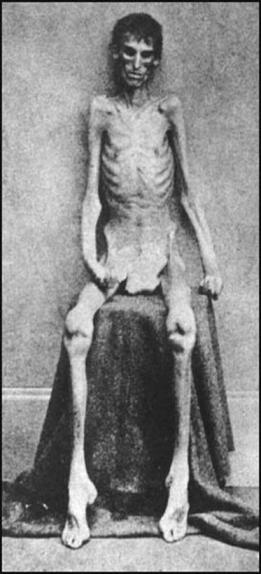
In the Wake Of The BP Disaster, Another Andersonville Trial

Someone has to be held responsible, even if nobody is to blame.

Someone has to be held responsible, even if nobody is to blame.

I don’t know about you, but I was certainly surprised to discover that in the view of the Justice Department, two men I had never heard of, Robert Kaluza and Donald Vidrine, were the ones responsible for the April 20, 2010 explosion of a BP oil rig that caused millions of barrels of oil to leak into the Gulf of Mexico for months, polluting the waters and the shores and causing billions of dollars of damages. That is the clear implication of the decision to prosecute the two rig  supervisors for manslaughter in the deaths of the eleven BP workers who perished in the blast.

Obviously, this makes no sense at all. Other government authorities have treated the BP spill as resulting from a complex series of errors, misjudgments, and regulatory violations on the part of several companies and their management teams. The allocation of responsibilities and damages will take years to unravel. How then can Kaluza and Vidrine, who are accused of disregarding abnormally high pressure readings that according to the government should have alerted them to the danger of a  blowout at BP’s Macondo well, be the ones facing criminal charges and prison time? How can this be fair, just, or even possible?

It isn’t fair or just. It is possible because it is easier to finger the two middle-managers who inherited the flawed well equipment that was a ticking time bomb than to put a whole company, or many companies, behind bars. As the F.B.I. agent investigating the theft of the Declaration of Independence keeps telling Nicholas Cage’s treasure hunter in the Dan Brown rip-off  movie “American Treasure,” “Somebody has to go to jail.” Kaluza and Vidrine may be the designated villains for the BP spill. Their only crime was one of moral luck: they were in the wrong place at the wrong time, the final links in a tangled chain of incompetence, corruption and miscalculations. Continue reading

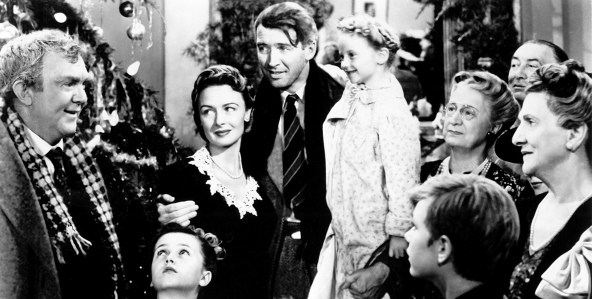
The Complete “It’s A Wonderful Life” Ethics Guide [UPDATED]

 Frank Capra’s 1946 masterpiece “It’s A Wonderful Life” is one of the great ethics movies of all time, perhaps the ethics movie of all time. In 2011 I prepared a guide through its complex ethics thicket. The post was divided into three separate posts, and I eventually combined them s0 readers can have the pleasure, if one can call it that, of watching the film like I do: having ethics arguments the whole way through. And now, here is your guide. Additions are welcome and encouraged.

1. “If It’s About Ethics, God Must Be Involved”

The movie begins in heaven, represented by twinkling stars. There is no way around this, as divine intervention is at the core of the fantasy. Heaven and angels were big in Hollywood in the Forties. Nevertheless, the framing of the tale advances the anti-ethical idea, central to many religions, that good behavior on earth will be rewarded in the hereafter, bolstering the theory that without God and eternal rewards, doing good is pointless.

We are introduced to George Bailey, who, we are told, is in trouble and has prayed for help. He’s going to get it, too, or at least the heavenly authorities will make the effort. They are assigning an Angel 2nd Class, Clarence Oddbody, to the job. He is, we learn later, something of a second rate angel as well as a 2nd Class one, so it is interesting that whether or not George is in fact saved will be entrusted to less than heaven’s best. Some lack of commitment, there—then again, George says he’s “not a praying man.” This will teach him—sub-par service!

2. Extra Credit for Moral Luck Continue reading