Chris Christie and the Curse of Consequentialism

It will be scant consolation to Chris Christie, who probably lost forever any chance of becoming President, but his bi-partisan actions in the wake of Superstorm Sandy provide a perfect example of how a completely ethical and responsible decision can have consequences that cause it to be judged unethical and irresponsible.

Even before Obama won Ohio’s electoral votes, guaranteeing his re-election, analysts were pointing to Christie’s much-photographed stroll with (and hugging of) the President, and the well-timed opportunity it provided to allow Obama to appear both Presidential and willing to co-operate with Republicans, as the tipping point in a close race, breaking Mitt Romney’s momentum and undercutting the argument that only he could “reach across the aisle.” I doubt that Chris and Barack’s New Jersey Adventure was in fact the primary reason Romney lost, but I have no doubt at all that conservatives will blame Christie, among others, for the loss. Continue reading
Revisiting the Tragedy of the Dead Child in the Locked Car

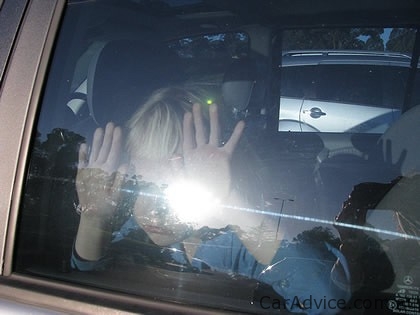
Almost two years ago, I wrote about Washington Post feature writer Gene Weingarten’s provocative and sensitive 2009 exploration of the tragic cases in which a distracted parent leaves a small child in an over-heated car. The issue, now as then, is how society should treat such parents, who are without exception crushed with remorse and guilt, their lives and psyches permanently scarred. Weingarten’s original piece, which won him a 2010 Pulitzer, did not take a position on how such parents should be treated by the criminal justice system. In today’s Washington Post, he does.

Weingarten writes:

“The parents are a continuing danger to no one, nor could anybody sanely argue that fear of prison is even a minuscule factor in preventing this. So we are left with the nebulous notion of punishing, for punishment’s sake alone, an act of accidental negligence that by its nature subjects the doer to a lifetime of agony so profound that it is unfathomable to anyone who has not lived it. Prosecution is not, in my view, warranted.”

Weingarten is thoughtful, analytical, reasonable, compassionate and fair. He is also, in this case, dead wrong. Continue reading

Ryan Braun, Steroids and Fairness

If Ryan Braun is innocent, this man, who never met him. tried to ruin his career. It can happen…you know, like Mark Furman tried to frame O.J.

The strange case of Ryan Braun, the 2011  National League Most Valuable Player who tested positive for steroids during the post-season play-offs, once again raises the perplexing ethical issue of fairness when formal procedures concerning alleged wrongdoing are involved.

Braun’s positive test sent a shudder throughout baseball. He was supposed to  be one of the game’s rising young “post-steroid era” stars. For Braun to be caught cheating was a discouraging reminder that the game had not left its disastrous days of pumped-up stars and dubious records behind: now the legitimacy of an MVP season was being called into question. Braun vehemently denied the charges (as every positive-testing player has) and appealed them, a move that had been futile in every previous case. To literally everyone’s surprise, however, the three member arbitration panel ruled 2-1 in Braun’s favor. Although the report of the independent arbitrator who cast the deciding vote has yet to be released, the reason Braun prevailed appears to be that the Major League Baseball contractor who had  responsibility for sending Braun’s urine samples to the testing facilities had to store them at his house for the weekend because FedEx had closed before he could mail them to the lab. This created a sufficient break in the chain of custody, it seems, to make the results invalid. Continue reading

Tales of Moral Luck: The Snake, the Testicle and the Lousy Friend

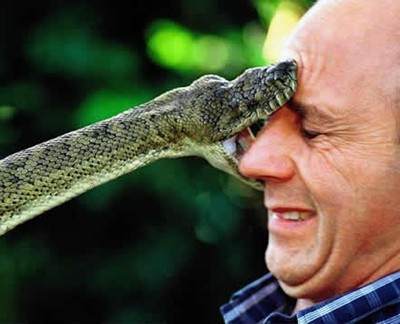
"Heck, sure, pal, I'll suck the venom out of your face--what's that? You were bitten WHERE????"

Irish tourist Jackson Scott was engaged in a necessary bodily function while vacationing in the Australian outback, when he was bitten—on the testicle.  The biter was a tiger snake, and its venom can be fatal.

Panicked, Scott begged his camping companion, Roddy Andrews to suck the venom out. Roddy, however, said, “Ewwwww!

Also, “No.”

But he drove Scott in a race against time to the nearest hospital, where doctors administered an antidote in time, barely, to save Scott’s life. Continue reading

A “Naked Teacher Principle” Spin-Off: “The Case of the Naked Football Coach”

If it's any consolation, Coach Withee, George Costanza sends his sympathies.

With the notable exception of the high school art teacher who moonlighted on the web as an artist that painted pictures using his butt and genitals while wearing a paper bag over his head, most victims of the “Naked Teacher Principle”(TNTP for short) have been females.  [You can read the initial exposition of the principle here. “To put it in the simplest possible terms, a responsible high school teacher has a duty to take reasonable care that her students do not see her in the nude. It’s not too much to ask.”] This time, however, the naked teacher was not only male but the football coach. And, as the merciless Principle demands, he’s out of a job. Continue reading

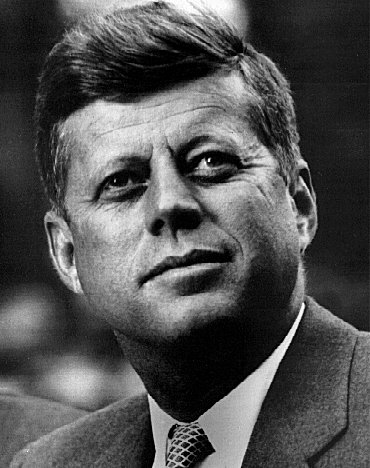
JFK, Ethics Corrupter

The new memoir by Mimi Alford, the former White House intern whom President Kennedy made his sex toy (though not his only one), hardly comes as a surprise to anyone who didn’t accept the fabricated, idealized version of JFK sold to the public by the likes of Arthur Schlesinger, Jr. and Chris Matthews. Still, her account of Kennedy’s revolting conduct is infuriating, because it continues his corruption of American ethics and leadership standards, the real legacy of his presidency.

Kennedy was a thoroughly fraudulent human being, a cynical and arrogant leader who used soaring prose about freedom, aspiration and the human spirit while masquerading as a devoted father and husband, betraying his wife, abusing his power for selfish personal gratification, and in the process, putting his country at risk during the height of the Cold War. Only moral luck, combined with the failure of a complicit media to tell the public what they really had a right to know—that their President was a sexist, reckless, ruthless, SOB—allowed Kennedy to escape with his myth intact long enough to be regarded as a heroic figure. Now, as the truth relentlessly emerges, the product of his devoted image-makers collides with the ugliness of JFK’s behavior, creating cognitive dissonance of the most destructive sort.  After all, if the great John F. Kennedy abused drugs in the White House, used his office and power to lure employees into illicit sexual relationships, degraded and pimped-out women devoted to him, and did all of this with the full knowledge that it would bring down his administration and his party if anyone ever revealed his secrets, then this must mean that character doesn’t matter in our leaders, that we should tolerate a wide range of misconduct, and that the abuse of the power of the President is just a traditional perk. Continue reading

“It’s A Wonderful Life” Ethics, Part I (of 3)

“It’s A Wonderful Life” made its now traditional holiday season appearance on network television, and naturally, I watched it. The movie is one of the great ethics movies of all time, as well as being one of the great American movies of all time, perhaps director Frank Capra’s masterpiece. One of the markers of a classic film is how one can find new things in it upon every viewing, and that is certainly true of “It’s A Wonderful Life.” I was struck this time around by how many ethics issues are raised in the screenplay, some, no doubt, unintentionally.

1. “If It’s About Ethics, God Must Be Involved”

The movie begins in heaven, represented by twinkling stars. There is no way around this, as divine intervention isat the core of the fantasy; heaven and angels were big in Hollywood in the Forties. Nevertheless, the framing of the tale advances the anti-ethical idea, central to many religions, that good behavior on earth will be rewarded in the hereafter, bolstering the theory that without God and eternal rewards, doing good is pointless.

We are introduced to George Bailey, who, we are told, is in trouble and has prayed for help. He’s going to get it, too, or at least the heavenly authorities will make the effort. They are assigning an Angel 2nd Class, Clarence Oddbody, to the job. He is, we learn later, something of a second rate angel as well as a 2nd Class one, so it is interesting that whether or not George is in fact saved will be entrusted to less than heaven’s best. Some lack of commitment, there—then again, George says he’s “not a praying man.” This will teach him—sub-par service! Continue reading

The Washington Redskins and the Nepotism Trap

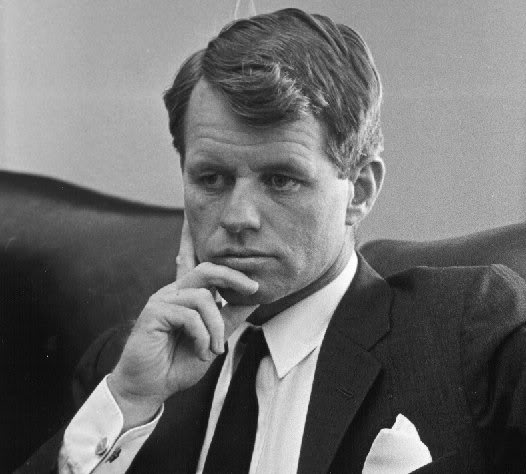
Bobby Kennedy was lucky. Kyle Shanahan isn't.

No leadership error embodies the appearance of impropriety more completely than nepotism, and, for good measure, it also creates an inherent conflict of interest and undermines fairness and integrity. Yet people continue to argue that it is not inherently unethical, and leaders and managers in all fields continue to walk into the nepotism trap. The fact that it doesn’t always snap shut is not an argument in its favor, for this is just moral luck; letting your kid play with matches in bed won’t necessarily burn the house down or kill him, but it’s still irresponsible.

Washington Redskins fans now have a painful lesson in nepotism’s drawbacks to guide their own decisions. As has been a routine event about now in the pro football season since hapless owner Dan Snyder became responsible for the team’s personnel, the Redskins season is imploding, and the head coach is on the griddle. This season that coach is Mike Shanahan, and the problem is his offense. The Skins were shut out Sunday, 23-0, and appear to have no quarterback, no offensive line, and no clue.

The team’s offensive coordinator? Kyle Shanahan, the head coach’s son. Now what? Continue reading

Terry Francona, Accountability, and Moral Luck

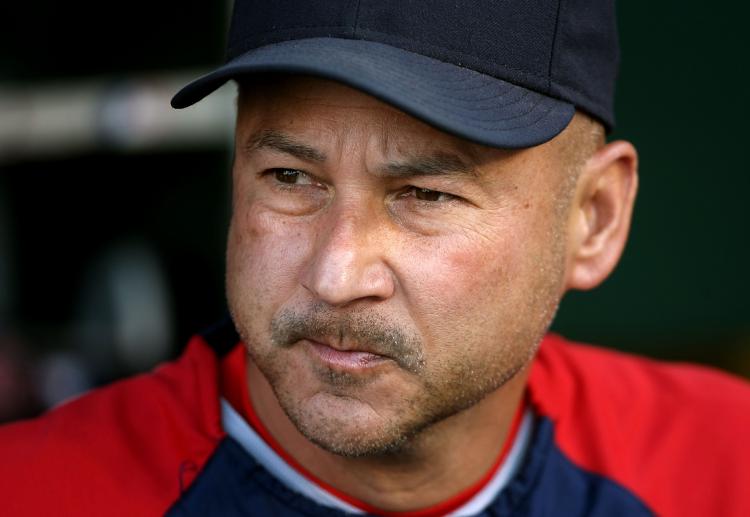
Good job, Terry. 'Bye.

Barack Obama, and indeed all leaders, current and future, have reason to heed the results of meeting to be held today between the ownership of the Boston Red Sox and the traumatized team’s manager of eight years, Terry Francona. Francona will learn whether his tenure—he is beyond question the most successful manager in the team’s century-plus existence—will end as a consequence of his squad’s historic and inexplicable collapse, robbing it of the play-off spot that seemed guaranteed less than a month ago. Continue reading

A Cautionary Ethics Tale From Texas

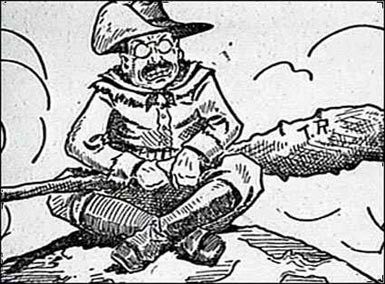
A Good Samaritan Teddy could relate to

In Texas, a 62-year-old man pulled over on the highway to help a couple whose truck had run out of gas. While he was assisting, the Good Samaritan apparently objected to the demeaning way the 31-year-old husband was addressing his wife, and said so. The husband then attacked the older man…who drew his concealed gun and shot him in the shoulder.

<sigh> Continue reading