“Miracle On 34th Street”…An Ethics Companion, Chapter One: “Meet Kris Kringle!”

The Introduction is here.

The movie tells us right at the start that 1) the charming old man in the white beard can’t possibly be Santa Claus, and 2) that he’s nuts. That is, he tells adults who are paying attention this as soon as he starts complaining to a New York City storekeeper that his window display has the reindeer mixed up: “You’ve got Cupid where Blitzen should be. And Dasher should be on my right-hand side. And another thing…Donner’s antlers have got four points instead of three!”

Let’s see:

  • No Christmas display has ever distinguished between Santa’s reindeer (except for Rudolph), because the individual reindeer have never had any identifying characteristics in reality or myth. Are we to assume that there are name-tags on the models? If so, why wouldn’t Kris be complaining about the features of all of them, not just “Donner’s” antlers?
  • The names of the reindeer, even if there are flying reindeer, were 100% the invention of the poem “A Visit from St. Nicholas,” or “The Night Before Christmas,” originally published in 1823.  No one has ever claimed that the author had some kind of special info on the actual names of the reindeer when he wrote,

    More rapid than eagles his coursers they came,
    And he whistled, and shouted, and called them by name;

    “Now, DASHER! now, DANCER! now, PRANCER and VIXEN!
    On, COMET! on CUPID! on, DUNDER and BLIXEN!

    …and anyway, if he did, those were their names 120 years before the movie takes place. Nobody has ever claimed the reindeer were immortal, either. I suppose Santa Claus, in a nod to the poem’s popularity (it has been called the most famous poem of all time), could have adopted the practice of always having the reindeer named after the poem’s versions, and when one Vixen dropped of old age, the young reindeer that took her place became the new Vixen.

I suppose. Continue reading

“Miracle On 34th Street”…An Ethics Companion: Introduction

As with most holiday movies, but perhaps more than most, the entire concept of digging into the ethics of the plot of “Miracle on 34th Street”  can be criticized as beside the point. The movie, at least the 1947 original, is a classic; it works dramatically and emotionally, it makes people feel good, and it has held up over time. That’s all a Christmas movie is supposed to do, and if it does it without really making sense or avoiding ethics potholes along the way, so what?

I sympathize with this view. However, our ethical standards and ethics alarms are affected by what we see, hear, like and respond to. If popular holiday movies inject bad ethics habits and rationalizations into our character, especially at a young age, that is something we should at least be aware of by the tenth or eleventh time we watch one of them.

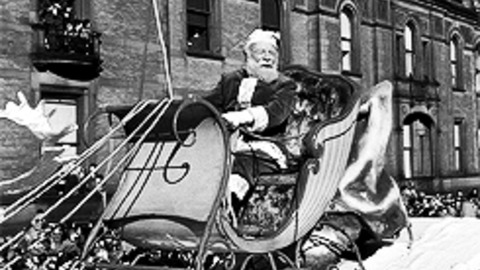
One ethical aspect of “Miracle on 34th Street” that must be flagged at the outset is competence. The film is so effortlessly engrossing and convincing that it is easy to forget how easily it could have failed miserably. Actually, it is also easy to remind oneself: just watch any of the attempts to remake the film. There have been four of these, starring, as Kris Kringle, Thomas Mitchell, Ed Wynn, Sebastian Cabot, and Richard Attenborough. That’s a distinguished crew, to be sure. Mitchell was one of the greatest character actors in Hollywood history. Wynn was nominated for an Academy Award (for “The Diary of Ann Frank”) and Attenborough won one, Best Supporting Actor Award in 1967 for “The Sand Pebbles.” Cabot wasn’t quite in their class, but he was a solid pro, and looked more like Santa Clause than Mitchell,  Wynn, or Richard Attenborough. None of them, however, were as convincing as Edmund Gwenn. He made many movies—all without a white beard— and had a distinguished career in films and on stage, but even audience members who knew his work had a hard time reminding themselves that he wasn’t Kris Kringle while they watched the movie. I still have a hard time. Continue reading

The “White Christmas” Ethics Guide (REVISED And UPDATED)

I’m looking at some holiday movies to add to the Ethics Alarms library of annotated classics—no, ethics and “A Christmas Story” are irrelevant, it being a child’s remembrance and hardly literal–but I might as well begin with  revising and revisiting the “White Christmas” guide, which first appeared in 2012. 

I still like the film—my wife hates it—being a fan of all four stars, especially Bing and Danny, as well as the director, Michael Curtiz.  I do like it a bit less each time I see it, mostly from an ethics perspective, and the successive revisions reflect that.

I still get misty when the old general, played by Dean Jagger, gets saluted by his reunited army unit, which has gathered at his struggling, snowless, Vermont inn on Christmas Eve to remind him that he is still remembered and loved. Nonetheless, “White Christmas” is by far the strangest of the Christmas movies, and also the most unethical. Though everything works out in the end, the characters in the sloppy plot spend the whole movie lying, extorting, betraying, manipulating and generally mistreating each other, always with no recriminations at all, and usually with no consequences either.

In his addendum last year to my original post, Michael West found the film foundering from the second the opening credits ended. He began with the script for the opening scenes—General Waverly* is played by Dean Jagger; Captain Bob Wallace is Bing Crosby, and Private Phil Davis is Danny Kaye:

Opening Scene in the Jeep as they hear the Entertainment show.

GEN CARLTON (To Adjutant): What’s this all about, Captain?

ADJUTANT: A little entertainment for the men, sir. Tonight’s Christmas Eve.

GEN CARLTON: These men are moving up tonight, General Waverly. They should be lined up for full inspection!

GEN WAVERLY (To Carlton): You’re absolutely right. (To Adjutant): There’s no Christmas in the Army, Captain.

ADJUTANT: Yes, sir.

GEN WAVERLY (To Carlton): There’s always a slip-up or two during a change in command. The men get a little loose. But I know I’m leaving them in good hands.

GEN CARLTON: (To Waverly): Thank you, General. (To Driver): Sergeant, take me to headquarters immediately! We’ll have those men turned out on the double!

The Sergeant looks at General Waverly.

GEN WAVERLY: Goodbye, Sergeant. Take the short cut.

SERGEANT: Yes, sir!

The jeep pulls off and makes a half circle. The Adjutant makes a gesture, as if to stop it. Waverly stops him. The Adjutant turns to him.

ADJUTANT: That’s not the way back to headquarters!

GEN WAVERLY: Joe, you know that, and I know that, but the new General doesn’t know it. Or he won’t for about an hour and a half.

ADJUTANT: That Sergeant’ll be a private tomorrow!

GEN WAVERLY: Yes… isn’t he lucky?

SCENE CHANGE TO ENTERTAINMENT SITE:

CAPTAIN BOB WALLACE and PRIVATE PHILIP DAVIS are doing a number on stage to entertain a mass of 200 or so soldiers. GENERAL AND ADJUTANT just starting to take seats, off to one side where they are not noticed by the performers. ABOUT 6 SOLDIERS seated in audience. They look off, see General, start to rise. The General notices them – motions for them to sit down again, indicating he doesn’t want attention called to himself. Captain Wallace sings “White Christmas”.

CPT WALLACE: Well that just about wraps it up, fellas. It’s certainly too bad General Waverly couldn’t be here for this little yuletide clambake ’cause we really had a slam bang finished cooked up for him. I guess by now you know the Old Man’s being replaced by a new Commanding General fresh out of the Pentagon…it’s not a very nice Christmas present for a division like us that’s moving up. The Old Man’s moving toward the rear. That’s a direction he’s never taken in his entire life. Well all I can say is we owe an awful lot to General Waverly and to the way…

GEN WAVERLY: ATTENTION!

Every man is at attention and every head has turned to where General Waverly has taken up a position near the front of the platform.

GEN WAVERLY: Captain Wallace, who’s responsible for holding a show in this advanced area?

CPT WALLACE: Well sir as a matter of fact it was…

PVT DAVIS: …me Sir! It was my idea sir. Uh, I mean when you gotta entertainer sir of the caliber of Captain Wallace, sir…I mean sir…it’s Christmas Eve, sir. And well, sir, I mean that if you were in New York, Sir, you’d have to pay six sixty or even eight eighty to hear a great singer like Captain Wallace, sir.

GEN WAVERLY: I’m well aware of Captain Wallace’s capabilities. Who are you?

PVT DAVIS: Er…Phillip Davis, sir. Private First Class, sir.

GEN WAVERLY: Well, at ease, Davis.

DAVIS: Yes, Sir!

WAVERLY: I said, At Ease!

DAVIS: Oh, uh, Yes, sir, thank you sir.

WAVERLY: This division is now under the command of General Harold G. Carlton, and I don’t want anyone to forget it — not that he’ll let you. He’s tough — just what this sloppy outfit needs. He’ll have you standing inspection night and day — you may even learn how to march. And if you don’t give him everything you got, I may come back and fight for the enemy. Merry Christmas!

ASSEMBLED MEN: Merry Christmas!

GEN WAVERLY: Well, I guess, all I can say is, how much I…what a fine outfit…How am I going… (to Wallace) don’t just stand there, how am I going to get off…?

CPT WALLACE: We happen to have a slam-bang finish…He turns to the musicians, gives the downbeat.

They play “THE OLD MAN,” which is sung by the entire outfit.

ARTY FALLS IN VICINITY…Soldiers crouch…then finish singing.

GENERAL AND ADJUTANT DEPART.

MORE ARTY FALLS, ON SITE…Men scatter. Captain Wallace and Private Davis try to get men to cover. Private Davis man handles the Captain to cover as a wall collapses where he had just been standing.

For starters, we see a mass of soldiers in an open air situation within effective range of enemy artillery fire. A single well-placed artillery round could eliminate approximately 200 soldiers — more than an entire World War 2 Infantry Company (whose authorized strength is about 190-195 men; but given this stage of the war and attrition, this could easily be 2-3 companies of EXPERIENCED soldiers). Someone in the chain of command KNOWS this to be true and authorized this gathering despite the obvious danger. We know for certain that the Adjutant knows what the gathering is, as he answers in line #2 precisely what is going on. But an Adjutant has no command authority, so someone else authorized the gathering. We have to assume General Waverly didn’t know until the Adjutant answered General Carlton’s inquiry based on General Waverly’s later questioning of Captain Wallace. We can’t ever be sure who actually made the decision to have the entertainment occur at that location since Private Wallace, breaking an incredible number of military bearing protocols, interrupts a Captain, to answer a General. This Private, Private Davis, accepts all responsibility for the decision to expose upwards of 2 companies-worth of men to devastating artillery fire.

This information leaves us with two options: Either it really was Private Davis’s idea to have the venue at that location, in which case, Private Davis’s commanding officer and the various commanding officers AND EVERYONE ELSE in their chain of command are colossally INEPT for agreeing to the idea. The second option is that Captain Wallace DID indeed make the decision to have the venue at that site, and now he’s standing there like a lump allowing a subordinate to cut him off mid-sentence, a military no-no, and then allowing the subordinate to take the heat of any potential censure that was forthcoming. Of course, since he’s a Private trying to cover for his boss, he’ll say anything, so I won’t even ding him for the horrible excuse that 200 men should be exposed to German artillery fire because CPT Wallace is a famous singer – we all know it’s worth dying to hear Bing sing…

But of course, even General Waverly doesn’t seem to mind that 200 of his soldiers are idling around with a population density rivaling that of Bombay, just one artillery strike away from having more in common with mist than with humanity. When HE discovered what was going on by the Adjutant’s answer in line #2, he should have immediately ordered the soldiers disperse and had about two dozen commissioned officers who had every ability to stop the farce standing in his headquarters receiving the most royal dressing down of their careers and maybe a few firings.

What possibly does General Waverly think outweighs the need to disperse a mass of soldiers within effective range of artillery? Why, a Christmas music concert of course! It is Christmas Eve, after all!  Now, the Army does a really good job bending over backwards for the morale, welfare, and recreation of soldiers, much more than was ever considered a military precedent. BUT, we learn from the dialogue, the entire division is on orders to “move up tonight.” This somewhat vague description could range anywhere from simply occupying a section of the line to relieve a unit coming back or it could mean they are initiating a major offensive operation. We learn, however, that this movement, whatever it is, is occurring in mere hours. Having experienced large movements of soldiers myself, I know that if a Division is stepping off in a few hours, the men down to the platoon level are ALREADY in their assembly areas doing final preparations. This is apparent to the new commander, General Carlton, who is astonished that the men aren’t doing their final checks of equipment and gear.

Which leads us to the next bit: General Waverly is none too concerned about the unjustifiable exposure he’s tolerating of his…well, now General Carlton’s men…as we know Waverly has just been replaced by General Carlton, who, trope-tastically, we learn is one of those wretched new leaders who is probably horribly incompetent. The movie lets us know early on that he’s a despicable piss-and-vinegar type when he is mad that the men are having Christmas entertainment. Never mind that we now know that Carlton is severely concerned about a huge mass of men within artillery range open and exposed as well as not anywhere near where they ought to be to initiate movement of the entire Division.

The movie also lets us know he’s a jerk because it pushes the whole “fresh out of ________” trope. The usual way this plays out is the “fresh out of West Point” or “fresh out of ROTC” smear applied to new Lieutenants who assume Platoon Leadership with little to no actual experience. Unfortunately, this doesn’t exactly play out on the General level. Yes, the General ranks expanded rapidly during World War II, but an individual didn’t become one by being a complete buffoon (and yes there are always exceptions — but General Carlton, who seems to have a sense of urgency that no one in Waverly’s sphere of influence seems to possess, does not seem to be the exception).

Never mind, we’ll go on with the traditional “smearing of the new guy who replaces the beloved experienced leader.” In the original script I copied and analyzed, the dialogue was OVERTLY insubordinate and actively undermining of the men’s confidence in their new commander. In the corrected dialogue, though cleaned up a lot, there are still hints of undermining the new guy’s authority before he even makes a decision as the commander. There’s General Waverly’s smart-ass “There’s no Christmas in the Army” jab as a response to Carlton’s concern about the location and timing of the entertainment event — which he says “knowingly” to the Adjutant, who, we must remind ourselves no longer works for the Waverly but for Carlton.

There is the extra-rotten move when Carlton, recognizing the imminent danger as well as the horrifying breach of schedule in implementing the plan of operations, indicates he plans to move to Headquarters immediately to begin rectifying the situation and is undermined either by the Sergeant driving Carlton or by General Waverly himself. The driver decides to undermine Carlton’s ability to fix the problem by taking an extra long route back to headquarters. Between a driver and a singing-private, this division is apparently full of the lowest-ranking guys thinking they know best when to leave a behind-the-schedule division exposed to enemy fire just so they can catch a few tunes from Bing. The only other possible explanation is that General Waverly, himself, with a nod-nod wink-wink, authorized the driver to follow the reckless plan to take an hour-and-a-half detour, which we assume will require another hour-and-a-half correction before Carlton can get to Headquarters. Just as with the Adjutant before, let’s again consider that this driver no longer works for Waverly, but for Carlton The Sergeant is being openly insubordinate.

Even if Waverly was not responsible for the three-hour diversion, he immediately became complicit when the Adjutant, in an apparent realization who his new boss is (Carlton), moved to correct the driver but was stopped  from doing so.by General Waverly

The last bit of insubordination and undermining  the chain of command comes from the subtle digs Captain Wallace makes during his speech. His “Fresh out of the Pentagon” disdain undermines faith that Carlton may be a good commander, followed by the snide “not a nice Christmas present” for the division is enough to get any soldier censured. Soldiers and peers WILL whisper about their leaders, but an open act of insubordination like that? Stamped out like a spark in a dry forest… I won’t even address the fact that it’s a COMMISSIONED OFFICER making the openly insubordinate comments and a CAPTAIN no less. He would be dismissed and transferred immediately.

But hey, I suppose Waverly recognized all their rotten conduct when he feebly tried to make things right by saying “hey guys, he’s a good commander, never mind all the stuff we said before and our attitudes we displayed before!” A few moments later, just to do Carlton some justice, the artillery shelling arrives.

Then the movie moves into its funny guilt extortion phase. Army private Phil Davis (Danny Kaye) rescues his smooth-singing captain, Bob Wallace (Bing Crosby) from being crushed by a falling wall in a World War II bombing raid, and injures his arm in the process. (It’s not a plot feature, but the battlefield set for the entire opening sequence is itself unethically unprofessional by being chintzy even by musical standards: it looks like they are filming a skit for a Bob Hope Christmas Special.  I thought it was lousy when I saw it as a kid. Michael Curtiz deserved better; the man directed “Casablanca.” Show some respect.) Phil then uses Wallace’s debt of gratitude to coerce him into accepting the aspiring comic as a partner in Wallace’s already successful civilian act. This is obviously unfair and exploitative, but Bing accepts the ploy with good spirits, and the next we see  the new team of Wallace and Davis knocking ’em dead and rising in the ranks of stage stars.

The act looks terrible. Bing was never much of a dancer, a game hoofer at best, and you don’t feature the greatest voice in the history of American popular music by having him sing exclusively duets. Nevertheless, all we see of the team’s rise is both of them singing and corny dancing inferior to what Bing did with Bob Hope in the “Road” movies.

Never mind. They have a show on Broadway, and as a favor to a mutual army buddy, they agree to watch the boonies nightclub act of “The Haynes Sisters” (Rosemary Clooney as Betty, and Vera-Ellen, of wasp-waist fame, as kid sister Judy. Did you know that in the “Sisters” number, Clooney sang both parts? ). Bing is immediately smitten with older sister Rosemary, but there is a tiff over the fact that younger sister Judy fooled them into seeing their act: she, not her brother, had sent the letter asking for a “favor.”

This is the first revealed of many lies woven into the script. This one is a double beach of ethics: Judy uses her brother’s name and contacts without his permission or knowledge, and lures Wallace and Davis to the night club under false pretenses.

Bing dismisses Judy’s cheat by noting that everyone “has an angle” in show business, so he’s not angry. Rosemary is, though, and reprimands Bing for being cynical. That’s right: Vera/Judy uses their brother’s name to trick two Broadway stars into watching their little act, and Rosemary/ Betty is annoyed because Bing/Bob (Bing’s bandleader, look-alike, sound-alike brother was also named Bob) shrugs off the lie as show business as usual. True, Betty is technically correct to flag the Everybody Does It rationalization, but shouldn’t she be grateful that Bob isn’t reaming out the Haynes sisters and leaving the club in a huff? OK, nice and uncynical is better than nice and cynical, but Bob is still giving her and Judy a break. As the beneficiary on Judy’s angle, Betty is ethically estopped from complaining that Bing/Bob’s reaction was “I don’t expect any better.” I can, she can’t. He should expect better: accepting unethical conduct allows it to thrive.

As we soon find out, however, Betty often flies off the handle.
Continue reading

Noonish Ethics Warm-Up, 11/30/18: The Trouble With Sloth, Bing Misplaced, And Reader Pointers

Hi there…

1. Thank you to the readers who immediately took my call for tips and links to heart. This post ends with three of them, and there are more on the way.

 2. Can we have a little Christmas music station integrity, please? There are currently three holiday music channels on Sirius-XM: an all instrumental channel, aka. department store muzak; “Holly,” which is supposedly “contemporary” Christmas music, meaning either bad songs, endless covers of “Last Christmas,” or horrific versions of classics so stylized that they are unrecognizable, like Destiny’s Child’s jarring version of “O Holy Night;” and “Traditions,” which is the all-dead people channel, with actual tunes, occasional references to Jesus, angels, and Bethlehem, and only a couple of songs written before 1963.

But it’s complicated. John Lennon is dead, but his awful Christmas song shows up on “Holly.” Paul NcCartney’s awful Christmas song has been on both channels: he’s alive, BUT the song is crap. However, I nearly drove off the road just now when Holly featured Bing Crosby singing “Mele kalikimaka” with the Andrews Sisters, whose recording of the same sone without Der Bingle turned up yesterday on Traditions. I don’t get it.

3. This is a good test as to whether the public is smart enough to know when it’s being manipulated. Paul Manfort’s plea deal about his dealings with the Ukraine and other questionable machinations unrelated to his time with the Trump campaign has nothing to do with the Russian 2016 election meddling. Michael Cohen admitting that he lies about his activities connected to the Trump organization building a hotel in Moscow also has no connection to the Left’s Russian collusion fantasies. So why is the news media hyperventilating about “big breaks” in the Mueller investigation? I’d say a) confirmation bias b) they aren’t very bright c) they don’t think the public is very bright, and d) they think they can continue to undermine the public trust by flogging this narrative. This is a fact: there was and is nothing illegal about Donald Trump pursuing a business project in Russia while running for President. It does not suggest or constitute collusion, and the fact that his ridiculous ex-lawyer lied about it is irrelevant to the Trump Presidency.

Nonetheless, here’s CNN legal analyst Jeffrey Toobin yesterday: Continue reading

Stop Me If I Ever Do This: Ann Althouse Disses William Goldman Without Knowing What The Hell She’s Talking About

Sometimes I worry about Ann Althouse. She’s often one of the most perceptive and objective bloggers on law and politics, but when she leaves her zone, we get things like her recent dismissive assessment of screenwriter/novelist William Goldman upon the news of his death.

Althouse admits that she hasn’t seen many of Goldman’s films, and I presume that she hasn’t read his novels, either. Nonetheless, she writes, “Goldman seems to have been a competent, successful, mainstream writer, and good for him, but I have no sense of him as original, profound, or speaking to me.”

Let me enlighten her. (And by the way, how could he “speak to her” if she didn’t read his novels or watch his best films?) Goldman was one of the very best, cleverest and reliably excellent screenwriter of his time, and probably any time.  Althouse cherry-picks an interview in which he said in part,

“[P]ay attention to the audience. The great thing about audiences is, I believe they react exactly the same around the world at the same places in movies. They laugh, and they scream, and they’re bored. And when they’re bored it’s the writer’s fault.”

Incredibly, Althouse uses this endorsement of lively writing, which Goldman was a master at, to minimize and condemn him. “And that’s the attitude about movies that has taken over in the last 40 years and why I’m not interested in movies anymore. This grand effort to preemptively stomp out all boredom bores me,” she writes, whatever THAT means. Goldman isn’t talking about explosions, sex scenes or CGI dinosaurs. He’s talking about stories that go somewhere, avoiding cliches, and making an audience want to watch and listen. My approach to play direction embodies exactly the same philosophy. I learned a lot about drama and comedy from Goldman’s films. Continue reading

Morning Ethics Warm-Up, 11/9/2018: Twitter Revelations

Good Morning!

I know I’ve been belly-aching about the decline in views on Ethics Alarms this year. There are a lot of theories, but one certainty: I’ve written fewer posts.  Beginning in July, I’ve had an unavoidable two-hour commitment during the work week that has compressed my schedule, and removed crucial time that would normally be used, in part, to create one or two additional blog commentaries. The task also left me fatigued and frequently caused time crunches with other projects. That commitment finally ends after today. I would celebrate, but I don’t have the energy.

1. Twitter bites Bill James. James, the free-thinking, courageous baseball iconoclast often credited with creating the discipline of sabermetrics, has been an inspiration to me for decades in his relentless commitment to banishing bias, majority beliefs and conventional wisdom from his analysis. (“Signature significance,” often mentioned here, is Bill’s term.) Yesterday, I learned that Bill was once again the target of fury within the baseball establishment (it doesn’t “get” Bill, and never will), this time because of a series of tweets he issued in discussing baseball with some followers.  Inspired by Washington Nationals free-agent outfielder Bryce Harper’s rejection of a 300 million dollar offer from his club, Bill was musing about the conventional wisdom that players. especially stars, are the reason people watch baseball. Among other tweets, he wrote,

“If the players all retired tomorrow, we would replace them, the game would go on; in three years it would make no difference whatsoever. The players are NOT the game, any more than the beer vendors are…The entire GAME is the product…We’re all replaceable, the players as much as the beer vendors. If they’re unhappy about that, talk to God about it; I don’t make these rules.”

This attracted the ire of the Players Association, which deliberately or  foolishly misconstrued what James was trying to convey. As a long-time reader of James’ work, I have seen this theme before. It’s a simple (but too complex for most players and broadcasters, essentially) proposition: even if the over-all quality of the players was reduced, the game being played would look and feel the same, its thrills, strange bounces and dramatic turns would be unchanged, the new, lesser players would yield new stars, and the popularity of the sport would not be significantly diminished. James makes such observations to jolt people out of comfortable assumptions, and force them to think. Too many people in baseball don’t want to think, or don’t know how. James also suggested that for a baseball player who was paid $3,000,000 a year to feel underpaid was ridiculous in some respects. Of course the Players Association and the players themselves couldn’t let that go without objection.

James is a consultant to the Boston Red Sox, and the team felt it had to reject James’ theories in this matter…mustn’t make the union mad, after all. The team wrote:

“Bill James is a consultant to the Red Sox. He is not an employee, nor does he speak for the club. His comments on Twitter were inappropriate and do not reflect the opinions of the Red Sox front office or its ownership group. Our Championships (sic) would not have been possible without our incredibly talented players — they are the backbone of our franchise and our industry. To insinuate otherwise is absurd.”

Of course, James never said that the game could be played without players.

To his credit, and typical of him, James took full responsibility for the mess. “I understand that the Red Sox are not in business to offend people, and certainly regret that I gave offense to anyone,” he wrote. That was clearly not an apology, nor was it intended as one. James has not retracted his statements. He has said that he should have been clearer. Speaking of his rebuke from the Red Sox, he said,

“I’m not offended. None of us in the organization — or, like me, sort of attached to the organization although not exactly in the organization — none of us should give offense unnecessarily. If I did that — and obviously I must have — it isn’t their fault; it’s mine. I do think that my remarks, taken in context, could not be misunderstood in the way that they have been. But it is pathetic for a writer to say ‘I’ve been misunderstood.’ Our job is to make ourselves understood.”

Yesterday, I heard one of the Sirius-XM Major League Baseball hosts ridicule the idea that a millionaire player shouldn’t feel underpaid, citing the salaries move and TV stars get. But James point, if anything, is more valid in reference to that industry. In my tiny corner of professional theater, I have encountered literally dozens of actors, actresses and artists who are as talented and accomplished as many, indeed most, of the stars who get paid multiple millions for their performances. If every film actor alive decided to emigrate to Denmark, it would take less than three years to replenish the talent pool. It would not even take one.  For the most part, he public goes to see good movies, not stars. Movies, not actors, are the product.

2. Just so you know that I’m a nice guy...A lawyer representing someone I criticized in a post from several years ago contacted me and asked if I would take the post down. His client, he told me, has been periodically contacted on social media by individuals who have read my post, and she is embarrassed by the episode I was writing about. The lawyer did not demand that I remove the post. He did not claim that I had defamed anyone; he conceded that I had published an opinion within my range of expertise, and that he had no grounds to force me to do anything. He just said that his client would be very grateful if I took down the post.

I checked the statistics. I rather liked the essay, but it had attracted few comments, no more than a hundred or so people had read it, and the topic was now moot. I took it down.

3. The Bad Guys (cont.) Matt Yglesias is an infamous left-wing pundit, and not a very bright one, in my experience. Naturally, he writes for Vox. In the wake of another leftist mob setting out to intimidate those with whom they disagree (Note: I will NOT take down a post if a mob outside my house demands it) Yglesias tweeted,

I think the idea behind terrorizing his family, like it or not as a strategy, is to make them feel some of the fear that the victims of MAGA-inspired violence feel thanks to the non-stop racial incitement coming from Tucker, Trump, etc….I agree that this is probably not tactically sound but if your instinct is to empathize with the fear of the Carlson family rather than with the fear of his victims then you should take a moment to reflect on why that is….I met a woman who didn’t leave the house for months because she was afraid of being picked up by ICE and never seeing her US citizen kids and husband again. What sense was there in terrorizing her family?…I honestly cannot empathize with Tucker Carlson’s wife at all — I agree that protesting at her house was tactically unwise and shouldn’t be done — but I am utterly unable to identify with her plight on any level.

The entire series is signature significance for someone with no ethical comprehension or bearings whatsoever. There is nothing here but bias and rationalizations, and no news  organization who employs such an ethically-handicapped writer can be trusted or taken seriously. Because an illegal immigrant is frightened of the fair and legal consequences of her own actions and choices, it is legitimate for a mob to terrify the family of conservative news commentator. Allow me to add intellectual bankruptcy to Yglesias’s undeniable maladies.

Now he’s deleted all of his tweets. Too late! We know you’re a vicious, biased idiot, Matt.

Racist Political Correctness, Casting Ethics, Double Standards, And The Rock

Oh look, another racist “you’re not black enough” casting controversy!

(Here was a previous one…)

Dwayne Johnson, the action hero known as The Rock, announced last week that he’ll be producing and starring in the film “John Henry and the Statesmen” about the black folk hero who died after defeating a steam-driven machine that supposedly would lay track faster than human beings could. Johnson, one of the top drawing box-office stars in 2017 and 2016, said John Henry was one of his “childhood heroes” and that his father, former pro wrestler Rocky Johnson, used to sing “Big John” to him before he put him to sleep as a kid.

Well, I don’t understand the “Big John” reference at all. The Jimmy Dean hit (yes, the sausage guy) was about a mine worker who dies saving his colleagues in a cave-in, and there was nothing in the song suggesting he was black, just BIG, like Dwayne Johnson. Here’s the song…

But I digress…

Continue reading

Travel Notes…[UPDATED]

Every trip I take seems to require some ethical clarification…

  • Lose-lose. At our hotel in Ft. Lauderdale, a convention of either transvestites, transgender individuals, or some combination of the two dominated the hotel. The organization was “Himmaher”…I think I’m spelling it right. [Correction: I wasn’t. And that wasn’t the organization; it was the name that was listed for the gathering, and the name was HIMMERSHE. Thanks to Zanshin in the Comments below for the correction.]

I had several illuminating encounters. I don’t know that this is true of all such people, but the members of this association or club all seemed to want to make any non-club member they saw as uncomfortable as possible. Yes, that’s unethical. How you choose to dress, what you choose to have lopped off, and who you want to sleep with could not interest me less, and that is the  attitude a society like ours should strive to encourage. (None of those things should engender and advantages, either.) But what these people seemed to be seeking was imposed ethics zugswang. If you looked directly at them, the response was a chip-on-the-shoulder, “Go ahead and stare, honey: neverf seen a freak before?” If you appeared to be avoiding staring—I regard a six-foot ex-male standing in the middle of a hotel lobby in a  wig, skimpy bathing suit, 6 inch heels and speaking loudly in a base voice as parading a psychological problem or ten, and deserving the same social courtesy I would offer to a Tourette’s victim or a hebephrenic—then the individual decided to make it a project to get you to stare, as if your failure to provide the attention they craved was an insult.

Yeah, I know this is a stage, similar to the early stages of the gay rights movement. Continue reading

Morning Ethics Warm-Up, 9/7/18: Movie Ethics Edition

Good morning from Ft. Lauderdale!

1. Good question! Referring to yesterday’s post about an actor being excised from a film because he was revealed to be a registered sex offender, trenchant commenter Zanshin asks,

Is it possible to define something like the Ethics Alarms Distracting Actor Principle corresponding with the Ethics Alarms Naked Teacher Principle? The Ethics Alarms Naked Teacher Principle (NTP) states: A secondary school teacher or administrator (or other role model for children) who allows pictures of himself or herself to be widely publicized, as on the web, showing the teacher naked or engaging in sexually provocative poses, cannot complain when he or she is dismissed by the school as a result.

I suppose one could argue that anyone who has a criminal record of any substantive variety cannot complain about the lifetime consequences of his own action. I don’t think the principle, as Zanshin implies it would, should apply to a movie actor in a small part unrelated to the offense. Distracting to who, exactly? How many movie-goers are going to say, “I wanted to see the film, but I hear that the guy who plays “Third guard” is a registered sex offender, and I’m outraged.” The actor who created the distraction was the meddlesome bigot who complained to the studio.

The NTP exists because secondary school students should not have to cope with naked images of their teachers, as this may interfere with their respect and concentration. No such justification exists in the case discussed yesterday. I might well apply in a situation like that of Kevin Spacey, whose personal conduct might well constitute a tangible distraction from any film he appears in. Continue reading

Sunday Morning Ethics Warm-Up, 9/2/18: Talking Rabbits, Giant Ants, And California Progressives

Good Morning!

1. I may start banning commenters who keep saying this. A new, articulate and agenda-driven commenter, Ross Grazier, writes, “But your writing on this blog seems to be all about politics and much less about ethics.” I don’t want to drive Ross off, since the position of Ethics Alarms Knee-jerk Progressive Ratioanalizer And Denier of Mainstream Media Bias seems to be vacant at the moment, but I’m really, really sick of this common smear of my work (Ross’s comment also reminded me that I need to add the “s0 called ethicist” and “self-anointed ethicist” to the magic phrases that can get a commenter banned). Not for the first time, I decided to categorize every topic I wrote about here in the past week as political, non-political, or “mixed,” meaning that the article included substantive relevance to political figures or controversies but that the ethical issues involved were not solely political in scope or relevance. There were 42 distinct topics discussed (I did not include the Comments of the Day). Of these, 26 were non-political. Ten were “mixed.” Exactly six were  “about politics.”

I was surprised, frankly. I expected a bit more emphasis on politics.

I regard Ross’s accusation and others like it as an either an effort to undermine my credibility and the reputation of Ethics Alarms, or as an example of confirmation bias at work. Easily debunked claims that are asserted anyway in print are unethical.

2. Movie Ethics Potpourri! A. I finally saw “Peter Rabbit,” which was the subject of a (Non political, Ross!) post here. You may recall that Sony was pressured into grovelling an apology for a scene in which the animated rabbits shot blackberries into Mr. McGregor’s mouth using sling-shots, provoking an allergic reaction. Seeking its 15 minutes of cheap publicity and social media outrage mongering, Kenneth Mendez, president and chief executive of the Asthma and Allergy Foundation of America, said, “Making light of this condition hurts our members because it encourages the public not to take the risk of allergic reactions seriously, and this cavalier attitude may make them act in ways that could put an allergic person in danger.” Naturally, there was a Change.org petition demanding that the offending sequence be removed. Now that I’ve seen the film—which is pretty good, not quite “Babe” good, but well-done and fun—I can appreciate the full insanity of the complaints.  B. The British film “Calibre,” now playing on Netflix, is a “Deliverance” style ethics movie, in which two reasonable good guys go on a hunting trip in Scotland and are hurled by bad luck and panic into a series of ethical dilemmas, managing to make exactly the wrong decision at every turn. In the end, three people are dead, multiple crimes have been committed, and the lessons are murky. This is an excellent “what would you do?” film for group discussion, though the ultimate answer is “Don’t go hunting, in Scotland or anywhere else.” C. Finally, in the rarified category of giant ant movie ethics, there is “Them!” It is a justly admired 50’s Sci-Fi flick about an alien invasion of giant ants, featuring a surprisingly accomplished and diverse cast including pre-“Gunsmoke” Jim Arness, James Whitmore, ol’ Santa Clause himself, Edmund Gwenn, ubiquitous Western character actor Dub Taylor, and Sigourney Weaver’s wacky uncle, Doodles Weaver. I hadn’t seen it for a while, and forgot that it included one of the most blatant examples of Rationalization #58. The Universal Trump, or “Think of the children!” on film.

Scientists and the military have determined that the giant ants—We’re talking THIS big:

—have invaded California (from outer space, in ant-shaped space ships!), that they pose a threat to LA, the state, and entire country, and that there may be hundreds of thousands of them. California has declared martial law. A military commander announces that the best strategy is to gas underground passages where the ants are presumably gathering, and then kill the ones who escape to the surface. No, says Big Jim. It seems that there are two small children missing that were taken by the ants from their now thoroughly masticated and dead father. As long as there’s a chance they may still be alive,  Jim says, we can’t take the chance of harming them. The man is gob-smacked. “You mean you’d risk all of Los Angeles for two kids who are probably already dead?” he asks, in a fair framing of the issue. “Why don’t you ask their mother?” says Arness. “She’s right over there.”

Well all righty then! How can you argue with that? Continue reading